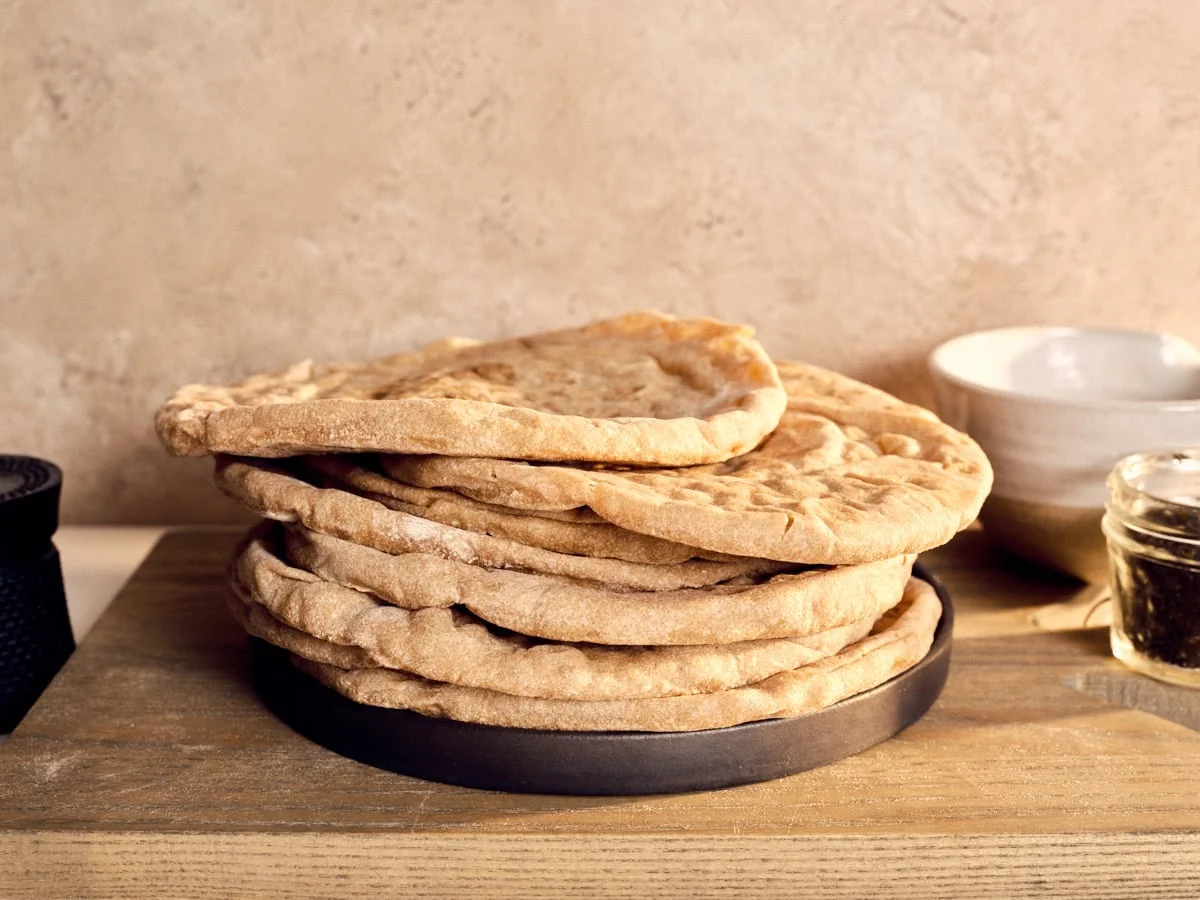

Last year, a baking class co-taught at Chimacum Valley Grainery in Washington by the author and renowned baker Graison Gill offered a unique culinary experience. Among the diverse array of breads featured, a whole-grain sourdough pita, meticulously developed by Gill, stood out. This particular creation, characterized by its hearty texture and the subtle sweetness imparted by freshly milled barley, has since become a source of inspiration. The following recipe is a direct homage to that memorable experience, reflecting the essence of a damp Pacific Northwest weekend, the distinctiveness of a singular farm and mill, and the profound connection fostered by individuals who inspire a passion for baking.
This is not the author’s inaugural venture into sourdough pita. Previous iterations include a delicate, airy version presented in the author’s first cookbook, and an experimental recipe incorporating sweeteners and ancient grains, yet to be published. However, the objective for this particular recipe was to craft something distinct: a wholly whole-grain pita that achieves remarkable softness, a reliable, impressive puff, and the profound depth of flavor derived from the synergy of natural sourdough fermentation and superior whole-grain flour. The author posits that while previous attempts were worthwhile, this iteration elevates the experience, with its unique texture and flavor profile serving as a testament to the inherent satisfaction of consuming whole grains prepared in such a wholesome manner.
The Art and Science of the Perfect Pita Puff
Achieving the signature puff in pita bread is a culinary feat that hinges on several critical factors, primarily related to dough preparation and oven dynamics. The inherent structure of the dough, when subjected to intense, dry heat, causes the moisture within to rapidly convert to steam. This trapped steam expands, forcing the layers of the dough apart and creating the characteristic pocket.
Key Factors for Optimal Puff:
- Dough Thickness: The recipe emphasizes rolling the dough to approximately 1/8-inch thickness. This precise dimension is crucial. If the dough is too thick, the steam may not be able to escape efficiently or inflate the entire surface evenly. Conversely, if rolled too thin, the dough may lack the structural integrity to hold the expanding steam, leading to premature rupture or a less dramatic puff.
- High Heat and Baking Surface: A preheated oven, ideally reaching 550°F (290°C) or higher, is paramount. This extreme heat is necessary to rapidly generate the steam required for inflation. Furthermore, utilizing a preheated baking steel or stone is vital. These dense surfaces retain and radiate heat effectively, ensuring that the bottom of the pita receives intense heat immediately upon contact, initiating the puffing process from the base.
- Dough Hydration and Gluten Development: The recipe’s high hydration level (84%) contributes to a pliable dough that can expand significantly. Proper gluten development, achieved through mixing and stretching, provides the necessary elasticity to contain the steam during the rapid heating process.
- Absence of Surface Tension Breakage: A common pitfall is a dry or tough exterior on the dough before baking. This can form a "skin" that prevents the steam from inflating the dough evenly. Ensuring the dough remains supple and is not over-manipulated during rolling is key.
Flour Selection: The Foundation of Flavor and Texture
The choice of flour is fundamental to the character of this whole-grain sourdough pita. The recipe specifies 100% whole wheat flour, with a particular commendation for Chimacum Valley Grainery’s Bread Flour. This artisanal flour, milled locally in Washington, embodies the "farm to table" ethos, offering a distinct sweetness and robust flavor profile inherent to freshly milled grains.
Flexibility in Grain Choices:
While the recipe champions a 100% whole wheat base, it also encourages experimentation by allowing up to 20% of the whole wheat to be substituted with other whole-grain flours. This flexibility allows bakers to introduce nuanced flavors and textures. For instance, incorporating whole triticale or whole spelt can lend unique characteristics to the pita, broadening its flavor spectrum without compromising its core identity. The inclusion of these diverse grains can also contribute different nutrient profiles and digestive qualities, aligning with the author’s observation that consuming whole grains in this manner "makes you feel good."
Baking Schedule: Integrating Sourdough into the Weekday Routine
The author’s intention was to develop a recipe that is both expedient and deeply nourishing, making it accessible even during busy workweeks. The timeline prioritizes convenience while maintaining the integrity of the sourdough process.
Timeline Breakdown:
- Overnight Levain Preparation: The process typically begins the evening before with the preparation of the levain. This starter, a mixture of whole wheat flour, water, and ripe sourdough starter, is left to ripen overnight at a controlled temperature (74-76°F or 23-24°C). Alternatively, a baker can utilize their active sourdough starter directly, though this might introduce a minuscule amount of non-whole grain flour if the starter is not exclusively whole grain.
- Morning Dough Mixing: The following morning, the main dough is mixed. This phase involves combining the flour, levain, salt, olive oil, and water. The author notes the option of a brief rest during mixing, which aids whole-grain flours in absorbing water effectively, circumventing the need for a formal autolyse step to streamline the process.
- Bulk Fermentation: The dough undergoes a 3-hour bulk fermentation at a warm room temperature (74-76°F or 23-24°C). This critical stage involves two sets of stretches and folds, performed at 30-minute intervals, to build dough strength and structure.
- Dividing and Shaping: Post-bulk fermentation, the dough is divided into ten equal portions (approximately 120 grams each) and shaped into tight balls. This step prepares the dough for its final proof.
- Proofing and Oven Preparation: The shaped dough balls are allowed to proof for one hour. Concurrently, the oven is preheated to its maximum temperature (550°F or 290°C) with a baking steel or stone. This simultaneous preparation ensures the optimal conditions for baking.
- Baking: The proofed dough is rolled out thinly and baked for a brief period (1-2 minutes per side) on the hot baking surface. The rapid exposure to intense heat triggers the puffing action.
Managing Fermentation and Sourness:
Maintaining a controlled fermentation timeline is not only for convenience but also plays a role in moderating the overall sourness of the sourdough. This is particularly important when working with a high proportion of whole-grain flour, which can contribute to a more pronounced tang. The result is a pita with a mild, yet complex, flavor profile. For added flexibility, the dough can be bulk retarded in the refrigerator after the initial two hours of bulk fermentation, allowing for baking the following day.
Recipe Vitals and Formula
This recipe is designed to yield ten pita, with the flexibility to scale up or down as needed.
Vitals:
- Total Dough Weight: 1,320 grams
- Prefermented Flour: 9.5%
- Levain in Final Dough: 22.0%
- Hydration: 84.0%
- Yield: Ten 120-gram pita
Total Formula:
- Whole Wheat Flour (Chimacum Valley Grainery Bread Flour): 699g (100.0%)
- Extra-Virgin Olive Oil: 14g (2.0%)
- Water (Levain and Mix): 503g (72.0%)
- Water (Mix): 84g (12.0%)
- Fine Sea Salt: 14g (2.0%)
- Ripe Sourdough Starter (100% hydration): 7g (0.95%)
The target final dough temperature for this recipe is between 77-78°F (25-26°C).
Method: Step-by-Step Preparation
1. Prepare the Levain (9:00 p.m.):
Combine 66g whole wheat flour, 66g water, and 7g ripe sourdough starter in a jar. Cover and let ripen at 74-76°F (23-24°C) overnight.
2. Mix the Dough (9:00 a.m.):
In a large mixing bowl, combine 632g whole wheat flour, 437g water (Water 1), 84g water (Water 2), 14g fine sea salt, 139g ripe levain, and 14g extra-virgin olive oil. Mix thoroughly with wet hands or a dough whisk until cohesive.
- Mechanical Mixer Method: Utilize a spiral mixer, incorporating ingredients in phases for optimal gluten development.
- Hand Mixing Method: Knead the dough for 6-8 minutes using the slap-and-fold or folds-in-the-bowl technique until smooth. Allow a 5-minute rest, then incorporate remaining water and knead for an additional 6-7 minutes until the dough is smooth and elastic. Transfer to a bulk fermentation container.
3. Bulk Fermentation (9:30 a.m. to 12:30 p.m. – 3 hours):
At a warm room temperature (74-76°F or 23-24°C), the dough will undergo bulk fermentation for approximately 3 hours. Perform two sets of stretches and folds at 30-minute intervals during the first hour. After the second set, allow the dough to rest, covered, for the remainder of the bulk fermentation. The dough should appear puffy and have increased in volume by about 25%.
4. Divide and Shape (12:30 p.m.):
Lightly flour a half sheet pan. Gently scrape the dough onto a floured surface and divide it into ten 120-gram pieces. Shape each piece into a tight ball by degasing, folding in the sides, and creating surface tension. Place the shaped balls on the prepared baking sheet, spaced a few inches apart.
5. Proof (1:00 p.m. to 2:00 p.m. – 1 hour):
Cover the dough and let it proof for one hour. Simultaneously, preheat your oven to 550°F (290°C) with a baking steel or stone in place for at least one hour.
6. Bake (2:00 p.m.):
The dough is ready for baking when it has increased in volume by about 30% and feels soft to the touch. Roll each dough ball to 7 inches in diameter and approximately 1/8 inch thick, using flour to prevent sticking. Transfer the rolled dough to a floured pizza peel and slide it onto the hot baking surface in the oven. Bake for 1-2 minutes until puffed, then flip and bake for an additional minute. Remove the pita to a towel-lined container and cover immediately to retain steam and softness. Repeat with the remaining dough.
These whole wheat sourdough pitas will remain fresh for up to a week when stored in a sealed bag at room temperature. Reheat gently in a low oven or toaster oven before serving.
Sourdough Pita Bread FAQs
Why won’t my pita puff in the oven?
Ensure the dough is rolled to approximately 1/8-inch thickness. Verify that your oven and baking surface are fully preheated to their maximum temperature. Avoid letting the dough dry out before baking, as this can form a skin that hinders puffing.
Why does only half of my pita puff?
Uneven rolling thickness is often the cause. If one side is rolled thinner than the other, it may puff differently. Aim for consistent thickness across the entire surface.
Why is my pita forming large bubbles all over instead of puffing completely?
This can indicate that the dough is close to overproofing. The dough may be too gassy and is forming irregular bubbles rather than a cohesive puff. Reducing the proofing time slightly in future bakes may resolve this.
The Broader Impact and Future Directions
This recipe for whole wheat sourdough pita transcends a simple set of instructions; it represents a thoughtful integration of artisanal grain, natural fermentation, and practical baking. The inspiration drawn from Graison Gill and the Chimacum Valley Grainery highlights a growing appreciation for local agriculture and the craftsmanship involved in producing high-quality flour. The author’s dedication to creating a nourishing and accessible bread reflects a broader trend towards healthier, more sustainable food choices.
For those seeking alternative flatbreads, the author also recommends exploring sourdough tortillas, which offer a versatile base for a variety of culinary applications, from simple wraps to elaborate burritos. The continued exploration of whole grains and sourdough techniques promises further innovation in the realm of home baking, offering both delicious results and a deeper connection to the food we consume.