
The culinary landscape of home baking has undergone a significant transformation over the past decade, driven largely by a renewed cultural interest in fermentation, sourdough propagation, and sustainable kitchen practices. Among the most enduring trends to emerge from this movement is the strategic utilization of sourdough starter discard—the portion of flour and water mixture typically discarded during the routine feeding of a wild yeast starter. While early iterations of discard recipes focused primarily on pancakes, crackers, and quick breads, contemporary pastry development has increasingly turned toward sophisticated sweets. The latest addition to this genre is a slice-and-bake cookie that marries the nostalgic comfort of breakfast cinnamon toast with the methodical precision of artisan sourdough baking.
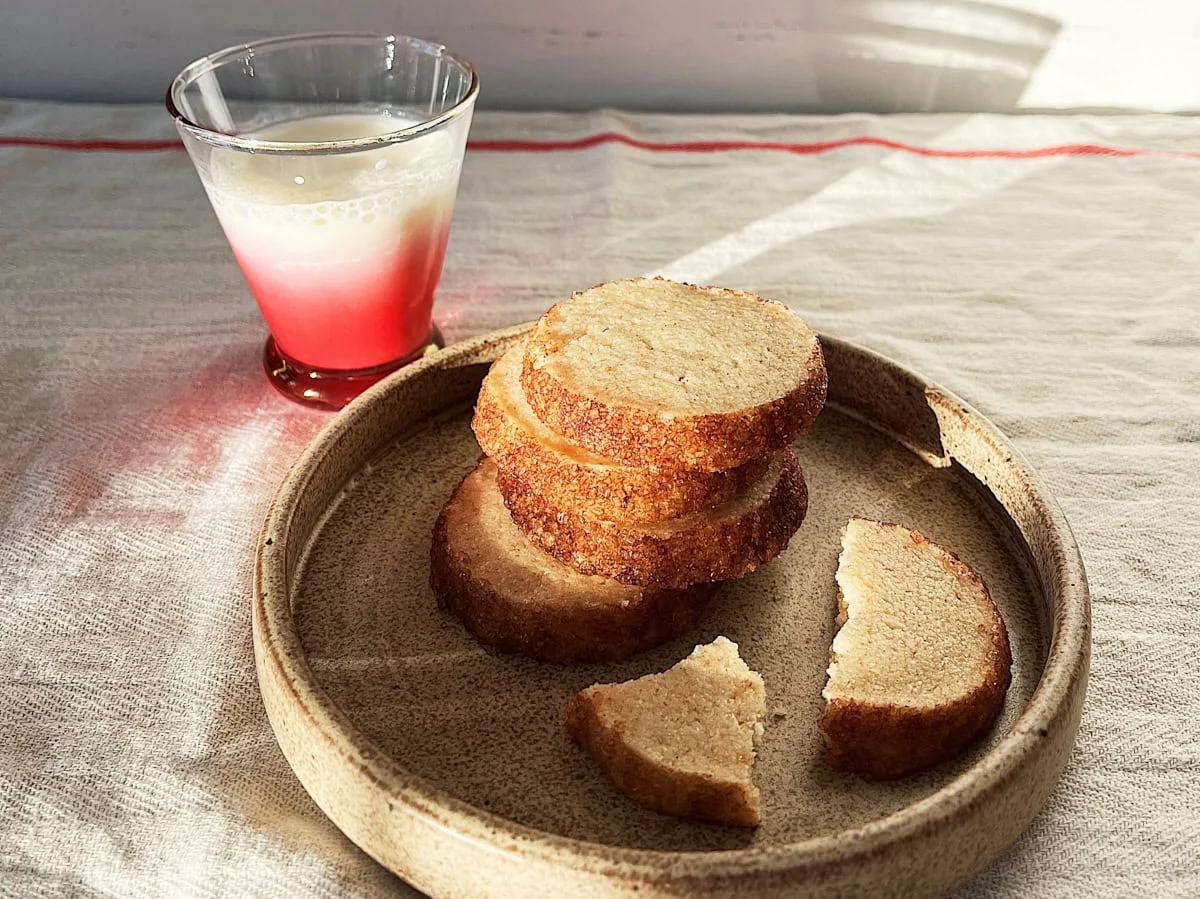
Developed for the peak holiday baking season, these vanilla-infused slice-and-bake cookies offer a practical solution for bakers seeking efficiency without sacrificing craftsmanship. Unlike traditional drop cookies that require tedious scooping or rolling for individual portions, the slice-and-bake method relies on shaping dough into logs, chilling until firm, and slicing into uniform rounds. This technique allows home bakers to divide labor into manageable shifts—preparing the dough days or even weeks in advance—making it an invaluable strategy during high-stress holiday hosting schedules. Despite their understated appearance on a crowded cookie swap table, these golden rounds consistently outperform more ornate confections in blind-tasting popularity.
Reassessing Standard Cookie Ratios Through Fermentation Science
The foundational architecture of classic shortbread and slice-and-bake cookies typically relies on a strict proportional ratio by weight: one part sugar, two parts butter, and three parts flour. Culinary historians and baking scientists note that this traditional formula is designed to yield a sturdy, highly structured dough capable of holding intricate shapes during high-temperature baking. However, when applied to sourdough discard recipes, this standard ratio presents distinct challenges. Because sourdough starter discard introduces a measurable amount of active water and fermented acidity into the mixing bowl, a standard three-part flour weight tends to create an excessively stiff, flour-heavy dough. Furthermore, because these specific cookies lack chemical leaveners like baking powder, baking soda, or whole eggs that contribute significant aeration and chewiness, a heavy flour load results in an unpleasantly dense texture.
To resolve this structural dilemma, modern recipe development has recalibrated the fundamental formula. By establishing a modified ratio of approximately 150 grams of granulated sugar to 226 grams of butter—supplemented by 250 grams of standard all-purpose flour and an additional 35 grams derived directly from unfed 100% hydration sourdough starter discard—the resulting dough achieves a delicate balance. The adjusted ratio shifts closer to one part sugar, one-and-a-half parts butter, and slightly under two parts flour. This calculated reduction in flour content prevents the dough from becoming leaden, while the inclusion of the sourdough discard imparts a subtle, pleasant tang that cuts through the rich butterfat.
The Critical Importance of Ingredient Selection
In minimalist baking formulas where the ingredient list is remarkably concise, the quality of each individual component dictates the final success of the product. Culinary experts emphasize that when a recipe features only a handful of ingredients—primarily butter, sugar, flour, and vanilla—substitutions or inferior products become immediately apparent on the palate.
Food scientists and professional pastry chefs consistently advocate for the use of high-grade, European-style cultured butter in shortbread and slice-and-bake applications. European-style butter generally contains a higher butterfat content and significantly less moisture than standard American supermarket varieties, typically churning out at roughly 82% to 85% fat. This elevated fat content translates directly to a richer mouthfeel, a more pronounced dairy flavor, and a tender, crumbly crumb structure that melts on the tongue.
Similarly, the choice of vanilla is paramount. The incorporation of high-grade vanilla bean paste or pure extract provides aromatic depth, anchoring the sweet, buttery notes of the dough. While the recipe remains faithful to a classic vanilla profile, the structural foundation is inherently modular, allowing home cooks to integrate regional or seasonal variations without compromising the core chemistry of the bake.
The Mechanics of Dough Preparation, Chilling, and Sourcing Discard
Executing a successful batch of slice-and-bake sourdough cookies requires careful adherence to temperature control and mechanical processing. The process typically begins with creaming room-temperature unsalted butter and granulated sugar together. While traditionalists with exceptional arm stamina can achieve this manually, culinary ergonomists recommend utilizing an electric hand mixer or a stationary stand mixer fitted with a paddle attachment. Efficient creaming incorporates tiny air pockets into the fat matrix, which contributes to the eventual tender bite of the baked cookie.
Once the butter, sugar, sourdough discard, and vanilla are thoroughly amalgamated, the dry ingredients—all-purpose flour and kosher salt—are incorporated just until combined to prevent the development of unwanted gluten structure. Because the inclusion of sourdough discard introduces additional moisture compared to standard shortbread doughs, the resulting unchilled mixture is exceptionally soft and pliable.
This high butter-to-flour ratio, combined with added hydration from the starter, creates a distinct vulnerability: if placed directly into a preheated oven without proper thermal intervention, the butter melts too rapidly, causing the cookies to spread excessively and lose their neat, cylindrical architecture. Consequently, a mandatory chilling period of at least two hours is non-negotiable. During this refrigeration window, the butter resolidifies entirely, locking the structure of the dough log into place and ensuring clean, architectural slices when cut with a sharp chef’s knife.
Professional bakers advise careful consideration regarding refrigeration materials. While eco-friendly beeswax-based reusable wraps have gained immense popularity in zero-waste kitchens, culinary testing indicates that prolonged contact with waxy coatings can occasionally transfer unwanted flavors or textures to high-fat cookie doughs over extended refrigeration periods. Standard parchment paper or washable, food-safe silicone stretch wraps represent safer alternatives for wrapping the cylindrical logs.
The Outer Crust: Textural Contrast and Flavor Profiles
What elevates these rounds from standard vanilla shortbread to the functional equivalent of cinnamon toast is the deliberate application of an exterior coating. Prior to slicing and baking, the chilled dough logs are brushed lightly with a beaten egg white—acting as a natural adhesive—and rolled generously in a specialized exterior matrix.
This exterior blend relies heavily on Demerara sugar, a large-grained, minimally processed cane sugar known for its amber hue and distinct crunch. Unlike standard granulated white sugar, Demerara crystals do not dissolve entirely during the baking process; instead, they retain a sparkling, crystalline texture that shatters pleasantly between the teeth. Combined with high-quality ground cinnamon and a touch of flaky sea salt, the coating mimics the quintessential sensory experience of buttered morning toast dusted with cinnamon sugar.
Beyond the classic cinnamon formulation, culinary flexibility is a hallmark of this recipe framework. Advanced home bakers frequently experiment with alternative flavor integrations. Incorporating finely rubbed citrus zest—such as lemon, grapefruit, or orange—directly into the sugar prior to creaming infuses the fat with aromatic essential oils. Alternatively, substituting or supplementing vanilla with potent extracts like almond, rose water, or orange flower water provides an elevated aromatic profile. For those seeking earthy, sophisticated notes, additions such as instant espresso powder, finely ground Japanese matcha, or pulverized Earl Grey tea leaves can be folded seamlessly into the flour mixture. For the outer crust, adventurous bakers have successfully swapped cinnamon for ground cardamom, sumac, or toasted sesame seeds, yielding entirely new flavor expressions while maintaining the reliable slice-and-bake template.
Baking Dynamics and Quality Control
Achieving optimal texture in a sourdough discard cookie demands precise thermal timing. Because the incorporation of sourdough starter introduces active water content into the dough matrix, these cookies possess a higher moisture level than traditional, water-free shortbreads.
One common pitfall for inexperienced bakers is premature removal from the oven. Unlike chocolate chip cookies, which often rely on a gooey, underbaked center for textural appeal, slice-and-bake shortbread-style cookies require a fully set interior to avoid an unpleasant, gummy mouthfeel. Furthermore, because of the high sugar and butter content combined with the inherent properties of the sourdough discard, the tops of the cookies do not darken significantly during the baking process. Relying solely on visual cues from the top surface can lead to underbaked batches. Culinary testing establishes that a minimum bake time of 14 minutes at standard temperatures is required to ensure the bottoms are properly browned and the internal structure is fully set.
For bakers who encounter minor imperfections in log shaping—resulting in slightly oval rather than perfectly circular cookies—a classic pastry chef trick can be employed immediately upon removing the hot sheet pan from the oven: swiftly swirling the inside of a round drinking glass or a metal biscuit cutter around each warm cookie instantly reforms the edges into a flawless geometric circle.
Storage Longevity and Freezing Protocols
One of the primary economic and logistical advantages of the slice-and-bake method is its exceptional adaptability to long-term storage and meal-prepping schedules. In an era where home cooking trends increasingly prioritize time management and food waste reduction, recipes that freeze exceptionally well command significant value.
Once the cookie dough logs have been rolled in the Demerara sugar and cinnamon mixture and sliced into individual rounds, they do not need to be baked immediately. Bakers can freeze the sliced unbaked rounds on a parchment-lined sheet pan for approximately two hours until completely solid. Once frozen, the rounds can be transferred to an airtight container or heavy-duty freezer bag, separated by layers of parchment paper, and stored safely for up to three months.
When cravings strike or unexpected guests arrive, the frozen cookie rounds can be transferred directly from the freezer to the baking sheet, requiring only an additional two to four minutes of baking time. This capability transforms a traditional holiday baking chore into an on-demand convenience, allowing zero-waste home bakers to maximize their sourdough starter discard while maintaining a ready reserve of artisan confections throughout the winter season.