
When the first GLP-1 receptor agonists, such as semaglutide, entered the mass market in 2017, the health and fitness industry experienced a collective moment of professional existentialism. Coaches and personal trainers across the United States openly questioned whether the rapid rise of pharmaceutical weight loss would render their services obsolete. For several years, these concerns remained largely theoretical; prescription rates were limited, and the drugs were viewed as niche treatments for specific metabolic conditions. However, the landscape has shifted dramatically. By 2026, the prevalence of these medications has reached a critical threshold, with over 10 percent of the U.S. adult population currently utilizing GLP-1 therapies. This widespread adoption has forced a paradigm shift within the wellness sector, transitioning from viewing pharmacotherapy as a professional threat to recognizing it as a permanent component of modern health management.
The initial apprehension felt by trainers was rooted in the fear that "magic bullet" solutions would decouple weight loss from the foundational habits of nutrition and exercise. Yet, as the medical community and the fitness industry have gained more longitudinal data, the narrative has evolved. Professional organizations and veteran coaches now largely agree that the most effective outcomes for patients occur when medication is paired with expert-led behavioral support. As Brian St. Pierre, MS, RD, notes, the industry is no longer in the business of competing with GLP-1s; it is now operating within the "GLP-1 support world."
A Chronology of Adoption and Integration
The integration of GLP-1 medications into standard health practice did not happen overnight. Following the initial 2017 market entry, the subsequent five years saw a slow, steady increase in awareness. By 2023, viral social media trends and broader insurance coverage catalyzed a rapid acceleration in prescriptions. As the patient population expanded, the demographic profile of the user base shifted from those with severe comorbidities to a broader spectrum of individuals seeking weight management assistance.
This influx of users presented an immediate challenge to fitness coaches: how to handle clients who were seeing rapid physiological changes without necessarily altering their long-term habits. Research indicates that while GLP-1s effectively manage hunger signals, they do not inherently teach the mechanics of protein intake, resistance training, or stress management. This gap has created a new, specialized market for coaches capable of providing the behavioral infrastructure necessary to ensure these physical changes are sustainable.
The Behavioral Spectrum of the GLP-1 User
Coaches today are encountering a diverse array of clients whose needs change as they progress through different stages of their medical journey. The "Honeymooner," for instance, represents a client in the early, highly successful phase of treatment. Because their results are immediate and consistent, their motivation to adopt supplemental exercise habits is often low. In these cases, professional advice emphasizes rapport-building rather than immediate intervention, ensuring the door remains open for future support when the initial medication-driven progress inevitably plateaus.
Conversely, the "Ambivalent Candidate" represents a significant segment of the population that is medically eligible for treatment but paralyzed by societal stigma or fear of long-term dependency. Coaching for this group requires a non-judgmental, data-driven approach. Professionals often utilize tools like the "4 Crazy Questions" framework to help clients articulate their values and fears, ultimately empowering them to make an informed decision alongside their medical provider.
Perhaps the most critical demographic for fitness professionals to engage is the "Muscle-Loss Risk" client. Medical data suggests that up to 40 percent of weight lost via GLP-1 therapy can originate from lean muscle mass. This creates a significant health risk, as the loss of muscle tissue can lead to a slowed metabolism and reduced functional capacity. For these clients, the coach’s role is to pivot the focus from the scale to body composition metrics, such as DEXA scans, and to prioritize protein-dense nutrition and progressive resistance training.

Medical Oversight and the Scope of Practice
A vital aspect of this evolution in coaching is the strict adherence to the boundaries between fitness instruction and medical advice. When clients report significant side effects—such as nausea, vomiting, or persistent lethargy—the coach’s role is not to diagnose or adjust medication, but to facilitate communication between the client and their physician.
The "Ready-to-Quitter," a client who experiences severe side effects, requires careful guidance to understand that these symptoms are often a result of rapid dosage escalation or nutritional deficiencies. Coaches can suggest observational experiments—such as tracking food to identify triggers or shifting to smaller, more frequent meals—to help alleviate discomfort. However, any modification in dosage must remain the exclusive purview of the prescribing physician.
The Long-Term Challenge: Maintenance and Cessation
As patients continue their journey, the question of long-term sustainability becomes paramount. For the "Graduate"—the individual who has achieved their goals and is tapering off medication—the challenge is significant. Clinical observations show that without established behavioral habits, the risk of weight regain within 18 months of cessation is high. Coaches act as the "stability layer" during this transition, helping clients refine the routines that will serve them once the chemical appetite suppression is removed.
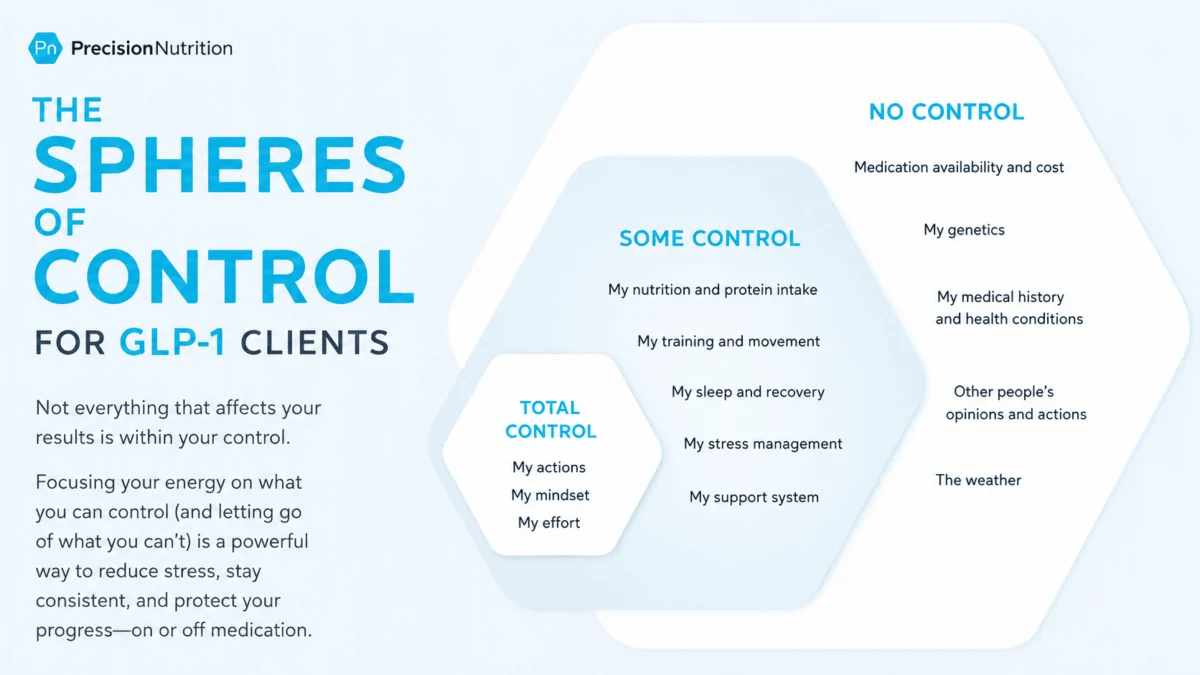
The "Priced-Out" client represents an additional layer of complexity. Economic and insurance-related barriers to medication access are an ongoing systemic issue. For these individuals, the focus must shift entirely to the "Spheres of Control" model. By isolating variables that remain within the client’s agency—such as sleep quality, movement, and nutritional density—coaches help mitigate the psychological distress associated with losing access to a medical treatment.
Implications for the Future of Wellness
The current trajectory of the health and fitness industry suggests that the "GLP-1 era" is not a temporary disruption but a fundamental change in the patient-provider dynamic. The most successful coaches are those who have adopted a multidisciplinary approach, integrating scientific understanding of metabolic health with traditional coaching methodologies.
Data from organizations like Precision Nutrition suggest that clients who sustain consistent exercise and nutrition behaviors while on medication are significantly more likely to maintain their results after treatment ends. The metaphor often used by industry leaders is that of a "rut" on a trail: the medication provides the opportunity to walk the path, but the coaching ensures that the path is reinforced deeply enough to remain visible even when the assistance is removed.
As we look toward the latter half of the decade, the focus of professional development for coaches is shifting toward specialized certifications that bridge the gap between pharmacology and lifestyle medicine. The objective is to standardize support, ensuring that every person using GLP-1 medications has access to the structural and behavioral tools required for long-term vitality.
In summary, the rise of GLP-1s has not rendered the fitness professional obsolete; rather, it has demanded a higher level of competence and a more empathetic, nuanced approach to human behavior. By focusing on the "support world," coaches are finding that they remain indispensable partners in the pursuit of health, regardless of whether a client’s journey involves pharmacological intervention. The future of the industry lies in this synergy: the medical ability to manage weight, combined with the behavioral ability to sustain it.