
The evolution of home baking frequently reaches an operational threshold where standard residential kitchen appliances can no longer satisfy output demands. For artisans transitioning from small-batch production to high-capacity baking—whether to supply local farmers’ markets, sustain a micro-bakery, or simply optimize efficiency—investing in dedicated commercial-grade equipment becomes a necessity. Among the industry standards for heavy-duty, compact artisan baking is the Belgian-manufactured Rofco bread oven, a specialized brick deck oven designed to bridge the gap between residential constraints and commercial output.
Understanding the mechanics, operational parameters, and thermal dynamics of specialty equipment like the Rofco B40 is essential for bakers seeking to scale production without sacrificing crumb structure, crust development, or overall flavor profiles.
Anatomy and Technical Specifications of the Rofco Oven
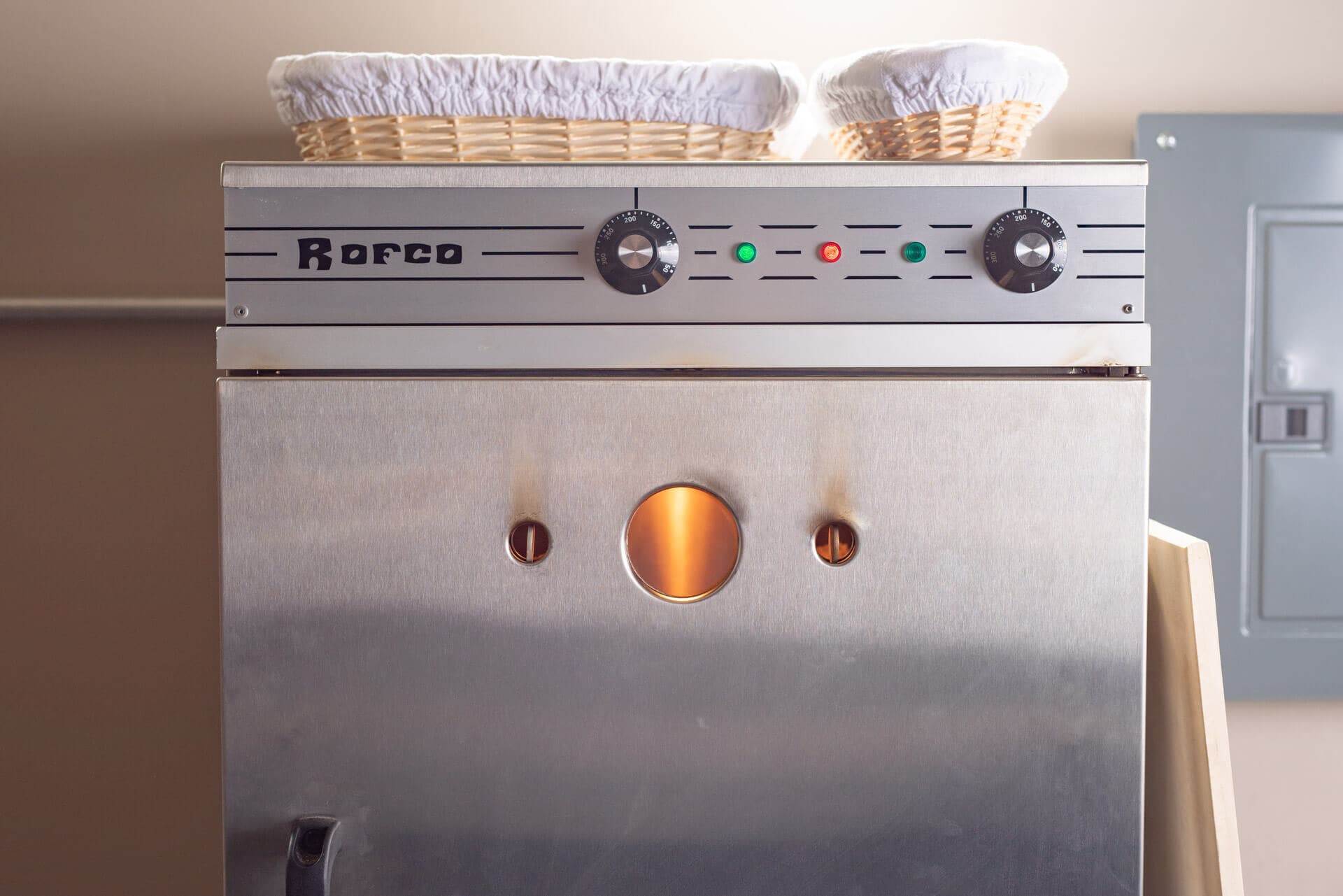
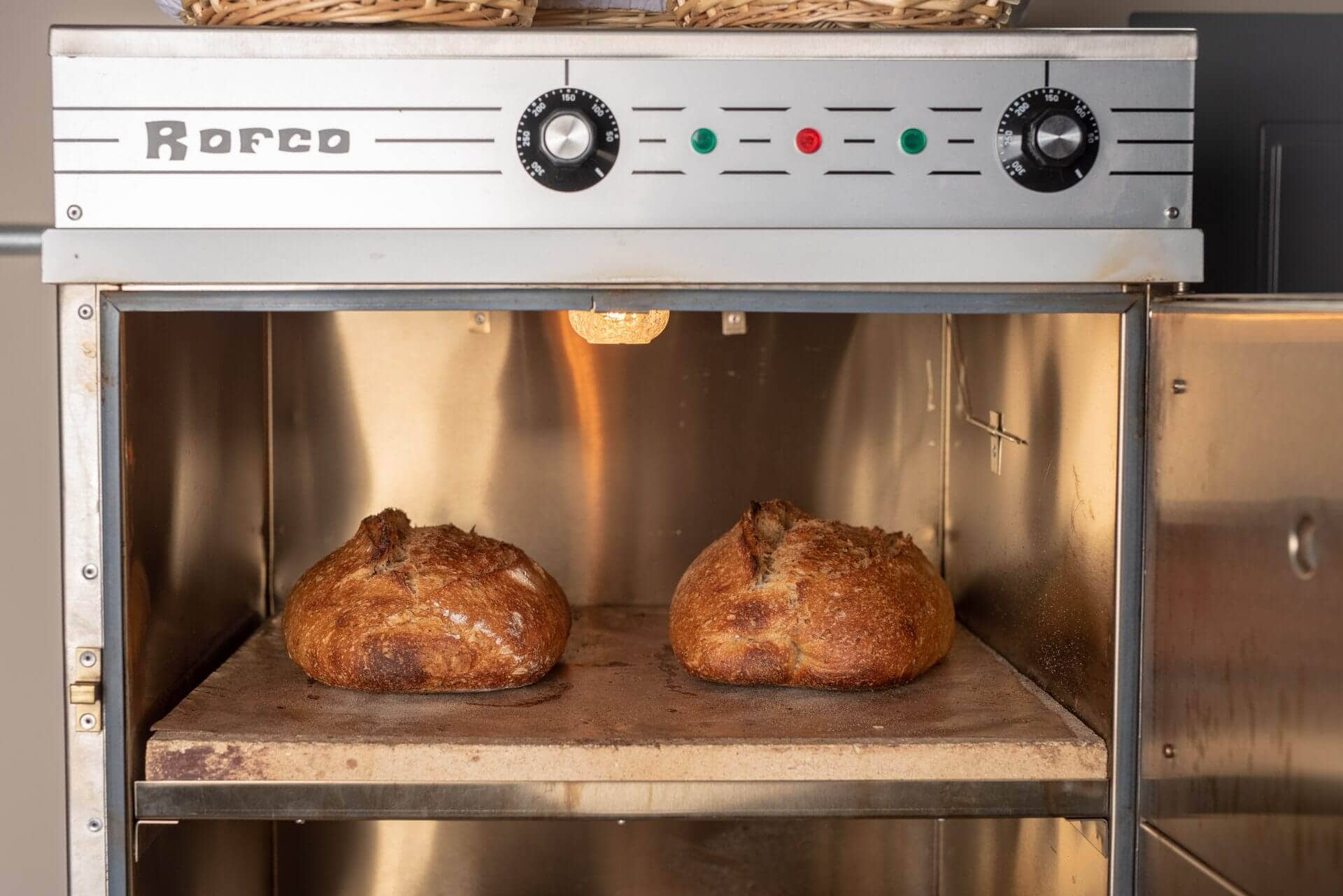
Engineered specifically for bread production, the Rofco bread oven utilizes a compact, no-nonsense architectural design featuring a sealed baking chamber and heavy refractory ceramic components. The flagship model—the B40—features three distinct square baking decks constructed from 1-3/8-inch-thick chamotte deck stones. These refractory bricks possess high thermal mass, allowing them to absorb and retain significant amounts of energy during the preheating phase. This thermal inertia ensures that even after the oven door is opened and ambient heat escapes during the loading process, the decks rapidly recover and maintain stable baking temperatures across consecutive, back-to-back baking cycles.
From an infrastructural standpoint, the oven operates on standard single-phase 220V AC electrical power, necessitating the installation of a dedicated circuit breaker and a 6-20R receptacle by a licensed electrician in standard North American residential settings. Unlike conventional convection ovens that rely on forced air currents—which can dry out dough prematurely and hinder oven spring—the Rofco functions primarily through radiant and conductive heat transfer within a closed environment. This limits external radiant heat emission, ensuring that while the appliance exterior becomes hot to the touch, it can safely operate in close proximity to walls or ancillary kitchen furnishings.
Strategic Dough Layout and Deck Optimization
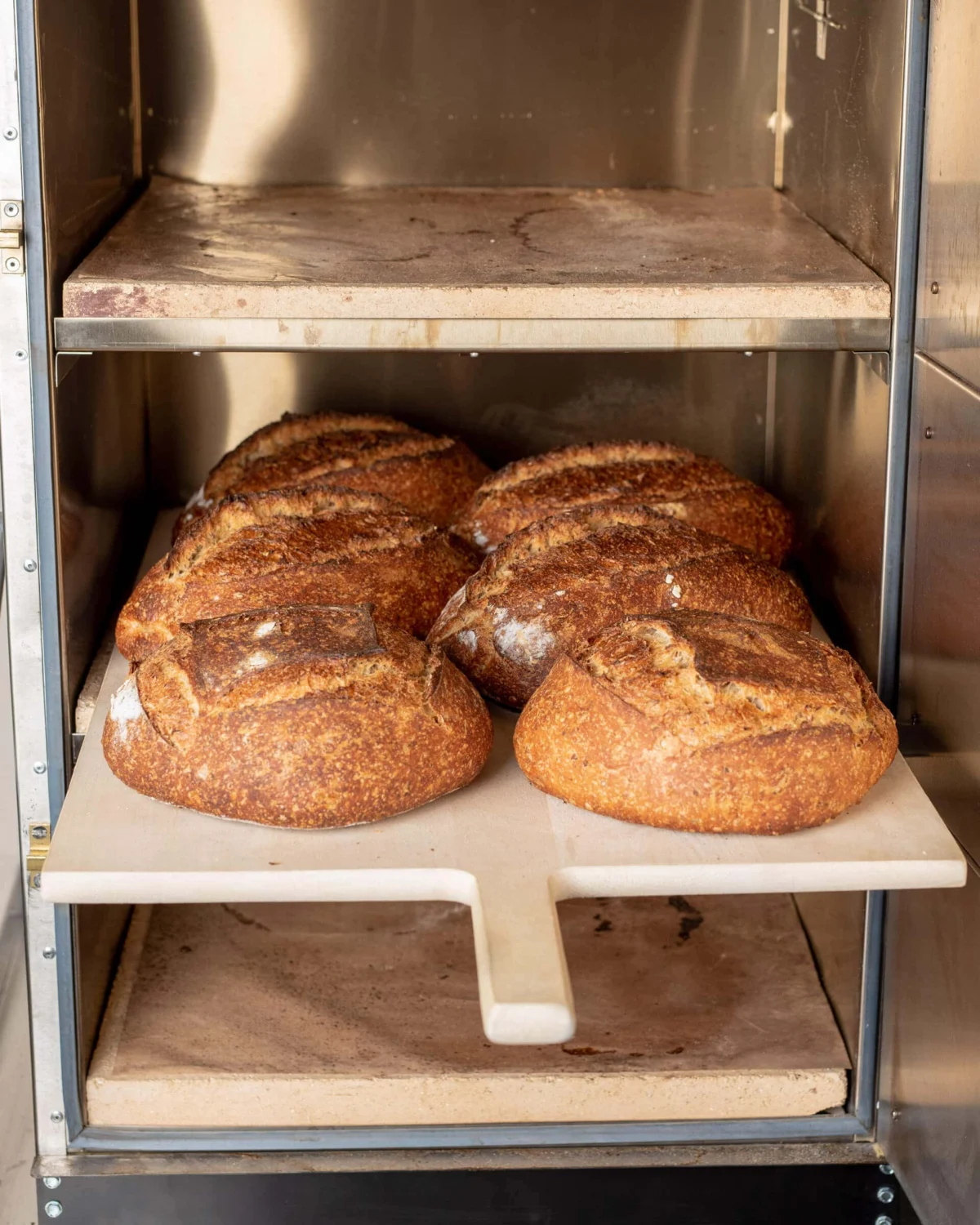
Maximizing the spatial efficiency of the Rofco’s 18.9-inch by 18.9-inch baking decks requires precise geometry and careful load planning. Bakers must balance maximum dough volume with adequate spacing to prevent loaves from fusing together during the critical oven-spring phase while ensuring uniform heat distribution.
Standard load configurations typically involve specific arrangements based on loaf weight and geometry:
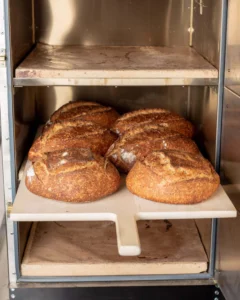
- Batards (900 grams each): Two units per deck, aligned parallel horizontally or vertically, representing the most common production setup.
- Boules (800 grams each): Two circular units per deck, positioned diagonally to maximize corner clearance.
- Smaller Formats (700 grams each): Up to four units per deck arranged in a balanced grid.
Additionally, the inclusion of square steel trays permits the production of smaller items, rolls, pastries, and flatbreads. These trays act as protective barriers, streamlining the transfer of delicate items and containing potential spills or seed shedding.
Thermal Management and Steam Injection Protocols
The formation of a glossy, blistered crust and optimal vertical expansion relies heavily on steam introduction during the initial stages of the bake. Because the Rofco features a sealed chamber devoid of active exhaust fans, it retains internal moisture effectively until manually vented. However, unlike automated commercial deck ovens equipped with push-button steam injection systems, the Rofco requires manual intervention.

Bakers generally employ one of two methodologies to generate steam: external high-pressure sprayers or integrated internal steam pods.
High-Pressure Sprayers
Utilizing a commercial-grade pressure sprayer filled with water allows the baker to mist the chamber interior directly. The operational protocol involves:
- Pressurizing the sprayer to achieve a fine, aerosolized mist.
- Loading the pre-scored dough onto the baking decks.
- Systematically spraying the lower, middle, and upper decks for approximately 10 to 12 seconds per zone immediately prior to sealing the door. Care must be taken to avoid direct contact with glass-enclosed lighting fixtures to prevent thermal shock and breakage.
Integrated Steam Pods
Alternatively, optional steel rectangular steam pods can be positioned along the lateral edges of each deck. Preheated alongside the stones, these boxes receive measured pours of water or ice cubes just after loading, instantly flashing into dense steam. While effective, these pods consume lateral surface area, leading many high-volume bakers to favor external sprayers to preserve maximum deck capacity.

Step-by-Step Baking Chronology and Parameters
Executing a successful bake in a Rofco oven requires strict adherence to a pre-programmed timeline and temperature curve. Empirical testing across various sourdough and commercial yeast formulas establishes a reliable baseline process:
| Step | Operational Phase | Temperature Setting | Duration |
|---|---|---|---|
| 1 | Thermal Preheating (Closed door and vents) | 240°C (464°F) | 1 hour 30 minutes |
| 2 | Initial Bake with Steam | 150°C (302°F) | 20 minutes |
| 3 | Steam Venting (Brief door opening and vent rotation) | 220°C (428°F) | 10 minutes |
| 4 | Final Bake and Crust Set (Optional loaf rotation) | 150°C (302°F) | 20 to 30 minutes |
A comprehensive 90-minute preheat at 240°C is critical to fully saturate the chamotte stones with thermal energy. Once loaded via a custom-width wooden peel and heat-resistant silicone baking mats, the temperature is dynamically managed to encourage maximum vertical rise before sealing the exterior crust. Venting the chamber at the 20-minute mark evacuates residual humidity, allowing the Maillard reaction to proceed unimpeded and producing a crisp, caramelized finish.
Essential Auxiliary Equipment for Workflow Efficiency
Integrating a high-capacity deck oven into a production workflow necessitates supporting hardware designed to enhance ergonomics and safety:
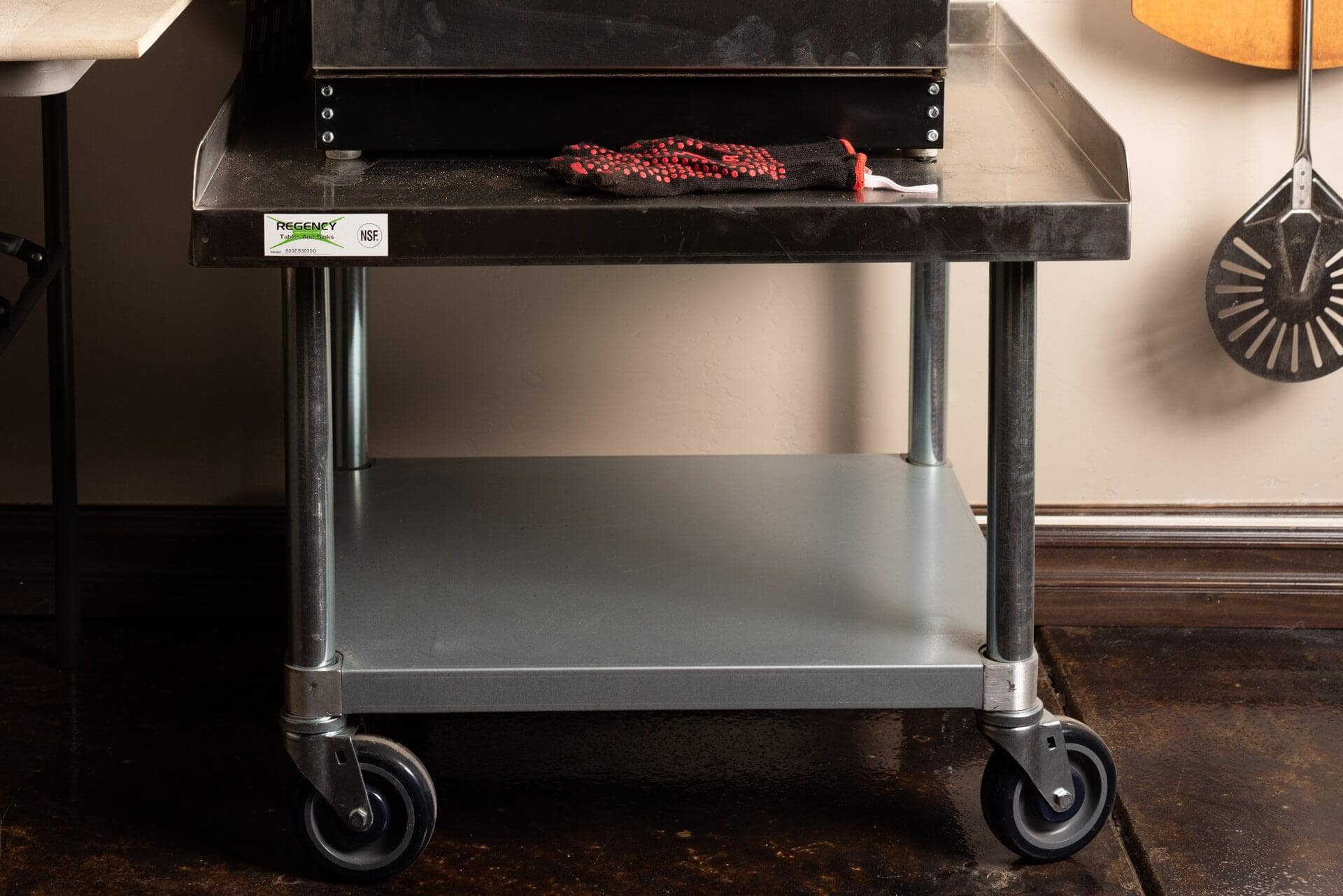
- Heavy-Duty Equipment Stands: Elevating the heavy appliance improves operational ergonomics. A stainless steel equipment stand (such as a 30-inch by 30-inch 16-gauge unit) raised to an optimal working height minimizes physical strain during loading and unloading. The addition of locking casters allows for mobility during maintenance, though fixed feet are occasionally preferred to maximize structural rigidity.
- Custom Wooden Peels: An 18-inch-wide wooden pizza peel—engineered to match the precise interior width of the B40 decks—facilitates the rapid, seamless transfer of multiple loaves on silicone sheets directly onto the hot stones without catching on the door frame.
- Post-Bake Utilization: Beyond baking, the residual heat of the oven chamber serves a secondary operational purpose. Storing damp canvas-lined bannetons and proofing baskets inside the cooling oven accelerates moisture evaporation, preventing microbial growth and mold formation between production runs.
Industry Implications and Market Analysis
The growing popularity of specialized micro-bakery equipment reflects a broader consumer shift toward localized, high-quality artisanal food production. As home bakers increasingly professionalize their operations, manufacturers face heightened demand for scaled-down commercial hardware that complies with residential or light-commercial electrical standards.
Industry analysts note that while appliances like the Rofco represent a significant capital investment, they offer a viable intermediate step for entrepreneurs testing market viability before committing to full-scale commercial brick-and-mortar operations. By bridging the gap between domestic limitations and commercial output, these systems enable small-scale producers to maintain stringent quality control over fermentation, shaping, and baking dynamics—ultimately democratizing access to professional-grade baking technology.