
The year 2020 ushered in an unprecedented global focus on exponential growth, primarily in the somber context of the SARS-CoV-2 virus spread, revealing the counter-intuitive nature of phenomena that initially appear dormant before rapidly escalating. While public health officials grappled with the implications of this rapid expansion in contagion, a parallel, albeit positive, exponential trend emerged in kitchens worldwide: a dramatic surge in home baking, particularly with yeast. This juxtaposition highlighted the dual-edged sword of exponential dynamics, influencing everything from global pandemics to local grocery store shelves, where yeast, a humble microorganism, became a highly coveted commodity.
The Enigma of Exponential Growth
Exponential growth, a mathematical concept where a quantity increases by a fixed percentage over a given period, is notoriously counter-intuitive. Unlike linear growth, which proceeds at a steady rate, exponential growth often appears negligible for extended durations before accelerating dramatically. This phenomenon is famously illustrated by the ancient "wheat and chessboard problem," where placing one grain of wheat on the first square, two on the second, four on the third, and so on, quickly leads to an astronomically large number of grains – far exceeding global production – by the final squares.
In the context of the COVID-19 pandemic, this characteristic proved challenging for public perception and policy. Early infection rates, though doubling consistently, presented low absolute numbers, leading to a false sense of security. However, as the base number grew, each subsequent doubling resulted in a significantly larger increase in cases, overwhelming healthcare systems and necessitating stringent public health measures such as lockdowns. Understanding this growth pattern was crucial for comprehending the rapid escalation of the crisis, which seemed to "skyrocket out of nowhere" to those unfamiliar with exponential dynamics.
The Pandemic’s Culinary Byproduct: A Baking Renaissance
As millions worldwide entered lockdown, the sudden abundance of free evenings and weekends, coupled with anxieties about food security and a desire for comfort, sparked an unprecedented resurgence in home baking. This period saw a substantial shift in consumer behavior, as individuals turned to culinary pursuits as a source of solace, productivity, and connection. Baking, with its tangible results and often therapeutic process, became a popular activity, leading to a steep rise in demand for staple ingredients, most notably flour and yeast.
Reports from various countries, including Norway, where the phenomenon was particularly acute, indicated prolonged periods of yeast scarcity. Supermarket shelves lay bare for weeks and even months, as supply chains struggled to keep pace with the sudden, massive spike in consumer demand. This surge was not merely a local anomaly but a widespread trend observed across continents, underscoring the global nature of the lockdown-induced baking boom. While some home bakers found themselves struggling to procure this essential leavening agent, others, perhaps unknowingly, benefited from the very principle of exponential growth inherent in yeast itself.
Yeast: A Microscopic Marvel of Exponential Reproduction
At the heart of the baking boom, and indeed many fermented foods and beverages, lies Saccharomyces cerevisiae, commonly known as baker’s or brewer’s yeast. This single-celled fungus is a microscopic powerhouse, capable of remarkable exponential reproduction under optimal conditions. Its life cycle involves budding, where a new cell grows out of the parent cell, eventually detaching to become an independent organism.
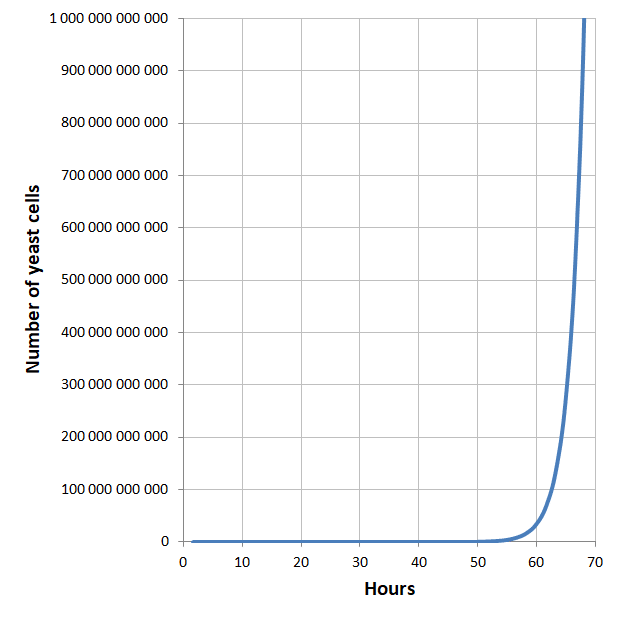
Under ideal circumstances – typically a warm environment (around 25-35°C), ample nutrients (sugars from flour), and sufficient moisture and oxygen – a single yeast cell can divide and double its population in approximately 100 minutes. This rapid doubling illustrates exponential growth in action:
- After 100 minutes: 1 cell becomes 2.
- After 200 minutes (approx. 3.3 hours): 2 cells become 4.
- After 24 hours (14.4 doublings): A single cell multiplies into approximately 16,000 cells.
- After 48 hours (28.8 doublings): The population swells to around 268 million cells.
- Before 72 hours (43.2 doublings): The initial single cell can give rise to an astounding trillion (1,000,000,000,000) yeast cells.
To put this into perspective, a typical 50-gram block of compressed fresh yeast contains a similar order of magnitude of cells. This incredible reproductive capacity is harnessed in commercial yeast production, where carefully controlled bioreactors provide the ideal environment for rapid propagation, ensuring a consistent and abundant supply for industrial and consumer use. However, in the less controlled environment of a bread dough, factors like nutrient availability, temperature fluctuations, and the accumulation of metabolic byproducts will inevitably slow this exponential growth, extending the fermentation process significantly.
Navigating Yeast Scarcity: The Rise of Precision Baking
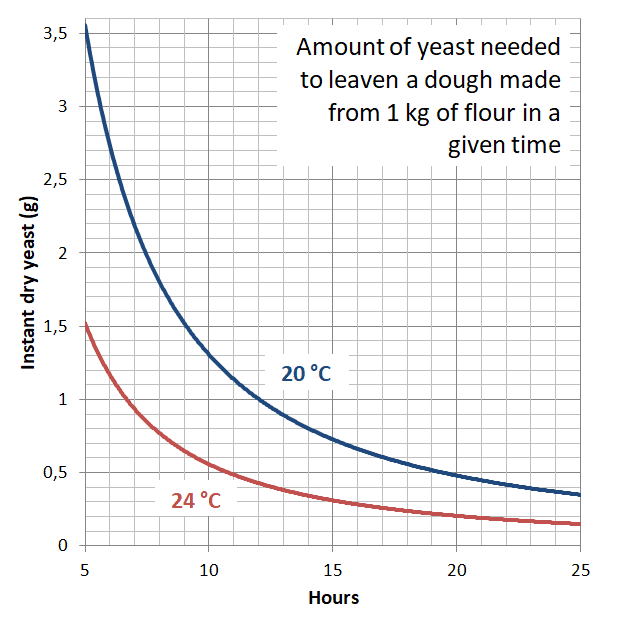
The widespread yeast shortages during the pandemic prompted many home bakers to re-evaluate their usage and explore methods for maximizing the efficiency of limited supplies. This often meant embracing longer fermentation times, a technique traditionally favored by artisan bakers for its benefits in flavor development and dough structure. The underlying principle is simple: by reducing the initial quantity of yeast and extending the proofing period, the yeast population has more time to grow exponentially and perform its leavening function, albeit at a slower, more controlled pace.
For instance, a conventional recipe might call for 7-10 grams of instant dry yeast for 1 kilogram of flour for a quick rise. However, utilizing the principles of exponential growth, a dough made with 1 kilogram of wheat flour can be perfectly leavened with as little as 0.48 grams of instant dry yeast if allowed to ferment for 20 hours at a moderate temperature of 20°C. This stark difference highlights the power of time and temperature as critical variables in the baking process.
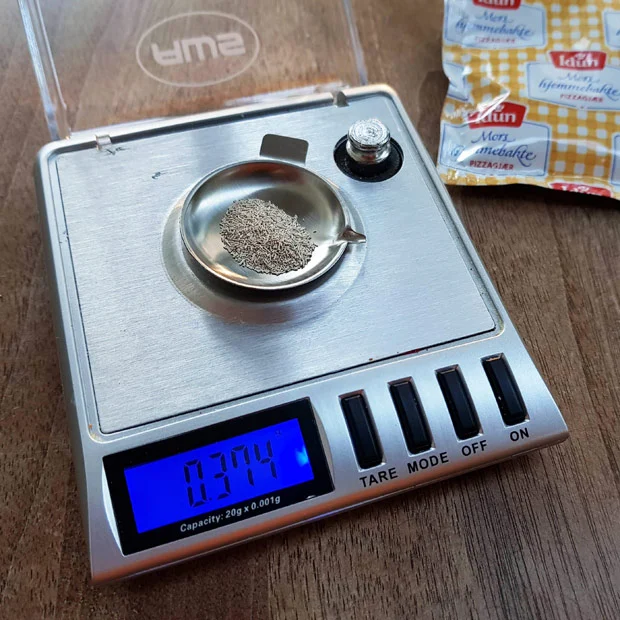
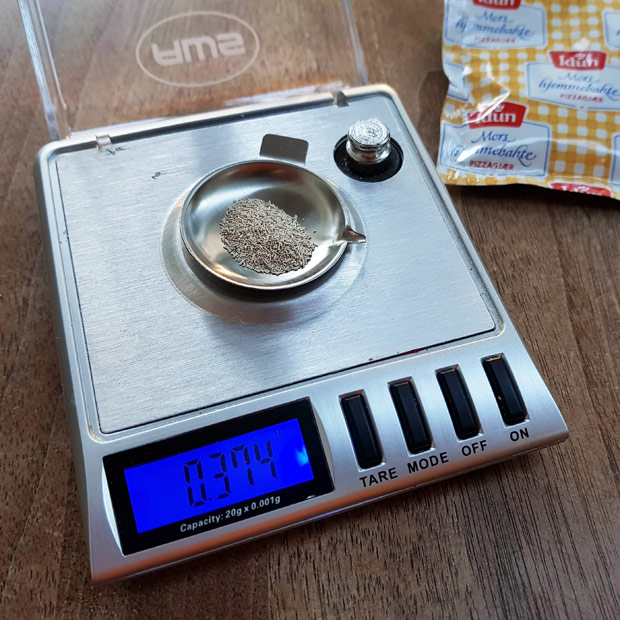
To facilitate such precision, home bakers increasingly turned to digital tools and specialized equipment. Small digital balances capable of measuring quantities down to 0.001 grams, once primarily found in laboratories, became popular kitchen instruments. These scales, now more affordable and accessible, allowed bakers to accurately measure the minute amounts of yeast required for extended fermentation.
Furthermore, mobile applications like PizzApp+ (available for Android devices) gained significant traction. These apps provide invaluable assistance in calculating the precise amount of leavening agent needed based on various parameters:
- Flour quantity: The primary determinant of dough size.
- Hydration: The water content relative to flour, impacting dough consistency.
- Salt percentage: Influences yeast activity and flavor.
- Desired fermentation time: Crucial for allowing sufficient yeast growth.
- Ambient temperature: Directly impacts yeast metabolic rate.
- Type of leavening agent: The app typically offers options for fresh compressed yeast, active dry yeast, instant dry yeast, and even liquid or firm sourdough starters, each with different potency and characteristics.
By inputting these variables, the app can recommend the exact quantity of yeast, empowering home bakers to achieve consistent results even with minimal yeast. This shift towards a more scientific, data-driven approach to baking represented a significant evolution in home culinary practices, moving away from purely intuitive methods to one informed by precise measurements and an understanding of microbial dynamics.
The Benefits of Extended Fermentation: Beyond Yeast Conservation
Beyond conserving precious yeast supplies, longer bulk fermentation offers several culinary advantages:
- Enhanced Flavor Development: Extended fermentation allows yeast and, crucially, naturally occurring lactic acid bacteria (LAB) present in flour to produce a wider array of organic acids, esters, and other aromatic compounds. These contribute to a more complex, nuanced, and often tangier flavor profile in the final product, characteristic of artisan breads.
- Improved Dough Structure and Texture: A slower rise generally results in a more extensible and elastic dough, which can hold gas better, leading to a more open, irregular crumb structure and a chewier texture.
- Increased Digestibility: The prolonged action of enzymes in the dough, facilitated by a longer fermentation, can break down complex carbohydrates and proteins, potentially making the bread easier to digest for some individuals. Phytic acid, an anti-nutrient found in grains, can also be reduced, improving mineral bioavailability.
While the convenience of instant dry yeast remains undeniably alluring for many, offering a quick and reliable rise, the pandemic-induced shortages and the exploration of extended fermentation methods also reignited interest in sourdough baking. Sourdough, relying on a symbiotic culture of wild yeasts and lactic acid bacteria, offers complete immunity from commercial yeast shortages, albeit demanding a greater time commitment and understanding of starter maintenance. However, for those seeking a balance of convenience and quality, the precision methods employing minimal instant dry yeast with extended proofing offered a practical and rewarding middle ground.
Industry Response and Future Implications
The sudden spike in demand for baking ingredients presented both challenges and opportunities for manufacturers and retailers. Yeast producers, accustomed to steady industrial and consumer demand, faced unprecedented pressure to scale up production. This often involved increasing shift work, optimizing existing facilities, and reallocating resources to meet the surge. However, the lead time required for increasing biological production, combined with logistical bottlenecks, meant that supply struggled to catch up with demand for several months.
Flour mills also experienced similar pressures, with sales of retail-sized bags skyrocketing, even as demand from commercial bakeries (which faced their own pandemic-related disruptions) fluctuated. This led to a temporary but significant restructuring of some supply chains, prioritizing retail packaging over bulk industrial supplies.
From a public health perspective, the widespread discussion of exponential growth, initially in the context of viral spread, inadvertently educated a global audience on a fundamental mathematical principle. The direct, tangible experience of yeast’s exponential growth in the kitchen offered a more benign, relatable example of a concept that otherwise proved abstract and frightening in epidemiological models.
Looking ahead, the "baking boom" appears to have left a lasting legacy. Many individuals who picked up baking during lockdown have continued the hobby, leading to a sustained elevation in demand for baking ingredients and tools. The increased familiarity with precision techniques, longer fermentation, and digital baking aids suggests a more informed and sophisticated home baking community. The experience underscored the interconnectedness of global events, from microscopic pathogens to consumer behavior, and the often-unforeseen ways in which scientific principles like exponential growth manifest in daily life, transforming both public health discourse and the humble kitchen.