
The modern American loaf of bread has long suffered from an identity crisis. Sourced from anonymous, massive commodity grain elevators and processed through industrialized systems, wheat is traditionally stripped of its geographical and agricultural origins long before it reaches the baking pan. However, a profound shift is occurring across the agricultural and culinary landscapes, one aimed at restoring transparency, flavor, and economic equity to the daily staple.
This movement took center stage from July 19 to July 21, 2026, when the Washington State University (WSU) Breadlab and the Washington State Department of Agriculture (WSDA) hosted the Grain Gathering in Washington’s fertile Skagit Valley. Marking the first time the landmark event has been held in eight years, the three-day symposium drew agriculturalists, plant breeders, commercial bakers, millers, and home enthusiasts together under the unifying theme of Nourishing Communities. Far from a conventional academic conference, the gathering served as an operational crucible where the theoretical science of wheat breeding met the tactile art of sourdough fermentation.
Main Facts and Event Chronology
The 2026 Grain Gathering convened hundreds of grain-obsessed professionals and home practitioners to examine the complete lifecycle of a loaf of bread—from seed selection to the final bake. Over the course of the three-day program, attendees moved between the research fields of the WSU Breadlab, active milling facilities such as Cairnspring Mills, and hands-on baking stations.
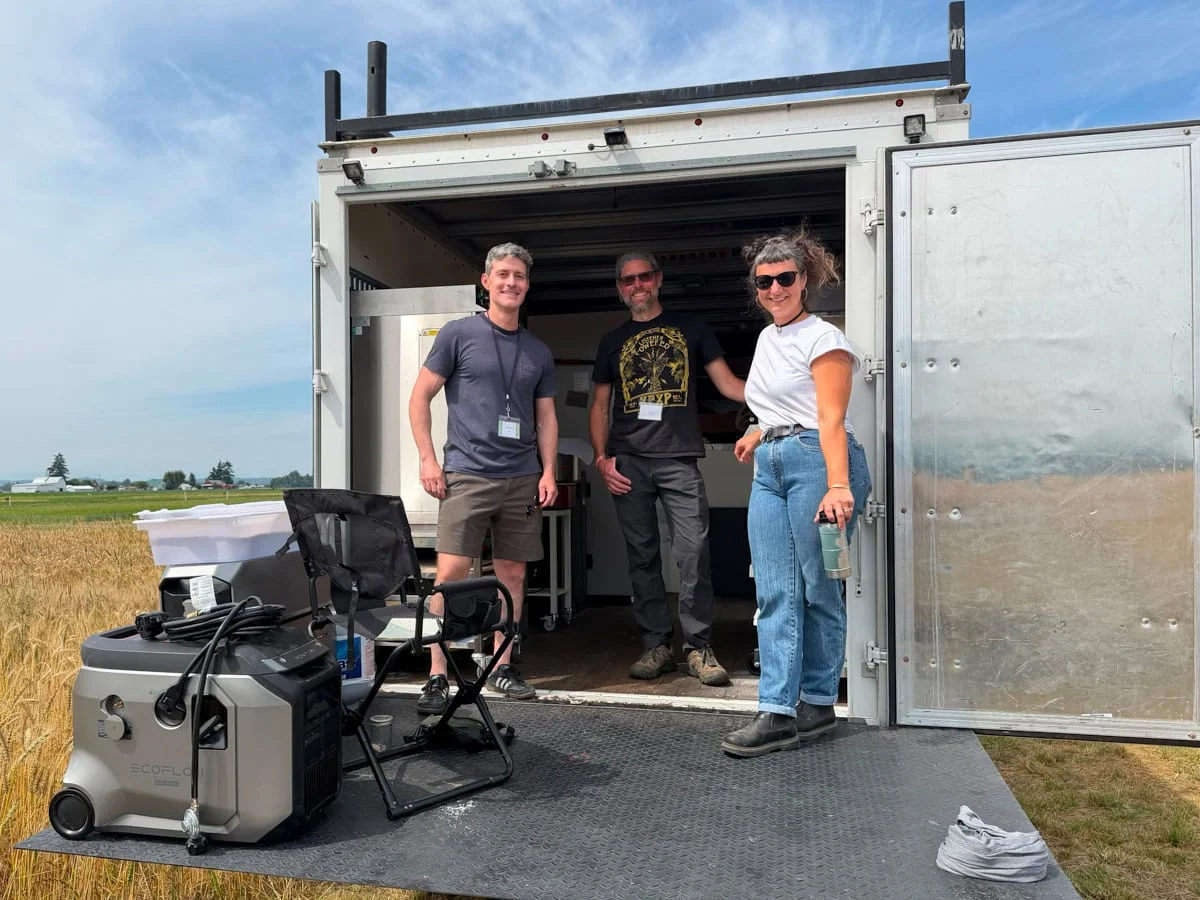
The schedule featured technical masterclasses, panel discussions on soil health and baking performance, and collaborative baking sessions. One of the logistical and symbolic highlights of the weekend was a fully operational mobile bakery and mill built by artisan baker Marc Benoit. Powered entirely by a rooftop solar array, the vehicle transported a functional bread oven, milling equipment, a mixer, and a workbench directly into the research fields. Alongside fellow bakers Baylin Speidel and Thomas Vroom, Benoit utilized grains sourced from regional growers—including Moon Family Farms, Hollis, Chimacum Confluence, and Palouse Heritage Elwha River Spelt—to produce dozens of artisan country loaves, large-format focaccia, baguettes, and specialty bialys over the course of the weekend.
Background Context and the Commodity Grain Dilemma
To understand the significance of the Skagit Valley gathering, industry analysts point to the structural limitations of the traditional commodity grain system. For decades, the global grain market has prioritized yield, uniformity, disease resistance, and ease of mechanical harvest above all other metrics. Wheat is aggregated into vast regional silos, turning distinct agricultural products into a homogenous, static commodity.
While this system successfully feeds vast populations efficiently, it carries a hidden cost: the erasure of flavor, nutrition, and farmer recognition. Once grain loses its identity in a communal pile, the specific land stewardship, soil management, and agronomic care exercised by the farmer go uncompensated by the market. Consequently, artisanal bakeries have grappled with rising operational costs while primary agricultural producers frequently capture only a fraction of the final retail value of a loaf of bread, which frequently commands between $6 and $12 in urban markets.
Breeding for Flavor, Nutrition, and Terroir
A core focus of the 2026 Grain Gathering was the evolving science of wheat breeding, led heavily by institutions like the WSU Breadlab. Traditional breeding programs have historically ignored flavor profiles and micronutrient density in favor of industrial processing tolerances. The Breadlab and its collaborators are actively rewriting these parameters by developing proprietary wheat varieties—such as Skagit 1109, Salish Blue, and Ruth—that are optimized to thrive in specific microclimates rather than demanding standardized, chemical-heavy management across universal conditions.
Crucially, these experimental varieties undergo immediate culinary testing. Breeders collaborate directly with millers and bakers to evaluate how new strains perform in actual dough mixing, fermentation, and baking processes. This feedback loop ensures that agricultural viability does not come at the expense of sensory quality. By establishing identity-preserved supply chains, these programs allow flour to be marketed with the specific variety name and the identity of the grower clearly indicated on the packaging, mirroring the terroir-driven models long established in the wine and specialty coffee industries.
Economic Implications and Supply Chain Compression
The presence of mobile processing infrastructure at the Grain Gathering underscored a broader economic argument gaining traction within the agricultural sector: the decentralization of milling and baking. By integrating milling and baking equipment into a single mobile unit, operators can effectively capture multiple tiers of the traditional supply chain, bypassing external distributor, commercial miller, and retail markups.
Agricultural economists observe that putting localized, mobile milling technology directly into the hands of farmers opens up significant alternative revenue streams. When growers can mill and bake their own grain on-site, or supply identity-preserved flour directly to local community bakers and home consumers, a larger percentage of the food dollar remains within the local agricultural economy. This compression of the supply chain not only incentivizes sustainable soil practices through direct financial reward but also builds resilience against disruptions in global grain transport networks.
Broader Impact and the Future of Baking
The implications of the Skagit Valley symposium extend far beyond commercial bakeries, resonating deeply within the expanding community of home bakers. The event demonstrated that the shift toward a more transparent grain economy does not require total systemic upheaval; rather, it can be driven by incremental purchasing and processing decisions at the consumer level.
By choosing to source identity-preserved grains directly from regional farms, utilizing small countertop stone mills to produce fresh flour at home, or supporting bakeries that explicitly trace their ingredients back to individual agriculturalists, consumers actively participate in reshaping the market. As the 2026 Grain Gathering concluded, the prevailing consensus among attendees was that the future of baking lies in collapsing the distance between the field and the oven. By prioritizing grains bred for nutrition and flavor alongside ecological stewardship, the modern baking community is proving that quality, equity, and agricultural integrity can successfully coexist in a single loaf of bread.