
After a six-year hiatus since its last revision, "Texture – A Hydrocolloid Recipe Collection," a seminal reference for culinary professionals, food scientists, and home cooks exploring the scientific principles of food, is poised for a significant v3.1 update. The forthcoming iteration promises an incremental yet crucial refinement, focusing on enhancing accuracy, expanding its content, and integrating community-driven feedback. This update underscores the dynamic nature of food science and the collaborative spirit that has defined the collection since its inception.
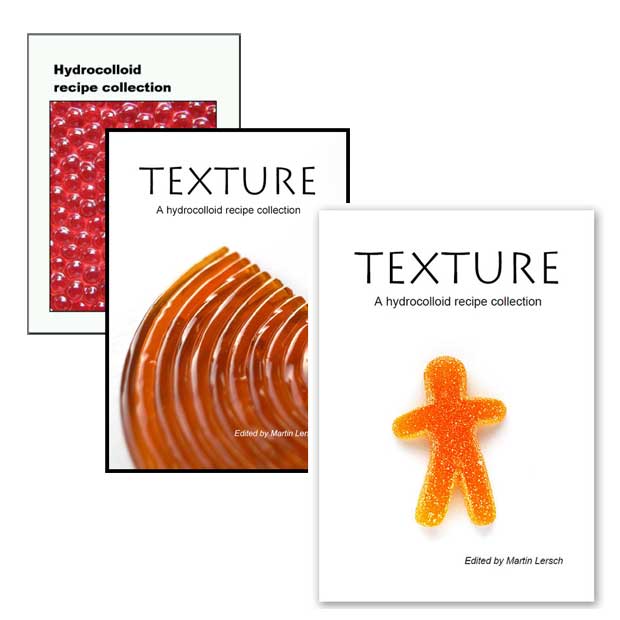
The "Texture" series has established itself as an indispensable guide to the application of hydrocolloids – a diverse group of macromolecules, typically polysaccharides or proteins, that form gels, thicken solutions, and stabilize emulsions and suspensions in food systems. From their ubiquitous presence in everyday processed foods to their pivotal role in avant-garde molecular gastronomy, hydrocolloids are fundamental to achieving desired textures and mouthfeel. The collection’s journey began with v.1.0 in 2007, followed by v.2.0 in 2008, and its most recent major update, v.3.0, in 2014. The upcoming v.3.1 aims to iron out existing wrinkles, correct inaccuracies, and broaden the scope of its recipe and explanatory content.
A Call for Community Engagement and Content Refinement
Central to the development of v3.1 is an open invitation for contributions from its global readership. The author has issued a public appeal for feedback, error reports, and, critically, photographic documentation of successful recipes. This collaborative approach highlights the empirical nature of culinary science, where practical application and verified outcomes are paramount. The submission of photographs is particularly encouraged, serving as a visual testament to a recipe’s efficacy and a valuable aid for users attempting new techniques. Detailed instructions for photo submissions are available through a previous blog post or directly within the current v.3.0 on page 8. This emphasis on user-generated content ensures that the updated collection remains relevant, reliable, and reflective of real-world culinary experiences.
The process of refining "Texture" is not merely about correcting existing entries but also about identifying and addressing gaps in its current coverage. The author has specifically highlighted several hydrocolloids that are currently underrepresented within the collection, including guar gum, gum arabic, konjac, locust bean gum, and tara gum. These ingredients, while widely used in the food industry for their distinct thickening, gelling, and stabilizing properties, often lack comprehensive culinary applications within accessible recipe collections.
Guar gum, derived from guar beans, is a potent thickener and stabilizer often employed in dairy products, sauces, and baked goods due to its high viscosity at low concentrations. Gum arabic, an exudate from acacia trees, is valued for its emulsifying and encapsulating properties, particularly in confectionery and beverages. Konjac, extracted from the konjac plant, forms elastic, heat-stable gels, making it popular in Asian cuisine and increasingly in vegan and gluten-free applications. Locust bean gum, sourced from the carob tree, acts as a thickener and gelling agent, often synergistic with other hydrocolloids. Tara gum, from the tara plant, offers properties intermediate to guar and locust bean gum, finding use in similar applications. The call for recipes featuring these specific hydrocolloids aims to unlock their full culinary potential, showcasing their versatility across a broader spectrum of dishes. Readers are encouraged to share their innovative recipes either via comments on the official announcement or directly via email to [email protected].
Addressing Omissions: Intentional and Accidental
Beyond underrepresented categories, the update also addresses the presence or absence of certain hydrocolcolloids within the collection. Some omissions are deliberate, particularly concerning proprietary products. Ingredients like Ultra-Tex and Pure Cote, both modified starches, and Trisol, a specialized wheat fiber, are intentionally excluded. This decision typically stems from the desire to maintain the collection’s focus on fundamental, widely available ingredients and to avoid promoting specific commercial brands or products whose formulations may be subject to change or intellectual property restrictions. This approach ensures the longevity and universality of the "Texture" collection, positioning it as a foundational resource rather than a product catalog.
However, other omissions may be accidental, particularly if a hydrocolloid is rare, novel, or has only recently gained prominence in culinary or food science circles. The author welcomes insights and suggestions regarding any such inadvertently missing ingredients, reinforcing the collaborative ethos behind the project. This open dialogue ensures that "Texture" remains a comprehensive and current resource in an ever-evolving field.
Expanding the Realm of Gels and Foams: Beyond Traditional Hydrocolloids
One of the most intriguing aspects of the v3.1 update is the planned expansion of the "non-hydrocolloid recipes" category. This section delves into the fascinating world of gels and foams created through natural gelling mechanisms inherent in specific ingredients or traditional culinary processes, without the explicit addition of conventional hydrocolloids. These examples, often rooted in regional culinary traditions, showcase the ingenious ways cultures have manipulated food textures for centuries.
Current examples within this category include Junket, a milk dessert gelled with rennet; Cuajada, a Spanish curdled milk dish; Ginger milk custard, where ginger enzymes cause milk to coagulate; Aiyu jelly and Grass jelly, popular Asian desserts utilizing plant-based gelling agents; Gelled seafood sauce, which gels due to natural collagen; Tofu, a protein gel formed from soy milk; and Hominy, nixtamalized corn that can form a gel-like consistency. The call for new examples in this section seeks to further enrich this cross-cultural exploration of texture, inviting readers to share other traditional gels or foams from around the world.
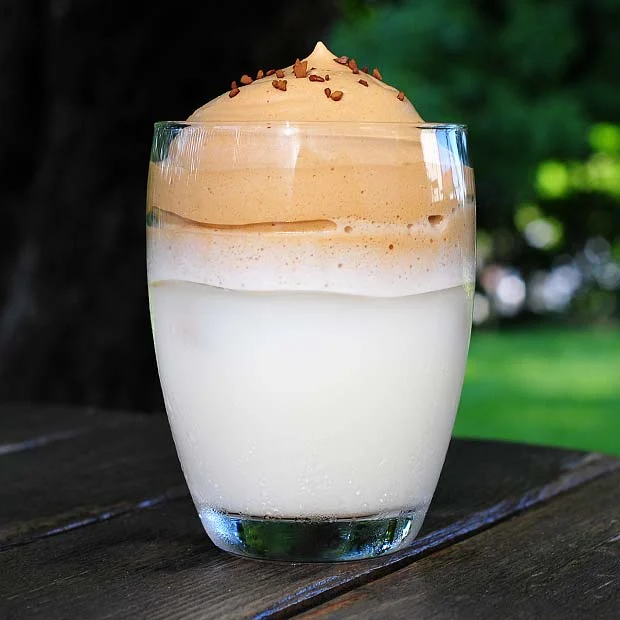
A notable addition confirmed for v.3.1 is the Dalgona coffee foam, which achieved viral global popularity in early 2020 during widespread lockdowns. This simple concoction, typically made by whipping equal parts instant coffee, sugar, and hot water until it forms a thick, stable foam, exemplifies a non-hydrocolloid foam with remarkable textural properties. Its stability is primarily attributed to the proteins and polysaccharides present in instant coffee, along with the sugar, which stabilizes the air bubbles and increases viscosity, creating a meringue-like structure without the need for traditional egg whites or specific hydrocolloid gums. The inclusion of Dalgona coffee foam not only reflects contemporary culinary trends but also serves as an excellent case study in understanding the complex interplay of ingredients and mechanical forces in creating stable foamed textures.
The Broader Impact and Implications of "Texture"
The continuous evolution of "Texture – A Hydrocolloid Recipe Collection" holds significant implications for various sectors. For the professional culinary world, it serves as a crucial educational tool, demystifying the science behind ingredients that are increasingly prevalent in modern kitchens. Chefs, particularly those engaged in molecular gastronomy or developing new product lines, rely on such resources to understand the functional properties of hydrocolloids and integrate them effectively into their creations. The systematic presentation of recipes, coupled with scientific explanations, empowers culinary innovators to experiment with confidence, pushing the boundaries of taste and texture.
In the academic and food science communities, "Texture" functions as a practical bridge between theoretical knowledge and real-world application. It provides tangible examples that illustrate complex principles of colloid chemistry, rheology, and material science, making these concepts accessible to students and researchers. The collaborative nature of the update also fosters a dynamic research environment, encouraging shared knowledge and peer review, which are hallmarks of scientific progress.
For the burgeoning market of home cooks and food enthusiasts, "Texture" democratizes access to advanced culinary techniques. As interest in "molecular gastronomy at home" grows, resources like this enable individuals to explore sophisticated textural modifications in their own kitchens. The inclusion of traditional, non-hydrocolloid gels further broadens this appeal, connecting modern scientific understanding with ancestral culinary wisdom. The global hydrocolloid market itself is a multi-billion-dollar industry, projected to continue growing, driven by demand for processed foods, healthier alternatives (e.g., fat replacers, gluten-free options), and natural ingredients. Resources like "Texture" indirectly support this industry by educating consumers and fostering innovation in product development.
A Legacy of Culinary Innovation and Education
The ongoing commitment to updating "Texture" reflects a broader trend towards scientific literacy in the culinary arts. In an era where food production, preparation, and consumption are increasingly scrutinized for their health, environmental, and ethical implications, a deep understanding of ingredients and their functional properties is more important than ever. "Texture" not only provides practical recipes but also cultivates an inquiring mindset, encouraging users to understand the "why" behind the "how."
The author’s continued dedication to this project, combined with the active participation of its community, ensures that "Texture – A Hydrocolloid Recipe Collection" will remain a living, evolving document. It stands as a testament to the power of open-source knowledge and collaborative effort in advancing culinary science and empowering a diverse audience to explore the fascinating world of food textures. The impending v.3.1 update is not just a revision; it is a reaffirmation of this legacy, promising to further enrich the gastronomic landscape for years to come.