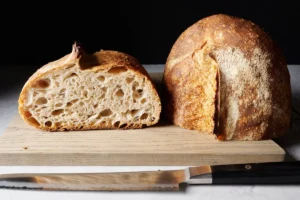

As lingering winter weather and prolonged seasonal chill continue to drive home cooks toward indoor culinary projects, the artisanal baking community has increasingly turned its focus toward high-extraction, spice-forward loaves designed to combat colder climates. Among the latest developments in home fermentation is a specialty sourdough variation that combines the intense, licorice-like aroma of freshly ground aniseed with the earthy, mineral-rich profile of buckwheat and the sweet depth of barley malt syrup. Developed as a seasonal remedy for early winter darkness and dry air, this artisanal loaf incorporates advanced panification techniques, such as flour scalding, to improve internal crumb texture and extend product freshness.
The Culinary Science Behind the Flour Scald
At the center of this recipe’s structural success is the ancient yet recently repopularized technique of flour scalding. By pouring boiling water directly over a portion of raw buckwheat flour—creating a thick, gelatinized paste comparable to the Asian yudane or tangzhong methods—bakers alter the starch molecules within the grain. This thermal transformation converts the starches into a gel that traps moisture within the matrix of the final dough.
Food science analysts note that trapped moisture is a primary factor in preventing staling, allowing the resulting bread to maintain a silky, soft crumb texture for days longer than standard artisanal boules. Furthermore, the scald acts as an aromatic catalyst, releasing complex volatile compounds from the buckwheat before it ever reaches the mixing bowl. When combined with Cairnspring’s Type 85 Trailblazer high-extraction flour—which retains a higher percentage of bran and germ than refined white flour—the resulting dough yields enhanced nutritional value without sacrificing structural integrity.
Flour Selection and Structural Trade-Offs
Crafting a loaf with high-extraction wheat and buckwheat requires careful navigation of gluten development. Buckwheat flour is naturally gluten-free, meaning that even when used in modest percentages (such as the 5% concentration utilized in this formula), it tends to tighten and close the internal crumb structure compared to 100% wheat loaves.
To offset this density, professional artisan bakers rely on high-extraction bases and robust whole-grain red wheat. The inclusion of Camas Country Hard Red Wheat at 20% of the total flour weight provides the necessary protein matrix to support a high hydration level of 75% (rising effectively to 83% when accounting for the water absorbed during the flour scald). The resulting dough demands a precise management of hydration through the bassinage method—withholding a portion of the water during initial mixing and only incorporating it if the developing gluten network demonstrates sufficient strength to hold the moisture.
Chronology of a Two-Day Baking Schedule
The production of scalded buckwheat and malt sourdough operates on a structured, multi-phase schedule designed to minimize active labor while maximizing flavor development through enzymatic activity and long cold fermentation.
Day One: Preparation and Bulk Fermentation
- 9:00 a.m.: The process begins with the preparation of the levain, combining high-extraction wheat flour, water, and a ripe 100% hydration sourdough starter, which is left to ripen at controlled room temperatures between 74°F and 76°F for approximately three hours.
- 9:10 a.m.: The flour scald is prepared by combining organic buckwheat flour with boiling water, stirring until a uniform, aromatic paste forms, and setting it aside.
- 11:00 a.m.: The autolyse phase commences, bringing together the remaining high-extraction flour, whole wheat flour, the cooled flour scald, and initial autolyse water to hydrate the starches and initiate gluten development.
- 12:00 p.m.: Mixing takes place, incorporating the ripe levain, fine sea salt, and reserved water using either mechanical spiral mixers or manual stretch-and-fold techniques.
- 12:30 p.m. to 3:30 p.m.: Bulk fermentation occurs over a three-hour window. During this phase, the baker performs two targeted sets of stretches and folds at thirty-minute intervals to build structural elasticity and gas retention.
- 3:30 p.m.: The dough is gently divided and pre-shaped into loose rounds, resting uncovered for thirty minutes.
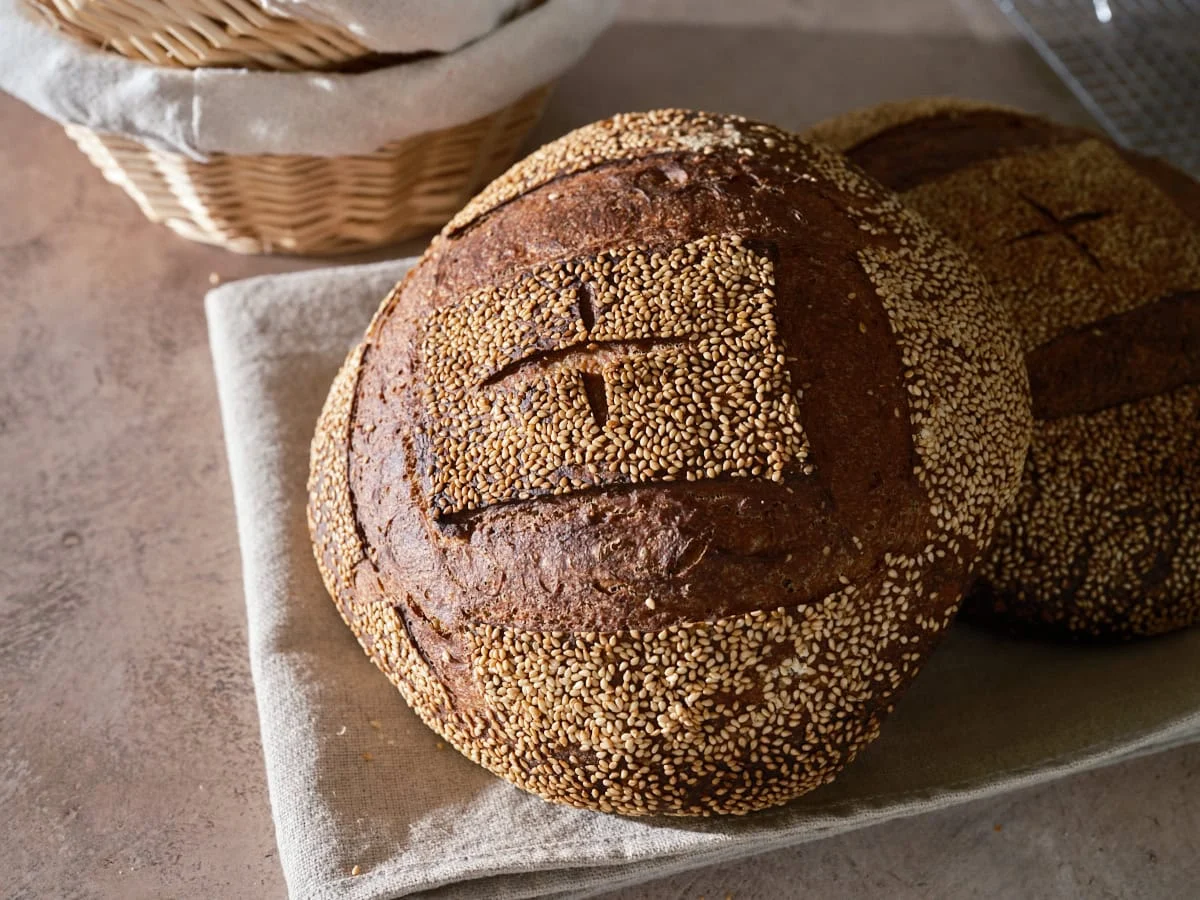
- 4:00 p.m.: Final shaping is executed using a specialized tension-building technique, after which the exterior of the dough is coated in raw white sesame seeds. The loaves are then inverted into proofing baskets.
- 4:15 p.m.: The shaped loaves are sealed in plastic bags and placed in the refrigerator for an overnight cold proof.
Day Two: Baking and Post-Processing
- 9:00 a.m.: The baking phase utilizes a preheated oven set to 450°F, equipped with a Dutch oven, baking stone, or specialized baking shell to trap steam during the initial stages of baking. After twenty minutes of covered steam baking, the cover is removed, and the bread continues to bake for an additional thirty minutes to develop a deeply colored, crisp crust and an internal temperature exceeding 204°F.
Flavor Profile and Ingredient Substitutions
The sensory experience of the finished loaf is defined by the immediate aromatic presence of aniseed, which carries distinct licorice-sweet notes that balance the earthy, tannic, and mineral qualities of the buckwheat. To complement the sweetness introduced by the barley malt syrup, bakers have noted several viable substitutions depending on desired flavor outcomes. Blackstrap molasses can be introduced in place of malt syrup to yield a more robust, slightly bitter, and deeply savory profile, whereas honey offers a lighter, more floral sweetness that pairs exceptionally well with anise. For those unable to source aniseed, caraway seeds provide a suitable alternative that delivers similar warming spice characteristics.
Market Implications and Artisan Trends
The rising popularity of specialized grain inclusion and ancient techniques like scalding reflects a broader consumer shift within the artisanal baking sector toward functional, nutrient-dense, and deeply flavorful heritage products. As consumers increasingly seek out breads that offer both complex sensory experiences and improved digestibility, techniques that elevate standard sourdough formulas through alternative grains and thermal starches are finding a permanent place in both professional and domestic kitchens. Industry analysts suggest that winter-focused baking trends—emphasizing warm spices, dark malts, and hearty whole grains—will continue to drive consumer engagement across baking literature and digital recipe platforms throughout the colder months of the year.