
Dough hydration stands as one of the most critical yet fundamentally misunderstood variables in artisanal bread baking. While frequently viewed by novice bakers as a static mathematical constant dictated by a recipe, professional bakers and culinary researchers recognize hydration as a dynamic biological and physical relationship. This intricate balance is governed by atmospheric conditions, ambient kitchen humidity, and, most importantly, the specific biochemical composition of the flour utilized.
Understanding the nuances of hydration allows bakers to transition from blindly following ratios to developing a tactile intuition. This shift enables them to diagnose structural failures, manipulate crumb texture, and consistently produce superior loaves of sourdough bread regardless of external environmental fluctuations.
Defining Dough Hydration and Mathematical Calculation
At its core, dough hydration represents the total water content of a formula expressed as a percentage of the total weight of the flour. The baking industry relies on a standardized metric known as baker’s percentages, where flour is always designated as 100%, and all other ingredients—water, salt, and levain—are measured relative to that total flour weight.
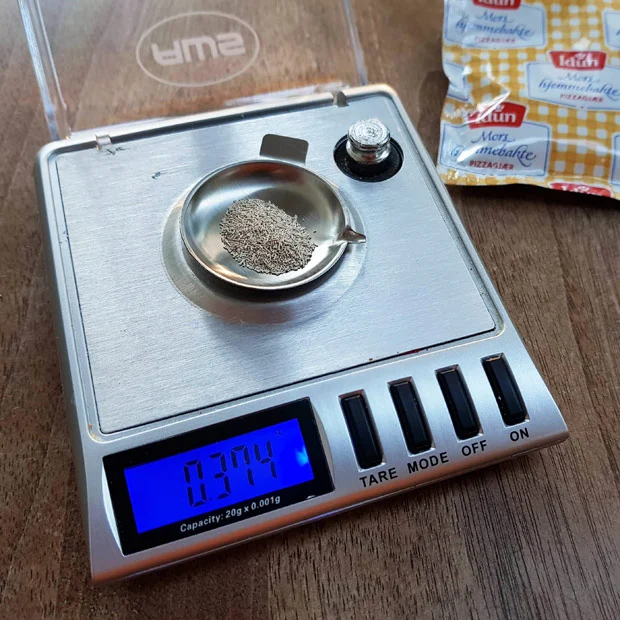
The mathematical formula for determining dough hydration is straightforward: divide the total weight of the water by the total weight of the flour, then multiply the resulting figure by 100. For instance, a formulation requiring 1,000 grams of flour and 700 grams of water yields a 70 percent hydration dough (700 divided by 1,000, multiplied by 100). This percentage provides an immediate, standardized baseline that allows bakers to anticipate dough behavior, extensibility, and handling characteristics prior to mixing.
However, experienced culinarians emphasize that a hydration percentage serves strictly as a guiding framework rather than an immutable law. Agricultural variations mean that flour is never a static ingredient; its protein content, moisture absorption capacity, and starch damage fluctuate significantly from harvest to harvest, mill to mill, and even bag to bag.
The Biochemical Impact of Water on Gluten Development
Water functions as the vital medium that transforms dry milled grain into a cohesive, viscoelastic network. When water meets flour, it hydrates two primary proteins: glutenin, which imparts elasticity and strength, and gliadin, which provides extensibility and flow. Together, these proteins bond to form the gluten matrix—the structural scaffolding responsible for trapping the carbon dioxide gas generated during yeast and bacterial fermentation.
The ratio of water to flour directly dictates the physical properties of the finished loaf:
- Low-Hydration Doughs (60% to 68%): These formulations yield tight, highly manageable doughs that resist deformation. Breads baked at this level typically feature a thicker, more substantial crust and a tighter, more uniform crumb structure. They are exceptionally well-suited for high-production commercial environments, bagels, pretzels, and traditional hearth loaves requiring minimal structural support during proofing.
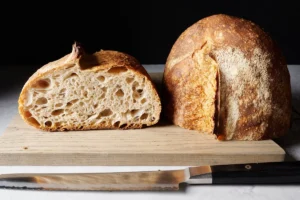
- Moderate-Hydration Doughs (68% to 75%): Representing the industry standard for classic country sourdoughs, this range balances workability with a tender interior. The resulting bread generally exhibits a crisp, blistered crust and a moderately open crumb structure that holds sandwich fillings securely without structural collapse.
- High-Hydration Doughs (75% to 85%+): Pushing water content higher stretches the gluten network to its absolute functional limits. While challenging to shape and prone to stickiness, these doughs produce artisan loaves with remarkably thin crusts and custard-like, highly open interiors. However, exceeding an optimal hydration threshold risks producing a gummy crumb, rapid staling, and complete structural failure if the loaf lacks adequate fermentation and mechanical strength.
Environmental Factors and Fluctuation Management
Baking is fundamentally an applied science subject to environmental variables. Ambient temperature and relative humidity within the kitchen directly influence the rate of enzymatic activity, fermentation speed, and flour hydration.
Dry climates, such as high-altitude regions, often necessitate higher overall hydration percentages because ambient air rapidly pulls moisture from the dough during bulk fermentation. Conversely, excessively humid environments can cause flour to pre-absorb moisture from the atmosphere, requiring bakers to slightly reduce added water to maintain a workable consistency.
Furthermore, flour composition heavily dictates water requirements. High-protein bread flours, typically containing between 12% and 14% protein, possess a robust gluten network capable of absorbing significantly more water without breaking down. In contrast, lower-protein European and domestic soft wheats demand reduced hydration levels to prevent the dough from becoming an unmanageable, slack soup.
Whole-grain flours, including whole wheat and rye, introduce an additional layer of complexity. The sharp bran and germ particles present in whole grains act like microscopic knives that can sever developing gluten strands while simultaneously absorbing vast amounts of moisture. Consequently, high-percentage whole-grain formulas require elevated hydration levels—frequently exceeding 80%—coupled with extended autolyse phases to ensure the water is fully integrated.
Advanced Mixing Techniques: The Principles of Bassinage
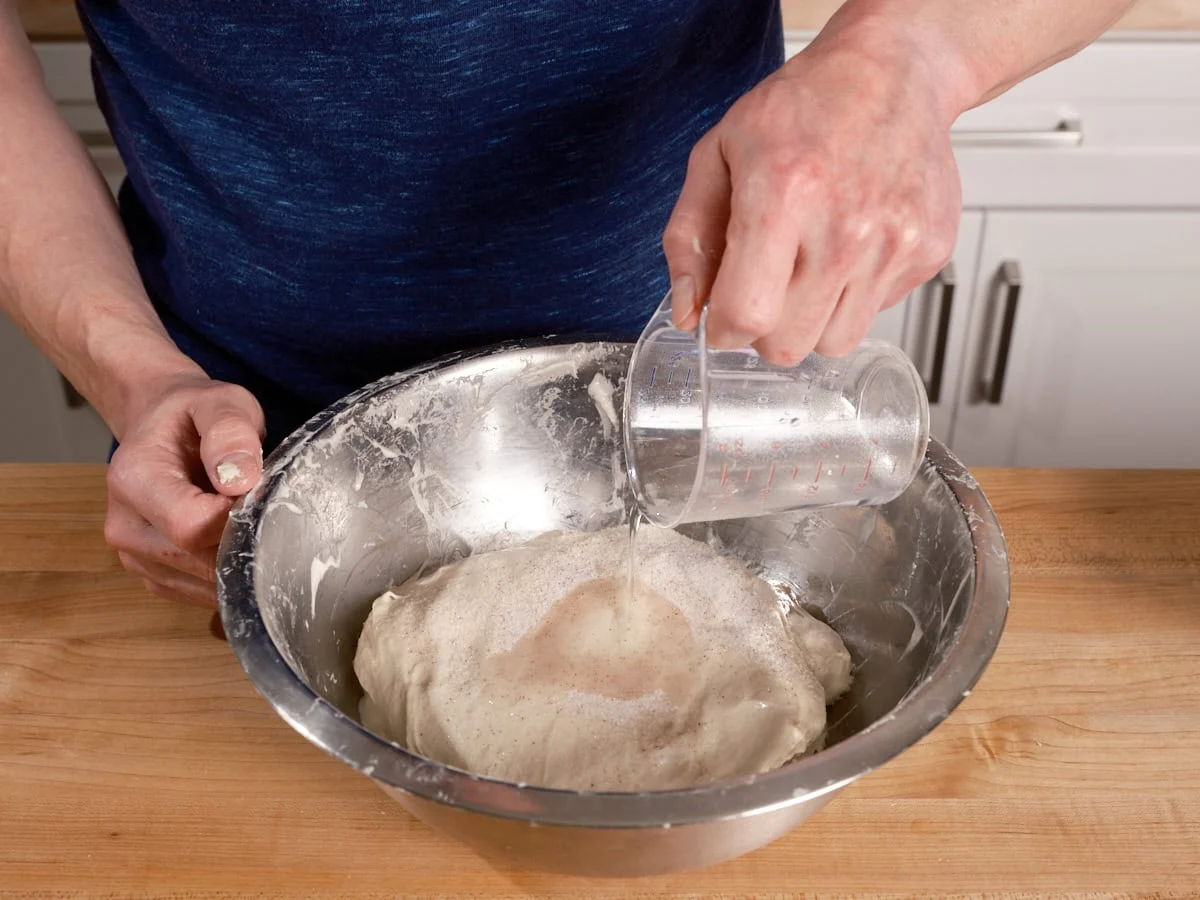
To successfully manage high-hydration formulas without compromising dough strength, many professional bakers utilize a French technique known as bassinage, or double hydration.
Instead of incorporating the entire quantity of mixing water at the initial stage, the baker holds back a specific portion (typically 10% to 20%) while mixing the primary mass with the remaining water. This initial phase allows the starches and proteins to rapidly absorb moisture and initiate early gluten development under optimal friction. Once a cohesive matrix has formed, the reserved water is slowly introduced and kneaded into the dough in increments.
This method offers distinct advantages in professional and home production:
- Enhanced Gluten Development: Attempting to build a gluten network in a completely saturated, soupy environment creates excessive friction issues and prolongs mixing times. Bassinage ensures strong initial structural formation before full saturation occurs.
- Diagnostic Flexibility: Holding back water provides the baker with real-time diagnostic control. If the primary dough feels uncharacteristically wet and slack due to humid weather or weak flour, the reserved water can be omitted entirely to preserve structural integrity.
Diagnosing Dough Hydration Visually and Tactilely
Mastering sourdough production requires shifting reliance from digital scales to tactile awareness. Bakers must evaluate dough through visual and physical inspection:
- Under-Hydrated Doughs (Under 62%): Visually, these doughs appear dry, tightly bound, and resistant to stretching. They often exhibit a rough surface texture, resist smooth rounding during shaping, and yield an unyielding crumb structure upon baking.
- Properly Hydrated Doughs (68% to 75%): A correctly hydrated dough feels smooth, supple, and slightly tacky without clinging aggressively to hands or work surfaces. It holds a gentle dome shape during bulk fermentation and demonstrates responsive elasticity when scored.
- Over-Hydrated Doughs (75%+): When water exceeds the flour’s absorption capacity, the dough loses its structural memory, flowing flat across the work surface and tearing easily when handled. Without rigorous coil folds or lamination techniques, these over-saturated masses trap excessive air pockets or collapse entirely in the oven.
Industry Reference Guidelines for Hydration
| Hydration Level | Physical Characteristics | Recommended Applications |
|---|---|---|
| 60% – 65% | Stiff, highly elastic, easy to handle, firm crust development | Bagels, soft pretzels, commercial pan loaves, pizza crusts |
| 65% – 70% | Balanced extensibility, manageable strength, versatile crumb | Beginner sourdough, classic country boules, sandwich loaves |
| 70% – 75% | Moderately open crumb structure, thin crust, moderate tackiness | Traditional hearth loaves, baguettes, batards |
| 75% – 80% | Tender, custard-like interior, requires advanced handling skills | Ciabatta, focaccia, open-crumb artisan sourdough |
| 80%+ | Highly fluid, challenging to shape, requires rigorous gluten building | Specialty high-hydration artisan breads |
Conclusion and Record-Keeping Recommendations
Ultimately, pursuing higher hydration percentages should never serve as an arbitrary badge of honor for a baker. The objective remains the production of a balanced, flavorful loaf with optimal crumb texture, digestions characteristics, and structural longevity.
Culinary experts strongly advocate for meticulous record-keeping. By documenting daily kitchen temperatures, flour brands, exact water weights, and resultant crumb structures in a dedicated baking journal, practitioners rapidly cultivate intuitive sensory awareness. This empirical approach ensures consistent, high-quality baking outcomes regardless of seasonal or environmental shifts.