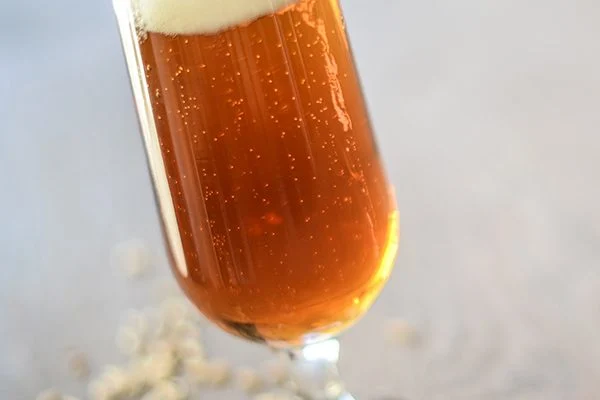

The art and science of amateur brewing reached a pinnacle this year as the American Homebrewers Association (AHA) announced the results of its prestigious annual flagship event. Standing out among a remarkably competitive field of contenders, Chuck Beckman of Gilbert, Arizona, proudly secured a gold medal at the 2026 National Homebrew Competition Final Round. Representing the Arizona Society of Homebrewers, Beckman triumphed in Category 5: Pale Malty European Beer, distinguishing his expertly crafted brew from a staggering 96 exceptionally strong entries in his division.
Beckman’s victory underscores the soaring standards of modern homebrewing, where precision, chemistry, and traditional techniques merge to produce commercial-grade masterpieces. His award-winning recipe—designed to offer a malt-forward profile that remains effortlessly light and drinkable—demonstrates a meticulous approach to brewing physics and ingredient selection.
Background and Context of the Competition
The National Homebrew Competition is widely recognized as the world’s largest amateur beer, mead, and cider competition. Organized annually by the American Homebrewers Association, the event serves as the ultimate proving ground for hobbyists looking to test their recipes against rigorous judging standards established by the Beer Judge Certification Program (BJCP).
To reach the final round, competitors must first navigate preliminary local and regional levels, where thousands of entries are evaluated for technical merit, adherence to style guidelines, and sensory appeal. Those who advance to the final round face a panel of master judges, cicerones, and industry professionals who evaluate entries through blind tastings. Winning a medal in this competition is a rare and coveted achievement, often serving as a launching pad for amateur brewers transitioning into professional commercial brewing.
Category 5, the division in which Beckman competed, encompasses styles rooted in European brewing heritage, specifically focusing on beers that balance delicate hopping with rich, complex malt characteristics. Beers in this category demand absolute flawlessness from the brewer, as minor technical or fermentation defects cannot be masked by heavy-handed hop additions or adjuncts.
The Anatomy of a Gold-Medal Brew
Beckman’s winning recipe is a masterclass in brewing balance, leaning toward a pronounced malt character while preserving a crisp, refreshing finish. Yielding a standard 5 U.S. gallons (18.9 liters), the beer was formulated with a precise selection of base and specialty malts, targeted water chemistry, and traditional European lager yeast.
The grain bill anchors the recipe with 9 pounds (4.08 kilograms) of Root Shoot Genie Pale 2-row malt, supplemented by 8 ounces (227 grams) of Root Shoot Genie Vienna malt and an additional 8 ounces (227 grams) of Weyermann Carahell. This combination establishes a solid foundation for the targeted Original Gravity (O.G.) of 1.045 (11.2°P) and Final Gravity (F.G.) of 1.012 (3°P), resulting in a clean, highly accessible Alcohol by Volume (ABV) of 4.3 percent.

Hop utilization was kept intentionally restrained to protect the malt-forward integrity of the style. The bittering addition featured 0.7 ounces (20 grams) of Liberty hops (8 percent alpha acids) at the 60-minute mark. Flavor and aroma contributions relied on Spalt Select hops, utilizing 1 ounce (28 grams) at 10 minutes remaining in the boil, followed by a small 0.22-ounce (6-gram) whirlpool addition for 10 minutes. This measured hop schedule yielded 21 International Bitterness Units (IBUs) and a soft, traditional herbal profile.
Technical Precision: Water Chemistry and Fermentation
Achieving gold-medal status at the national level requires far more than simply combining grains and hops; it demands meticulous control over water profiles and fermentation kinetics. Beckman’s water profile was carefully adjusted to achieve mineral concentrations of Calcium (Ca) at 52 ppm, Magnesium (Mg) at 0 ppm, Sodium (Na) at 36 ppm, Chloride (Cl) at 99 ppm, Sulfate (SO4) at 45 ppm, and Bicarbonate (HCO3) at 24 ppm. This mineral balance accentuates malt roundness and creates a smooth, rounded mouthfeel characteristic of classic European lagers.
Fermentation was executed using White Labs WLP 860 Munich Helles Lager Yeast, pitched via a robust 2-liter yeast starter containing approximately 379 billion cells to ensure a healthy, vigorous fermentation. Primary fermentation was maintained at a cool 50 to 52 degrees Fahrenheit (10 to 11 degrees Celsius), followed by a mandatory diacetyl rest at 64 degrees Fahrenheit (18 degrees Celsius) for three days to eliminate unwanted buttery off-flavors. The beer was then cold-rushed, packaged, and force-carbonated to 2.8 volumes of CO2, followed by a four-week conditioning period.
Notably, Beckman employed traditional acidification techniques by incorporating 32 ounces (946 milliliters) of homemade sauergut (yielding approximately 0.68 percent lactic acid) during the mash and again at the end of the boil. This brought both the mash and final boil down to a precise pH of approximately 5.30 and 5.31, respectively, showcasing advanced historical brewing methodologies.
Industry Reactions and Expert Analysis
Following the announcement of the winners, feedback from the judging panel provided valuable insights into the sensory profile of Beckman’s beer. While the entry scored exceptionally high marks for technical execution and drinkability, judges noted that further enhancements could be achieved by amplifying the malt complexity in both aroma and flavor.
Reflecting on the judges’ critiques, Beckman offered professional-level introspection on how future iterations of the recipe could be elevated. He suggested substituting light Munich malt for the Vienna malt component and increasing its proportion by two to three percentage points. According to Beckman, this subtle adjustment could bridge the gap toward achieving the elusive perfection demanded by the classic Munich Helles style.
Broader Impact and Implications for the Homebrewing Community
Beckman’s triumph at the 2026 National Homebrew Competition highlights the vibrant and growing craft beverage culture in Arizona. Local organizations, such as the Arizona Society of Homebrewers, play a critical role in fostering education, resource sharing, and technical mentorship among enthusiasts. Success stories like Beckman’s elevate the profile of regional brewing clubs, proving that hobbyists in non-traditional brewing climates can compete and win on the national stage against peers from historically rich brewing regions.
As commercial craft breweries increasingly look to the homebrewing community for innovative recipes, ingredient trends, and technical breakthroughs, gold-medal winners like Beckman serve as vital contributors to the broader brewing industry. Their dedication to mastering complex styles, historic processes, and scientific precision ensures that the tradition of fine brewing continues to evolve and thrive for generations to come.