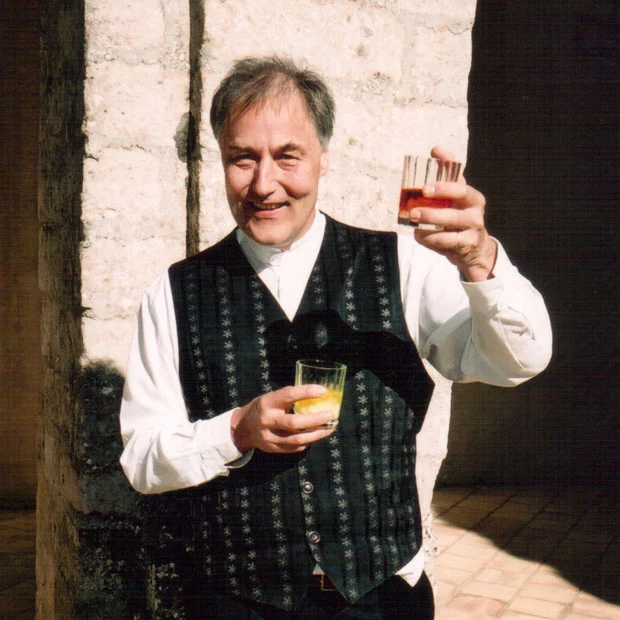

The intersection of culinary arts and hard science has reached a significant milestone with the official release of a retrospective document detailing twenty years of molecular gastronomy seminars held in Paris. Compiled by physical chemist Hervé This—a foundational figure in the scientific exploration of cooking—the newly published summaries offer a rare glimpse into a systematic, long-term investigation of kitchen physics and chemistry. The documents, now made publicly available in both French and English editions, encapsulate hundreds of monthly sessions dedicated to stripping away culinary folklore and replacing it with empirical data.
For professional chefs, food scientists, and educators, the publication serves as an invaluable compendium. It bridges the gap between traditional gastronomy and rigorous laboratory analysis, providing a roadmap for how empirical inquiry can transform everyday kitchen practices.
Main Facts and Overview of the Publication
The newly released compendium distills two decades of collaborative experimentation conducted during monthly seminars in Paris. Led primarily by Hervé This, these gatherings brought together scientists, culinary professionals, students, and passionate amateurs to test common kitchen lore, traditional recipes, and physical transformations occurring during food preparation.
The findings have been condensed into accessible PDF summaries: a French edition and an English translation. While the translated version provides concise bullet-point overviews of the conclusions reached over the twenty-year span, the extensive, full-length documentation—complete with precise experimental conditions, methodologies, and raw data—remains hosted through AgroParisTech in French.
According to scientific and culinary analysts, the release is not merely a collection of trivia, but a methodological framework. It demonstrates how minute culinary claims, often passed down through generations without verification, can be rigorously tested, validated, or disproven through scientific observation. The data spans a vast array of culinary phenomena, ranging from the protein coagulation in eggs and meat to the rheology of emulsions, sauces, and doughs.
Background Context: The Genesis of Molecular Gastronomy
To understand the weight of this twenty-year retrospective, one must examine the origins of molecular gastronomy as a formal discipline. In the late 1980s and early 1990s, the late Oxford physicist Nicholas Kurti and French physical chemist Hervé This recognized a distinct gap in the culinary world. While physics and chemistry were routinely applied to industrial food manufacturing, the domestic and restaurant kitchen remained largely governed by intuition, tradition, and unverified lore.
In 1992, Kurti and This organized the first International Workshop on Molecular Gastronomy, held in Erice, Sicily. This multidisciplinary gathering aimed to create a formal arena where scientists and chefs could collaborate. The central objective was not to invent futuristic cooking techniques—a common misconception that later came to define "molecular cuisine" in high-end restaurants—but rather to understand the physical and chemical mechanisms underlying traditional culinary transformations.
Following Kurti’s passing, Hervé This continued this mission in France, establishing the monthly seminars at AgroParisTech (formerly INA P-G) in Paris. These seminars became a crucible for scientific curiosity. Each month, participants tackled specific questions submitted by the public, chefs, or researchers, designing safe, reproducible experiments to uncover the fundamental truths behind everyday cooking.
Chronology and Evolution of the Paris Seminars
The trajectory of the Paris molecular gastronomy seminars mirrors the broader evolution of food science over the last quarter-century.
Phase One: Foundation and Curiosity (Late 1990s to Early 2000s)
During the initial years, the seminars focused heavily on dismantling basic kitchen myths. Questions frequently centered on fundamental techniques: Why do custards curdle? How does salt affect the boiling point of water? What causes meat to lose moisture during roasting? The atmosphere was exploratory, establishing a baseline of trust and collaboration between skeptical culinary professionals and analytical scientists.
Phase Two: Expansion and Standardization (Mid-2000s to 2010s)
As the movement gained international traction, the scope of the seminars broadened. Researchers began categorizing culinary transformations into systematic groups: colloidal systems, heat transfer mechanisms, enzymatic actions, and sensory perceptions. During this period, the seminars also gave birth to related concepts such as "note-by-note" cooking, an avant-garde culinary style proposed by This, where dishes are constructed entirely from pure chemical compounds rather than traditional plant or animal tissues.
Phase Three: Consolidation and Public Access (2020 to Present)
The recent release of the twenty-year summary document marks the transition of these findings from localized academic archives to globally accessible public knowledge. By compiling two decades of monthly conclusions into structured digital formats, the organizers have ensured that the intellectual labor of hundreds of participants can be utilized worldwide by culinary schools, university chemistry departments, and R&D kitchen teams.
Methodology and the Culture of Questioning
The core philosophy underlying the Paris seminars is deceptively simple: never accept a culinary claim without empirical proof. In professional kitchens, techniques are frequently justified by statements such as "searing meat seals in the juices" or "adding oil to pasta water prevents sticking."
During the monthly seminars, participants subjected these adages to controlled scientific testing. The process typically involved three stages:
- Identification of a common culinary belief or observation.
- Formulation of a hypothesis based on known chemical and physical laws.
- Execution of controlled experiments to measure variables such as mass loss, temperature gradients, structural integrity, and chemical composition.
While critics occasionally argued that some tested hypotheses addressed trivial phenomena, proponents emphasize that the value lies in the methodology rather than the immediate utility of the specific finding. By training cooks to think analytically, and scientists to appreciate the complexities of culinary matrices, the seminars fostered a culture of evidence-based cooking long before "food science" became a mainstream media fixture.
Implications for Education, Industry, and Research
The publication of the twenty-year seminar summaries carries wide-ranging implications across multiple sectors.
Educational Applications in Chemistry and Physics
For educators, the data provides a ready-made curriculum for teaching STEM (Science, Technology, Engineering, and Mathematics) subjects. Chemistry teachers frequently struggle to engage students with abstract concepts like molecular bonds, phase changes, and reaction rates. By framing these concepts around culinary applications—such as explaining protein denaturation through the transformation of egg albumen or starch gelatinization through sauce thickening—teachers can leverage students’ natural interest in food to illustrate complex scientific principles.
Impact on Professional Culinary Arts and R&D
In the professional sphere, modern modernist kitchens and industrial food product development laboratories rely heavily on the foundational work pioneered by figures like This. Understanding the precise parameters of emulsification, gelation, and Maillard reactions allows chefs to innovate with greater consistency and precision. Rather than relying on trial and error, kitchen R&D teams can utilize empirical data to troubleshoot recipes systematically.
The Future of Culinary Science
As food systems face unprecedented challenges regarding sustainability, resource efficiency, and nutrition, the rigorous approach championed by the Paris seminars becomes increasingly relevant. Concepts like note-by-note cooking, once viewed as radical academic exercises, offer theoretical frameworks for creating resource-efficient foods with minimal environmental impact.
Broader Reception and Ongoing Challenges
The release of the bilingual summaries has been met with enthusiasm across the global culinary science community. Food scientists have praised the initiative for democratizing access to decades of accumulated knowledge, though some have noted the inherent limitations of brief summary documents. Because the English translations are condensed and occasionally require cross-referencing with the original French texts for full technical clarity, researchers emphasize the necessity of consulting the comprehensive AgroParisTech archives for replication purposes.
Furthermore, the divide between traditional culinary arts and empirical science, while narrower than it was thirty years ago, still presents cultural hurdles. Many traditional chefs continue to operate on intuition and sensory feedback rather than numerical metrics. Publications like This’s twenty-year summary serve as an essential bridge, demonstrating that scientific inquiry does not strip food of its artistry, but rather deepens human understanding and appreciation of the craft.
Conclusion
The publication of the twenty-year summary of the Paris molecular gastronomy seminars represents a significant milestone in the history of food science. By systematically documenting two decades of rigorous inquiry into everyday kitchen practices, Hervé This and his collaborators have provided a lasting resource for chefs, scientists, and educators alike. As these findings become more widely integrated into kitchens and classrooms around the globe, they continue to validate the foundational premise of molecular gastronomy: that the kitchen is not merely a place of tradition, but a living laboratory of physical and chemical wonder.