
Maple syrup, a staple of North American culinary heritage, represents a significant investment for consumers who frequently purchase the product in bulk to take advantage of seasonal harvests. However, the high sugar content and unique chemical composition of this natural sweetener necessitate specific handling procedures to prevent spoilage and maintain organoleptic quality. While commercially packaged maple syrup is shelf-stable under certain conditions, home storage requires a nuanced understanding of microbiology, container permeability, and temperature control. Failure to adhere to established preservation protocols often results in the colonization of the syrup by xerophilic molds, leading to significant product loss and potential health risks. This analysis explores the technical requirements for maintaining the integrity of maple syrup from the moment of purchase through long-term storage.
The Chemical Foundations of Maple Syrup Stability
To understand the storage requirements of maple syrup, one must first examine the legal and chemical definitions of the product. In North America, maple sap must be concentrated through evaporation until it reaches a specific density to be legally classified as syrup. According to the North American Maple Syrup Council, the standard density for finished maple syrup lies between 66° and 68° Brix. The Brix scale measures the sugar content of an aqueous solution, with one degree Brix representing approximately one percent sucrose by weight.
The density of the syrup is the primary factor in its shelf stability. If the syrup is processed to a density below 66° Brix, the water activity remains high enough to allow for the growth of yeast and molds, leading to fermentation or visible spoilage. Conversely, if the density exceeds 68° Brix, the solution becomes supersaturated, and excess sugar will precipitate out of the liquid to form large crystals at the bottom of the container. While these crystals are not a safety hazard, they diminish the quality and usability of the product.
Chemically, maple syrup typically maintains a pH level between 5.15 and 7.9. While this range is technically above the 4.6 threshold often associated with the risk of Clostridium botulinum in low-acid canned foods, the high sugar concentration creates an osmotic pressure that inhibits bacterial growth. It is the low water activity, rather than acidity, that serves as the primary preservative mechanism in maple syrup.

Container Dynamics and Shelf Storage
The shelf life of unopened maple syrup is heavily dependent on the material of the storage vessel. For long-term room temperature storage, glass and metal containers are considered the industry standard. These materials provide an absolute barrier to oxygen, which is essential for preventing the germination of mold spores that may be present in the headspace of the container.
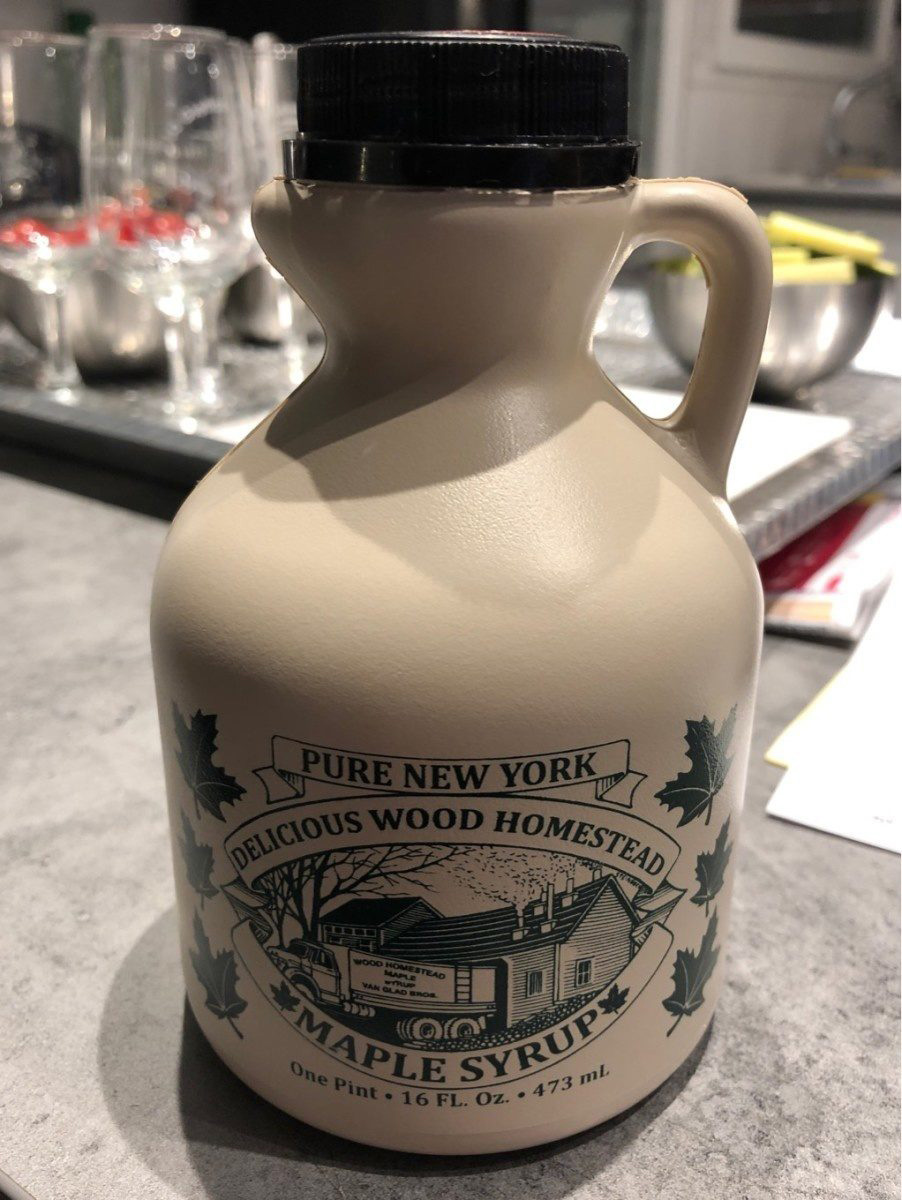
In contrast, the iconic beige or grey plastic jugs often used by smaller producers are typically made of high-density polyethylene (HDPE). While durable and cost-effective, HDPE is slightly porous at a molecular level, allowing for a slow exchange of oxygen over time. The Quebec Maple Syrup Producers Association (QMSP) has conducted extensive testing which indicates that these plastic containers do not provide a "foolproof barrier to oxygen." Consequently, the QMSP recommends that maple syrup purchased in plastic jugs be stored in the refrigerator even before the seal is broken. This cold storage slows down the oxidative processes and inhibits any potential microbial activity that might be triggered by oxygen ingress.
Refrigeration Requirements Post-Opening
Once the original seal of a maple syrup container is compromised, the product is immediately exposed to ambient air, which invariably contains dormant mold spores. Because maple syrup is a nutrient-rich medium, these spores can quickly colonize the surface of the liquid if left at room temperature.
Refrigeration is the mandatory secondary step in maple syrup preservation. Cold temperatures significantly increase the "lag phase" of microbial growth, effectively slowing the rate at which molds can reproduce. However, refrigeration is not a permanent solution for opened containers. Over several months, even refrigerated syrup may develop a fungal mat on the surface. For consumers who purchase gallon-sized containers but consume the product slowly, refrigeration alone may be insufficient to prevent spoilage before the product is finished.
The Gold Standard: Long-Term Preservation via Freezing
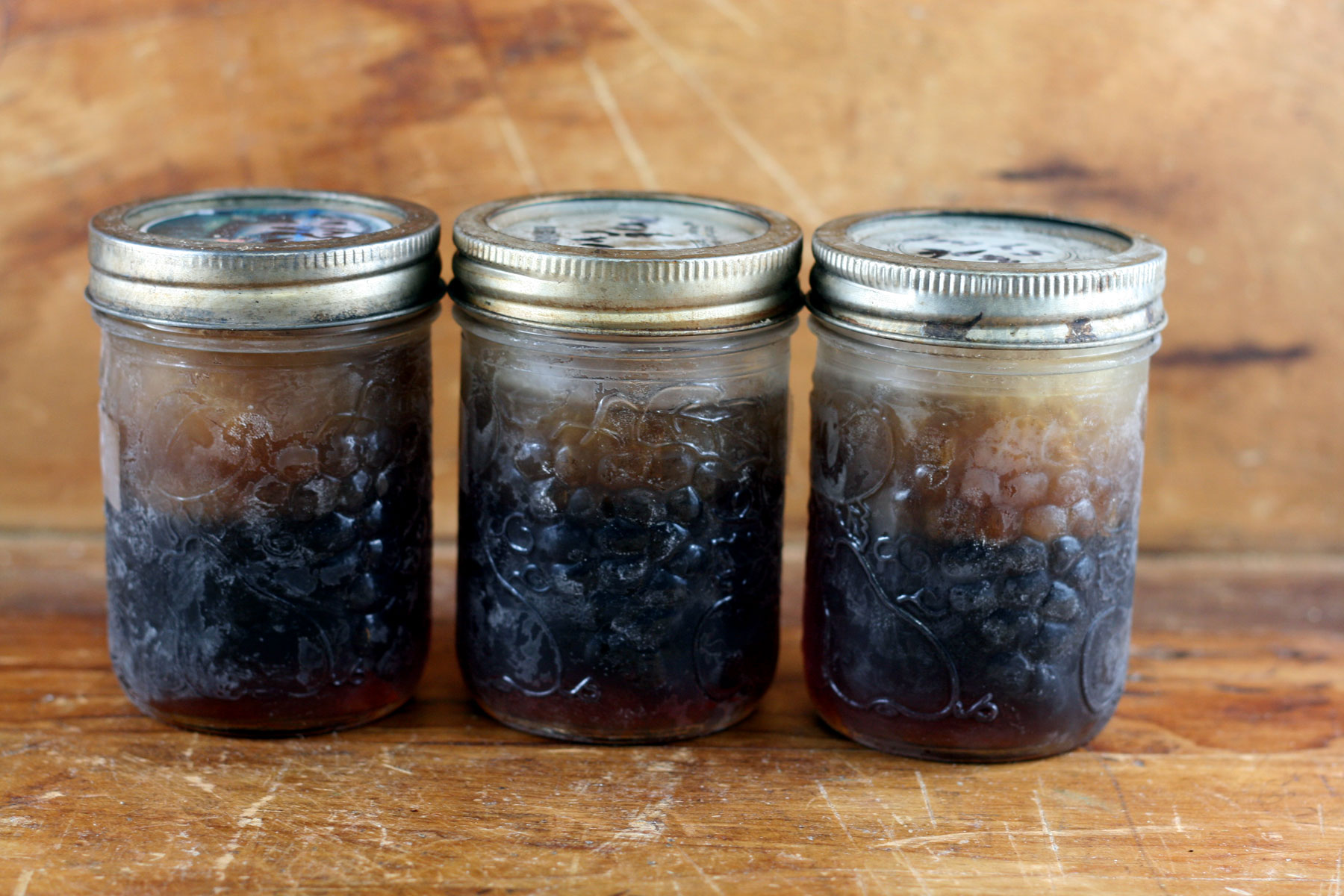
For home consumers, the most effective method for preserving the quality and safety of maple syrup over an extended period is freezing. Unlike many other food products, maple syrup does not suffer from structural degradation when subjected to sub-zero temperatures. Due to its high sugar concentration, maple syrup does not freeze into a solid block of ice; instead, it becomes highly viscous, taking on a texture similar to thick honey or chilled molasses.
Technical Advantages of Freezing
Freezing offers several distinct advantages over other preservation methods:
- Total Microbial Inhibition: Mold spores are unable to germinate at freezer temperatures, ensuring that the syrup remains spoilage-free indefinitely.
- Quality Retention: Freezing prevents the darkening of the syrup and the development of "off" flavors that can occur during prolonged room-temperature storage.
- Flexibility: Maple syrup can undergo multiple freeze-thaw cycles without any loss of integrity. The Vermont Maple Sugar Makers’ Association notes that as long as any condensation formed during thawing is stirred back into the syrup, the product remains unchanged.
Best Practices for Freezing
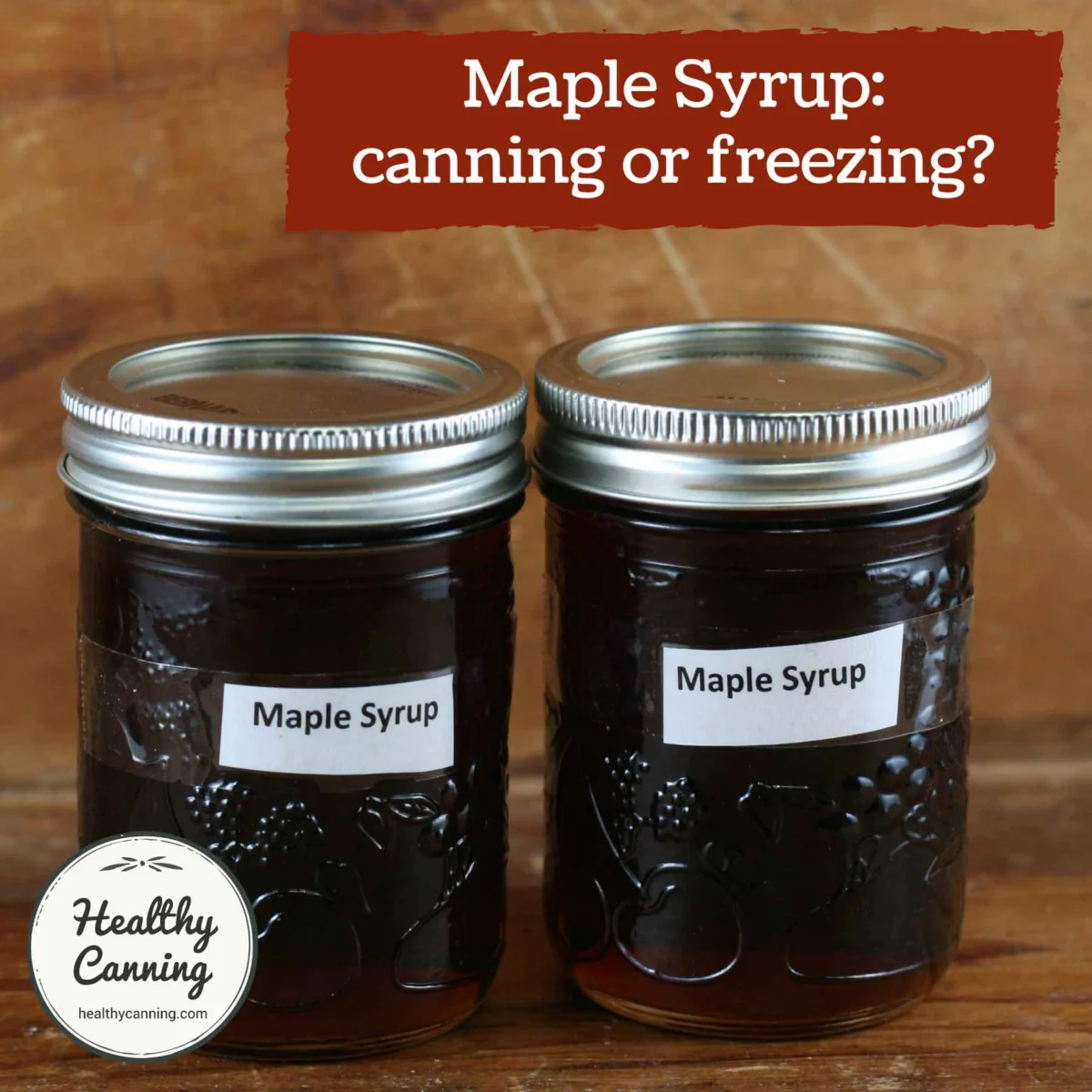
To ensure success, consumers should transfer bulk syrup into glass Mason jars before freezing. Glass is preferred over plastic for its superior oxygen barrier and over metal for its resistance to corrosion. When filling jars for the freezer, "headspace"—the empty space between the top of the liquid and the lid—is critical.
According to the National Center for Home Food Preservation (NCHFP), the following headspace should be maintained to allow for expansion and minimize oxygen exposure:
- Pint Jars: 1/2 inch (1.25 cm)
- Quart Jars: 1 inch (2.5 cm)
Jars should be sealed tightly and labeled with the date of freezing. While the syrup can remain safe indefinitely in a freezer, most experts suggest a quality window of 12 to 24 months for optimal flavor.
The Risks and Challenges of Home "Recanning"
Some consumers attempt to "re-can" bulk maple syrup by heating it and sealing it in smaller jars to create shelf-stable portions. However, this process—more accurately described as "hot bottling"—is fraught with technical challenges and is generally discouraged by food scientists at various university extension services, including Ohio State University and the University of Maine.
The "Stack Burn" and "Sugar Sand" Phenomena
When maple syrup is reheated to the temperatures required for bottling (82°C to 85°C), it undergoes chemical changes. Prolonged exposure to high heat can lead to "stack burn," a condition where the syrup continues to cook inside the jar, resulting in a darker color and a scorched flavor. Furthermore, heating syrup above 82°C causes dissolved minerals, primarily calcium malate, to precipitate out of the solution. This creates "sugar sand" or "niter," which makes the syrup appear cloudy and leaves a gritty sediment at the bottom of the jar. Removing this sediment requires professional-grade filtering equipment that is rarely available in a home kitchen.
The Hot-Pack and Inversion Process
If a consumer chooses to proceed with bottling despite these risks, the industry utilizes a "hot-pack" method. The syrup must be heated to exactly 82°C–85°C (180°F–185°F). Jars must be preheated to prevent thermal shock and breakage. Once filled, the jars are capped and inverted for five to ten minutes. This "inversion" ensures that the scalding syrup comes into contact with the lid and the neck of the jar, killing any mold spores that may have settled there during the filling process.
However, research from the University of Maine has shown that this method is not foolproof. Some heat-resistant fungal species, such as certain strains of Penicillium and Aspergillus, can survive temperatures of 75°C for several minutes. If the syrup cools too quickly during the bottling process—which is common in smaller glass containers—the "kill zone" temperature is not maintained long enough to ensure sterilization, leading to eventual spoilage on the shelf.
Broader Implications for the Maple Industry and Consumers
The preservation of maple syrup is not merely a matter of culinary preference but also one of economic and environmental significance. Maple syrup is a resource-intensive product, requiring approximately 40 gallons of sap to produce a single gallon of syrup. Spoilage at the consumer level represents a waste of the energy used in evaporation and the labor involved in harvesting.
Furthermore, as the industry moves toward more sustainable packaging, the trade-off between plastic and glass becomes a central theme. While plastic jugs reduce shipping weight and carbon footprints, their limited shelf-stability at room temperature places a higher burden on the consumer to provide refrigerated or frozen storage.
For the modern consumer, the transition from seeing maple syrup as a pantry staple to viewing it as a perishable "fresh" product is essential. By utilizing freezing as the primary method of preservation, households can enjoy the seasonal bounty of the maple harvest year-round without the risks of mold contamination or the quality degradation associated with improper home bottling. As climate change continues to impact the length and timing of the maple tapping season, the ability to effectively store and preserve this "liquid gold" will become increasingly vital for both producers and aficionados alike.