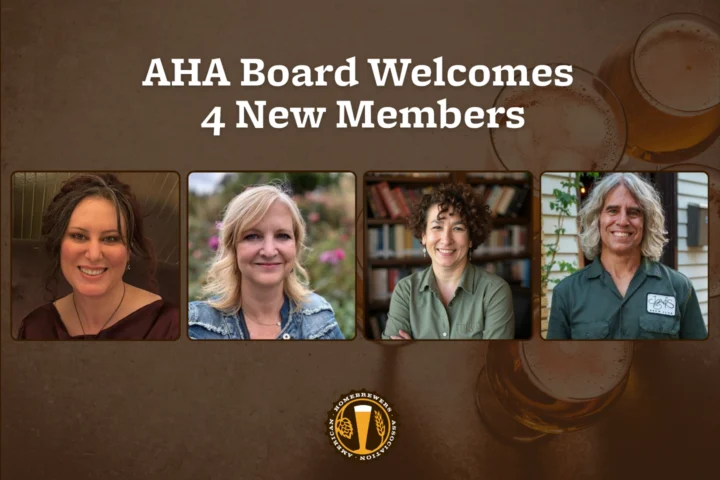

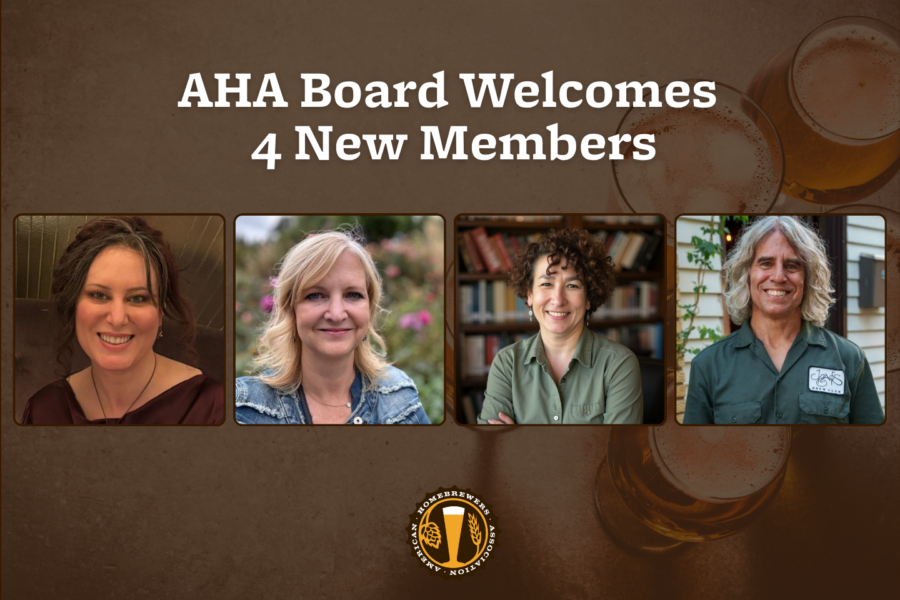
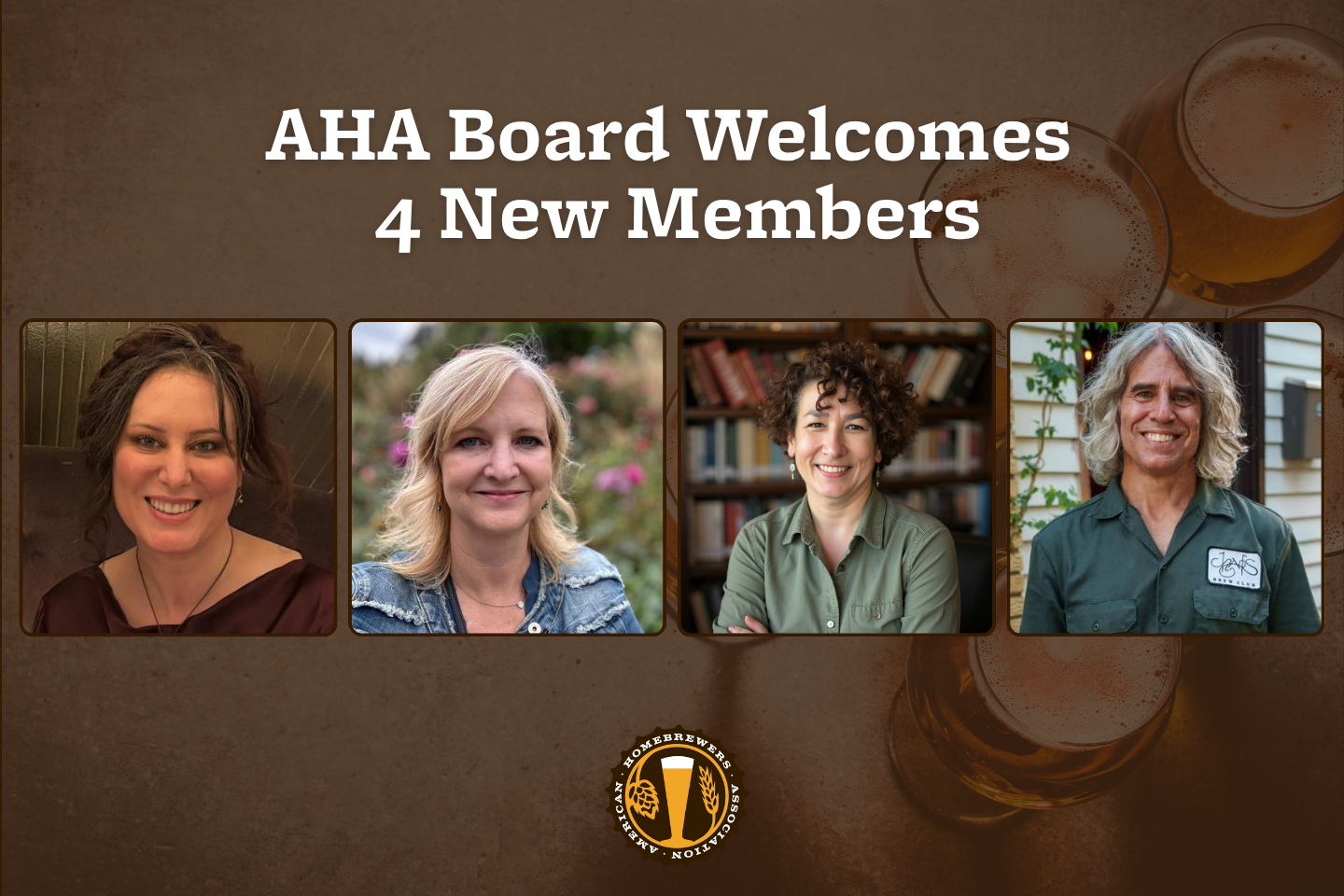
The American Homebrewers Association (AHA) has officially concluded its first-ever board election as a newly independent organization, marking a pivotal transition in the governance of the world’s largest community of amateur brewers. Following a comprehensive selection process that began in early 2026, the association’s membership has elected four new individuals to the Board of Directors: Jen Blair, Stephanie Butler, Jen Pereira, and Jeff Whelpley. These leaders were chosen from a competitive slate of 10 candidates, who were distilled from an initial pool of 28 nominees representing a diverse cross-section of the homebrewing community.
This election represents a landmark moment for the AHA, which recently transitioned into a dual-entity structure operating as both a 501(c)(6) membership organization and a 501(c)(3) supporting organization, known as the A-HA Foundation. The newly elected directors will serve three-year terms, joining existing board members Shawna Cormier, Drew Beechum, and Gregory Roskopf to steer the association through its next chapter of growth and community engagement.
The official seating of the new board is scheduled for June 20, 2026, during the AHA’s annual meeting at Homebrew Con in Asheville, North Carolina. This gathering serves as the primary forum for the association’s members to celebrate the craft, share technical knowledge, and witness the formal handover of leadership responsibilities.
The Evolution of the American Homebrewers Association
To understand the significance of this election, one must look at the historical trajectory of the AHA. Founded in 1978 by Charlie Papazian in Boulder, Colorado, the association was established just as the United States began to relax Prohibition-era restrictions on home fermentation. For decades, the AHA operated as a division of the Brewers Association (BA), the trade group representing small and independent professional craft brewers.
While the partnership with the Brewers Association provided stability and resources, the decision to move toward independence as a standalone 501(c)(6) and 501(c)(3) was driven by a desire for greater autonomy and a focused mission dedicated solely to the amateur enthusiast. A 501(c)(6) designation identifies the AHA as a business league or professional association, allowing it to focus on member benefits, advocacy, and the promotion of the hobby. Simultaneously, the 501(c)(3) status of the A-HA Foundation allows for tax-deductible contributions aimed at educational initiatives, scientific research into fermentation, and the preservation of brewing history.
This structural independence necessitates a self-governing board elected directly by the membership, making the March 2026 election a foundational event in the association’s modern era.
Profile of the New Board and Leadership
The four newly elected members bring a wealth of experience ranging from technical brewing expertise to community organization and sensory analysis.
- Jen Blair: A recognized figure in the beer education circuit, Blair’s background often emphasizes the intersection of sensory science and brewing history. Her presence on the board suggests a continued focus on elevating the educational standards for homebrewers.
- Stephanie Butler: Known for her work in community building, Butler’s election reflects the association’s goal of expanding its reach into every neighborhood. Her experience is expected to bolster the AHA’s support for local homebrew clubs.
- Jen Pereira: With a focus on the logistical and organizational aspects of the hobby, Pereira’s contribution is vital as the AHA navigates its new status as an independent non-profit.
- Jeff Whelpley: A seasoned brewer with a deep understanding of the technical nuances of fermentation, Whelpley represents the core "maker" identity of the association.
These individuals will work alongside Shawna Cormier, the current Board Chair, who has been instrumental in navigating the AHA through its independence transition. The board is also supported by veteran homebrewers like Drew Beechum, an influential author and podcaster in the craft beer world.
Transition of the Founding Board
The election also marks the departure of two key figures who were essential to the association’s recent restructuring: Sandy Cockerham and Gary Glass. Both served as members of the Founding Board, a transitional body tasked with establishing the legal and operational framework for the independent AHA.
Gary Glass, in particular, has a long history with the organization, having served as its director for nearly two decades. His transition from an executive role to a founding board member helped ensure continuity during the separation from the Brewers Association. Sandy Cockerham, a highly ranked judge in the Beer Judge Certification Program (BJCP), provided the technical and judicial perspective necessary to maintain the integrity of the AHA’s flagship competitions.
In a statement following the election results, Board Chair Shawna Cormier expressed deep gratitude for their service, noting that the groundwork laid by the Founding Board was "impressive to say the least." She emphasized that the new board is now positioned to help the AHA grow for future generations.
Chronology of the 2026 Election Cycle
The path to the March election was a multi-stage process designed to ensure a democratic and representative outcome:
- January 2026: The AHA opened the nomination period, receiving 28 applications from members across the United States and internationally.
- February 2026: A nominating committee reviewed the candidates based on their experience, vision for the hobby, and commitment to the association’s values. A final slate of 10 candidates was presented to the membership.
- March 2026: The voting period was held electronically, allowing all active AHA members to cast their ballots for the four open seats.
- April 2026: The election results were verified and publicly announced.
- June 20, 2026: The new directors will be formally seated during the annual meeting in Asheville.
Supporting Data: The Impact of Homebrewing
The importance of a strong AHA board is underscored by the economic and cultural impact of homebrewing in the United States. According to historical data from the Brewers Association and the AHA:
- There are an estimated 1.1 million homebrewers in the U.S. who produce roughly 1.4 million barrels of beer annually.
- Homebrewers are a primary driver of the craft beer industry; it is estimated that over 90% of professional craft brewers started as homebrewers.
- The AHA supports over 1,500 registered homebrew clubs, providing a social and educational network that fosters local economies through the purchase of brewing supplies and ingredients.
By maintaining a robust governing body, the AHA ensures the continued viability of the National Homebrew Competition (NHC), the world’s largest international beer competition. The NHC provides a platform for amateur brewers to receive feedback from certified judges, a process that has historically served as a "proving ground" for future professional brewery owners.
Strategic Vision and Future Implications
The AHA’s stated vision is to see "a homebrewer in every neighborhood and a homebrew club in every community." This goal is more than just a slogan; it is a strategic response to the evolving beverage landscape. As the craft beer market matures, the AHA is positioning homebrewing as a lifelong pursuit focused on "Community, Education, Joy, and Volunteerism."
The move to a 501(c)(3) foundation is particularly significant for the future of the hobby. This status allows the AHA to seek grants and donations that were previously inaccessible. These funds can be directed toward:
- Diversity and Inclusion Initiatives: Programs designed to make homebrewing more accessible to underrepresented groups in the fermentation community.
- Educational Content: Expanding the reach of Zymurgy magazine and the association’s digital resources to provide high-level technical data to brewers of all skill levels.
- Legislative Advocacy: Continuing the work of ensuring that homebrewing remains legal and protected at both the state and federal levels, including the right to transport homebrew to competitions and club meetings.
Asheville and Homebrew Con 2026
The selection of Asheville, North Carolina, for the 2026 Homebrew Con is a fitting backdrop for this historic board seating. Known as "Beer City USA," Asheville has one of the highest concentrations of breweries per capita in the country. The city’s vibrant brewing culture was built on the foundations laid by homebrewers in the 1990s, making it a symbolic location for the AHA to celebrate its new independence.
During the June conference, the new board will participate in several town-hall-style sessions, allowing members to engage directly with their elected representatives. This level of transparency is a hallmark of the new 501(c)(6) structure, emphasizing that the association is truly "member-directed."
As the American Homebrewers Association embarks on this new era, the focus remains on the "unmatched reasons" for membership: the technical excellence found in Zymurgy, the validation of the National Homebrew Competition, and the community rewards of the AHA Member Deals program. With a fresh board of directors and a clear mandate from its members, the AHA is well-equipped to champion the art of fermentation for decades to come.