
In a move that signals a seismic shift in the global gig economy and logistics sector, Uber Technologies Inc. has officially announced its agreement to acquire Berlin-based Delivery Hero in a transaction valued at approximately $14.8 billion. This acquisition represents Uber’s most ambitious expansion into the international food delivery and "Quick Commerce" (Q-commerce) markets to date. The deal, which is poised to consolidate several of the world’s most prominent delivery brands under a single corporate umbrella, will expand Uber’s delivery footprint to a staggering 99 countries, effectively creating a global powerhouse in both mobility and last-mile logistics.
The transaction is a definitive statement of intent from Uber, which has spent the last several years evolving from a ride-hailing pioneer into a diversified technology platform. By integrating Delivery Hero’s extensive network, Uber aims to capitalize on the increasing consumer demand for rapid delivery of food, groceries, and retail goods across diverse geographic regions. On a pro forma basis, the combined entities generated roughly $236 billion in gross bookings in 2025, a figure that underscores the massive scale of the new organization.
A Global Portfolio: Bringing Local Leaders Together
The acquisition is notable not just for its price tag, but for the sheer volume of market-leading brands it incorporates. Delivery Hero has spent the last decade and a half building a fragmented but powerful empire through aggressive acquisitions and localized growth. Under the terms of the agreement, Uber will take control of several major subsidiaries, including foodpanda, Glovo, PedidosYa, talabat, HungerStation, and South Korea’s dominant delivery platform, Baedal Minjok.
These brands represent some of the most recognizable names in their respective regions. For instance, talabat and HungerStation hold commanding positions in the Middle East and North Africa (MENA) region, while PedidosYa is a household name across Latin America. Glovo, headquartered in Spain, has a significant presence across Europe and Africa, and foodpanda remains a major player in Southeast Asia. Perhaps most significantly, the acquisition of Baedal Minjok gives Uber a firm foothold in South Korea, one of the world’s most sophisticated and high-volume delivery markets.
According to Uber, the acquisition covers businesses spanning 50 distinct markets. These specific segments of Delivery Hero’s operations accounted for approximately $42 billion in gross bookings last year alone. By absorbing these entities, Uber is not merely adding volume; it is acquiring established logistics infrastructures and deep-rooted merchant relationships in some of the fastest-growing economies in the world.
Strategic Objectives and the Vision of Dara Khosrowshahi
Uber CEO Dara Khosrowshahi emphasized that the merger is about more than just geographic expansion. It is about creating a more efficient, reliable, and affordable ecosystem for all participants in the delivery "triangle": consumers, merchants, and couriers.
“Delivery Hero’s talented team has built an extraordinary business, with beloved local brands and leading positions across many of the world’s fastest-growing delivery markets,” Khosrowshahi said in an official statement. “By bringing our platforms together, we will extend affordable, reliable delivery to many millions more people in many of the world’s most dynamic economies, while creating more opportunities for merchants and couriers.”
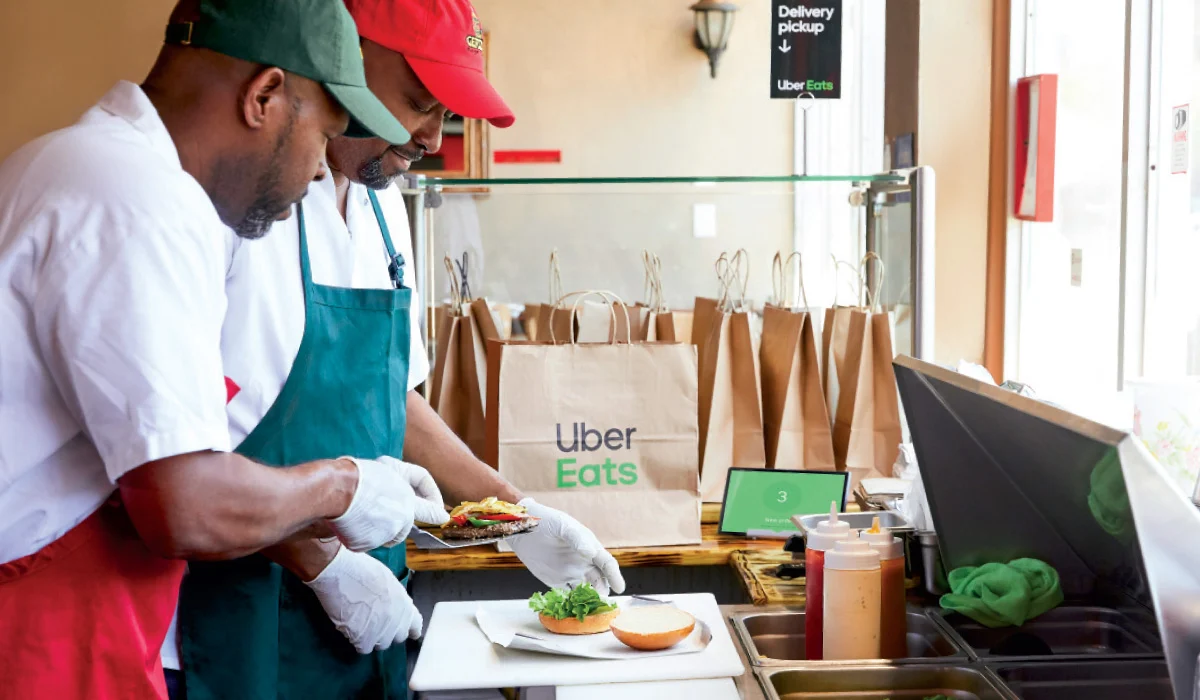
The strategy centers on "order density." By combining the user bases of Uber Eats and Delivery Hero’s various brands, Uber can increase the number of orders flowing through its network. For couriers, this theoretically means less "dead time" between deliveries and higher earning potential. For merchants, the combined platform offers a wider audience and access to Uber’s sophisticated advertising and commerce tools, which allow businesses to pay for better placement and targeted promotions within the app. For consumers, the goal is a more seamless experience with a wider variety of vendors and faster delivery times driven by a more optimized courier network.
Delivery Hero’s Transition and the Future of Q-Commerce
For Delivery Hero, the deal represents the culmination of a 15-year journey. Founded in 2011, the company was a pioneer in the European tech scene, eventually going public and becoming a constituent of the DAX index. However, the post-pandemic era has been challenging for the delivery sector, with investors shifting their focus from pure growth to sustainable profitability.
Niklas Östberg, CEO and co-founder of Delivery Hero, described the combination with Uber as the "right next step." He noted that Uber’s global mobility platform—its ride-hailing business—provides a unique synergy that Delivery Hero could not replicate on its own. The ability to toggle between moving people and moving packages is a core component of Uber’s efficiency model.
“We are excited about this opportunity with Uber and the possibilities it offers for our employees, shareholders, and partners,” Östberg stated. “Uber’s global mobility and delivery platform and our shared commitment to innovation make this the right partnership to build on Delivery Hero’s strengths in local food delivery and Quick Commerce.”
Quick Commerce, or the delivery of small grocery orders and household essentials in under 30 minutes, has been a major focus for Delivery Hero. By integrating these "dark stores" and rapid-fulfillment centers into Uber’s network, the combined company aims to lead the transition of retail from traditional brick-and-mortar or next-day shipping to near-instantaneous local delivery.
Commitments to the German Economy and Workforce
Mindful of the regulatory and political sensitivities surrounding such a massive cross-border acquisition, Uber has made significant commitments to Germany. Delivery Hero is one of Germany’s most prominent tech "unicorns," and its departure into American ownership could have raised concerns about the loss of domestic innovation.
To mitigate these concerns, Uber has pledged to maintain Delivery Hero’s global headquarters in Berlin. Furthermore, the company has committed to preserving the local workforce in Germany through at least 2029. Beyond maintaining the status quo, Uber announced an ambitious investment plan for the region. The company intends to invest approximately $2.3 billion in Germany over the next five years.
This investment will be directed toward several key areas:
- Corporate Workforce: Expanding the technical and operational teams based in Berlin.
- Autonomous Vehicle (AV) Initiatives: Germany’s status as an automotive hub makes it an ideal location for Uber to test and deploy its future autonomous delivery and mobility solutions.
- Automotive Partnerships: Strengthening ties with the German automotive industry to develop specialized vehicles for delivery and ride-sharing.
By anchoring its European operations in Berlin, Uber is signaling its desire to be a long-term partner in the European technology ecosystem, rather than just a foreign acquirer.
The Broader Context of Industry Consolidation
The Uber-Delivery Hero deal is the latest and largest chapter in a multi-year trend of consolidation within the delivery sector. As the market matures, the "winner-take-all" (or winner-take-most) dynamics of platform economics have forced smaller players to merge or be acquired.
Competitors have been equally active. DoorDash, the current market leader in the United States, recently completed a $8.1 billion acquisition of the Finnish delivery company Wolt, giving it a significant foothold in Europe and Japan. DoorDash also spent $3.9 billion to acquire U.K.-based Deliveroo, further intensifying the rivalry for international dominance.
This consolidation is driven by the high costs of customer acquisition and the thin margins associated with food delivery. By scaling up, these companies can spread their fixed costs—such as software development, marketing, and corporate overhead—over a much larger volume of transactions. The goal is to reach a level of "platform ubiquity" where the service becomes an essential utility for urban living.
Timeline and Regulatory Hurdles
While the agreement has been signed, the path to completion is lengthy. The transaction is subject to the approval of Delivery Hero’s shareholders and must pass rigorous regulatory clearances in multiple jurisdictions. Given the size of the deal and the market share the combined company would hold in various regions, antitrust regulators in the European Union, the Middle East, and Asia are expected to scrutinize the merger closely.
Uber has indicated that it expects the deal to close during the second half of 2027. This nearly two-year lead time reflects the complexity of integrating dozens of different brands and operating systems, as well as the anticipated duration of regulatory reviews. During this interim period, both companies are expected to continue operating independently, though they will likely begin the preliminary work of aligning their technological infrastructures.
Implications for the Future of Labor and Retail
The merger also has significant implications for the future of work and the retail landscape. As Uber grows into a nearly ubiquitous global intermediary for commerce, its influence over labor standards for gig workers will only increase. The company has faced numerous legal challenges regarding the classification of its couriers and drivers, and the expansion into 99 countries will require navigating a complex patchwork of international labor laws.
For retailers and restaurants, the consolidation of the delivery market into a few major players creates a "gatekeeper" effect. While Uber’s advertising tools offer new ways to reach customers, some industry analysts express concern that high commission fees could squeeze the margins of small businesses that become overly dependent on a single platform for their sales.
However, the potential for innovation is equally significant. With $236 billion in gross bookings, the combined company will have the capital to invest in transformative technologies like drone delivery, robotic sidewalk couriers, and AI-driven logistics optimization. The $2.3 billion investment in Germany specifically targets these future-facing initiatives, suggesting that the Uber of 2027 will look very different from the ride-hailing app that launched over a decade ago.
As the second half of 2027 approaches, the global business community will be watching closely to see if this $14.8 billion gamble pays off. If successful, Uber will have cemented its position not just as a transportation company, but as the operating system for the modern physical world, moving everything from people to pad thai with unprecedented global scale.