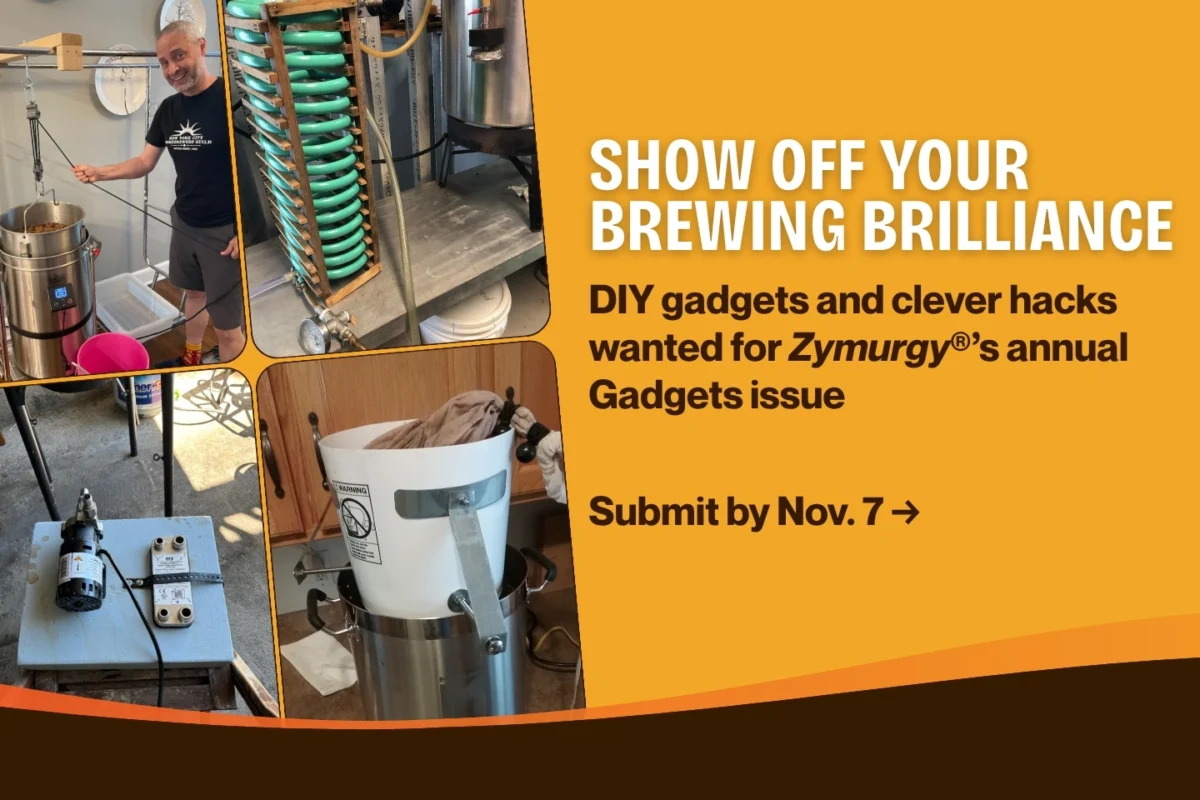

The American Homebrewers Association (AHA) has officially initiated its annual call for submissions for the upcoming January/February 2026 "Gadgets" issue of Zymurgy® magazine. This long-standing tradition invites homebrewing enthusiasts to share their unique inventions, customized equipment, and practical "hacks" that improve the efficiency, speed, or quality of the brewing process. As the world’s longest-running publication dedicated specifically to the hobby of homebrewing, Zymurgy serves as a primary repository for community-driven innovation. The AHA has set a firm deadline of Friday, November 7, 2025, for all entries, requiring participants to submit high-resolution photographs alongside concise descriptions of their creations.
This call for submissions highlights a core tenet of the homebrewing community: the "maker" spirit. Since its inception, homebrewing has been as much about mechanical engineering and process optimization as it has been about fermentation and recipe development. By featuring these gadgets, Zymurgy provides a platform for peer-to-peer knowledge sharing, allowing a single brewer’s clever solution to a common problem to be adopted by thousands of others worldwide.
The Historical Context of Zymurgy and the AHA
To understand the significance of the "Gadgets" issue, one must look at the history of the American Homebrewers Association and its flagship publication. The AHA was founded in 1978 by Charlie Papazian in Boulder, Colorado. This was the same year that President Jimmy Carter signed H.R. 1337 into law, which federally legalized homebrewing for the first time since Prohibition.
Zymurgy magazine was launched shortly thereafter to provide educational resources to a rapidly growing population of hobbyists who previously had to operate in a legal gray area. Over the decades, the magazine has documented the evolution of the craft, from the early days of "extract brewing" in plastic buckets to the modern era of sophisticated, computer-controlled all-grain systems. The "Gadgets" issue, specifically, has become one of the most popular annual editions because it showcases the ingenuity of the average brewer, often highlighting solutions that eventually become standard features in commercial brewing equipment.
Submission Requirements and Editorial Process
The submission process for the January/February 2026 issue is structured to ensure that the most practical and innovative tools are selected for publication. The AHA requires that all contributors hold an active membership to the association, a policy that reinforces the organization’s member-supported model.
Participants are instructed to provide a clear, high-quality photograph of their gadget in action. Visual clarity is paramount, as these images often serve as the primary instructional guide for readers looking to replicate the build. Accompanying the photo must be a short description detailing:
- The Problem: What specific brewing challenge does the gadget solve?
- The Build: What materials were used, and what was the approximate cost?
- The Result: How has the tool improved the user’s brew day or the final quality of the beer?
Following the November 7 deadline, the Zymurgy editorial team will undergo a rigorous review process. Selected gadgets are typically categorized by their function—such as fermentation control, wort chilling, cleaning and sanitation, or kegging systems—and are vetted for safety and originality.
The Evolution of Homebrewing Technology
The gadgets featured in Zymurgy reflect the broader technological shifts within the brewing industry. In the 1980s and 1990s, submissions often focused on fundamental hardware, such as DIY immersion chillers made from copper tubing or converted Sanke kegs (often called "keggles").
In the last decade, however, there has been a marked shift toward digital integration and automation. Recent "Gadgets" issues have featured:
- Automated Temperature Controllers: Using Raspberry Pi or Arduino platforms to maintain precise fermentation temperatures.
- Digital Hydrometers: Custom-built sensors that float in the fermenting beer to provide real-time gravity and temperature data via Wi-Fi.
- Advanced Water Chemistry Tools: Inventions designed to precisely meter mineral additions or manage pH levels during the mash.
- 3D-Printed Components: Custom-designed stir plate housings, hop baskets, and replacement parts for aging equipment.
The upcoming 2026 issue is expected to continue this trend, likely showcasing more sustainable brewing solutions, such as water-reclamation systems and energy-efficient heating elements, as brewers become increasingly conscious of their environmental footprint.
Supporting Data: The Impact of Homebrewing Innovation
Homebrewing is a significant economic and cultural force in the United States. According to data from the Brewers Association (the parent organization of the AHA), there are an estimated 1.1 million homebrewers in the U.S. who produce roughly 1.4 million barrels of beer annually.
The DIY nature of the hobby has direct implications for the professional craft beer sector. Research indicates that approximately 90% of professional craft brewers started as homebrewers. Many of the technologies now found in small-to-medium-sized professional breweries—such as specific manifold designs for mash tuns or specialized hop-back canisters—were first conceptualized and refined in home garages.
Furthermore, the AHA’s membership base, which fluctuates between 35,000 and 45,000 active members, represents a highly engaged demographic that spends significantly on equipment and raw materials. By fostering a culture of innovation through the "Gadgets" issue, the AHA not only supports its members but also drives the R&D cycle for homebrew supply companies, which often look to these grassroots inventions for the next big product idea.
Chronology of the 2026 Gadgets Issue Production
The production of a major magazine issue like Zymurgy involves a lengthy lead time. The current timeline for the January/February 2026 issue follows a structured path:
- October 2025: Official call for submissions is broadcast across AHA digital channels and social media.
- November 7, 2025: Deadline for all member submissions.
- Mid-November 2025: Editorial review and selection process. Editors verify the viability and safety of the submitted gadgets.
- Late November 2025: Graphic design and layout phase. High-resolution photos are integrated into the "Gadgets" feature spread.
- December 2025: Final proofing and printing. The digital version of the magazine is prepared for early access.
- January 2026: Distribution to AHA members via mail and digital platforms.
This timeline ensures that the content is curated and polished, maintaining Zymurgy’s reputation for high-quality technical journalism.
Community and Official Responses
While formal statements regarding the 2026 call have been primarily instructional, the sentiment from the AHA leadership consistently emphasizes the importance of community contribution. Historically, Zymurgy editors have noted that the "Gadgets" issue is one of their most interactive editions.
"Homebrewers are natural problem solvers," is a common refrain within the organization. Inferred reactions from the community suggest that being featured in Zymurgy is a point of significant pride for hobbyists. For many, it is a form of peer recognition that validates their technical skills and their contribution to the collective knowledge of the craft.
Industry analysts suggest that this call for submissions is also a strategic move to maintain member engagement during a time when the hobby faces competition from other domestic activities. By involving members directly in the content creation process, the AHA strengthens the bond between the organization and its base.
Broader Implications for the Brewing Industry
The annual "Gadgets" issue does more than just fill pages; it serves as a historical record of the democratization of brewing technology. When a homebrewer creates a way to oxygenate wort more effectively using off-the-shelf hardware, they are essentially lowering the barrier to entry for producing professional-quality beer at home.
This democratization has led to a more educated consumer base. As homebrewers master the technical aspects of brewing through DIY gadgets, they become more discerning craft beer drinkers. They understand the nuances of fermentation off-flavors, hop utilization, and malt profiles, which in turn pushes professional brewers to maintain higher standards of quality.
Moreover, the "Gadgets" issue often highlights the intersection of different hobbies. It is common to see entries from brewers who are also skilled in woodworking, metalworking, electrical engineering, or software development. This cross-pollination of skills is a primary driver of innovation within the beer industry, ensuring that brewing technology does not remain stagnant.
Conclusion
The American Homebrewers Association’s call for submissions for the Jan/Feb 2026 "Gadgets" issue of Zymurgy represents a vital opportunity for the brewing community to showcase its ingenuity. By documenting these homemade solutions, the AHA continues its mission to promote the community of homebrewers and to empower enthusiasts to make the best beer in the world. As the November 7 deadline approaches, the association expects a diverse array of entries that will once again prove that some of the best brewing advancements happen not in large-scale laboratories, but in kitchens, basements, and garages across the country.