
The practice of home food preservation has seen a significant resurgence in recent years as consumers prioritize food security, local sourcing, and the elimination of artificial preservatives from their diets. Among the various produce items gaining traction in the home canning community, the tomatillo (Physalis philadelphica) stands out as a staple of Mexican and Central American cuisines that has successfully migrated into the gardens and kitchens of North America. Often mistaken for green tomatoes, these husk-covered fruits offer a unique tartness and firm texture that make them an essential ingredient for salsas, stews, and sauces. To ensure the safety and longevity of this seasonal harvest, the United States Department of Agriculture (USDA) has established rigorous, science-based protocols for canning whole tomatillos. This guide examines the technical requirements, safety considerations, and culinary applications of home-canned tomatillos, providing a comprehensive resource for both novice and experienced preservers.
The Botanical Context and Harvest Preparation
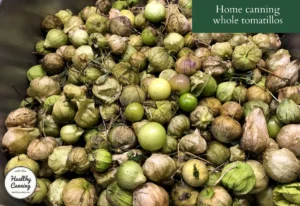
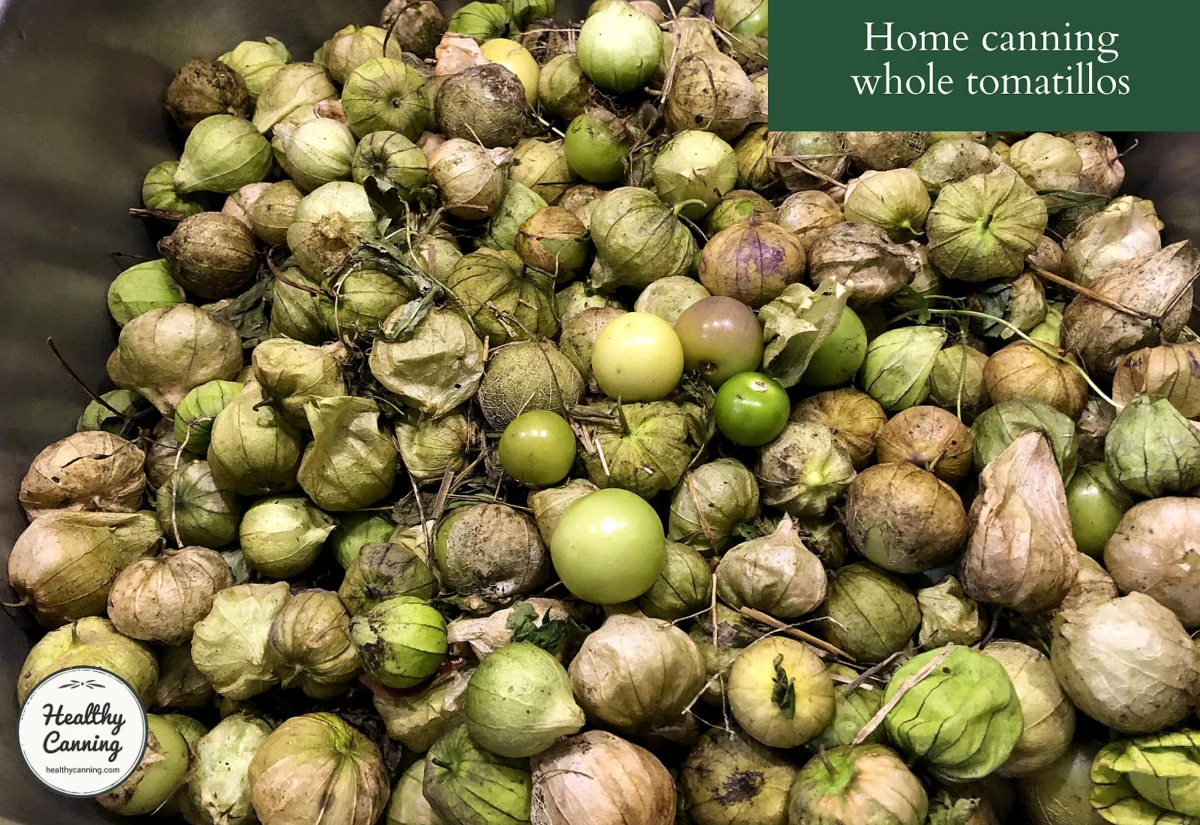
Tomatillos are members of the Solanaceae or nightshade family, but unlike their tomato cousins, they grow inside a papery calyx known as a husk. Understanding the anatomy of the fruit is the first step in successful preservation. When preparing tomatillos for the canning process, the husks must be removed. Beneath the husk, the fruit often possesses a sticky, resinous coating. This is a natural defense mechanism of the plant and should be washed away with cool water before proceeding.

Unlike the standard procedure for canning whole tomatoes, which typically involves blanching and peeling to remove the skins, tomatillos do not require peeling. The skin of a tomatillo is thin and structurally integral to the fruit’s ability to withstand the heat of the canning process without disintegrating. For those planning their canning sessions, quantity estimation is vital for resource management. On average, home canners should expect to use approximately one kilogram of fresh tomatillos per one-liter jar, or roughly two pounds per US quart jar. These numbers serve as a baseline, though variations in fruit size and packing density will influence the final yield.
The Science of Acidification and Food Safety
The primary concern in any home canning operation is the prevention of Clostridium botulinum spores, which can thrive in the anaerobic, low-acid environment of a sealed jar. While tomatillos are generally more acidic than many tomato varieties—with the USDA Center for Food Safety and Applied Nutrition assigning them an approximate pH value of 3.83—safety margins in home canning are paramount.
To ensure the final product remains safely below the critical 4.6 pH threshold, the USDA mandates the addition of an acidifier. Regardless of the processing method used, canners must add either bottled lemon juice or citric acid to each jar. For a half-litre (pint) jar, the requirement is one tablespoon of bottled lemon juice or one-quarter teaspoon of citric acid. For a one-litre (quart) jar, these amounts are doubled to two tablespoons of lemon juice or one-half teaspoon of citric acid. While lime juice is a traditional culinary partner for tomatillos and may be used, it must be bottled lime juice to ensure a consistent acidity level. It is important to note that even when utilizing pressure canning—a method often associated with low-acid foods—acidification remains mandatory because the specific pressure-processing times for tomatillos were developed with the assumption of added acidity.
Processing Methods: Water Bath, Steam, and Pressure Canning
Home canners have three primary validated methods for processing whole tomatillos: boiling water bath canning, atmospheric steam canning, and pressure canning. Each method has specific requirements and advantages depending on the equipment available and the altitude of the kitchen.
Water Bath and Steam Canning
For many, the water bath method is the most accessible. This involves submerging the filled jars in boiling water for a specified duration. Atmospheric steam canning, a more water-efficient alternative, uses the steam trapped in a specialized container to achieve the same internal jar temperatures. Both methods share the same processing times:
- Half-litre (US Pint) jars: 40 minutes
- One-litre (US Quart) jars: 45 minutes
It is critical to note that if a canner is working at an altitude where the adjusted processing time exceeds 45 minutes, steam canning is not recommended. This is due to the risk of the canner boiling dry before the process is complete. In such cases, a traditional water bath or pressure canning should be employed.

Pressure Canning Guidelines
Pressure canning offers a significantly shorter processing time by reaching temperatures higher than the boiling point of water. The USDA provides specific time and pressure combinations for both weighted-gauge and dial-gauge pressure canners. For most standard altitudes (0 to 300 meters or 0 to 1,000 feet), the following weighted-gauge guidelines apply:
- 15 minutes at 5 pounds of pressure
- 10 minutes at 10 pounds of pressure
- 1 minute at 15 pounds of pressure
As altitude increases, the pressure must be adjusted upward to compensate for the lower atmospheric pressure. For those living above 1,000 feet, the 5-pound setting is generally insufficient, and the 10-pound or 15-pound settings must be adjusted accordingly.
Step-by-Step Chronology of the Canning Process
The transition from raw harvest to a shelf-stable product follows a precise sequence designed to maintain food quality and safety.
- Preparation: Remove husks and wash tomatillos thoroughly.
- Pre-cooking: Place the tomatillos in a large pot of boiling water and simmer for 5 to 10 minutes. This softens the fruit and allows for a tighter pack in the jars, reducing the amount of air trapped inside.
- Jar Preparation: While the fruit simmers, prepare the canning jars by washing them in hot, soapy water or a dishwasher.
- Acidification: Add the required amount of lemon juice or citric acid directly into the empty, hot jars.
- Packing: Pack the hot tomatillos into the jars. If desired, add salt for seasoning (this is optional and does not affect safety).
- Filling: Cover the fruit with the boiling water used for simmering, leaving exactly 2 cm (1/2 inch) of headspace at the top of the jar.
- De-bubbling: Run a non-metallic utensil around the inside of the jar to release trapped air bubbles. Re-measure the headspace and add more liquid if necessary.
- Sealing: Wipe the rims of the jars with a clean, damp cloth to remove any residue that might interfere with the seal. Apply the lids and screw on the bands until they are "fingertip tight."
- Processing: Place jars in the chosen canner and process according to the times and pressures dictated by the method and altitude.
- Cooling: Once processing is complete, allow the jars to cool undisturbed for 12 to 24 hours. Check the seals by pressing the center of the lid; it should not flex or pop.
Culinary Applications and Expert Recommendations
Canned tomatillos are a versatile pantry asset, though their texture differs from the fresh variety. Because they have been simmered and then heat-processed, they are essentially pre-cooked. This makes them ideal for recipes where a softened texture is desired.
Martha Rose Shulman, a noted culinary contributor to The New York Times, suggests that an 11-ounce can of tomatillos (or a roughly equivalent volume of home-canned fruit) can be substituted for one pound of fresh tomatillos. Shulman notes that because canned tomatillos are already softened, the typical initial steps of simmering or broiling found in fresh recipes should be bypassed.
The Joy of Cooking recommends using canned tomatillos as a sophisticated condiment for grilled meats, poultry, and specifically seafood. Their inherent acidity cuts through the richness of grilled fats, providing a bright, balanced flavor profile. Furthermore, home-canned tomatillos serve as the perfect base for "Salsa Verde Cocida" (cooked green salsa). By blending the canned fruit with onions, cilantro, garlic, and peppers, home cooks can produce restaurant-quality sauces in a fraction of the time required when starting from raw produce.
Nutritional Profile and Economic Impact
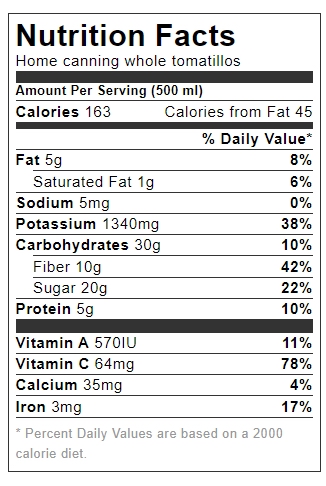
Preserving tomatillos at home is not only a culinary advantage but also a nutritional and economic one. A half-litre (pint) jar of plain canned tomatillos contains approximately 163 calories and is naturally low in sodium if no salt is added during the canning process. They are an excellent source of dietary fiber, Vitamin C, and potassium. Specifically, a single serving can provide up to 64 mg of Vitamin C and 1340 mg of potassium, making them a heart-healthy addition to various dishes.
Economically, canning allows gardeners to manage the "glut" of a late-summer harvest, preventing food waste and reducing grocery expenditures during the winter months. When stored in a cool, dark place, home-canned tomatillos maintain optimal quality for at least 12 months, though they remain safe to eat as long as the vacuum seal remains intact.
Final Analysis of Implications
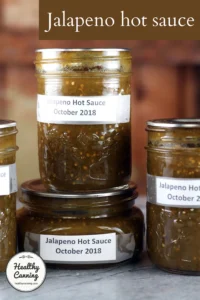
The USDA procedure for home canning tomatillos represents the intersection of traditional kitchen wisdom and modern microbiological safety. By adhering to these standardized protocols, home preservers can confidently extend the shelf life of their garden bounty while ensuring the health of their households. As global food supply chains face increasing volatility, the ability to process and store high-quality, nutrient-dense produce like tomatillos at home is more than just a hobby—it is a vital skill for sustainable and resilient living. Whether used in a fiery habanero hot sauce or a mild salsa verde, the home-canned tomatillo remains a cornerstone of the modern larder, bridging the gap between the harvest season and year-round culinary creativity.