
The past year has indelibly etched the concept of exponential growth into the global consciousness, primarily through the somber lens of the SARS-CoV-2 pandemic. This mathematical principle, which dictates growth at a fixed percentage over a given period, often defies intuition; it presents a period of seemingly negligible change before accelerating dramatically, a phenomenon starkly illustrated by the ancient wheat and chessboard problem. This deceptive characteristic largely explains why COVID-19 case numbers appeared to skyrocket unexpectedly, catching many off guard. Yet, amidst the challenges and restrictions of global lockdowns, the same principle of exponential growth found a profoundly positive application in an unexpected quarter: the dramatic rise in home baking. As millions found themselves with unprecedented free time during evenings and weekends, a culinary renaissance unfolded, leading to an unprecedented demand for baking essentials, most notably, yeast.
The Global Baking Phenomenon Amidst Crisis
The early months of 2020 saw the world grapple with a rapidly escalating health crisis. As countries implemented strict lockdown measures, encouraging or mandating citizens to stay home, daily routines were upended. For many, this meant a significant shift in lifestyle, including a curtailment of dining out and an increased focus on home-based activities. This unprecedented scenario created fertile ground for a widespread resurgence in home baking. From sourdough starters to elaborate pastries, kitchens worldwide became centers of culinary experimentation and comfort. Retailers across continents reported a sudden and sustained surge in sales of flour, sugar, and crucially, yeast. In countries like Norway, where the article’s author resides, instant dry yeast became a coveted commodity, vanishing from supermarket shelves for weeks and even months on end. This mirrored trends observed globally, from the United States to Australia, where the #BreadBaking hashtag trended widely on social media, reflecting a collective turn towards the therapeutic and productive act of baking.
The phenomenon wasn’t merely a passing fad; it represented a deeper societal response to uncertainty. Baking, with its tangible results and structured process, offered a sense of control and accomplishment in a world that felt increasingly chaotic. It provided a creative outlet, a means of nurturing, and a connection to tradition. This surge in demand, however, placed immense pressure on existing supply chains for key ingredients. While flour mills and sugar refineries often operate at scale, the specific infrastructure for yeast production and distribution faced an unforeseen challenge, leading to temporary but widespread shortages. Those who understood the underlying principles of yeast activity, particularly its exponential growth, found themselves at an advantage, able to stretch their limited supplies further.
Understanding Exponential Growth: A Double-Edged Sword
Exponential growth, though often discussed in abstract terms, is a fundamental concept with far-reaching implications, both beneficial and detrimental. In the context of the pandemic, its negative manifestation was terrifyingly clear. A small cluster of infections could, over a seemingly slow initial period, burgeon into an unmanageable epidemic, overwhelming healthcare systems. This counterintuitive nature, where "nothing is happening for a long time, and then all of a sudden a lot happens," contributed to public underestimation of the virus’s threat in its nascent stages. Epidemiologists and public health officials frequently used examples like the wheat and chessboard problem – where the number of grains doubles on each successive square, leading to astronomical numbers quickly – to explain the pandemic’s trajectory and the urgency of early intervention.
Conversely, the very same principle underpins the magic of fermentation, a process central to baking, brewing, and winemaking. Yeast, a single-celled microorganism, thrives by multiplying exponentially. This biological marvel transforms simple ingredients into complex, flavorful foods. The understanding of this growth mechanism allowed savvy home bakers to navigate the yeast shortages by optimizing its use, turning a scarcity into an opportunity for more patient and flavorful baking.
The Miraculous Multiplication of Yeast
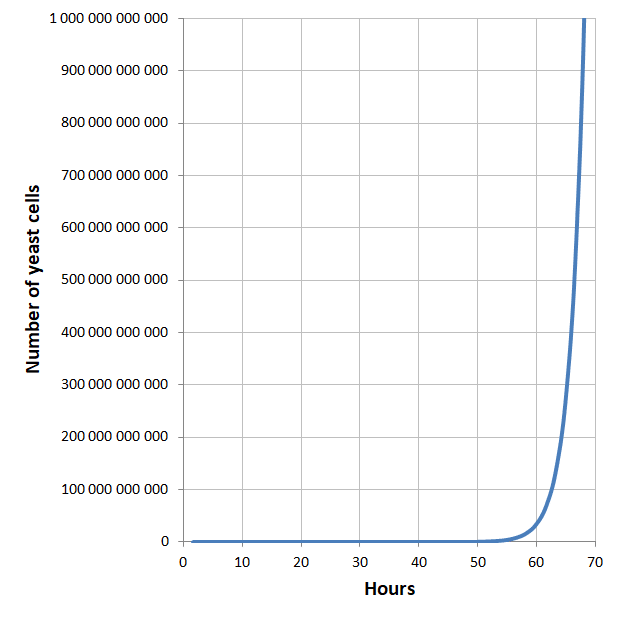
At the heart of the baking boom lies Saccharomyces cerevisiae, commonly known as baker’s yeast. This microscopic fungus is a master of exponential growth. Under ideal conditions – a warm, nutrient-rich environment with adequate oxygen – a single yeast cell can initiate a remarkably rapid cycle of reproduction. Its life cycle, from budding to splitting into two daughter cells, can complete in as little as 100 minutes. This means that in just over an hour and a half, the yeast population doubles.
The implications of this rapid doubling are staggering. Starting with a single cell, after another 100 minutes, there are four cells. The progression is not linear but geometric. Within 24 hours, the initial single cell has multiplied into approximately 16,000 cells. After 48 hours, the count skyrockets to an astonishing 268 million cells. Before three full days have passed, the population can reach the order of a trillion (1,000,000,000,000) yeast cells. To put this into perspective, a typical 50-gram piece of compressed fresh yeast contains roughly this many cells. This incredible rate of proliferation is harnessed in commercial yeast production, where optimal conditions are meticulously maintained for a limited time to yield vast quantities of yeast for industrial and consumer markets.
However, the conditions within a bread dough are far from the ideal laboratory environment. As yeast ferments, it consumes sugars, produces carbon dioxide (which creates the dough’s rise) and ethanol, and eventually faces limitations in nutrient availability, oxygen levels, and increasing concentrations of its own waste products. These factors collectively slow down its growth rate considerably compared to its theoretical maximum. Nonetheless, the underlying exponential principle ensures that even a small initial amount of yeast, given sufficient time, can effectively leaven a substantial dough.
Strategic Baking: Making Yeast Last Longer
The scarcity of yeast during the pandemic spurred a practical revolution in home baking: the embrace of longer, slower fermentation processes using minimal quantities of yeast. This approach, long advocated by artisan bakers, proved to be a highly effective strategy for extending the life of a single 12-gram sachet of instant dry yeast, making it last for an extended period. Instead of relying on a large quantity of yeast for a quick rise, bakers learned to "let time do the work."
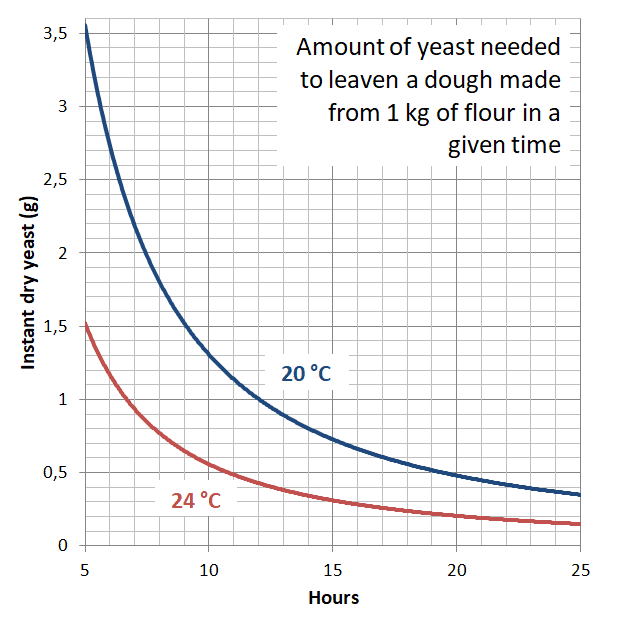
This method leverages the inherent efficiency of exponential growth. Even with a minute amount of yeast, given enough hours, the population will multiply sufficiently to leaven the dough. For instance, a dough made with 1 kilogram of wheat flour, typically calling for several grams of yeast for a standard rise, could effectively be leavened with as little as 0.48 grams of instant dry yeast if allowed to ferment for 20 hours at a moderate temperature of 20°C. This not only conserved precious yeast but also offered significant culinary benefits. The extended bulk fermentation allows for the slower development of complex flavors and aromas, often attributed to the metabolic activities of both the yeast and naturally occurring lactic acid bacteria. These bacteria, present in flour and the environment, contribute a subtle tang and depth, transforming a simple loaf into a more nuanced and delicious product.
Precision in the Home Kitchen: Tools for Modern Bakers
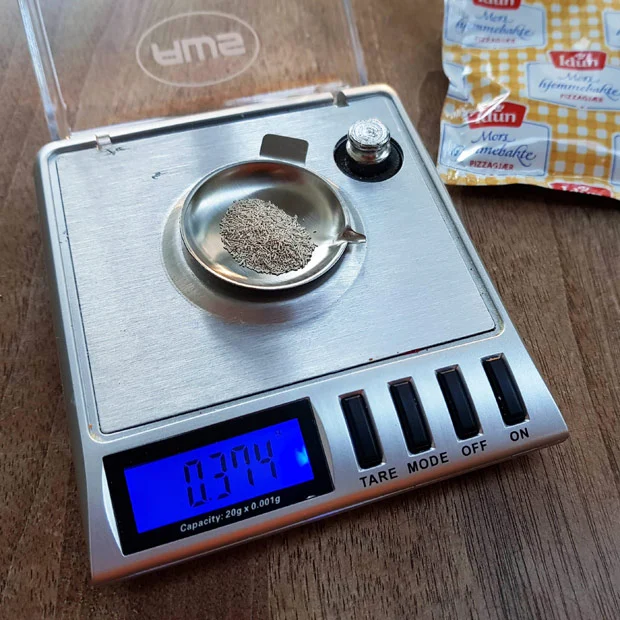
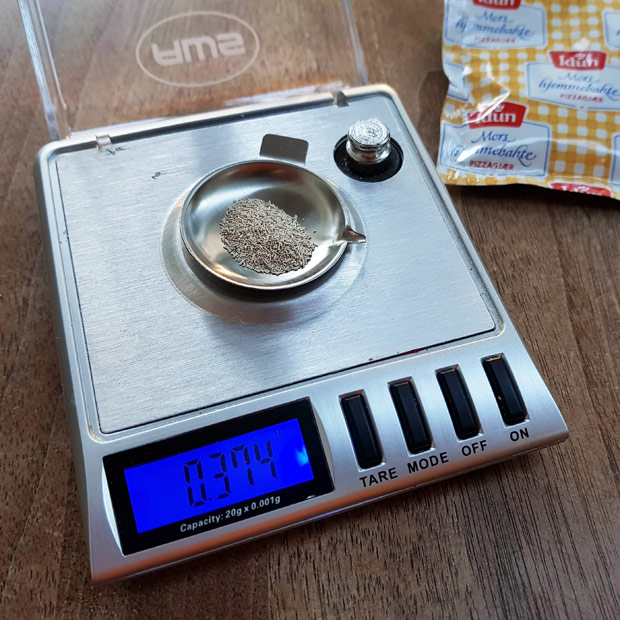
Adopting a strategy of minimal yeast usage necessitates precision, a concept often associated with professional kitchens or scientific laboratories rather than the average home. Measuring quantities as small as 0.48 grams accurately requires specialized tools. Fortunately, small digital balances with a 0.001-gram readout, once considered high-end equipment, have become increasingly affordable and accessible to home cooks. These "jewelry scales" or "precision scales" are not laboratory-grade instruments but offer sufficient accuracy for practical kitchen applications, empowering home bakers to confidently measure the minute amounts of yeast required for long, slow fermentations.
Beyond physical tools, digital applications have emerged as invaluable aids. The article specifically references PizzApp+ for Android, an exemplary tool designed to assist bakers in calculating precise ingredient ratios. Such apps allow users to input variables like flour weight, desired fermentation time, temperature, and type of yeast (fresh compressed, active dry, instant dry, or even liquid and firm sourdoughs). The app then provides an exact recommendation for the amount of yeast needed, removing much of the guesswork from the process. This technological integration demystifies complex baking science, making sophisticated techniques accessible to a broader audience and further encouraging experimentation with longer fermentation times and reduced yeast quantities. These digital aids exemplify how technology can bridge the gap between scientific principles and practical application in the home kitchen.
Industry Reactions and Consumer Shifts
The unprecedented demand for yeast and other baking supplies prompted significant responses from various stakeholders. Yeast manufacturers, like Lesaffre and AB Mauri, reported dramatic increases in production, working to meet the surge in consumer interest. While specific official statements on production figures are often proprietary, anecdotal evidence from industry reports indicated a rapid pivot to maximize output, often prioritizing consumer-sized packaging over bulk commercial formats. Retailers implemented various strategies, from limiting purchases of flour and yeast per customer to actively seeking alternative suppliers, to ensure some stock availability. Public health bodies and food safety organizations also subtly encouraged home cooking as a way to maintain morale and reduce reliance on external food sources during periods of uncertainty.
The pandemic-fueled baking boom also underscored a broader shift in consumer habits. While the convenience of instant dry yeast remained highly alluring for its simplicity and reliability, there was also a noticeable uptick in interest in more traditional methods, particularly sourdough baking. Sourdough, which relies on a natural starter culture rather than commercial yeast, offered a complete solution to yeast shortages and appealed to those seeking deeper engagement with the baking process, despite its steeper learning curve. This dual trend highlights a public desire for both efficiency and authenticity in their culinary pursuits. The long-term implications suggest a potential lasting legacy of increased home cooking, improved culinary skills among the general populace, and a greater appreciation for the science behind food preparation.
Beyond the Pandemic: Lasting Legacy of the Baking Boom
As the world gradually moves beyond the most acute phases of the pandemic, the question remains: will the home baking renaissance endure? Early indications suggest that many who discovered the joys of baking during lockdown have continued the practice. The skills acquired, the joy derived, and the economic benefits of preparing food at home are compelling reasons for this trend to persist. The experience of making yeast stretch further, coupled with the understanding of exponential growth, has not only been a practical lesson in resourcefulness but also a fascinating insight into microbiology.
The unexpected link between a global crisis and a resurgence of an ancient craft demonstrates the human capacity for adaptation and finding solace in productive activities. The availability of precise tools and intuitive apps has democratized artisan baking, empowering a new generation of home bakers. Ultimately, the story of yeast during the pandemic is a microcosm of human resilience, illustrating how a fundamental scientific principle, when understood and applied, can transform a challenge into an opportunity for creativity, learning, and comfort, leaving a lasting mark on our culinary landscape.