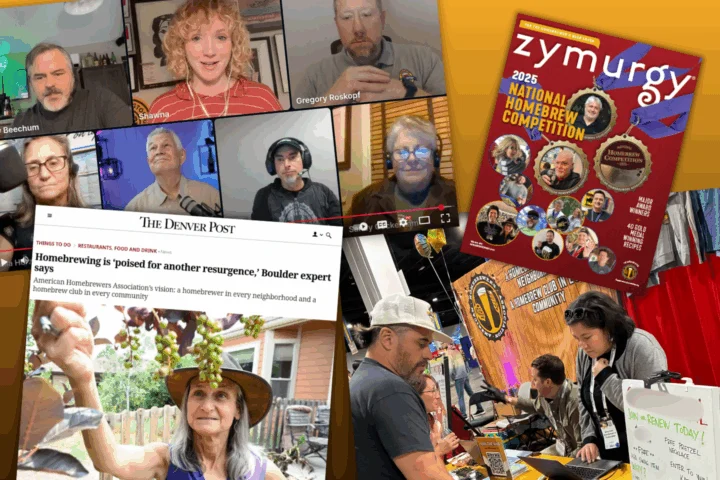

The American Homebrewers Association (AHA) has officially transitioned into a fully independent nonprofit organization, marking 2025 as a watershed year for the hobbyist brewing community. This move toward institutional autonomy represents the most significant structural change in the association’s history since its founding in 1978. As the organization pivots away from its previous governance model, the AHA leadership has unveiled a comprehensive strategic plan designed to decentralize the hobby and foster community-level engagement through a new vision: a homebrewer in every neighborhood and a homebrew club in every community.
The shift to independence comes at a critical juncture for the domestic fermentation hobby. After decades of operating under the umbrella of the Brewers Association (BA), the AHA’s new status as a standalone nonprofit allows it to refocus its financial and advocacy resources exclusively on the needs of amateur brewers. This transition involves not only a change in legal status but also a complete overhaul of the association’s digital infrastructure, membership services, and advocacy priorities.
A Historical Context of the AHA and the Path to Independence
To understand the magnitude of this transition, one must look at the trajectory of the American Homebrewers Association. Founded by Charlie Papazian in Boulder, Colorado, the AHA was instrumental in the legalization of homebrewing at the federal level and subsequently at the state level across all 50 U.S. states. For much of its existence, the AHA shared a symbiotic relationship with the Brewers Association, the trade group representing small and independent professional craft brewers.
However, as the craft beer industry matured and the professional sector faced new economic pressures, the AHA leadership identified a need for a dedicated, independent voice that could focus solely on the grassroots level of the hobby. The process of separation, which began in earnest in 2024, culminated in the 2025 declaration of full independence. This move allows the AHA to operate with a "founding board" of volunteers who are directly accountable to the membership, ensuring that the organization’s trajectory is dictated by those who actively participate in the craft.
Chronology of 2025 Milestones and Strategic Implementation
The 2025 calendar year has been defined by a series of rapid-fire developments aimed at stabilizing the new independent entity while maintaining the high level of service expected by its global membership. Following a pivotal board update in April, the association has hit several key benchmarks:
- Establishment of Independent Nonprofit Status: The AHA completed the legal and financial separation required to operate as an autonomous nonprofit. This included the establishment of new accounting practices, insurance structures, and governance bylaws.
- Launch of the 2025-2030 Strategic Plan: The board introduced a five-year roadmap focusing on three pillars: community growth, educational excellence, and legislative advocacy.
- National Homebrew Competition (NHC) Integration: Despite the organizational shift, the AHA successfully executed the National Homebrew Competition, the world’s largest amateur brewing competition. The 2025 event saw thousands of entries across dozens of categories, providing critical validation for brewers and maintaining the competition’s status as the "gold standard" of the hobby.
- Digital Transformation Initiative: Recognizing that its legacy systems were a barrier to growth, the AHA began the process of migrating to a new membership platform. This upgrade is designed to streamline the renewal process, improve the "Member Deals" interface, and provide a more robust forum for club interactions.
Detailed Analysis of the "Homebrewer in Every Neighborhood" Vision
The AHA’s new vision statement is more than a slogan; it is a response to changing social dynamics in the post-pandemic era. Data from the AHA suggests that while the total number of homebrewers remains significant, the way individuals engage with the hobby is shifting from large-scale regional events to hyper-local micro-communities.
By aiming for a "homebrew club in every community," the AHA is signaling a shift in resource allocation. Instead of focusing solely on national-scale festivals, the association is investing in "Club Insurance" programs, "Club of the Year" awards, and resources for local organizers to navigate municipal regulations. This localized approach is intended to lower the barrier to entry for new brewers and provide a support network that can withstand economic fluctuations or changes in the commercial craft beer market.
Supporting Data and Membership Benefits
The AHA currently serves tens of thousands of members, and its impact is felt through several key programs that have been fortified during this transition:
- Zymurgy Magazine: As the flagship publication of the association, Zymurgy continues to be the primary source for peer-reviewed brewing research and NHC-validated recipes. In the independent era, the magazine is expected to expand its digital archives, giving members access to decades of brewing science.
- AHA Member Deals: The association maintains partnerships with hundreds of breweries and homebrew supply shops across the country. These "Member Deals" provide discounts on ingredients, equipment, and taproom purchases, often allowing the membership to pay for itself through regular use.
- Advocacy and Legal Defense: The AHA remains the primary advocate for homebrewers’ rights. This includes fighting for the right to transport homebrew to competitions and events, as well as clarifying tax codes that affect small-scale production.
Official Responses and Governance
The "Founding Board" of the independent AHA has emphasized that this transition is a "member-led charge." In recent communications, the board stated that the move to independence was necessary to ensure that "the soul of homebrewing" remains protected. By removing the layers of corporate overhead associated with larger trade groups, the AHA can ensure that membership dues are reinvested directly into the hobby.
A significant component of this transparency is the "Zymurgy Live" series. On November 5, 2024, the AHA took the unusual step of opening a typically member-only session to the general public. This event was designed to explain the future of the association and the mechanics of the new strategic plan. Such moves suggest a governance style that prioritizes open communication and recruitment, aiming to bring lapsed members back into the fold by demonstrating the tangible benefits of the new independent structure.
Future Outlook: What is "Simmering" for 2026
As the association looks toward 2026, the focus shifts from structural transition to operational excellence. The AHA has teased several upcoming initiatives:
- Advanced Educational Resources: New partnerships with brewing schools and technical experts to provide master-class level content via the AHA website.
- Infrastructure Upgrades: The completion of the member service portal upgrade, which promises a more intuitive user experience and better integration with local club rosters.
- Enhanced Advocacy: Increased focus on state-level legislation to modernize homebrewing laws, particularly regarding the sharing of fermented beverages at organized community events.
- Sustainable Growth Models: Developing programs to help local homebrew shops—the lifeblood of the hobby—stay competitive in a changing retail environment.
Broader Implications for the Fermentation Industry
The independence of the AHA has implications that extend beyond the hobby itself. Historically, the homebrewing community has served as the R&D department for the professional craft beer industry. Almost every major craft brewery in the United States, from Sierra Nevada to Dogfish Head, traces its origins to a homebrewing kit.
By strengthening the grassroots infrastructure of the hobby, the AHA is essentially ensuring the long-term health of the professional industry. A more robust, educated, and connected homebrewing community leads to a more discerning consumer base and a steady pipeline of talent for professional breweries. Furthermore, the AHA’s focus on "every neighborhood" suggests an effort to diversify the hobby, bringing homebrewing to demographics and geographic areas that have historically been underserved by the craft beer movement.
The AHA’s transition to a standalone nonprofit is a bold bet on the future of DIY fermentation. In an era where digital communities often replace physical ones, the AHA is doubling down on the importance of the local club and the neighborhood brewer. As the organization moves into 2026, its success will be measured not just by the number of members on its rolls, but by the vibrancy of the local communities it helps to cultivate. Through independent governance, a clear strategic vision, and a commitment to its founding principles, the American Homebrewers Association is positioning itself to lead the next generation of brewers toward a more connected and innovative future.