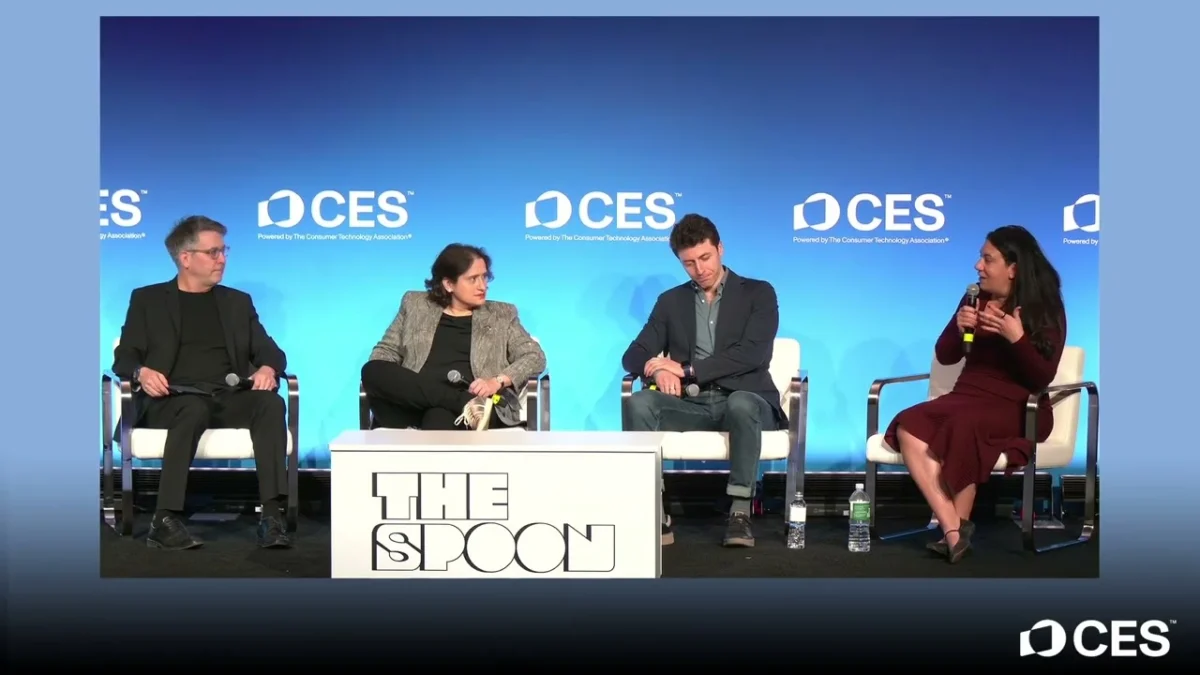

The grand stage of the Consumer Electronics Show (CES) has long been a predictor of technological futures, and for decades, the kitchen of tomorrow has been painted with broad strokes of automation and robotic prowess. Yet, a recent deep dive into the evolving culinary landscape, facilitated by a panel of industry leaders at The Spoon’s Food Tech conference in Las Vegas, reveals a more nuanced and perhaps more practical vision. Far from the chrome-plated, hyper-automated kitchens of science fiction, the next generation of culinary innovation is poised to unfold through subtle integrations, user-centric design, and the quiet intelligence of everyday appliances.
The prevailing sentiment among experts gathered at the conference was a decisive pivot away from the ostentatious and the overly complex. The era of "throwing a robot at the problem" in the kitchen appears to be waning, replaced by a focus on genuine user needs and the seamless reduction of daily friction. This shift signifies a maturing understanding of how technology can best serve consumers in their most personal spaces.
The Evolution of the Smart Kitchen: Lessons Learned
Nicole Papantoniou, Director of the Kitchen Appliances Lab at the Good Housekeeping Institute, provided a critical retrospective on the past decade of smart kitchen development. She highlighted a significant misstep by early adopters: the tendency to imbue products with smart features that addressed non-existent consumer pain points. "A lot of people were putting smart features into products that you didn’t really need," Papantoniou stated. "I don’t think people understood why they needed Alexa to make coffee for them." This observation underscores a fundamental principle of successful technology adoption: it must solve a real problem or significantly enhance an existing process. The focus, she argued, has now decisively shifted towards "friction reduction," a more subtle yet profoundly impactful approach. The goal is to make technology so integrated and intuitive that users benefit from it without actively thinking about its presence.
Jonathan Blutinger, Senior Design Engineer at Smart Design, echoed this sentiment, characterizing many early smart kitchen products as "over-engineered." His philosophy, deeply rooted in human-centered design, emphasizes that technological advancement must be driven by demonstrable human need. "Just because you can, doesn’t necessarily mean you should," Blutinger advised, reinforcing the idea that innovation should stem from a clear understanding of human requirements, not simply from the availability of new technological capabilities. This principle suggests a move away from novelty for novelty’s sake and towards solutions that genuinely improve the user experience.
The AI Enigma: From Buzzword to Background Integration
The omnipresence of Artificial Intelligence (AI) at CES 2026 was undeniable, with a vast majority of exhibitors touting their products as "AI-powered." This pervasive marketing, however, raised concerns about a potential repetition of the "slapping Wi-Fi on everything" phenomenon that characterized earlier waves of connected appliances. Robin Liss, CEO of Suvie, offered a crucial distinction between the Wi-Fi era and the current AI landscape. "Almost all these products have embedded software or cloud-connected software," Liss explained. "The way we look at AI is it’s not some all-encompassing model… it’s integrations into steps of the process." This perspective suggests that AI in kitchen technology is less about a singular, overarching intelligence and more about intelligently optimizing specific tasks and workflows within the cooking process.
Blutinger further elaborated on the challenges posed by AI, particularly the potential for overuse and misuse of the term by marketers. He predicted that while the integration of AI into products is inevitable, both the label and the technology itself will gradually recede into the background, becoming an invisible enabler of enhanced functionality. "That word alone has created such a stigma around it," he noted. "The technology should not be upfront and personal. It should be invisible in a sense." This vision of invisible AI aligns with Papantoniou’s prediction that consumer acceptance will likely increase as AI becomes a normalized, unadvertised component of everyday products. "Once people stop advertising that it’s AI and it’s just part of the normal product, it’ll be way more accepted," she concluded. This implies that the true success of AI in the kitchen will be measured not by its visibility, but by its ability to enhance the cooking experience without demanding conscious effort from the user.
The Enduring Appeal of Countertop Appliances
The discourse around the future of the kitchen consistently returns to the question of robotics. When pressed on the timeline for seeing humanoid robots in domestic kitchens, the panel expressed skepticism, a sentiment that mirrored discussions from earlier sessions focused on food robots at CES. Papantoniou firmly stated, "I still think that’s really soon for us to be seeing it in the home kitchen. Five years is soon."
Liss articulated the significant hurdles that food robotics face, particularly concerning safety and practicality. "Food is inherently dangerous, and kitchen appliances dealing with high heat are inherently dangerous," she cautioned. The complexity of ensuring robots do not pose a risk to humans, even in commercial settings, is a formidable challenge that translates directly to the home environment. "Getting the robot not to hurt the workers around it… that’s the hard part," she added.

Instead of full-fledged humanoids, the panelists advocated for task-specific automation. Blutinger explained that human dexterity and adaptability are difficult and often unnecessary to replicate fully. "We are designed as humans to do so many range of tasks," he said. "Like we have to be perfect for so many things. It’s not like cooking takes up 100% of our time. So if we’re trying to optimize for just automation in the kitchen, why do we need these complex articulated (robot) arms doing things? Why not just have like a simple little one degree of freedom rotating thing that just rotates our sauce?" This pragmatic approach suggests that simpler, single-purpose robotic elements integrated into appliances could offer more immediate and practical benefits than complex, generalized humanoid robots.
The ongoing dominance of specialized countertop appliances was another key theme. Despite advancements in integrated kitchen systems, innovation continues to flourish in this segment. Liss pointed to the market performance of companies like Breville and SharkNinja as evidence. "I would say that probably the reason you’re seeing so many, the proliferation of lots of little countertop appliances, which makes me very happy, is because the innovation is happening there," she stated. She further elaborated on the economic drivers, noting that "the stock performance of Breville, Shark Ninja, are, you know, Breville is larger than Whirlpool, Shark Ninja is many multiples larger than Whirlpool. It’s because all of the innovation is happening on the countertop because of that replacement cycle challenge of major appliances." The inherent difficulty and cost associated with replacing large, built-in appliances create a barrier to rapid innovation in that sector, pushing manufacturers to focus on the more accessible countertop market.
Papantoniou offered a candid assessment of the trade-offs associated with multi-functional appliances, suggesting that specialized devices often perform better. "There is that stigma that multifunctional appliances don’t do everything well. And while it’s gotten a lot better, I would say like an air fryer function in an oven is not going to compete with your basket air fryer." This preference for specialized tools highlights a consumer desire for optimized performance in specific culinary tasks.
The Future Kitchen: Personalization, Less Friction, and More Time
Looking ahead, the panelists painted a cohesive picture of a future kitchen defined by increased personalization, reduced user effort, and a greater emphasis on the human element. Papantoniou predicted a surge in adoption as consumer apprehension diminishes. "People are adopting it more and not being so scared of it and not judging it as harshly, I think, as they did in the past," she observed. "I think people actually do want their coffee maker to start working while they’re still in their bedroom. So I think that’s gonna just be coming more." This suggests a growing acceptance of connected devices that offer convenience and streamline daily routines.
Blutinger reiterated his core message of usability, emphasizing that the primary goal for kitchen innovation should be the reduction of friction. "I think just reduce friction in the kitchen. That’s the biggest thing if you’re trying to innovate in the kitchen space," he stated. This focus on seamless operation implies that future kitchen technologies will prioritize intuitive interfaces and automated processes that require minimal user input.
Liss concluded with a humanistic vision, asserting that the ultimate benefit of these advancements lies in improving quality of life. "I think it’s healthier, more personalized food, cooked how you want it," she said. "You’re getting to spend, most importantly, is families getting to spend time with each other happily enjoying meals for those everyday weeknight meals rather than spending an hour, mom spending an hour prepping the food or wasting money on really expensive delivery, right? It’s like a better life for people because they’re eating healthy, good food at home, saving money, and spending time with their loved ones." This perspective frames kitchen technology not as a replacement for human involvement, but as an enabler of more fulfilling domestic experiences, allowing individuals and families to reclaim time and foster stronger connections around shared meals. The underlying message is that the most valuable innovation in the kitchen of the future will be the one that empowers people to live better, healthier, and more connected lives.
The full session, titled "CES 2026: The Kitchen of the Future: AI, Robotics & Smart Tech," offered a comprehensive look at the evolving domestic culinary landscape, providing valuable insights into where the industry is headed and what consumers can realistically expect in the coming years. The consensus points towards a future where technology serves as an invisible, supportive partner, enhancing our cooking experiences and freeing up valuable time for what truly matters.