
The pursuit of health and wellness in modern society often presents a paradox: despite widespread access to information on fundamental health practices, many individuals, including highly discerning professionals, find themselves ensnared by the allure of niche solutions, quick fixes, and advanced gadgetry. This phenomenon diverts attention and resources away from the consistent application of basic, scientifically proven habits that form the bedrock of long-term well-being. The acquisition of a new BPA-free tupperware set, while seemingly a minor health-conscious choice, can sometimes symbolize this broader tendency to focus on marginal gains while neglecting more impactful, albeit less glamorous, lifestyle changes.
The Allure of the "Magic Bullet" in Health
The journey toward improved health frequently begins with a genuine desire for change, often sparked by a realization of feeling "stuck" or unsatisfied with one’s current state. For many, this initial motivation leads to an exploration of various avenues, ranging from conventional advice to the latest trends. However, a common pitfall is the gravitation towards what can be described as "magic bullets"—ultra-specific, often expensive, or complex interventions promising transformative results without the perceived drudgery of consistent foundational work.
This inclination is fueled by several factors. The burgeoning wellness industry, valued at trillions globally, continuously introduces new products, diets, and protocols, often marketed with compelling narratives and celebrity endorsements. Social media platforms amplify these trends, creating echo chambers where anecdotal evidence and aspirational lifestyles can overshadow scientific rigor. Consequently, individuals might find themselves researching optimal workout routines for hours, investing in popular supplements, or meticulously scrutinizing minor environmental toxins, all while struggling with more fundamental challenges like consistent exercise, balanced nutrition, or adequate sleep. This pattern suggests a search for an external solution to an internal struggle, providing a temporary sense of progress without requiring the hard, sustained effort of behavioral change.
The Unmet Fundamentals of Health
Despite the complexity of modern health advice, the core principles of well-being remain remarkably simple and consistent across scientific consensus. These foundational habits, while widely acknowledged, are alarmingly under-practiced. A landmark study cited that a mere 6 percent of Americans consistently adhere to five basic health behaviors. Expanding this to encompass slightly more advanced yet still fundamental practices—such as regularly consuming five servings of fruits and vegetables, optimizing protein intake, or effectively managing stress—would likely see this percentage dwindle even further.
The essential pillars of health include:
- Consistent Physical Activity: Aiming for at least 30 minutes of moderate-to-vigorous exercise most days of the week, incorporating both aerobic and resistance training. Data from the World Health Organization (WHO) indicates that over a quarter of the world’s adult population is insufficiently active, contributing significantly to the global burden of non-communicable diseases.
- Nutritious, Minimally Processed Diet: Prioritizing whole foods, such as fruits, vegetables, lean proteins, and whole grains, with an emphasis on making 80% of one’s diet from these sources. This allows for flexibility and enjoyment without compromising overall health. The pervasive availability and marketing of ultra-processed foods, however, make consistent adherence challenging, with studies showing these foods contributing to a significant portion of caloric intake in many developed nations.
- Adequate Protein Intake: Consuming sufficient protein (approximately 1.2 to 2.2 grams per kilogram of body weight for most adults) is crucial for muscle mass maintenance, satiety, and body composition goals. This often translates to 4-6 palm-sized portions of lean protein daily.
- Prioritizing Quality Sleep: Striving for seven to eight hours of restorative sleep per night, supported by consistent sleep schedules and a wind-down routine. The Centers for Disease Control and Prevention (CDC) reports that over a third of U.S. adults usually get less than the recommended amount of sleep, with profound implications for cognitive function, metabolic health, and mood regulation.
- Moderation or Avoidance of Harmful Substances: Reducing or eliminating excessive consumption of alcohol, tobacco, and illicit drugs. Public health campaigns consistently highlight the severe long-term health consequences associated with these behaviors.
These behaviors, while seemingly basic, collectively contribute to a robust defense against chronic diseases, support mental clarity, enhance physical performance, and extend healthspan. Their widespread neglect underscores a significant public health challenge that transcends individual willpower.
Psychological Barriers to Consistent Action

The struggle to implement these fundamental habits is not simply a matter of knowing what to do; it is deeply rooted in psychological and behavioral patterns. Experts in behavioral science identify several common barriers:
- Ambition Overload and the Planning Fallacy: Individuals often embark on health journeys with highly ambitious, multi-faceted plans, envisioning a complete overhaul of their lifestyle overnight. This "all-or-nothing" approach is frequently driven by an optimistic bias, where people overestimate their future time, energy, and motivation. Behavioral economists term this the "planning fallacy," where individuals underestimate the time and resources required to complete future tasks. While such grand plans offer temporary psychological relief and a sense of control, their inherent complexity often leads to quick abandonment when confronted with the realities of busy, unpredictable lives. The subsequent failure can trigger self-blame, reinforcing a narrative of lacking "willpower" or "discipline."
- The "Hardcore" Fallacy: Dismissing Simplicity: A prevalent belief is that if simple actions like eating vegetables and exercising moderately were truly effective, everyone would be healthy. This leads to a skepticism towards basic advice and a gravitation towards "cutting-edge" or "industry-secret" strategies. The perception is that meaningful results must stem from complex, difficult, or extreme interventions. This fallacy overlooks the fact that the vast majority of people are not consistently performing even the most basic health behaviors. The appeal of novelty and the promise of a "new outcome" with a "new us" can be powerful motivators, distracting from the proven efficacy of sustained, simple efforts.
- The Pursuit of Perfection: Many individuals approach health with an idealized vision of a "perfect" self—one who never misses a workout, always eats impeccably, and maintains flawless sleep hygiene. This perfectionistic mindset is often perpetuated by social media portrayals of health and fitness. However, "perfect" health is an illusion; human existence inherently involves variability, setbacks, and imperfections. This pursuit of an unattainable ideal leads to an "on-off" mentality, where any deviation from the strict plan is perceived as a failure, leading to complete abandonment of healthy habits. Accepting imperfection and building resilience for "bad days" is crucial for long-term adherence.
- Ambivalence and Resistance to Change: Behavioral psychologists highlight that feelings of ambivalence—the simultaneous desire for change and a reluctance to give up current comforts—are a normal and fundamental part of the change process. Wanting to eat healthier while also craving favorite treats, or desiring more sleep but being drawn to late-night doom scrolling, are common examples. Similarly, resistance, the feeling of "I want this, but I also don’t," arises when contemplating significant shifts. These contradictory emotions are not signs of weakness or illogic; rather, they signal that the desired change holds deep personal significance, indicating a powerful internal conflict that needs to be acknowledged and addressed compassionately.
Strategies for Cultivating Sustainable Health Habits
Overcoming these barriers requires a deliberate shift from an outcome-focused, all-or-nothing mindset to a process-oriented, flexible, and compassionate approach.
-
Explore the "Why" Before the "How": Before embarking on any new health endeavor, a deep dive into one’s motivations is critical. Understanding the intrinsic reasons behind the desire for change—beyond superficial goals like weight loss—provides a more resilient and sustaining drive. Asking probing questions such as "Why is this important to me?", "What are the long-term consequences of not changing?", or using techniques like the "5 Whys" (repeatedly asking "why" to uncover deeper motivations) can unearth powerful emotional connections to health goals. This clarity helps individuals persevere through inevitable challenges.
-
Prioritize High-Impact, Realistic Actions: The key to effective change lies in identifying and consistently executing the most impactful actions that align with one’s goals, rather than attempting to do "all the things" at once. This involves focusing on actions that are:
- Essential: Directly contributing to the core goal (e.g., movement, nutrition, recovery).
- Achievable: Realistic within current life circumstances.
- Measurable: Allowing for tracking of progress and consistency.
Guidance tools, such as skill-based frameworks (e.g., focusing on "eating to satisfied" within a "nutrition" domain), can help break down broad goals into concrete, daily actions. Starting with one or two small, manageable actions increases the likelihood of success and builds momentum.
-
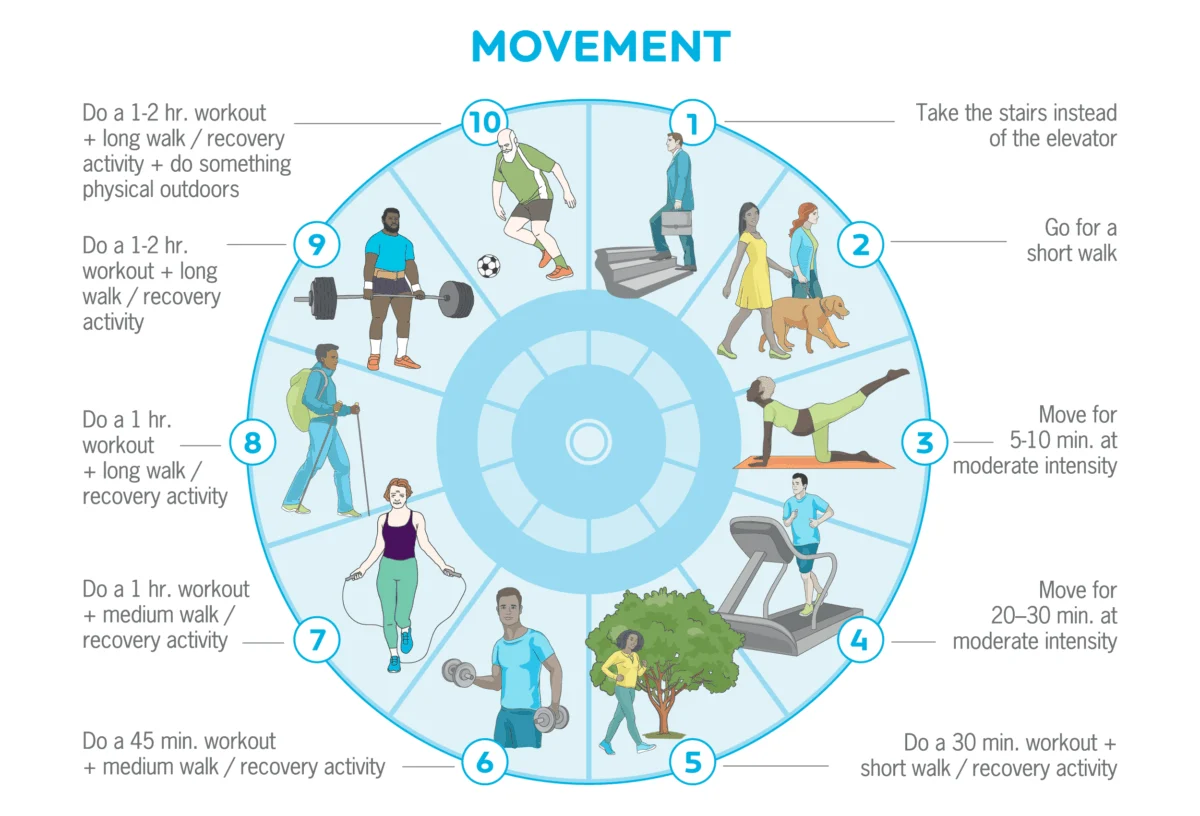
Embrace Flexibility: The "Dial" Concept: To counter the perfectionist trap, adopting a "dial" mentality rather than an "on-off" switch for health habits is transformative. This involves defining a "floor" (the absolute minimum action one can take even on the worst day) and a "ceiling" (the maximum, ideal effort).
- Floor Examples: 5 minutes of walking, 10 push-ups, one extra portion of vegetables, three conscious deep breaths before a meal.
- Ceiling Examples: An hour-long intense gym session, two hours of comprehensive meal prep, a 45-minute guided meditation.
This flexible range allows individuals to adapt their efforts to the unpredictable nature of life. When stress is high or time is scarce, the dial can be turned down to the "floor," ensuring continuity without complete abandonment. The critical insight here is that doing the bare minimum still "counts" and prevents the destructive cycle of all-or-nothing thinking. Consistency, even at a low intensity, far outweighs sporadic bursts of perfection followed by long periods of inactivity.
-
Create a Supportive Ecosystem: Willpower alone is often insufficient for sustained behavioral change. A more powerful strategy involves proactively designing one’s environment to make desired actions easier and undesired actions harder. This is often referred to as "choice architecture."
- Increase Accessibility: Make healthy choices readily available and visible. For instance, a "kitchen makeover" might involve prepping healthy snacks in advance and placing them at eye level in the fridge, while less healthy options are relegated to less accessible cupboards.
- Reduce Friction: Minimize obstacles to desired behaviors. If the goal is to exercise, lay out workout clothes the night before, or choose a gym that is conveniently located.
- Establish Social Support: Surround oneself with individuals who share similar health goals or provide positive reinforcement. Social norms and peer influence play a significant role in behavior.
Research, such as a review in Nature Reviews Psychology, consistently highlights that "access" is a primary influencer of behavior. By investing effort upfront to build an environment that naturally nudges towards healthy choices, individuals can significantly reduce the cognitive load and willpower required daily, making consistent action nearly inevitable.
Broader Implications and a Call for Realistic Health
The societal implications of widespread neglect of basic health habits are profound, contributing to rising rates of chronic diseases, increased healthcare costs, and a diminished quality of life for millions. Public health initiatives and individual wellness journeys must increasingly emphasize the power of these fundamentals over the fleeting promises of niche solutions.
Embracing a "C+ effort" mentality is not about settling for mediocrity; it is about acknowledging human imperfection and fostering self-compassion. It recognizes that sustainable health is built on the consistent application of "good enough" actions, adaptable to life’s inevitable fluctuations. Perfection is an illusion that often leads to paralysis; consistent, imperfect action is the engine of real, lasting change. By focusing on the powerful simplicity of foundational habits, individuals can escape the trap of the magic bullet and build a genuinely healthy, resilient life.