In an era defined by the rise of biohacking, wearable technology, and a proliferation of longevity-focused media, many individuals are increasingly preoccupied with the prospect of extending their healthspan and lifespan. High-profile figures, including podcasters and technology entrepreneurs, have popularized intensive, data-driven protocols—ranging from specialized supplementation to extreme physical training—designed to stave off the biological decline associated with aging. However, a comprehensive analysis of health data suggests that the pursuit of "optimal" health is often a misdirected effort, as the most significant improvements in longevity are consistently linked to basic, sustainable lifestyle habits rather than complex, high-cost interventions.

The Rise of Optimization Culture
The contemporary obsession with longevity has moved beyond medical necessity into the realm of lifestyle optimization. Over the last decade, a "longevity industry" has emerged, fueled by figures such as Dr. Peter Attia and Bryan Johnson, who advocate for rigorous monitoring of biomarkers. While these methods offer a sense of control, they frequently demand an extraordinary investment of time, financial resources, and cognitive energy.

For the average person, the barrier to entry for this "optimized" lifestyle is prohibitively high. Research from organizations like Precision Nutrition indicates that the vast majority of the population fails to meet even the most fundamental guidelines for physical activity, nutrition, and sleep. The disconnect lies in the assumption that complex, fringe strategies—such as cold plunges, advanced blood panel monitoring, or controversial supplement stacks—are required to achieve a long, healthy life. In reality, the evidence suggests a law of diminishing returns: the most dramatic health gains are realized when moving from a sedentary or poor-diet lifestyle to a foundational, habit-based approach.

Analyzing the Foundational Pillars of Health
To understand the efficacy of health interventions, one must look at the data surrounding four core pillars: exercise, nutrition, sleep, and stress management.

Exercise and the U-Shaped Curve
Physical activity is arguably the most potent tool for longevity. Studies of Harvard alumni and large-scale data involving over 270,000 older adults consistently demonstrate that any movement reduces mortality risk. The relationship between exercise volume and health follows a U-shaped curve. While moderate to high activity levels (roughly 150 to 300 minutes of moderate activity per week) correlate with significant reductions in cardiovascular disease and cancer mortality, the "extreme exercise hypothesis" suggests that beyond a certain threshold—approximately 10 hours of intense cardio or excessive high-impact training—the risk of myocardial issues, such as atrial fibrillation, may increase. The goal for the general public should be consistent, mixed-modality training, focusing on both aerobic capacity and resistance training for bone density and muscle maintenance.

Nutritional Patterns Over Perfection
The discourse surrounding nutrition has become needlessly complicated. Large-scale epidemiological studies, including those analyzing data from millions of participants, consistently show that a diet rich in whole or minimally processed foods—specifically five servings of fruits and vegetables daily—is the gold standard for reducing all-cause mortality. Ultra-processed foods (UPFs) have been linked to 32 distinct harmful health outcomes, including type 2 diabetes and cardiovascular disease. Crucially, the data suggests that achieving 70 to 80 percent of caloric intake from whole foods provides the vast majority of health benefits. Beyond that, the marginal utility of "perfect" eating declines, and the potential for developing restrictive eating behaviors, such as orthorexia, increases.

Sleep Hygiene and Stress Regulation
Sleep is often the first casualty of a high-stress, high-performance lifestyle, yet it is a primary predictor of cognitive health and longevity. Longitudinal studies indicate that individuals who consistently secure seven to nine hours of quality sleep have significantly lower rates of dementia and cardiovascular disease. Similarly, chronic stress management is essential. While stress is a natural component of human experience, unmanaged, long-term stress elevates inflammatory markers and hypertension. The most effective approach is not the elimination of stress—which is often impossible—but the implementation of "recovery" practices that allow the body to return to homeostasis.

The Economic and Practical Tradeoffs
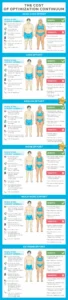
The disparity between a "healthy" lifestyle and an "optimized" one is vast. A cost-benefit analysis reveals that an optimizer lifestyle often costs three to four times more in both time and money than a foundational health approach. When accounting for specialized testing, expensive supplements, and time-intensive therapeutic interventions, the financial burden can easily exceed $10,000 annually.

This hyper-focus on optimization can also trigger secondary health risks. Excessive fixation on health data and protocols often leads to social isolation, as the rigid requirements of an optimized lifestyle may conflict with the social interactions and community involvement that are actually the strongest predictors of long-term life satisfaction. The Harvard Study of Adult Development, spanning over 87 years, has repeatedly identified strong social relationships as the most significant predictor of both longevity and quality of life, often surpassing the influence of socioeconomic status or even physical health markers.

Implications for Public Health
The trend toward extreme biohacking creates a "survivorship bias" in the public imagination, where the habits of a minority of high-performance individuals are treated as necessary requirements for the masses. Public health experts argue that this shift in focus away from the basics may be detrimental. If a large portion of the population believes that health is only achievable through expensive, complex, or time-consuming protocols, they are more likely to abandon health-promoting behaviors altogether.

The evidence is clear: the path to longevity is not found in the latest, unproven longevity supplement or advanced medical monitoring. Instead, it is found in the "boring" basics. Consistent physical movement, a diet centered on whole foods, adequate sleep, the management of stress through sustainable means, and, perhaps most importantly, the cultivation of a robust social circle, remain the most reliable interventions for a longer, more fulfilling life.

Conclusion: A Pragmatic Path Forward
For those seeking to improve their health trajectory, the most effective strategy is to audit their current habits against these foundational pillars before considering any fringe or experimental methods. The objective should be a sustainable, long-term approach that fits within the reality of one’s daily life, rather than a transient, high-intensity protocol that is likely to be abandoned. By focusing on consistency rather than perfection, individuals can achieve significant improvements in their healthspan without sacrificing the quality of life that makes the pursuit of longevity worthwhile in the first place. As research continues to evolve, the consensus remains that a simple, disciplined life is far more effective than an overly complicated, optimized one.