
The prevalence of macro tracking—monitoring the intake of proteins, fats, and carbohydrates—has surged in the fitness industry over the last fifteen years. Originally popularized by the "If It Fits Your Macros" (IIFYM) movement, the practice aimed to provide flexibility within a structured caloric framework. However, as Dr. Fundaro discovered, the transition from a helpful tool to an obsessive necessity is a common, often unacknowledged, reality for many athletes and fitness enthusiasts.
The Evolution of Nutritional Tracking and Its Limitations
The history of calorie and macro tracking can be traced back to the mid-20th century, though it became digitized and ubiquitous with the advent of smartphone applications in the early 2010s. By 2024, industry estimates suggest that millions of users rely on daily logs to manage body composition. While these tools are effective for short-term objectives, researchers in behavioral nutrition have increasingly identified a "tracking fatigue" phenomenon. This state is characterized by increased anxiety, social isolation during meals, and a weakened connection to the body’s innate satiety signals.
Dr. Fundaro’s experience mirrors the findings of several studies in the Journal of Eating Disorders, which suggest that while tracking can foster nutritional awareness, long-term adherence often correlates with increased body dissatisfaction. For someone with a high level of expertise, the inability to eat without a digital interface highlighted a systemic issue: the outsourcing of intuition to technology.
From Powerlifting to Plate: The RPE Methodology
In the world of strength sports, the Rate of Perceived Exertion (RPE) scale, modernized by Gunnar Borg in the 1960s, revolutionized training. Instead of blindly following a rigid percentage of a one-rep maximum, lifters began using subjective intensity to regulate their training load based on daily recovery and stress levels. This "autoregulation" allows for better longevity and performance.
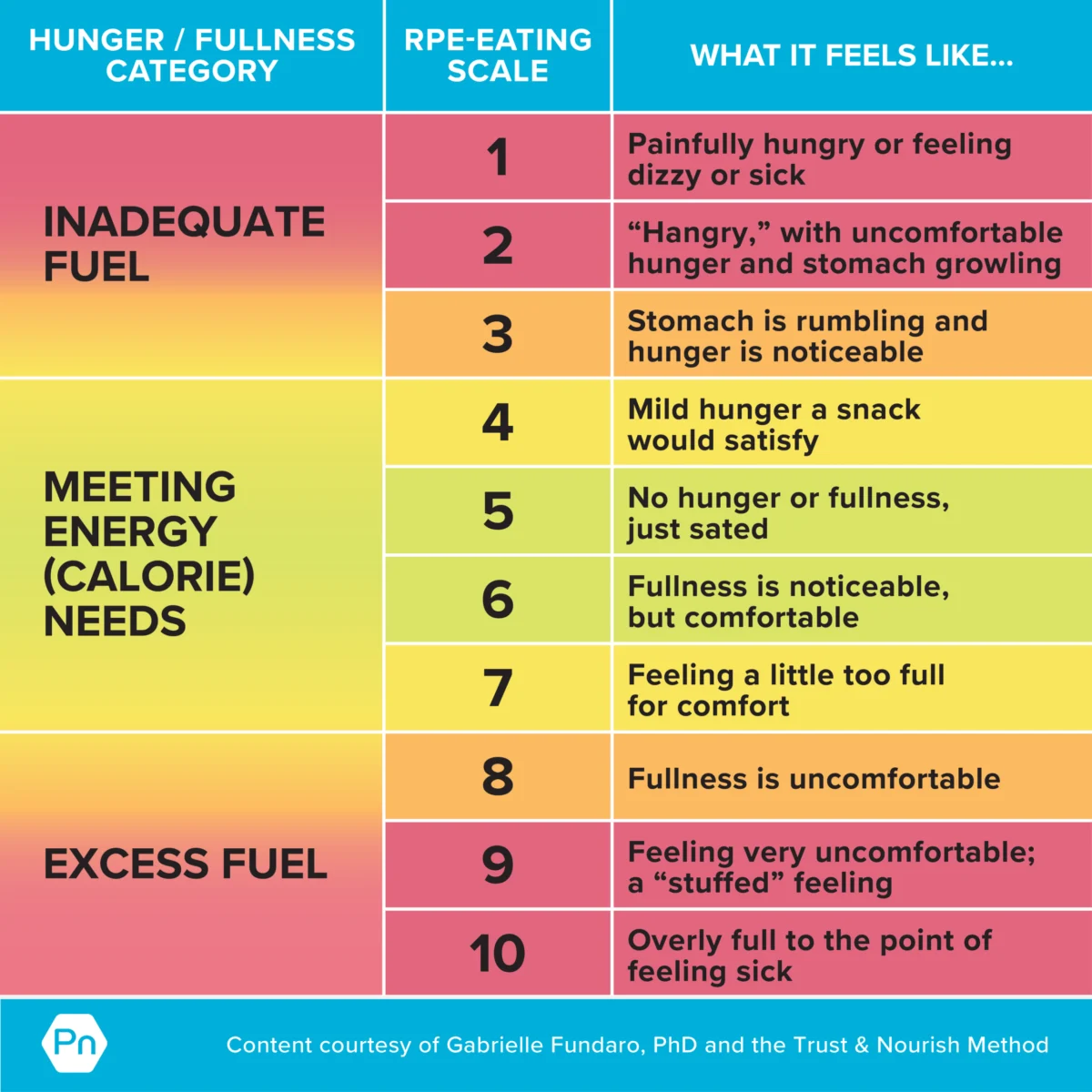
Dr. Fundaro’s breakthrough occurred when she hypothesized that this autoregulatory model could be applied to food. The RPE-Eating framework asks individuals to rate their hunger and fullness on a scale of 1 to 10. By replacing digital inputs with internal physiological data, the model shifts the focus from "hitting targets" to "practicing competence."
The Four Pillars of the RPE-Eating Framework
To transition away from external tracking, Dr. Fundaro developed a structured, four-step methodology designed to rebuild interoceptive awareness—the body’s ability to sense its own internal state.
- Clarifying Intentions: Before shifting methods, one must determine if the goal is performance, health maintenance, or simply regaining a neutral relationship with food. RPE-Eating is rarely the most efficient path for rapid weight loss, but it is highly effective for sustainable, long-term health.
- Identifying Hunger vs. Appetite: The system distinguishes between "hunger," a physiological requirement for energy, and "appetite," the psychological desire to eat. Practitioners are encouraged to log their hunger levels before and during meals to sensitize themselves to their body’s signals.
- Navigating Non-Hunger Triggers: Emotional eating is a well-documented human behavior. The framework utilizes a "Notice and Name" strategy to identify emotional states—such as anxiety, boredom, or stress—that lead to consumption. This provides a buffer, allowing the individual to choose non-food coping mechanisms.
- Balancing Satiety and Satisfaction: A critical innovation of this method is the inclusion of "satisfaction." A meal that is nutritionally adequate (satiety) but lacks emotional enjoyment often leads to dietary restriction, which inevitably triggers a compensatory binge. Integrating enjoyable foods prevents the "pendulum effect" common in restrictive dieting.
Data-Driven Autoregulation: Is It Effective?
Skeptics of the RPE-Eating method often point to the lack of precision. Critics argue that "feelings-based" eating risks caloric surplus or deficit without the user realizing it. However, Dr. Fundaro argues that the human body is inherently equipped with sophisticated metabolic sensors that are often ignored in favor of app-based math.

Internal validation suggests that RPE-Eating functions similarly to biofeedback in clinical settings. By monitoring hunger and fullness, an individual effectively tracks blood glucose and hormonal shifts indirectly. While not as precise as a blood glucose monitor, it is significantly more scalable and accessible for the general population.
Societal and Clinical Implications
The implications for the fitness coaching industry are profound. Many coaches are beginning to move away from rigid meal plans in favor of "nutritional coaching," which prioritizes long-term behavior change over short-term transformation. The RPE-Eating model provides a "bridge" for clients who are suffering from disordered eating tendencies or who are simply burnt out from years of tracking.
Professional associations, including the International Society of Sports Nutrition, have recently begun to emphasize the importance of psychological health in conjunction with physical performance. The movement toward intuitive but structured eating represents a correction in the fitness industry, acknowledging that a physique is not "optimal" if it is maintained through chronic mental stress.
Chronology of the Transition
- Pre-2020: High reliance on macro tracking for competition preparation and body maintenance.
- 2021-2022: Onset of "tracking fatigue" and realization that external metrics were suppressing internal signals.
- 2023: Implementation of RPE-based training and the conceptualization of the RPE-Eating scale.
- 2024: Formal adoption of the RPE-Eating framework for personal use and integration into client coaching programs.
Limitations and Practical Considerations
It is essential to note that the RPE-Eating framework is not a panacea. Dr. Fundaro explicitly cautions that it is not intended for individuals with acute, diagnosed eating disorders, who require specialized medical intervention. Furthermore, the system requires a high degree of patience. In a culture of "instant results," the time required to develop interoceptive awareness is a significant barrier.
For parents, shift workers, and those in high-stress environments, the mental bandwidth required to sit and "check in" with hunger cues during a meal may not always be available. In these instances, the framework suggests a flexible application: using the tools when possible and acknowledging that perfection is not the objective.
Conclusion: A Shift in Paradigms
The success of the RPE-Eating approach lies in its ability to return agency to the individual. By teaching people how to listen to their own biology, it removes the fear of the "unknown" that occurs when a tracking app is deleted. As Dr. Fundaro often notes, the goal is not to abandon nutrition science, but to internalize it.
The broader lesson for the fitness community is clear: tools such as macro trackers should be viewed as training wheels, not as a permanent prosthetic for human intuition. As individuals move through their fitness journeys, the ability to transition from rigid control to flexible, informed autonomy is perhaps the most significant indicator of long-term success. Whether through RPE-Eating or other mindful methodologies, the industry is increasingly moving toward a future where health is defined by the quality of one’s relationship with food, rather than the numbers on a screen.