
The simple act of brewing a cup of black coffee belies an extraordinary scientific complexity, a microscopic universe of chemical interactions that culminates in the familiar aroma and taste enjoyed by billions worldwide. Far from a mere infusion, a standard cup of coffee is an intricate aqueous solution, predominantly water, yet housing hundreds, if not thousands, of diverse chemical compounds in precise balance. This deep dive into coffee’s molecular makeup reveals why achieving the perfect brew is as much an art as it is a science, highlighting the ongoing quest by researchers to decode its profound sensory impact.
The Foundation: Water and Dissolved Solids
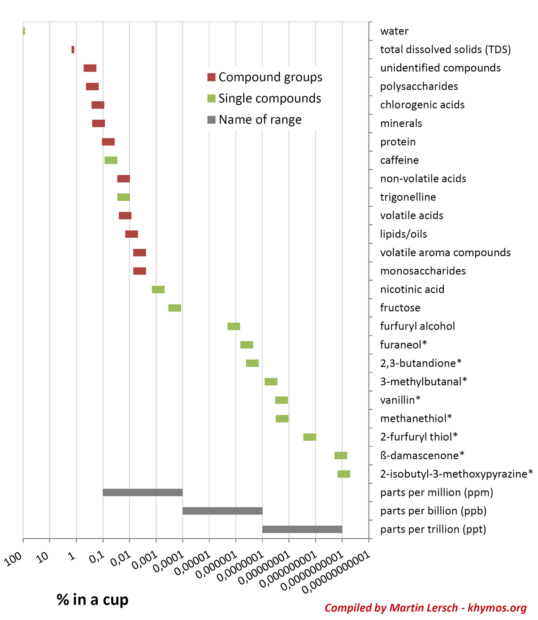
At its most fundamental, brewed coffee is an aqueous solution, with water typically constituting over 98.5% of its volume. This overwhelming proportion underscores water’s critical role as the solvent, responsible for extracting the soluble compounds from roasted coffee grounds. The remaining 1.2% to 1.5% comprises what is known as Total Dissolved Solids (TDS). This seemingly small percentage translates to a substantial 12 to 15 grams of extracted solids per liter of brewed coffee, typically derived from approximately 60 grams of dry coffee grounds. These solids are the very essence of coffee, imparting its characteristic color, flavor, and aroma.
The concentration of TDS serves as a primary metric for coffee strength, a parameter meticulously monitored by baristas and coffee enthusiasts alike. However, as scientific understanding progresses, it becomes clear that TDS alone provides an incomplete picture. The quality and balance of these dissolved solids, rather than just their quantity, are paramount to the sensory experience.
The Aroma Enigma: Volatile Compounds and Olfactory Science
The most captivating aspect of coffee, its intoxicating aroma, is attributed to a complex mixture of volatile organic compounds. These molecules, capable of vaporizing and traveling to the olfactory receptors in the nose, are responsible for the vast spectrum of notes—from floral and fruity to nutty, smoky, and earthy—that define coffee’s bouquet. Chromatographic techniques, such as Gas Chromatography-Mass Spectrometry (GC-MS) coupled with olfactometry (GC-O), have been instrumental in separating and identifying these individual chemical components. Through these advanced analytical methods, scientists have identified hundreds of different molecules in coffee. Yet, the full chemical symphony remains largely undeciphered.
A significant study conducted in 2002 by Sanz, Czerny, Cid, and Schieberle, utilizing Aroma Extract Dilution Analysis (AEDA), revealed that out of 40 key odorants identified in coffee, a remarkable 13 remained unknown [1]. This highlights the immense challenge in coffee chemistry. The reasons for this elusiveness are multi-faceted: many of these critical aroma compounds are present in extremely low concentrations, making their isolation and structural elucidation difficult. Additionally, some molecules may possess complex structures that complicate the analytical process.
Early attempts to synthetically mimic coffee aroma further underscore this complexity. A 1996 study by Semmelroch and Grosch demonstrated that a mixture of 22 key volatile compounds could produce "clearly coffee-like" models of Arabica and Robusta coffees [2]. While impressive, the description "clearly coffee-like" suggests a significant gap between synthetic approximations and the nuanced richness of naturally brewed coffee. This indicates that a far greater number of compounds, potentially acting synergistically, are required to replicate the full sensory profile, reassuring coffee aficionados that "synthetic" coffee is unlikely to rival the real thing anytime soon.

The Palate’s Canvas: Non-Volatile Compounds and Taste Perception
Beyond the volatile compounds that define aroma, non-volatile compounds contribute profoundly to coffee’s taste on the tongue, as well as its body and texture. These include a diverse array of molecules such as carbohydrates, acids, minerals, proteins, lipids, and the well-known stimulant, caffeine.
- Carbohydrates: Sugars (like sucrose, glucose, and fructose) and soluble oligosaccharides contribute to sweetness and play a crucial role in Maillard reactions and caramelization during roasting, developing complex flavor precursors.
- Acids: Coffee contains numerous organic acids, including chlorogenic acids (CGAs), quinic acid, citric acid, malic acid, and acetic acid. These acids are vital for coffee’s brightness, acidity, and perceived freshness. CGAs, in particular, are abundant in green coffee beans and undergo transformations during roasting, contributing to bitterness and astringency.
- Minerals/Salts: Trace minerals extracted from the beans contribute to the overall mineral balance and can subtly influence flavor perception.
- Proteins and Lipids: While less soluble, certain proteins and lipids contribute to the coffee’s body, mouthfeel, and crema (in espresso). Lipids, in particular, can encapsulate volatile compounds, influencing their release and perception.
- Caffeine: The most famous compound in coffee, caffeine, is a bitter alkaloid that provides the stimulant effect. Its concentration varies significantly between coffee species (Robusta generally having more than Arabica) and contributes distinctly to the beverage’s bitterness.
These non-volatile components, along with some unidentified compounds that likely contribute to color and bitterness, form the backbone of coffee’s taste profile, interacting with taste receptors on the tongue to create a multi-dimensional sensory experience.
The Power of the Miniscule: Odor Activity Values (OAVs)
The impact of a chemical compound on coffee’s flavor is not directly proportional to its concentration. This counterintuitive concept is explained by the Odor Activity Value (OAV), defined as the ratio of a compound’s concentration to its odor threshold (the minimum concentration at which it can be detected by the human nose). Compounds with high OAVs, even if present in minuscule amounts, can have a profound impact on the overall flavor.
A prime example is beta-damascenone, a potent odorant found in coffee at concentrations as low as 1 part per trillion (ppt). Despite its extremely low presence, beta-damascenone is considered one of the top five most impactful odorants in coffee [1]. This remarkable sensitivity of the human nose to specific molecules highlights the sophistication of our olfactory system. Beta-damascenone belongs to the "rose ketones" family, first identified in rose oil in the 1960s. Its name derives from the Damask rose (Rosa × damascena), where it was initially discovered. Its complex aroma profile includes notes of rose, blackcurrant, fruity, and tobacco, adding significant depth and complexity to coffee. The flavor and fragrance industry, exemplified by companies like Firmenich, quickly recognized its potential, famously incorporating beta-damascenone and other rose ketones into iconic perfumes such as Dior’s Poison. The discovery and quantification of such potent compounds represent significant milestones in flavor science.
The fact that compounds present at 0.0000000001% can be as critical to flavor as those at 0.01% underscores the limitations of simple concentration measurements and emphasizes the ongoing challenge of accurately quantifying and understanding coffee’s complete flavor profile.
The Science of Extraction: Polar, Non-Polar, and Brewing Dynamics
The process of brewing coffee is fundamentally an extraction process, where hot water selectively dissolves compounds from ground coffee. The solubility of these compounds varies significantly based on their polarity.
- Polar Compounds: These include acids, minerals, proteins, and carbohydrates. Being highly soluble in water (a polar solvent), water is exceptionally efficient at extracting them, typically yielding over 75% of these compounds from the grounds.
- Non-Polar Compounds: This group encompasses many volatile aroma compounds and lipids. Their solubility in water is considerably lower, meaning that standard water-based brewing typically extracts only 10-30% of these compounds.
This differential extraction rate is crucial for understanding brewing dynamics. Different brewing methods—espresso, pour-over, French press, cold brew—employ varying contact times, temperatures, pressures, and turbulence, which in turn influence the extraction efficiency of polar versus non-polar compounds. For instance, espresso, with its high pressure and short contact time, extracts a different balance of compounds compared to a long, slow cold brew. The exploration of alternative, less polar solvents, such as ethanol, could potentially unlock new dimensions of coffee extraction, yielding novel flavor profiles for specialized applications or research.
Beyond Strength: Why TDS Tells Only Part of the Story
While Total Dissolved Solids (TDS) is a useful measure for quantifying coffee strength, it is a poor predictor of the nuanced aroma and flavor in a cup. This limitation stems directly from the complex chemistry discussed: the vast differences in extraction yields between polar and non-polar compounds, and the disproportionate impact of certain compounds (like beta-damascenone) at extremely low concentrations.
A TDS measurement predominantly reflects the presence of the more abundant, highly soluble polar compounds. It offers little insight into the delicate balance of volatile aroma compounds that define a coffee’s character. Two coffees with identical TDS readings might offer vastly different sensory experiences due to variations in their minute, yet powerful, odorant profiles. Therefore, while instrumental analysis provides invaluable data, the human nose remains an unparalleled "analytical detector" for assessing the true quality and complexity of coffee. The subjective yet highly sensitive nature of human olfaction and taste continues to be the ultimate arbiter in the exploration of coffee’s wonders.
A Historical Brew: The Evolution of Coffee Science
The scientific investigation into coffee has evolved significantly since its popularization centuries ago. Early inquiries focused primarily on its stimulating effects, leading to the isolation of caffeine in the early 19th century. However, it wasn’t until the mid-20th century, with advancements in analytical chemistry, particularly chromatography and spectroscopy, that scientists began to unravel the true complexity of coffee’s flavor and aroma compounds. The 1990s and early 2000s saw a boom in research, leading to the identification of hundreds of volatile compounds and the establishment of concepts like Odor Activity Values, which revolutionized understanding of how these compounds contribute to sensory perception. This ongoing scientific journey parallels the rise of the specialty coffee movement, where an appreciation for nuanced flavors has driven both consumer demand and scientific curiosity.
Implications for the Coffee Industry and Beyond
The deepening understanding of coffee’s chemical composition carries profound implications across the entire coffee value chain:
- For Farmers and Breeders: Knowledge of chemical precursors can guide the selection and breeding of coffee varietals with enhanced flavor potential, optimized for specific environmental conditions and desired taste profiles.
- For Roasters: Understanding how heat affects different compounds allows roasters to meticulously control roasting profiles to develop specific flavors, manage bitterness, and maximize the desirable aromatic compounds while minimizing undesirable ones. The Maillard reaction, caramelization, and Strecker degradation are complex chemical processes precisely manipulated during roasting to unlock coffee’s full sensory potential.
- For Brewers and Equipment Manufacturers: Insights into extraction dynamics inform the design of brewing equipment and techniques, allowing for optimized extraction of desired compounds and greater consistency in the final cup.
- For the Flavor and Food Science Industry: The identification of key odorants and taste compounds facilitates the development of natural and artificial flavorings for various food and beverage products, although full replication of natural coffee remains a significant challenge.
- For Consumers: A greater appreciation for the science behind their daily brew can enhance the enjoyment and understanding of coffee’s diverse sensory attributes, fostering a more informed and discerning palate. It also highlights the intricate process from bean to cup, enriching the overall coffee experience.
- Health and Wellness: Beyond flavor, the complex chemical matrix of coffee also includes numerous bioactive compounds like antioxidants (e.g., chlorogenic acids), which are increasingly studied for their potential health benefits, adding another layer to the understanding of this ubiquitous beverage.
The journey to fully comprehend the marvel that is coffee’s chemistry is far from complete. As analytical techniques become more sophisticated, and our understanding of human perception deepens, additional key odorants and taste modifiers are likely to be discovered. The humble cup of coffee, therefore, remains a rich frontier for scientific exploration, continuously challenging researchers to uncover its hidden depths and further enrich the experience for coffee lovers worldwide.