
The debate surrounding the health implications of vegetable and seed oils has reached a fever pitch in recent years, fueled by the rise of niche dietary movements such as the carnivore diet and the rapid dissemination of health-related content across social media platforms like TikTok. These oils—ranging from canola and soybean to corn and sunflower—have been labeled by some as "toxic sludge," "motor oil," or "the hateful eight," while others continue to maintain that they are heart-healthy alternatives to saturated animal fats. To navigate this polarized landscape, it is necessary to separate the science of lipid biochemistry from the inflammatory rhetoric often found in digital spaces.
The historical context of this controversy traces back to the early 20th century. During the Industrial Revolution and the subsequent decades, the food industry sought cost-effective alternatives to animal fats like lard and butter. This period saw the introduction and mass-market success of hydrogenated oils and margarine, which were initially touted as superior to traditional animal fats. However, as medical science evolved, the dangers of trans fatty acids—byproducts of the partial hydrogenation process—became clear. By 2018, the United States Food and Drug Administration (FDA) effectively banned the use of partially hydrogenated oils in the food supply. This regulatory shift, while positive, left a lingering skepticism in the public consciousness regarding the manufacturing processes used to produce modern seed oils.
The primary argument levied against vegetable oils today centers on the refinement process. Unlike olive or avocado oils, which can be extracted through simple mechanical pressing, the seeds of plants like corn, soybeans, and rapeseed contain relatively low levels of fat. To extract these oils efficiently, manufacturers employ intensive methods, including high-heat pressing, chemical solvent extraction (typically using hexane), and deodorization. Critics argue that these high-heat, industrial processes strip away natural antioxidants and polyphenols, potentially oxidizing the polyunsaturated fatty acids (PUFAs) and rendering them inflammatory.

In contrast, mainstream nutritional science largely supports the inclusion of moderate amounts of unsaturated fats. The American Heart Association (AHA) has long suggested that replacing saturated fats with polyunsaturated and monounsaturated fats can lower levels of LDL cholesterol and reduce the risk of cardiovascular disease. The friction between these perspectives often stems from the distinction between the biological impact of fatty acids in a whole-food matrix versus those in a highly processed, refined oil state.
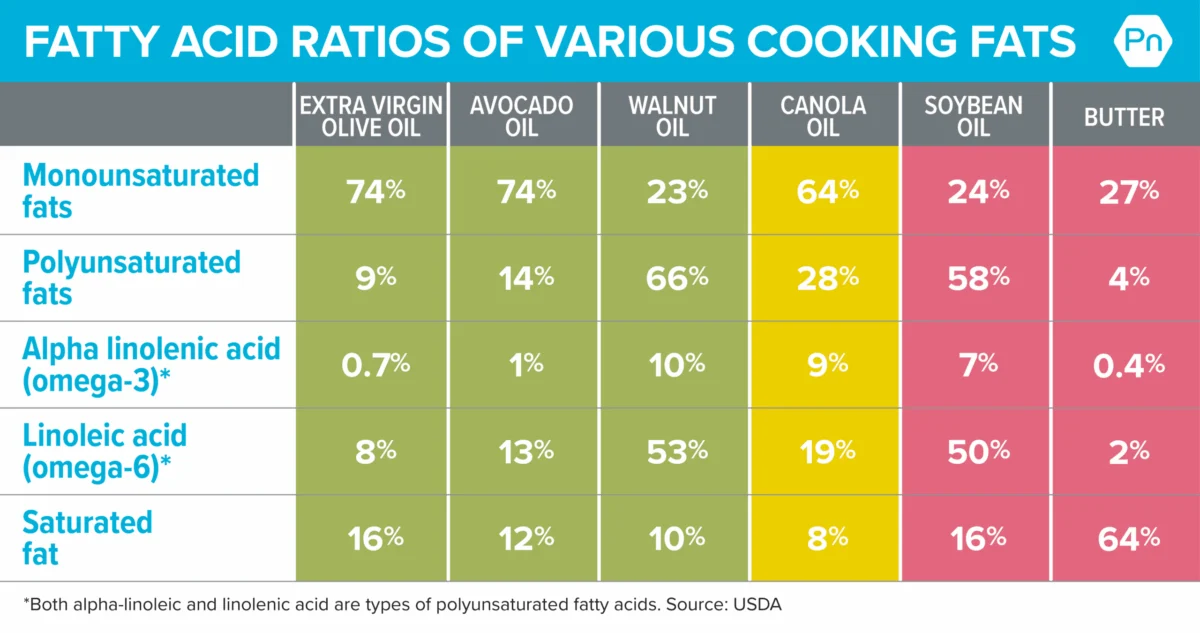
A significant point of contention involves the ratio of omega-6 to omega-3 fatty acids. Critics argue that the modern Western diet is heavily skewed toward omega-6 consumption, which some hypothesize promotes chronic inflammation and contributes to metabolic syndrome, depression, and autoimmune conditions. While it is true that the modern diet contains an elevated intake of omega-6s compared to ancestral diets, the scientific consensus is not as settled as social media influencers might suggest. A landmark 2019 study published in the journal Circulation analyzed data involving over 13,000 individuals and found that higher intakes of linoleic acid—the most common omega-6 fat—were associated with a lower risk of heart disease and early death. Harvard Health and other major institutions have noted that there is no definitive evidence requiring a strict 1:1 ratio of omega-6 to omega-3 for the average person.
The distinction between "refined" and "minimally processed" is critical. Extra virgin olive oil (EVOO) remains the gold standard in nutritional research. Beyond its monounsaturated fat content, EVOO is rich in oleocanthal and other phenolic compounds that provide anti-inflammatory and antioxidant benefits. Large-scale observational studies, such as those conducted on Mediterranean populations, have consistently demonstrated that high consumption of olive oil correlates with increased longevity and lower incidence of chronic disease. Importantly, recent culinary and scientific research has debunked the myth that EVOO is unsuitable for cooking. Because of its high polyphenol content, it is remarkably stable at heat, often outperforming more refined oils that lack these protective natural compounds.
When examining the impact of refined oils on human health, it is essential to consider the "food matrix" effect. Most of the refined vegetable oil consumed in the modern world is not added by home cooks in controlled quantities; rather, it is a primary component of ultra-processed foods (UPFs). These products, which include chips, crackers, frozen meals, and fast-food fried items, are often calorically dense and nutritionally sparse. Research consistently shows that a diet high in ultra-processed foods is associated with increased risks of obesity, type 2 diabetes, and premature mortality. In this context, the oil itself is only one part of a larger nutritional profile that is frequently problematic due to high sodium, low fiber, and an abundance of refined carbohydrates.

From a practical, evidence-based standpoint, the path forward for the average consumer involves a shift toward whole-food sources of fat. Prioritizing foods such as walnuts, chia seeds, flaxseeds, olives, and avocados allows for the consumption of beneficial fatty acids while also capturing the fiber, vitamins, and minerals that accompany them in nature. When it comes to cooking oils, the recommendation remains consistent among experts:
- Prioritize minimally processed oils such as extra virgin olive oil or avocado oil.
- If budget or flavor profiles necessitate an alternative, high-oleic versions of sunflower or safflower oil, or expeller-pressed canola oil, serve as stable, neutral options that are far superior to highly refined, solvent-extracted varieties.
- Limit the intake of deep-fried foods, regardless of the type of oil used, as the high-heat, repeated-use nature of industrial deep frying leads to the formation of harmful oxidation products and trans fats.
- Aim to derive the majority of daily fat intake from whole, unprocessed sources.
The "toxic" label applied to all vegetable oils is an oversimplification that ignores the nuances of lipid chemistry and processing methods. While it is true that the industrialization of the food supply has led to an over-reliance on refined, nutrient-poor oils, the solution is not necessarily to adopt an extreme, restrictive diet that eschews all plant-based fats. Instead, the focus should be on minimizing ultra-processed food consumption and choosing oils that retain their natural, protective compounds.
As the scientific community continues to explore the complexities of human metabolism, the role of dietary fats will remain a subject of intense investigation. However, the current weight of evidence suggests that the focus of public health initiatives should remain on reducing the consumption of ultra-processed, calorie-dense foods rather than fixating on the inherent "toxicity" of any single plant-derived lipid. By emphasizing whole, minimally processed foods, individuals can maintain a healthy, sustainable diet that supports long-term metabolic health and longevity. Consumers are encouraged to consult clinical data and peer-reviewed literature, rather than anecdotal trends, when making foundational changes to their dietary habits.