
The shift away from rigid tracking is not merely a personal anecdote; it reflects a growing tension within the sports nutrition and wellness industries. As digital tracking apps have proliferated, so too has the phenomenon of "tracking burnout," where the mental load of logging every gram of protein and fat begins to outweigh the physiological benefits of precision.
The Evolution of Nutritional Autonomy
The reliance on macro tracking—counting protein, carbohydrates, and fats—gained mainstream traction in the early 2010s as a flexible alternative to traditional "clean eating" diets. Proponents argued that as long as the numbers aligned with a specific target, body composition could be manipulated with mathematical certainty. However, the psychological toll of this method often went unaddressed.
For Dr. Fundaro, the breaking point arrived after years of balancing her professional life with the stringent demands of competitive lifting. She realized that the very tools designed to grant her control had, in fact, stripped her of her autonomy. The inability to dine at a restaurant without calculating the estimated macros of a meal, or the anxiety triggered by an "untracked" day, became a source of significant psychological distress. This realization triggered an investigative process into alternative frameworks that could bridge the gap between structure and intuition.
Borrowing from Athletic Science: The RPE Framework
The solution surfaced in an unlikely place: the weight room. In strength and conditioning, the Rate of Perceived Exertion (RPE) scale has long been used as a tool for autoregulation. Developed by Gunnar Borg in the 1960s, the RPE scale was originally a medical tool to measure physical strain during cardiac rehabilitation. By the 2000s, it had become a gold standard for elite athletes, allowing them to adjust their training intensity based on daily recovery, sleep quality, and psychological readiness, rather than strictly following a rigid, pre-written program.
Dr. Fundaro identified a parallel between the "over-training" risks in the gym and the "over-tracking" risks in the kitchen. She theorized that if a lifter could accurately judge their exertion on a 1–10 scale to achieve peak performance, a similar scale could be applied to hunger and satiety to achieve nutritional health. Thus, the RPE-Eating model was developed.
Decoding the RPE-Eating Scale
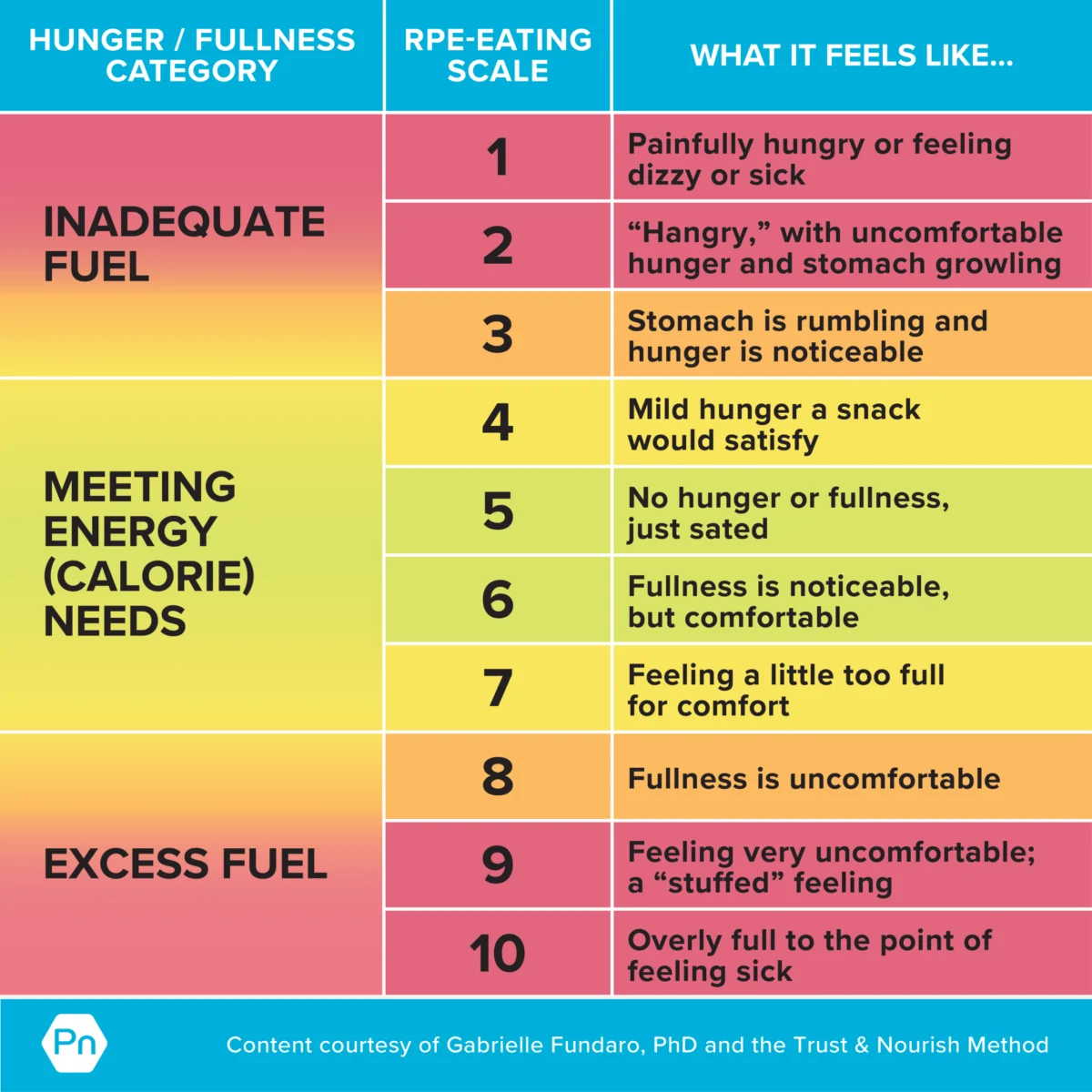
The RPE-Eating scale operates on a 1–10 spectrum, shifting the focus from external caloric databases to internal biological feedback.
- 1–3 (Inadequate Fuel): Characterized by physical symptoms like dizziness, lightheadedness, and profound hunger.
- 4–7 (Adequate Fuel): The target zone. This range represents the "sweet spot" where physical hunger is addressed, energy levels are stable, and the individual feels satisfied without the discomfort of being overly full.
- 8–10 (Excess Fuel): Ranges from uncomfortable fullness to physical sickness or "stuffed" sensations.
By adopting this scale, individuals move away from the "all-or-nothing" mentality of dieting. Instead of asking "Does this fit my macros?", the user asks, "How does this food make me feel?" and "Am I eating to satisfy a physical need or an emotional impulse?"
Chronology of the Shift
The transition from tracking to intuitive regulation is rarely instantaneous. Research into nutritional psychology suggests that individuals who have spent years using tracking software often experience a period of "interoceptive atrophy"—a reduced ability to recognize natural hunger and fullness cues.

- Phase One: Awareness. For the first few weeks, the practitioner records hunger levels before and after meals to recalibrate their internal sensors. This is not about restricting food, but about observing the body’s response to consumption.
- Phase Two: Trigger Identification. The practitioner begins to log "non-hunger triggers." This involves identifying emotional cues—such as stress, boredom, or professional burnout—that lead to mindless consumption.
- Phase Three: Integration. Once the individual can reliably distinguish between hunger and appetite, they begin to eat based on internal cues, reserving tracking only for high-stakes athletic periods if necessary.
Data-Driven Skepticism and Industry Reaction
Critics of the RPE-Eating approach often argue that it lacks the precision necessary for high-level athletes, such as bodybuilders or weight-class athletes. In these fields, every gram of glycogen or protein can influence aesthetic outcomes or weigh-in eligibility.
However, Dr. Fundaro’s counter-argument is based on the concept of "fitness for life." She emphasizes that for the vast majority of the population—including those who are not preparing for a professional show—the long-term health risks of disordered eating and chronic stress outweigh the minor aesthetic gains of extreme precision.
Furthermore, data from studies on "Mindful Eating" suggest that individuals who practice greater interoceptive awareness maintain more stable body weights over time than those who rely on external tracking devices, which often lead to binge-restrict cycles.
The Role of Satisfaction
A critical component often missing from traditional nutrition plans is the concept of "satisfaction." A meal may hit the required caloric and macro targets, but if it lacks the flavor or social connection associated with traditional dining, it is likely to be abandoned.
RPE-Eating posits that "satisfaction" is a legitimate nutritional requirement. By allowing for "off-limits" foods to be consumed within the 4–7 range of the RPE scale, practitioners report a significant reduction in the psychological desire to binge. This aligns with findings in behavioral economics, which suggest that when an item is no longer "forbidden," its appeal as a high-value reward decreases.
Broader Implications for Public Health
The movement toward RPE-Eating reflects a broader cultural pivot in the wellness industry. As public health officials grapple with the rise of eating disorders and the mental health impacts of social media-driven fitness culture, tools that promote self-trust are gaining professional favor.
For clinicians, this method provides an "off-ramp" for patients who are ready to stop tracking but lack the confidence to do so. It acknowledges that tracking is a valid educational tool—much like a training wheel on a bicycle—but it is not a permanent solution for navigating the complexities of human appetite.
Conclusion: A Path Toward Sustainable Nutrition
The transition from macro tracking to RPE-Eating is not a rejection of science; it is an evolution of it. By applying the same principles of autoregulation used by Olympic-level athletes to the act of eating, individuals can move toward a more sustainable relationship with food.
The goal, as Dr. Fundaro notes, is not to achieve a "perfect" diet, but to build a level of nutritional competence that allows one to thrive without the constant interference of an app. In an era where data is often mistaken for wisdom, the RPE-Eating scale serves as a reminder that the most sophisticated nutritional instrument available is, and has always been, the human body itself. While it requires the labor of mindfulness and the patience to learn one’s own cues, the result is a liberation from the numbers, leading to a more grounded and intuitive approach to long-term health.