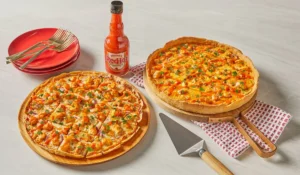

Grimaldi’s Pizzeria, the renowned institution famous for its coal-fired brick oven pizza, has officially announced a nationwide initiative to honor healthcare and education professionals by offering a 15% discount during the upcoming Nurse and Teacher Appreciation Week. Running from Monday, May 4, through Friday, May 8, the promotion serves as a targeted gesture of gratitude toward two of the most vital workforce sectors in the United States. To redeem the discount, eligible patrons are required to present a valid school or workplace identification card at any participating Grimaldi’s location across the country. This initiative underscores a growing trend within the hospitality industry to leverage corporate social responsibility as a means of fostering community ties and acknowledging the demanding nature of frontline public service roles.
Strategic Timing and Promotion Logistics
The decision to align this promotion with the first full week of May is a calculated move that coincides with the traditional observation of National Nurses Week and National Teacher Appreciation Week. By offering a 15% reduction in the total bill, Grimaldi’s aims to provide a tangible benefit to professionals who often work extended hours under high-pressure conditions. The promotion is structured to be accessible yet strictly regulated; it applies to all orders placed within the five-day window but stipulates that the discount cannot be combined with other ongoing promotions, coupons, or rewards programs.
Logistically, the requirement for a valid I.D. ensures that the benefits are directed specifically toward the intended demographic. In the fast-casual and upscale-casual dining sectors, such verification processes are standard to maintain the integrity of the offer while allowing the brand to track the engagement levels of specific professional cohorts. The "nationwide" scope of the offer is particularly significant, as Grimaldi’s operates dozens of locations in various states, including New York, Texas, Nevada, and Arizona, meaning the impact of the discount will be felt in diverse economic markets.
Historical Context: The Origins of Professional Appreciation Weeks
To understand the significance of Grimaldi’s initiative, one must look at the historical and cultural weight of the weeks being celebrated. National Nurses Week begins annually on May 6 and concludes on May 12, the birthday of Florence Nightingale, the founder of modern nursing. The week was first observed in 1954, though it took decades of advocacy before President Ronald Reagan signed a proclamation in 1982 officially designating May 6 as National Recognition Day for Nurses.
Similarly, National Teacher Appreciation Week is organized by the National Education Association (NEA) and the National Parent Teacher Association (PTA). While the origins of a day for teachers date back to the late 1940s, it was not until 1980 that Congress declared a National Teacher Day. In 1984, the PTA expanded the celebration to a full week. For a brand like Grimaldi’s to integrate both professions into a single promotional window demonstrates an awareness of the shared societal value these roles provide—often with limited financial recognition relative to their impact.
The State of the Nursing and Education Professions
The enrichment of this promotional news comes at a time when both nursing and teaching are facing unprecedented systemic challenges. According to data from the American Nurses Association (ANA), the United States is currently navigating a significant nursing shortage, exacerbated by an aging population and high turnover rates following the global health crises of the early 2020s. Projections suggest that more than one million new registered nurses will be needed by 2030 to meet the nation’s healthcare demands.
In the education sector, the National Center for Education Statistics (NCES) reports that nearly half of public schools in the U.S. have reported being understaffed. Teachers frequently cite burnout and a lack of community support as primary reasons for leaving the profession. In this climate, corporate gestures—even those as simple as a discounted meal—take on a symbolic importance. While a 15% discount does not solve systemic labor issues, industry analysts suggest that such moves contribute to a "culture of appreciation" that can improve morale among local workforces.
Economic Impact and Consumer Behavior in the Restaurant Industry
From a business perspective, Grimaldi’s Pizzeria is tapping into a proven marketing strategy known as "cause-marketing" or "community-based discounting." By targeting teachers and nurses, the brand is appealing to a demographic that possesses significant collective purchasing power. According to the Bureau of Labor Statistics (BLS), there are approximately 3.2 million full-time equivalent teachers in public schools and over 4 million registered nurses in the U.S.
For the restaurant industry, which has faced its own share of hurdles regarding rising food costs and labor shortages, these promotions serve a dual purpose. First, they drive foot traffic during the Monday-to-Friday period, which typically sees lower sales volumes compared to weekends. Second, they build long-term brand loyalty. A teacher who utilizes a discount during Appreciation Week is statistically more likely to return to that establishment for full-price meals in the future, viewing the brand as a supporter of their profession.
The Grimaldi’s Brand and Culinary Tradition
Grimaldi’s Pizzeria is not a standard fast-food chain; it carries a legacy rooted in the traditions of Brooklyn, New York. Known for its coal-fired brick ovens, the restaurant utilizes a specialized heating process that reaches temperatures of up to 1,200 degrees Fahrenheit. This method creates a signature "smoky" flavor and a crisp crust that is difficult to replicate with standard gas or electric ovens.
The brand’s expansion from a single location under the Brooklyn Bridge to a national presence has been defined by a commitment to quality ingredients, including secret-recipe dough and fresh mozzarella. By offering this discount, Grimaldi’s is inviting a broad spectrum of the "hero" workforce to experience a premium culinary product that is often positioned at a higher price point than mass-market pizza chains. This elevates the perceived value of the 15% discount, as it applies to a high-end casual dining experience.
Official Responses and Inferred Community Reaction
While official statements from Grimaldi’s leadership emphasize the company’s desire to "give back to those who give so much," the reaction from the community is expected to be overwhelmingly positive. In previous years, similar promotions across the restaurant industry have seen high engagement on social media platforms, where educators and healthcare workers share their experiences.
Industry experts note that the inclusion of both professions in a single week creates a "halo effect" for the brand. "When a company acknowledges the exhaustion and dedication of nurses and teachers, they aren’t just selling pizza; they are selling an alignment of values," says a marketing analyst specializing in the food and beverage sector. The requirement of an I.D. also facilitates a brief, positive interaction between staff and customers, allowing restaurant employees to personally thank these professionals for their service.
Comparative Analysis of Industry Appreciation Trends
Grimaldi’s 15% discount is part of a broader landscape of corporate appreciation. Other major brands often participate in these weeks, with offers ranging from free coffee at convenience stores to significant percentages off at apparel retailers. However, the 15% discount on a full meal at a sit-down pizzeria is considered a substantial offer within the "full-service" category. Unlike "freebie" promotions that may only include a small side item or a drink, a percentage-based discount on the entire order allows groups of colleagues—such as a group of teachers during a lunch break or a shift of nurses—to save significantly on a communal meal.
Implications for Corporate Social Responsibility (CSR)
The broader implication of this move by Grimaldi’s is the continued shift toward active Corporate Social Responsibility in the mid-scale dining sector. Modern consumers, particularly those in the Millennial and Gen Z demographics, increasingly make purchasing decisions based on a company’s perceived social impact. By identifying and supporting "local heroes," Grimaldi’s positions itself as a community pillar rather than a mere commercial entity.
This strategy is particularly effective in the "post-pandemic" era, where the public’s awareness of the essential nature of teaching and nursing remains high. The 15% discount serves as a recurring reminder that the private sector recognizes the public sector’s contributions. As May 4 approaches, the initiative is expected to result in a measurable uptick in weekday traffic for Grimaldi’s, while simultaneously reinforcing the brand’s reputation for community engagement.
Conclusion and Future Outlook
As the window of May 4 through May 8 draws near, Grimaldi’s Pizzeria stands ready to welcome thousands of nurses and teachers across its various locations. The promotion highlights the intersection of commerce and community, proving that even in a competitive economic environment, there remains a significant place for gratitude-based marketing. For the teachers and nurses who spend their days educating the next generation and saving lives, the 15% discount is more than just a reduction in price; it is a recognition of their tireless efforts and an invitation to pause, reflect, and enjoy a meal prepared with the same level of dedication they bring to their own professions.
Moving forward, it is likely that such initiatives will become even more integrated into the annual calendars of major restaurant groups. As the labor market for both healthcare and education continues to face challenges, the role of local businesses in providing support and recognition will remain a critical component of the American social fabric. Grimaldi’s Pizzeria, through this nationwide offer, reaffirms its commitment to those who serve the public, one coal-fired slice at a time.