
The intersection of rigorous scientific methodology and culinary arts has increasingly defined the modern culinary landscape, with specialty coffee serving as a primary focal point for chemical exploration. What was once treated as a routine morning stimulant has evolved into a complex biochemical endeavor. Recent developments in analytical techniques, fluid dynamics, and consumer equipment have allowed researchers, roasters, and home enthusiasts to deconstruct the extraction process with unprecedented precision. By applying foundational principles of chemistry to variables such as brew ratios, total dissolved solids, particle size distributions, and thermal dynamics, the global specialty coffee sector is fundamentally redefining how a cup of coffee is understood and produced.

Background Context and the Rise of Third-Wave Coffee
The current analytical approach to coffee brewing did not emerge in a vacuum. Over the past fifteen years, the global coffee industry has experienced what sociologists and culinary historians term the "third wave of coffee"—a movement that treats coffee as an artisanal agricultural product akin to wine or craft beer, emphasizing single-origin sourcing, lighter roasts, and transparent supply chains. Particularly strong in Scandinavia and other parts of Europe, this movement fostered a culture of experimentation.
During the widespread lockdowns and social restrictions of 2020, domestic culinary experimentation surged. Confined to their homes, many consumers—including formally trained scientists—turned their analytical focus toward daily routines. Faced with inconsistent pour-over results and an influx of diverse single-origin beans sourced via subscription services like Kaffebox, researchers began applying laboratory-grade curiosity to kitchen countertops. This period of domestic contemplation revealed a broader industry-wide realization: despite the high quality of specialty beans, home brewing techniques often lacked the reproducibility and control necessary to consistently unlock optimal flavor profiles. Consequently, a vast body of contemporary scientific literature surrounding pour-over, immersion, and drip coffee has been brought to the forefront, bridging the gap between industrial food science and domestic practice.
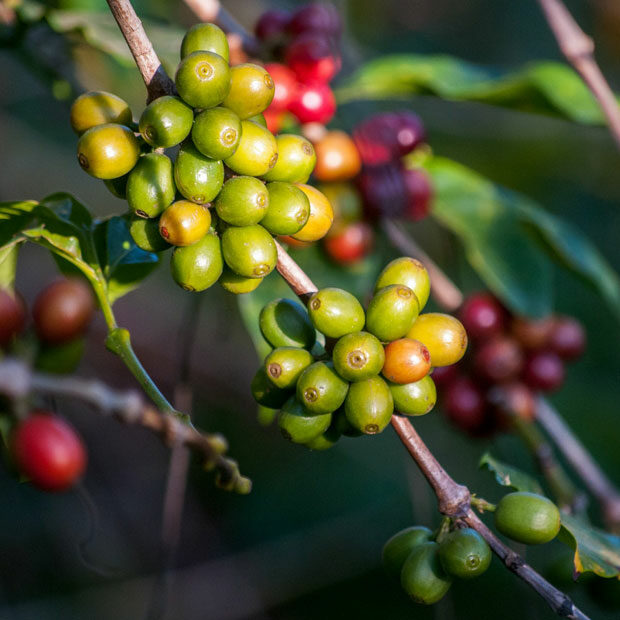
The Mechanics of Extraction: Brew Ratios, TDS, and Yields
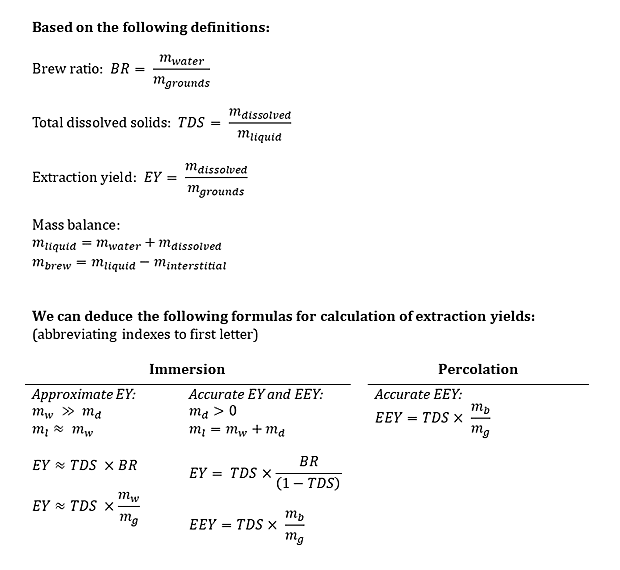
At the heart of coffee extraction chemistry are three interrelated parameters: the brew ratio (BR), total dissolved solids (TDS), and extraction yield (EY).
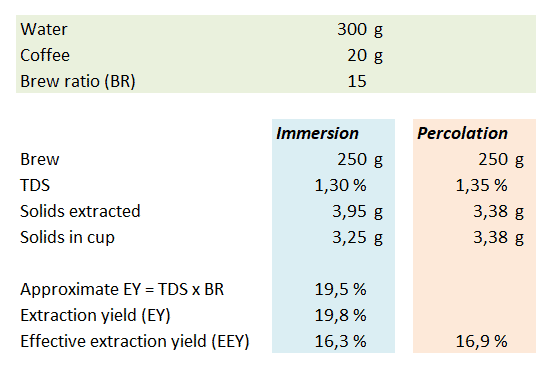
The brew ratio serves as the foundational recipe for any given extraction, defined simply as the mass of water relative to the mass of dry coffee grounds. Standard black coffee recipes typically utilize a brew ratio between 15 and 25, with 60 grams of coffee per 1,000 grams of water (a ratio of 16.7) acting as a standard baseline. This ratio allows brewers to scale recipes uniformly, mirroring the baker’s percentages used in dough production.
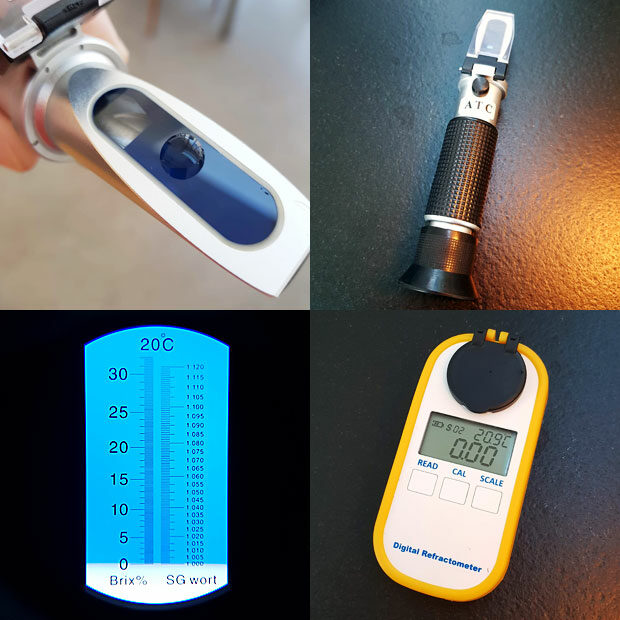
However, controlling the ratio does not guarantee flavor clarity, which is where Total Dissolved Solids (TDS) becomes essential. TDS measures the concentration of extracted chemical compounds within the liquid beverage, typically expressed as a percentage. A standard cup of black coffee is composed of more than 98% water, with dissolved solids accounting for the remaining 1.2% to 1.5%. Measuring TDS traditionally required gravimetric analysis—evaporating a weighed sample of coffee to dryness and weighing the residual matter. Because this method is impractical for daily use, industry practitioners and researchers increasingly rely on optical refractometers. By measuring how light refracts through a coffee sample compared to pure water—often utilizing the Brix scale and converting via a standardized multiplier—users can quickly determine whether beverage strength falls within optimal parameters.
Building upon TDS, the extraction yield (EY) calculates the percentage of the original dry coffee mass that has been successfully dissolved into the liquid. Calculating EY requires distinguishing between immersion brewing methods, where the entire liquid mass is uniformly integrated, and percolation (pour-over) methods, where interstitial liquid trapped between coffee grounds does not ultimately reach the final cup. Experts such as Scott Rao and Jonathan Gagné have extensively analyzed these mechanics, noting that percolation methods often yield a higher measured TDS in the cup due to the introduction of fresh solvent, whereas immersion methods extract a greater absolute mass of compounds from the grounds. Understanding these distinctions explains why immersion and percolation coffees exhibit markedly different sensory profiles, even when utilizing identical beans and brew ratios.
Grind Size, Particle Size Distribution, and Surface Area
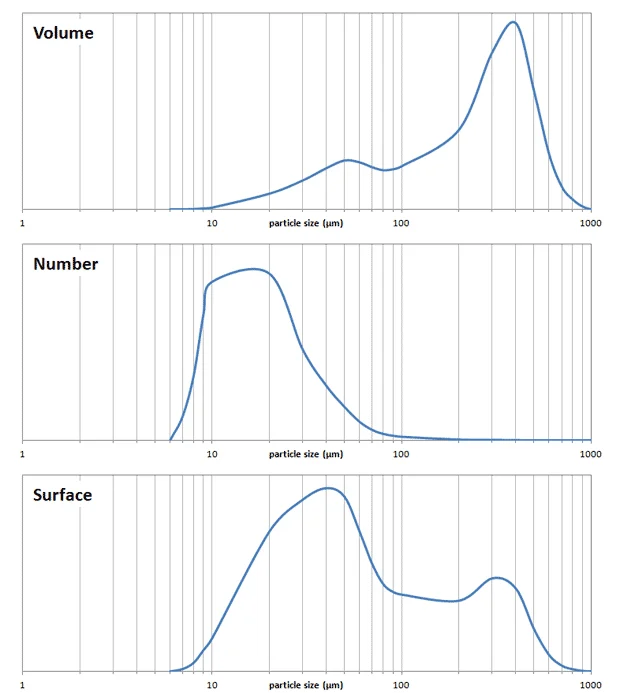
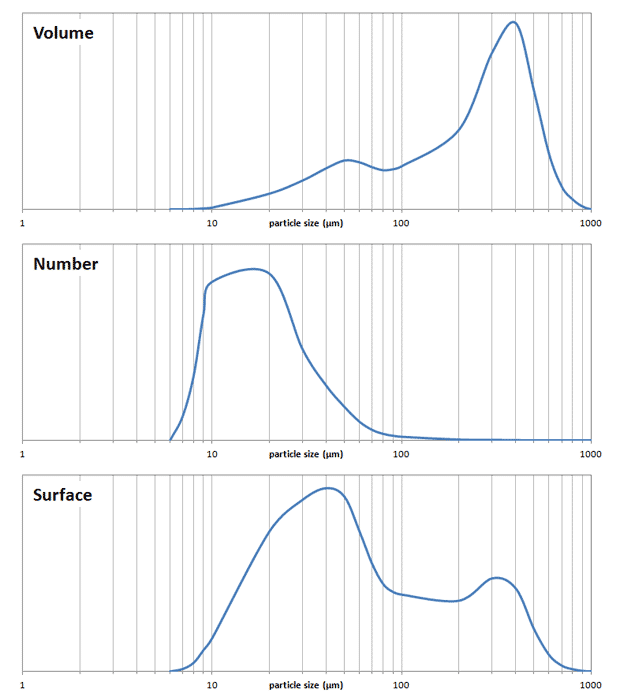
Beyond liquid chemistry, physical mechanics play a critical role in extraction efficiency. When a roasted coffee bean is fractured in a grinder, it does not break down into uniform particles; rather, it produces a heterogeneous mix ranging from large fragments ("boulders") to microscopic particles ("fines").
Particle size distribution (PSD) can be measured using laser diffraction instruments in industrial settings or mechanical sifters (such as those produced by Kruve) and image analysis software in domestic environments. Visualizing PSD through the lens of surface area distribution rather than volume reveals a critical chemical insight: more than half of total coffee extraction occurs on the surface of particles smaller than 100 micrometers. Furthermore, preliminary research from organizations like Barista Hustle suggests that water penetrates coffee particles to a depth of approximately 100 micrometers. Consequently, the core of larger coffee particles remains entirely unextracted, representing unused potential.
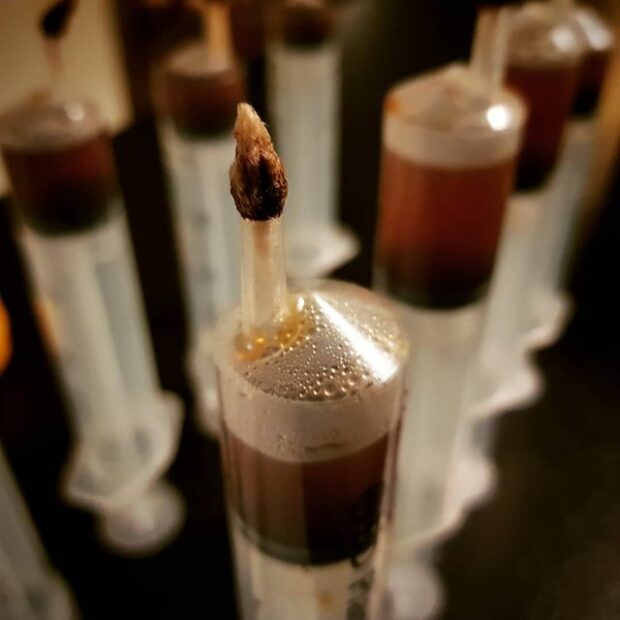
This dynamic places immense importance on grinder quality. Conical and flat-burr grinders are engineered to minimize undesirable fines that can clog filter beds and over-extract bitter compounds, while low-quality blade grinders produce erratic distributions that compromise flavor clarity. From a purely theoretical standpoint, industrial roller mills capable of producing exceptionally uniform particle distributions could rival or exceed the performance of standard domestic grinders, though issues of oxidation and staling in pre-ground coffee generally necessitate whole-bean packaging paired with immediate domestic grinding.
Environmental Variables: Water Composition, Temperature, and Filtration
While bean selection and grinding set the physical stage, environmental variables dictate the chemical reaction rates. Water—comprising over 98% of the final beverage—is far from a neutral solvent. The mineral content of water, particularly the presence of calcium, magnesium, and bicarbonate ions, significantly alters extraction efficiency and flavor expression. Pioneering work in DIY mineral waters, popularized by culinary scientists, demonstrates that tailoring water hardness and alkalinity can unlock distinct flavor notes in specialty coffee, much like historical practices in regional beer brewing.
Temperature similarly governs both solubility and diffusion rates. Higher water temperatures (approaching 100°C) accelerate the extraction of a wider spectrum of chemical compounds, while lowered temperatures—utilized in cold brew techniques executed over extended timeframes— selectively extract different volatile and non-volatile molecules, resulting in reduced perceived acidity and bitterness.
Finally, the choice of filter material exerts a profound mechanical influence on the final cup. Paper filters effectively retain both microscopic fines and insoluble lipids (coffee oils), yielding a clean cup with pronounced clarity. Conversely, metal or cloth filters allow oils and larger suspended particles to pass through, enhancing body and mouthfeel at the expense of perceived transparency. Scientific analysis of paper filters reveals that variations in pore size, cellulose swelling upon hydration, and bleaching methods further modulate flow rates and particulate retention, transforming simple paper into a sophisticated filtration medium.
Implications and Future Outlook
The systematic codification of coffee brewing parameters represents a broader shift within the global food and beverage sector. As precision tools—such as affordable refractometers, calibrated sifters, and digital water chemistry calculators—become increasingly accessible to commercial cafes and home consumers alike, the margin for error in specialty coffee preparation narrows significantly.
Industry analysts observe that this scientific rigor elevates the entire supply chain. When consumers and cafes can accurately measure extraction yields and isolate variables such as grind distribution and water chemistry, feedback loops back to roasters and farmers become more precise. Producers are incentivized to focus on agricultural and processing innovations, knowing that their raw material will be evaluated against exacting chemical standards. Ultimately, the fusion of chemistry and craft ensures that the morning cup of coffee is no longer viewed as a static commodity, but as a dynamic, controllable chemical system capable of infinite refinement.