
The competitive landscape of American homebrewing witnessed a masterclass in recipe formulation and technical execution during the final round of the 2026 National Homebrew Competition. Standing out among an exceptionally rigorous field, Jarrett and Amanda Long of Arlington, Texas—proud members of the local brewing collective Horsemen of the Hopocalypse—captured a prestigious gold medal in Category 18: Specialty IPA. Navigating a pool of 94 meticulously crafted entries, the Longs’ winning brew demonstrated a sophisticated balance of traditional malt complexity and modern hopping techniques, ultimately capturing the highest praise from the competition’s panel of certified judges.
The achievement underscores the escalating standards of skill, precision, and creativity within the amateur brewing community. Winning a gold medal at the National Homebrew Competition is widely regarded as one of the highest accolades an amateur brewer can achieve, often serving as a stepping stone for regional acclaim or future commercial ventures within the booming craft beverage industry.
Background Context and the Significance of the National Homebrew Competition
Organized annually by the American Homebrewers Association (AHA), the National Homebrew Competition is the largest of its kind in the world. It evaluates thousands of entries from across the globe, subjecting amateur creations to rigorous sensory analysis by Beer Judge Certification Program (BJCP) judges. Beers submitted to the competition must adhere to precise style guidelines, though specialty categories—such as the Specialty IPA division conquered by the Longs—allow brewers to push the boundaries of conventional styles while maintaining technical harmony.
Category 18: Specialty IPA is renowned for its diverse interpretation and stiff competition. Brewers entering this category are tasked with introducing unique ingredients, alternative malt bills, or specialized processing methods while preserving the defining structural bitterness, aromatic punch, and drinkability expected of an India Pale Ale. For Jarrett and Amanda Long, the victory represents years of iterative recipe development, peer collaboration within the Horsemen of the Hopocalypse, and a deep understanding of brewing science.
Anatomy of a Champion: Ingredients and Specifications
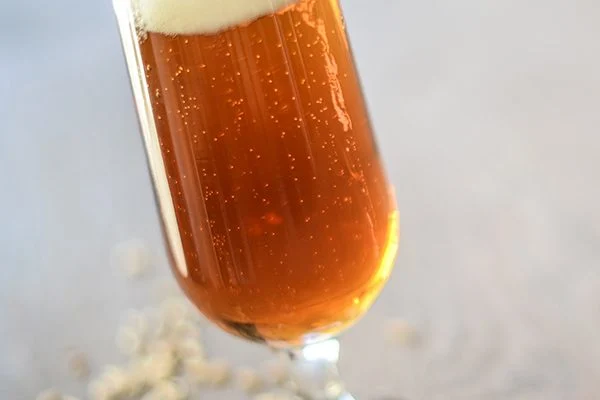
The gold-medal-winning recipe engineered by the Longs is a testament to meticulous process control and ingredient selection. Designed to yield 6 U.S. gallons (22.71 liters) of finished beer, the formulation breaks away from pale, clear West Coast IPAs by utilizing an exceptionally dark and complex malt bill, reflected in its notable 36 SRM (Standard Reference Method) color rating—a deep, ruby-brown hue more commonly associated with robust porters or dark ales than standard IPAs.
The grist is anchored by 9 pounds (4.08 kg) of Malteurop pale 2-row malt, providing a clean, highly fermentable base. Complexity is swiftly introduced through a substantial 3-pound (1.36 kg) addition of Muntons brown malt, complemented by 2 pounds (0.9 kg) of flaked corn to lighten the body and add crispness, and 1 pound (454 g) of 80L caramel malt to impart rich toffee and caramel undertones.
The hopping schedule relies on a classic Pacific Northwest pairing of Chinook and Cascade hops, managed through precise timing intervals. Bitterness is established early with a 60-minute addition of 0.5 ounces (14 g) of high-alpha-acid Chinook (14.5% a.a.). Flavor and aroma contributions are layered in later stages, featuring 1.5 ounces (42 g) of Chinook and 1 ounce (28 g) of Cascade at the 15-minute mark. To maximize volatile aromatic compounds without extracting harsh vegetative bitterness, the brewers implemented a 10-minute hop stand at 194°F (90°C) using 1 ounce each of Chinook and Cascade. A subsequent dry-hop addition of the same combination for three days amplified the aromatic profile prior to packaging.

Technical Execution and Specialized Brewing Aids
What separates award-winning homebrew from standard amateur batches is the integration of advanced brewing chemistry. The Longs utilized several specialized processing aids to optimize clarity, shelf stability, and fermentation health.
During the mash, 3 grams of beta glucanase and 3 grams of Oxblox were introduced to break down complex gums and beta-glucans, ensuring efficient lautering and preventing haze-forming compounds. In the boil, 1 tablet of Whirlfloc and 15 grams of PVPP (polyvinylpolypyrrolidone) were added at the 10-minute mark to bind and precipitate chill haze and polyphenol complexes.
For fermentation, the recipe calls for two packs of Wyeast 1056 American ale yeast, known for its clean, neutral fermentation profile that allows the malt and hop characteristics to shine without producing excessive esters. Advanced enzymatic intervention was further employed via the use of ALDC (alpha-acetolactate decarboxylase) during yeast rehydration and subsequently in primary fermentation prior to spunding. This compound actively prevents the formation of diacetyl, ensuring a buttery-free, pristine flavor profile. Finally, gelatin fining was utilized to clarify the finished beer prior to packaging.
Brewing Timeline and Step-by-Step Methodology
Executing a complex specialty IPA requires strict adherence to a well-defined operational timeline. The production process for the Longs’ gold-medal recipe follows a rigorous protocol:
- Mash-In: The brewers initiate the mash at 148°F (64°C), holding the temperature steady for an extended 90-minute rest. This extended conversion window ensures high fermentability despite the heavy specialty malt bill, aided by the inclusion of beta-glucanase enzymes.
- Boil: Following the mash and lautering, the wort undergoes a vigorous 1-hour boil. Hop additions and fining agents (Whirlfloc and PVPP) are introduced at their designated intervals to structure bitterness and clarify the liquid.
- Whirlpool and Cooling: Post-boil, the wort is chilled to the hop-stand temperature of 194°F (90°C), where the secondary hop additions steep for 10 minutes before rapid cooling to pitching temperature.
- Fermentation: Primary fermentation is conducted at a controlled 65°F (18°C) using Wyeast 1056. The incorporation of ALDC safeguards against off-flavors, while spunding techniques in the primary vessel assist with natural carbonation management.
- Conditioning: After primary fermentation and clarification with gelatin, the beer is packaged via keg or bottle conditioning, bringing the analytical specifications—including an Original Gravity of 1.067 (16.4°P), a Final Gravity of 1.015 (3.7°P), an ABV of 6.75%, and 62 International Bittering Units (IBUs)—into precise alignment.
Broader Impact and Implications for the Homebrewing Community
The success of Jarrett and Amanda Long at the 2026 National Homebrew Competition highlights the ongoing evolution of homebrewing culture in Texas and across the United States. No longer confined to simple beer kits or replicating commercial styles, modern amateur brewers routinely employ laboratory-grade enzymes, advanced fining agents, and precise temperature-control techniques that rival commercial facilities.
For regional clubs like the Horsemen of the Hopocalypse, such victories validate collaborative knowledge-sharing, equipment sharing, and constructive critique among members. As winning recipes are published and archived by organizations like the American Homebrewers Association, the techniques pioneered by brewers like the Longs circulate globally, inspiring a new generation of hobbyists to experiment with structural malt depths and innovative hopping schedules within specialty categories. The 2026 gold medal stands as a benchmark for technical precision, proving that meticulous attention to recipe design and cellar management remains the ultimate formula for championship success.