
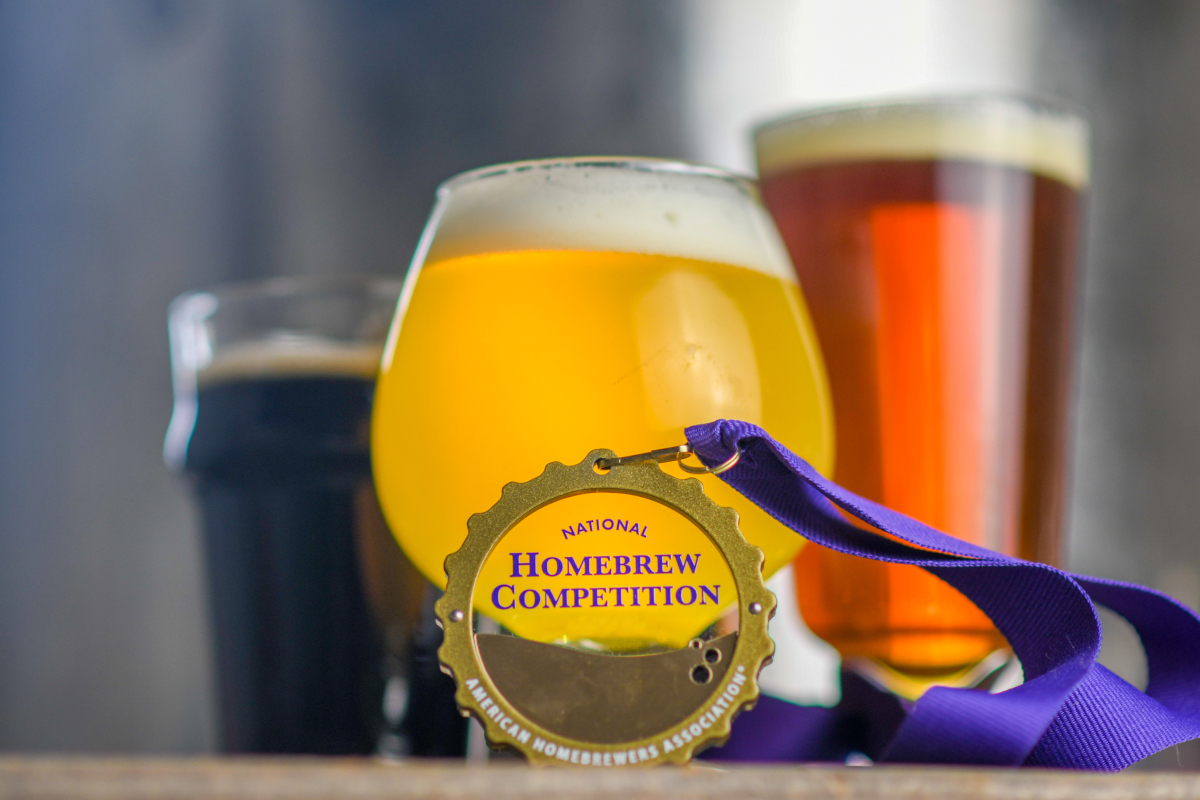
The annual artisan fermentation community has reached its high-water mark for the year with the official release of the gold medal-winning recipes from the final round of the 2026 National Homebrew Competition. Recognized globally as the world’s largest amateur homebrewing competition, this year’s event once again highlighted the extraordinary skill, scientific precision, and creative innovation flourishing among non-commercial brewers, mead makers, and cider crafters.
With entries pouring in from across the United States and international hubs, the final round served as a rigorous showcase of technical brewing acumen. The newly published repository of winning formulas offers a transparent look into how amateur fermenters achieve professional-grade results across dozens of meticulously judged categories, spanning classic European lagers, hop-forward ales, complex barrel-aged stouts, fruit-forward meads, and crisp, orchard-fresh ciders.
Background and Context of the National Homebrew Competition
Organized by the American Homebrewers Association (AHA), the National Homebrew Competition is a cornerstone institution in the broader craft beverage movement. Established decades ago to foster the craft of homebrewing, the competition provides a platform for hobbyists to have their handcrafted beers, meads, and ciders evaluated by a panel of nationally and internationally certified judges.
The path to a gold medal is notoriously grueling. Entrants must first navigate a series of regional first-round competitions held across various zones. Only the highest-scoring entries advance to the final round, where they face microscopic scrutiny under the Beer Judge Certification Program (BJCP) guidelines. Judges evaluate entries based on aroma, appearance, flavor, mouthfeel, and overall impression, looking for technical perfection and adherence to style parameters—or brilliant, innovative execution in non-traditional categories.
The significance of these winning recipes extends far beyond bragging rights. Historically, the homebrewing community has served as the R&D lab for the commercial craft beer industry. Countless professional brewmasters, mead makers, and cidermakers cut their teeth developing recipes in suburban garages and urban apartments before scaling up to commercial production. Consequently, the release of the 2026 gold medal recipes offers a treasure trove of technical data for aspiring brewers looking to refine their water chemistry, hop schedules, and fermentation profiles.

Breakdown of the 2026 Gold Medal Formulas and Technical Data
The newly published collection features a diverse array of technical specifications, offering deep insights into the brewing parameters required to secure top honors. While some winning submissions rely on time-tested traditional grain bills, others push the boundaries of ABV (Alcohol by Volume), IBU (International Bitterness Units), and SRM (Standard Reference Method color scale).
Among the standout entries in the lager and pilsner categories is the brew formerly known as "String of Perles," now officially designated simply as "German Pils." This crisp offering clocks in at a balanced 5.2% ABV, supported by 35 IBU of bitterness and a pale 3.4 SRM color profile, exemplifying the delicate balance required of classic continental brewing. For those leaning toward darker, malt-forward lagers, the "Czech Amber Lager" secured gold with a 5.6% ABV, 35 IBU, and a richer 14 SRM, while the "International Dark Lager" dialed back the bitterness to 15 IBU while pushing the color depth to 19 SRM at 5.3% ABV.
Ale categories brought formidable creativity and strength to the competition floor. The "Hickory Dickory Weizenbock" made a strong impression in the heavier ale divisions, registering a robust 7.9% ABV, 17.6 IBU, and a 12.4 SRM. British styles were equally well-represented, highlighted by "The Bitter Formally Known as Herbal Joe’s," an approachable session ale at 4.2% ABV with a punchy 38 IBU and 11 SRM. Pushing deep into high-gravity territory, entries like "Hard Days Night" showcased the immense patience and control required for strong ales, boasting a staggering 10.4% ABV, 38 IBU, and 22 SRM. Meanwhile, the formidable "BDSM" ale claimed top honors in its class with an impressive 11.2% ABV, 26 IBU, and a near-opaque 30 SRM.
Specialty and experimental beers also captured the judges’ attention. "Not If We Jam It!" provided a masterclass in moderate-gravity brewing, landing at 4.6% ABV with an original gravity (OG) of 1.048 (12°P) and a brilliant 5 SRM. On the bitter end of the spectrum, "Toasted Scout" flexed its muscles with a dominant 9.1% ABV and a biting 67 IBU, balanced against a deep 39 SRM.
The expertise on display was not limited to beer. The mead and cider categories demonstrated advanced mastery over high-sugar fermentations, requiring precise nutrient management and temperature control to avoid fusel alcohols. "Meaders Added Context…" achieved an 11.55% ABV with an original gravity of 1.090 (21.5°P) and a terminal final gravity of 1.002 (0.5°P). For sheer magnitude, "Smoking Cassis" dominated the mead sector with a monumental 16% ABV, an 18 SRM color rating, and a heavy original gravity of 1.160 (36.2°P). In the cider division, the "Westside HoneyCrisp" single-varietal cider struck gold at 7.6% ABV, starting at an OG of 1.054 (13.3°P) and fermenting down to an ultra-dry 0.996 (-1.04°P), while the complex "Eyes Pie Perry" reached a wine-like 14% ABV with an OG of 1.169 (38°P).
Industry Implications and the Future of Amateur Fermentation
The release of these recipes arrives at a fascinating time for the global fermentation community. The commercial craft beverage sector has faced shifting consumer preferences, economic pressures, and increased market saturation over recent years. In contrast, the amateur homebrewing sector continues to thrive as an inclusive, passion-driven community focused on experimentation and education.
Industry analysts note that the techniques perfected by homebrewers often foreshadow commercial trends. For instance, the rise of heavily fruited meads, complex ciders utilizing culinary apple varieties, and precisely tuned historical lager styles often begin in small-batch home setups before commercial craft producers adopt them to capture consumer interest. By making these award-winning recipes publicly accessible through the Homebrewers Association digital archive, the organization is actively investing in the continuous elevation of beverage quality across both hobbyist and professional spheres.
Furthermore, the diversity of styles represented in the 2026 winner’s circle underscores the democratization of brewing knowledge. Advanced equipment, once restricted to commercial facilities, is increasingly accessible to home enthusiasts. Temperature-controlled conical fermenters, sophisticated water treatment profiles, and specialized laboratory yeast strains allow homebrewers to replicate—and sometimes surpass—the laboratory-like precision of commercial breweries.
Accessing the Full Recipe Archive
For brewers, enthusiasts, and curious consumers eager to examine the exact grain bills, hop additions, yeast strains, and process notes behind these medal-winning masterpieces, the complete database is now available. The American Homebrewers Association has integrated these 2026 final round victors into its searchable online recipe archive at HomebrewersAssociation.org.
As the craft beverage community looks ahead, the benchmark has officially been set for the next generation of fermentation enthusiasts. Whether these recipes inspire home brewers to scale up for future competitions or simply encourage weekend experimentation in the kitchen, the 2026 National Homebrew Competition has once again proven that the heart of craft beverage innovation beats loudest in the homebrewing community.