
The United States Department of Agriculture (USDA) provides rigorous, science-based guidelines for home food preservation to ensure the safety and longevity of shelf-stable products. Among the various fruits and vegetables suitable for home canning, the tomatillo (Physalis philadelphica)—a staple of Mexican and Central American cuisines—requires specific handling techniques that differ significantly from its relative, the common tomato. Unlike tomatoes, which typically require peeling before the canning process, tomatillos are processed whole and unpeeled after their papery husks are removed. Following the USDA’s Agriculture Information Bulletin No. 539, home canners can safely preserve the unique, tart flavor of tomatillos for year-round use in salsas, stews, and sauces, provided they adhere to strict acidification and processing protocols.
The Botanical and Nutritional Profile of the Tomatillo
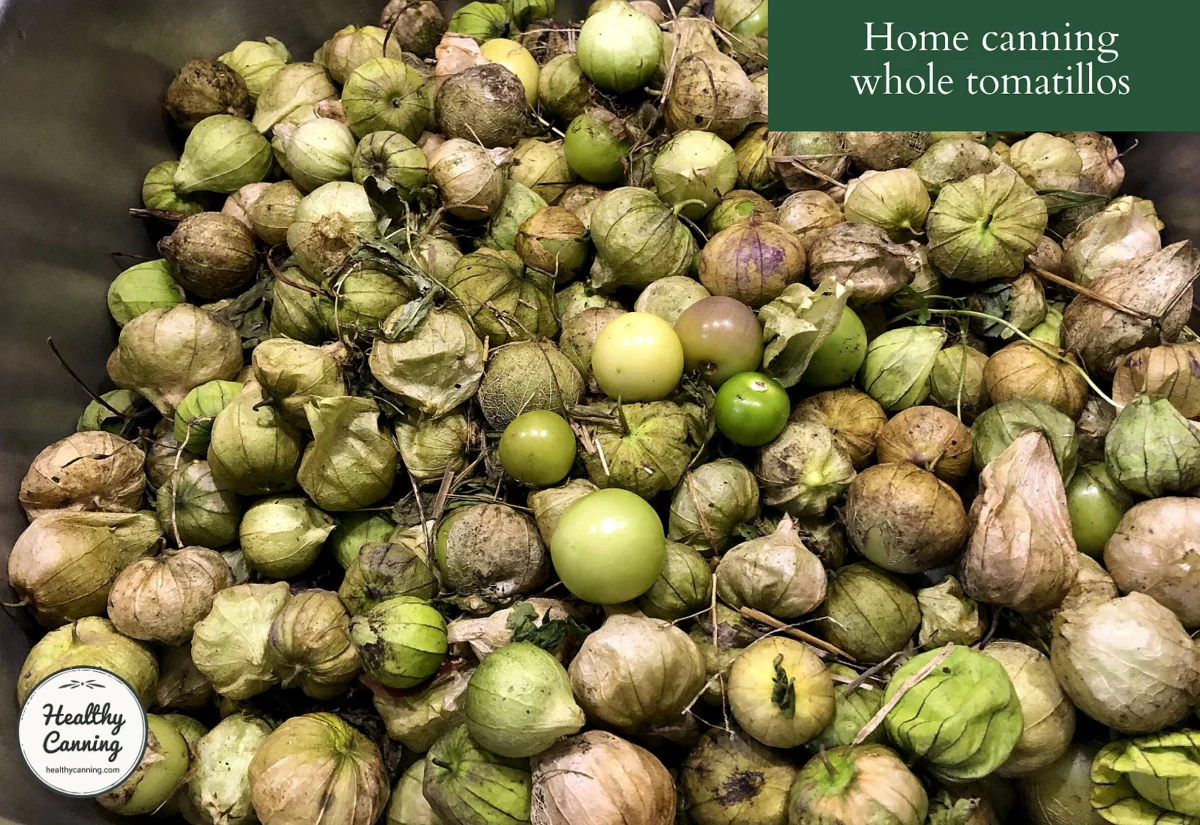
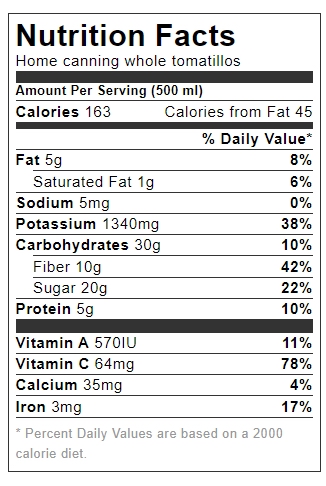
The tomatillo, often referred to as the "husk tomato," is not a true tomato but a member of the nightshade family more closely related to the Cape gooseberry. Enclosed in a characteristic papery calyx, the fruit is known for its firm texture and acidic, citrus-like flavor profile. From a nutritional standpoint, tomatillos are a low-calorie addition to the diet, providing approximately 163 calories per half-litre (US pint) when canned without added salt. They are a significant source of Vitamin C, Vitamin A, and potassium, boasting a high fiber content that remains largely intact through the canning process.
Scientifically, tomatillos are naturally more acidic than many varieties of green tomatoes. The USDA’s Center for Food Safety and Applied Nutrition assigns an approximate pH value of 3.83 to tomatillos. While this is below the critical threshold of 4.6 for low-acid foods, the USDA still mandates the addition of supplemental acid during the canning process. This requirement acts as a safety margin to account for variations in ripeness, soil conditions, and cultivar acidity, ensuring that the environment inside the jar remains inhospitable to Clostridium botulinum spores.

Preparation and Quantity Requirements
Successful home canning begins with the selection of high-quality produce. For the best results, tomatillos should be firm, green, and have husks that are dry and light brown. As a general guideline for yield, home canners should expect to use approximately 1 kilogram of fresh tomatillos per 1-liter jar (roughly 2 pounds per US quart).
The preparation chronology begins with the removal of the papery husks. Once husked, tomatillos often possess a sticky residue on their skin; this is a natural coating and should be washed off with cool water. Unlike the labor-intensive process of blanching and peeling tomatoes, tomatillos are kept whole. The USDA procedure involves simmering the cleaned, whole tomatillos in boiling water for approximately 5 to 10 minutes until they are softened but not falling apart. This pre-cooking step ensures that the fruit is heated through and helps to exhaust air from the plant tissues, which prevents the fruit from floating and improves the vacuum seal during processing.
The Mandatory Role of Acidification
One of the most critical safety components of the USDA procedure is the addition of a standardized acidifier. Even if a pressure canning method is chosen, acidification remains mandatory. The pressure canning times provided by the USDA for tomatillos are designed to achieve a seal and specific texture quickly, but they are not long enough to safely process the fruit as a "low-acid" food.
Canners must add one of the following to each jar before filling:
- Bottled Lemon Juice: 1 tablespoon per half-litre (pint) or 2 tablespoons per litre (quart).
- Bottled Lime Juice: Same proportions as lemon juice. This is often preferred for tomatillos due to the complementary flavor profile.
- Citric Acid: 1/4 teaspoon per half-litre (pint) or 1/2 teaspoon per litre (quart).
It is essential to use bottled juices rather than fresh, as bottled products have a standardized pH level required for safety. While salt may be added for flavor—typically 1/2 teaspoon per pint or 1 teaspoon per quart—it is considered an optional seasoning and does not contribute to the preservation of the food.
Chronology of the Canning Process
Once the tomatillos are simmered and the jars are prepared with the necessary acidifier, the following steps must be followed:
- Packing the Jars: Pack the hot tomatillos into hot, sterilized jars. Jars should be either half-litre (US pint) or 1-litre (US quart) sizes.
- Adding Liquid: Cover the tomatillos with the boiling water used for simmering, or fresh boiling water, leaving exactly 2 cm (1/2 inch) of headspace.
- Removing Air Bubbles: Run a non-metallic spatula or bubble remover around the interior of the jar to release trapped air, which can interfere with the vacuum seal.
- Cleaning the Rim: Wipe the rim of the jar with a clean, damp cloth to remove any residue that might prevent the lid from seating properly.
- Capping: Adjust the two-piece canning lids to fingertip tight.
Comparative Processing Methods: Water Bath, Steam, and Pressure
The USDA recognizes three primary methods for processing tomatillos, each with specific timing requirements based on jar size and altitude.
Water Bath and Steam Canning
Water bath canning involves submerging jars in boiling water, while steam canning uses a specialized pot that surrounds jars with atmospheric steam. Both methods are effective for high-acid foods.

- Half-litre (Pints): 40 minutes
- Litres (Quarts): 45 minutes
It is important to note that steam canning is only recommended if the total processing time (including altitude adjustments) does not exceed 45 minutes. If a home canner lives at an altitude where the adjusted time exceeds this limit, the steam canner may run out of water, risking both the safety of the product and the integrity of the equipment.
Pressure Canning
Pressure canning is a faster alternative but requires careful monitoring of the gauge. The USDA offers times for both weighted-gauge and dial-gauge canners. For weighted-gauge canners at altitudes of 0 to 300 meters (0-1000 feet), the options include:
- 15 minutes at 5 lbs of pressure.
- 10 minutes at 10 lbs of pressure.
- 1 minute at 15 lbs of pressure.
At higher altitudes, these pressures must be increased (e.g., to 10 lbs or 15 lbs) to compensate for the lower boiling point of water.
Technical Data and Altitude Adjustments
Altitude is a critical factor in food safety. As altitude increases, the atmospheric pressure decreases, causing water to boil at a lower temperature. To compensate, processing times must be extended for water bath/steam canning, or pressure must be increased for pressure canning. Failure to adjust for altitude can result in under-processed food, allowing spoilage organisms to survive.
For water bath canning, the standard 40 or 45-minute times are based on sea level. Canners living above 305 meters (1,000 feet) must add 5 to 15 minutes to the processing time depending on their specific elevation. In pressure canning, the weight or pressure is increased rather than the time.
Official Responses and Safety Implications
The National Center for Home Food Preservation (NCHFP) and the USDA have emphasized that home canning is a science, not an art. In response to the rising popularity of "rebel canning" or "open-kettle" methods found on social media, official safety bodies have reiterated that only tested recipes—such as those found in the USDA Complete Guide to Home Canning—should be used.
The primary implication of following these standards is the prevention of foodborne illness. While tomatillos are naturally acidic, the density of the whole fruit and the potential for variations in home-grown produce make the addition of acid and the specific processing times non-negotiable. Food safety experts note that even if a jar "clicks" and seals, it does not guarantee the contents are safe if the internal temperature did not reach the levels necessary to destroy pathogens.
Culinary Applications and Impact on Food Security
Canning whole tomatillos offers significant advantages for home cooks and small-scale farmers. Once canned, the fruit has already been softened by the heat, making it ready for immediate use in cooked applications. Martha Rose Shulman of the New York Times notes that canned tomatillos are an excellent substitute for fresh, though they should be drained before use. Because they are already cooked, they are best suited for "salsa verde cocida" (cooked green sauce) rather than raw salsas.
The Joy of Cooking suggests that canned tomatillos serve as an exceptional condiment for grilled meats, poultry, and shellfish. Beyond their culinary versatility, the ability to preserve tomatillos contributes to household food security and reduces food waste during peak harvest seasons. By transforming a perishable garden surplus into a shelf-stable pantry staple, consumers can reduce their reliance on global supply chains and enjoy nutrient-dense produce throughout the winter months.
Final Storage and Shelf Life
After processing, jars should be left to cool undisturbed for 12 to 24 hours. The rings should be removed to prevent "pseudo-seals" or rusting, and the jars should be stored in a cool, dark, dry place. According to USDA guidelines, home-canned goods are best used within one year for optimal quality and nutritional value, though they remain safe as long as the vacuum seal remains intact.
In conclusion, the USDA procedure for canning whole tomatillos is a meticulous but rewarding process. By prioritizing acidification, adhering to tested processing times, and making necessary altitude adjustments, home canners can safely capture the essence of the harvest, ensuring a high-quality, versatile ingredient is always at hand.