
This seemingly innocuous comment, overheard from a friend, encapsulates a pervasive challenge in contemporary health and wellness: the allure of niche solutions overshadowing foundational habits. Anna, a highly capable law professional known for her critical thinking and ability to dissect complex issues, found herself exploring a new BPA-free tupperware set as a potential avenue to address her long-standing goal of losing 15 pounds. This focus emerged despite her concurrent struggles with consistent gym attendance, frequent reliance on takeout, and sacrificing sleep for digital distractions. Her rationale? The belief that microplastics in food containers could disrupt hormones and contribute to weight gain, a theory gaining traction in certain wellness circles.
When prompted about more direct interventions like consistent workouts or home meal preparation, Anna’s response was indicative of a widespread sentiment: "Yeah, but I’ve tried that a thousand times. If it were that simple, it would have worked already." This statement highlights a core dilemma: the dismissal of fundamental, albeit often unglamorous, health behaviors in favor of seemingly innovative or specialized approaches. This phenomenon is not unique to Anna; it represents a significant behavioral pattern observed across various demographics, where individuals, even those adept at critical analysis in other areas of their lives, can fall prey to the seductive promise of "magic bullet" solutions.
The Overlooked Foundation of Health
The pursuit of health and well-being is often complicated by a tendency to seek novel, complex, or "cutting-edge" strategies, overlooking the profound impact of basic, consistent actions. These fundamental habits, universally recognized yet inconsistently practiced, form the bedrock of sustainable health. They include:
- Regular Physical Activity: Aiming for at least 30 minutes of moderate-to-vigorous exercise most days of the week, incorporating both aerobic and resistance training. The Centers for Disease Control and Prevention (CDC) consistently emphasizes the broad benefits of regular movement, from cardiovascular health to mood regulation.
- Nutrient-Dense Diet: Consuming a diet primarily composed of whole, minimally processed foods. Experts widely agree that if 80% of one’s diet consists of such foods, significant health benefits can be realized. This approach inherently allows for dietary flexibility without demanding strict perfection.
- Adequate Protein Intake: Ensuring sufficient protein consumption (typically 1.2 to 2.2 grams per kilogram of body weight for most adults) is crucial for muscle maintenance, satiety, and body composition goals. This is a foundational nutritional principle supported by extensive research in sports science and dietetics.
- Quality Sleep: Prioritizing seven to eight hours of restorative sleep per night. Sleep deprivation has been linked to numerous health issues, including impaired cognitive function, hormonal imbalances, and increased risk of chronic diseases. Establishing consistent sleep-wake cycles and a calming pre-bed routine are vital.
- Moderation of Harmful Substances: Reducing or avoiding excessive alcohol, tobacco, and recreational drug use. The health detriments associated with these substances are well-documented by public health organizations globally.
Beyond these physiological cornerstones, other crucial elements like fostering positive social relationships and effective stress management are equally vital but often receive less direct attention in initial health pursuits. Despite their undeniable efficacy, data reveals a striking lack of adherence to these basic principles. A 2016 study published in Mayo Clinic Proceedings highlighted that only 2.7% of American adults met four out of five ideal health behaviors, while other analyses, as referenced in the original context, suggest that a mere 6% consistently perform five basic health behaviors. This translates to an overwhelming majority – close to 94% of Americans – not consistently engaging in these fundamental practices.
The Allure of the "Magic Bullet": Why We Get Distracted
The disconnect between knowing what to do and consistently doing it is multifaceted, rooted in psychological biases and societal pressures. Several barriers commonly prevent individuals from embracing these foundational habits:
1. Ambition Overload and the Planning Fallacy
Individuals often embark on health journeys with an ambitious, all-encompassing overhaul plan. This might involve simultaneously committing to daily hour-long workouts, an entirely "clean" diet, and eight hours of sleep, even when current habits are far removed from these ideals. While such grand plans offer temporary psychological relief and a sense of progress, they frequently succumb to the "planning fallacy"—a cognitive bias where individuals underestimate the time, costs, and challenges involved in future tasks.
Our brains are predisposed to optimism about future resources, leading us to believe we will have more time, energy, and motivation than reality often affords. This overestimation results in complex plans that are unsustainable within already busy lives. When these ambitious goals inevitably falter, individuals often internalize the failure, blaming their willpower or discipline, rather than recognizing the inherent flaw in the overly aggressive planning. This cycle of striving for perfection, failing, and self-blame perpetuates a sense of "struggling with consistency," further alienating individuals from effective, gradual change.
2. The Search for "Industry Secrets" and "Cutting-Edge" Solutions
A prevalent belief is that if basic health behaviors were truly effective, everyone would be healthy. This fallacy fuels the search for advanced, esoteric, or "secret" methods, often marketed as revolutionary breakthroughs. The wellness industry, valued at over $4.5 trillion globally, capitalizes on this desire for novelty and quick fixes, promoting everything from exotic supplements to extreme diets and biohacking tools.
The appeal of something new and "cutting-edge" lies in its promise of a different outcome, a "new us" untainted by past failures. This distracts from the perceived monotony of consistent, simple actions like eating vegetables or getting enough sleep. However, many of these highly marketed strategies prove to be unsustainable, inaccessible, ineffective, or simply unproven. They drain financial resources, time, and effort without delivering significant returns, all while diverting attention from the impactful, albeit less glamorous, fundamentals.
3. The Perfection Trap: All-or-Nothing Mentality
The pervasive narrative within parts of the health and fitness industry often dictates an unrealistic standard of "perfect health." This ideal typically involves a rigorous regimen of organic foods, intense exercise, early morning meditations, and flawless self-discipline. This "perfection trap" fosters an all-or-nothing mindset, where any deviation from the ideal is perceived as a failure, leading to abandonment of efforts entirely.

The truth is, "perfect" health is an illusion. Human existence is inherently imperfect, subject to illness, stress, life events, and fluctuating energy levels. Embracing this vulnerability, rather than resisting it, is crucial for sustainable health. The pursuit of an unattainable ideal often leads to frustration and self-criticism. Paradoxically, achieving one’s realistic best self often necessitates accommodating one’s "worst self"—the part that succumbs to cravings, prefers leisure over exercise, or faces unexpected life challenges. Life is dynamic, and expecting an unwavering adherence to an ideal ignores the reality of competing demands, personal slumps, and external obstacles.
Navigating the Path to Sustainable Action: Expert-Backed Strategies
Overcoming these barriers requires a compassionate and strategic approach that acknowledges human imperfection while fostering consistent, impactful action. Health and behavioral science experts advocate for the following steps:
1. Explore the "Why" Before the "How"
Before initiating any change, a deep dive into underlying motivations is critical. Understanding why a particular health goal matters provides the sustained drive needed to overcome inevitable obstacles. Techniques like "The 5 Whys" exercise, where one repeatedly asks "why" to uncover deeper reasons, can illuminate core values and intrinsic desires. For instance, wanting to "lose weight" might evolve into "I want more energy to play with my children," or "I want to reduce my risk of chronic disease to live a longer, fuller life." Clarity on these deeper motivations and the consequences of inaction fortifies commitment, making it more resilient during challenging times.
2. Prioritize the Most Effective Actions
Effective change is about strategic prioritization, not simultaneous overhauls. It involves identifying the most impactful behaviors relative to one’s goals and consistently executing them. This means focusing on a manageable number of changes that are truly essential. For instance, if weight management is the goal, prioritizing consistent movement, balanced nutrition, and adequate sleep will yield greater returns than meticulously tracking micronutrients or investing in niche supplements. Resources like "Skills, Practices, and Daily Actions Cheat Sheets" can guide individuals in selecting specific, actionable steps within broader domains like nutrition, movement, or stress management, ensuring focus on high-leverage activities.
3. Implement a "Floor and Ceiling" Approach to Consistency
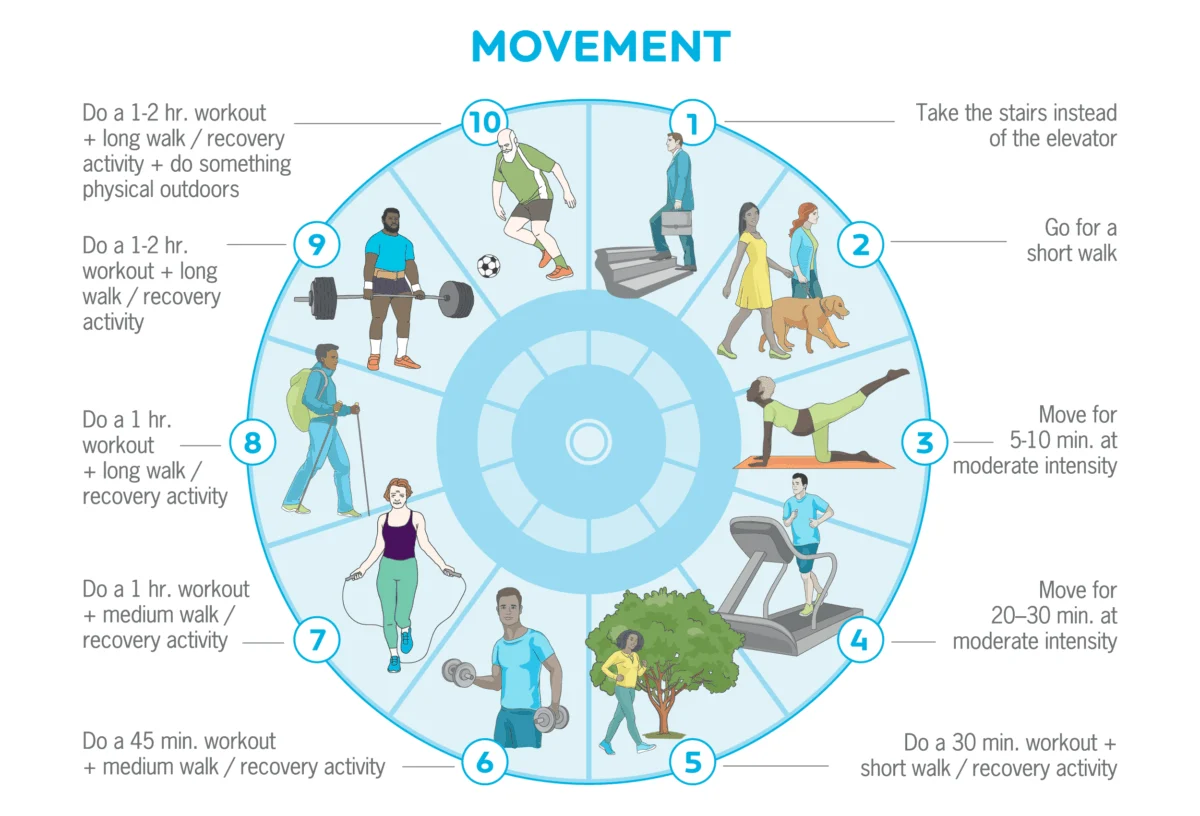
Acknowledging the fluctuating nature of life, behavioral experts recommend defining a flexible range for health actions. This involves establishing a "pathetic goal" (a "floor") – the absolute minimum action one can commit to even on their worst day. This could be five minutes of walking, one extra serving of vegetables, or three deep breaths before a meal. Simultaneously, define a "ceiling" – the ideal, high-effort action when conditions are optimal.
This "floor and ceiling" strategy transforms health habits from an "on" or "off" switch to a flexible "dial." When life is smooth, the dial can be turned up; when challenges arise, it can be turned down to the "floor" without completely abandoning the habit. The crucial insight is that any effort within this range "counts." Performing the bare minimum is not failure; it is a success within the context of a real, unpredictable life, fostering consistency over time and preventing the demotivating cycle of all-or-nothing thinking.
4. Cultivate a Supportive Ecosystem
Willpower alone is often insufficient for sustained behavioral change. A more powerful lever is the strategic modification of one’s environment to make desired actions easier and undesired actions harder. Health professionals often live in ecosystems that naturally support their habits (e.g., working in gyms, having access to healthy food). Individuals can emulate this by actively shaping their immediate surroundings.
This involves making small but impactful changes: ensuring healthy foods are visible and prepped, removing tempting items from easy access, structuring one’s schedule to include dedicated time for exercise or meal prep, and seeking social support from like-minded individuals. Research, such as reviews published in Nature Reviews Psychology, consistently highlights that "access" is a primary determinant of behavior. By proactively designing an environment that nudges towards healthy choices, individuals can significantly reduce the mental effort required for consistency, making desired actions the obvious, default choice.
Embracing "C+ Effort" for Long-Term Success
The journey to sustainable health is rarely linear or perfect. For many, particularly those conditioned by academic or professional striving, the concept of "C+ effort" can be challenging to embrace. However, this philosophy embodies compassion and acceptance for human imperfection. It acknowledges that consistently doing "good enough" is vastly superior to intermittently striving for "perfect" and then crashing.
While there will be periods of exceptional performance ("A" effort), these are not the sole measure of success. The true marker of sustainable health lies in the ability to maintain fundamental habits, even when life demands a reduction in intensity. This flexible, adaptable approach fosters resilience, prevents burnout, and builds long-term consistency. Living a healthy, meaningful life is an ongoing process of striving for improvement while simultaneously allowing for flexibility, mistakes, and the inevitable "bad days" or seasons. Ultimately, recognizing that "good enough" is often more effective than chasing an elusive ideal provides a liberating and pragmatic pathway to enduring well-being.