
A seemingly simple cup of black coffee, often perceived as a straightforward infusion of roasted beans, is, in reality, a remarkably complex chemical solution. While appearing to be predominantly water, accounting for more than 98.5% of its volume, the remaining 1.2% to 1.5% consists of a dazzling array of dissolved solids. These seemingly minute proportions translate to a substantial 12 to 15 grams of extracted compounds within every liter of brewed coffee, typically derived from approximately 60 grams of ground beans. This intricate matrix of extracted compounds is the very foundation of coffee’s characteristic color, taste, and captivating aroma, presenting a fascinating frontier for scientific exploration.
The Elusive Essence: Deconstructing Coffee’s Chemical Symphony
Coffee’s journey from a wild Ethiopian shrub to a global cultural phenomenon and a multi-billion-dollar industry has spurred centuries of appreciation, yet a comprehensive scientific understanding of its exact composition is a relatively modern endeavor. The quest to decipher what lies within each brew is driven not only by academic curiosity but also by industry demands for quality control, flavor consistency, and the development of novel coffee products. Scientists employ advanced chromatographic techniques, such as gas chromatography-mass spectrometry (GC-MS) and liquid chromatography-mass spectrometry (LC-MS), to separate and identify individual chemical components. These analyses consistently reveal the presence of hundreds, if not thousands, of different molecules. Astonishingly, despite decades of research, many of these compounds remain uncharacterized, hinting at the profound depth of coffee’s chemical complexity. A notable aroma extract dilution analysis (AEDA) conducted in 2002 underscored this challenge, reporting that 13 of the 40 key odorants responsible for coffee’s signature scent were still unknown. The difficulty in identifying these elusive compounds stems from several factors: their often-exceedingly low concentrations, which complicate the isolation of sufficient samples for full structural elucidation, and the potential for large, complex molecular structures that defy straightforward characterization.
The challenge of replicating coffee’s flavor synthetically further highlights its intricate nature. A 1996 study demonstrated that by combining 22 key volatile compounds, researchers could produce "model" coffees that mimicked both Arabica and Robusta varieties. While these synthetic concoctions were described by assessors as "clearly coffee-like," they fell short of perfectly replicating the nuanced aroma of natural coffee. This suggests that even a relatively large number of known compounds is insufficient to capture the full sensory experience, implying that hundreds, if not thousands, of compounds, many still unidentified, contribute to coffee’s distinct and beloved profile. The prospect of "synthetic" coffee competing with the authentic brew thus remains a distant one.
A Universe in a Cup: Volatile and Non-Volatile Compounds
The vast chemical repertoire of coffee can be broadly categorized into volatile and non-volatile compounds, each playing distinct roles in the sensory experience. Volatile compounds, characterized by their low boiling points and ability to easily evaporate, are primarily responsible for coffee’s aroma. These molecules waft into the nasal passages, stimulating olfactory receptors and contributing to the rich bouquet perceived before and during consumption. Conversely, non-volatile compounds are larger, more stable molecules that contribute to the taste perceived on the tongue, as well as the body and texture of the beverage. While some molecules can affect both aroma and taste, their odor threshold is typically much lower than their taste threshold, meaning they are detected by the nose at far lower concentrations than by the tongue.
Non-volatile compounds contribute significantly to the diverse taste profiles encountered in coffee, including bitterness, sweetness, acidity, and astringency. Among these are:

- Carbohydrates: Sugars like sucrose contribute to sweetness, while complex polysaccharides such as arabinogalactans and mannans, though not directly sweet, impart body and viscosity to the brew. The roasting process caramelizes some sugars and breaks down others, creating new flavor compounds.
- Acids: A wide spectrum of organic acids dictates coffee’s brightness and complexity. Chlorogenic acids, a major group, are potent antioxidants contributing to bitterness and astringency, and they undergo significant transformation during roasting, giving rise to quinic acid and other compounds. Other acids include citric (fruity notes), malic (apple-like), and acetic acid (contributing to brightness in small amounts, but sourness in excess). The balance and transformation of these acids are crucial for a coffee’s perceived quality.
- Minerals and Salts: Essential minerals like potassium, magnesium, and calcium are extracted into the brew, influencing not only the taste but also the mouthfeel and overall perception of flavor.
- Proteins and Lipids: While present in smaller quantities, these compounds contribute to the body and texture of coffee, with lipids playing a role in emulsion stability, particularly evident in the formation of crema in espresso.
- Caffeine: The most well-known component, caffeine is a stimulant but also a significant contributor to coffee’s characteristic bitterness.
- Melanoidins: Formed during the Maillard reaction (the complex chemical browning process that occurs during roasting), melanoidins are large, nitrogenous compounds responsible for coffee’s dark color, contributing to its bitterness, and significantly enhancing its body and mouthfeel. A substantial portion of the "unidentified compounds" mentioned in research are likely these complex, polymeric melanoidins.
The Power of Perception: Odor Activity Values (OAVs)
The composition of a cup of coffee spans an astonishing range of concentrations, illustrating a logarithmic scale that encompasses more than nine orders of magnitude. This vast difference in concentration, from percentages to parts per trillion (ppt), highlights a critical concept in flavor chemistry: a lower concentration does not necessarily equate to a lower impact on the overall flavor. The reason lies in the unique sensitivity of the human olfactory system to different compounds, quantified by their Odor Activity Value (OAV). An OAV is calculated by dividing the concentration of a compound by its specific odor threshold—the minimum concentration at which a compound can be detected by smell. This means that a compound present at an infinitesimal concentration, such as 0.0000000001%, could wield as much, if not more, influence on the overall flavor profile as a compound present at 0.01%, simply because our noses are exquisitely sensitive to it.
A prime example of this phenomenon is $beta$-damascenone, an extremely potent odorant found in coffee. Present at concentrations as low as 1 part per trillion (ppt), $beta$-damascenone nevertheless has a profound impact on coffee’s flavor, consistently ranking as one of the top five most impactful odorants. This compound belongs to a family of molecules known as rose ketones, first discovered in rose oil in the 1960s. Its name, damascenone, is derived from the Damask rose (Rosa × damascena), a flower renowned for its intense fragrance. Pioneering work by flavor and fragrance companies, such as Firmenich, led to the incorporation of $beta$-damascenone and other rose ketones into iconic perfumes, most famously Dior’s Poison. The sensory profile of $beta$-damascenone is remarkably complex and multifaceted, described as fruity (reminiscent of apple, blackcurrant, or plum), floral (rose-like), woody, sweet, and even tobacco-like or spicy. Accurately measuring such ultra-low concentrations and precisely determining individual odor thresholds represents a significant challenge in analytical chemistry, suggesting that even more key odorants in coffee may await discovery in the coming years as analytical techniques continue to advance.
Extraction Dynamics: Polar vs. Non-Polar Compounds
The efficiency of extracting various compounds from coffee grounds is fundamentally governed by their chemical polarity and the nature of the solvent—in this case, water. Coffee compounds can be broadly classified as polar or non-polar. Polar compounds, which include acids, minerals, proteins, and carbohydrates, share a common characteristic: they are highly soluble in water, a polar solvent. Consequently, when brewing coffee with water, typically more than 75% of these polar compounds are efficiently extracted.
In contrast, non-polar compounds, such as many volatile aroma molecules and lipids, exhibit low solubility in water. As a result, only about 10% to 30% of these non-polar compounds are typically extracted during standard water-based brewing. This differential extraction efficiency has profound implications for the final flavor profile and the efficacy of various brewing methods. Hot water, for instance, excels at rapidly dissolving polar components, contributing to the body and acidity. However, it is less efficient at extracting the full spectrum of non-polar aromatics. This insight also informs the science behind alternative brewing methods like cold brew, where a longer extraction time at lower temperatures allows for a different balance of extracted compounds, often resulting in a beverage with lower acidity and bitterness due to altered solubility kinetics. The potential for exploring additional dimensions of coffee extraction through less polar solvents, such as ethanol or even supercritical carbon dioxide (used industrially for decaffeination and specific flavor extractions), opens avenues for creating highly tailored coffee products or flavor concentrates.
The Limitations of Metrics: Beyond Total Dissolved Solids (TDS)
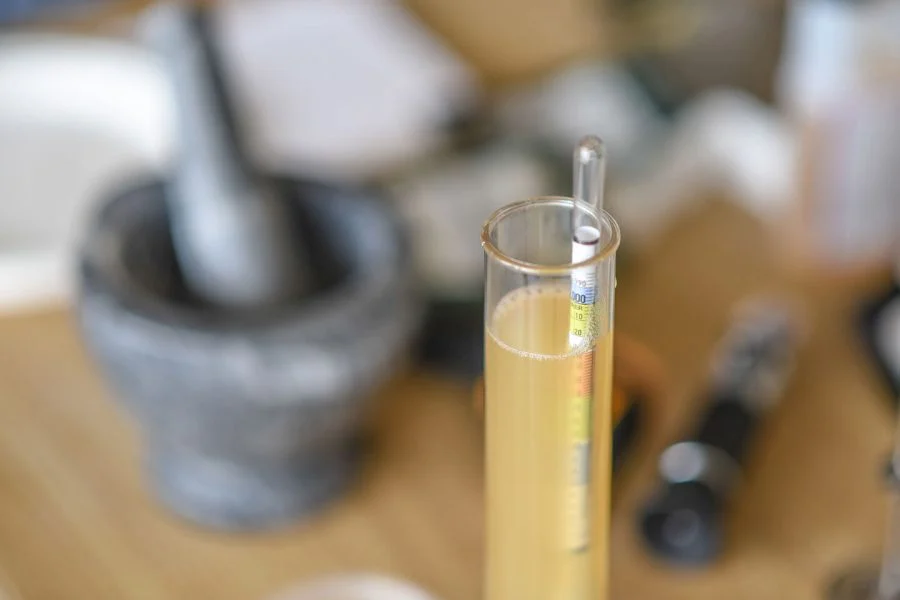
Total Dissolved Solids (TDS) is a widely used metric in the coffee industry, primarily serving as a measure of coffee strength. It quantifies the total mass of solids dissolved in the brew, offering a convenient way to ensure consistency in extraction. However, while useful for this specific purpose, a TDS measurement is inherently limited in its ability to predict the intricate aroma and flavor profile of a cup of coffee.
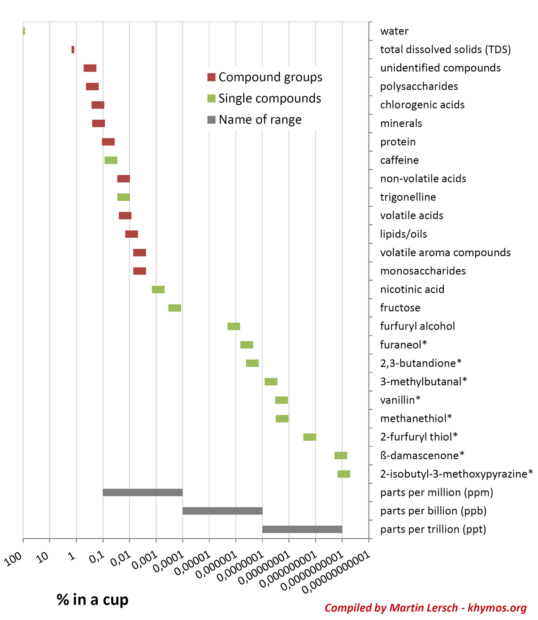
The reason for this limitation lies in the complex interplay of factors discussed previously. Only a few major compound groups, primarily the highly concentrated non-volatile polar compounds, significantly influence the overall TDS reading. The trace aroma compounds, which despite their minute concentrations can be profoundly impactful due to their high OAVs, contribute negligibly to the TDS. Furthermore, the significant difference in extraction yields between polar and non-polar compounds means that TDS measurements cannot account for the subtle but crucial variations in the aromatic fraction. Therefore, relying solely on TDS provides an incomplete picture of coffee quality. While scientific instruments offer invaluable insights into coffee’s chemical makeup, the human nose and palate remain the most sophisticated and nuanced analytical detectors. An experimental approach, leveraging our sensory perception, continues to be the preferred method for most coffee enthusiasts and professionals as they navigate the wonders of coffee extraction and explore its boundless flavor potential.
Scientific Pursuit and Future Implications
The scientific journey into coffee’s composition has evolved significantly over time. Early qualitative descriptions of coffee’s effects and rudimentary chemical analyses in the early 20th century paved the way for a more rigorous scientific approach. The advent of advanced analytical techniques, particularly gas chromatography and mass spectrometry in the mid-20th century, revolutionized the identification of volatile aroma compounds. Studies like the 1996 model coffee experiment and the 2002 AEDA provided crucial milestones, shifting focus towards understanding the impact of compounds, not just their presence. Today, the field utilizes high-resolution mass spectrometry, metabolomics, and even artificial intelligence to delve deeper into the intricate chemical networks.
Despite these advancements, significant challenges remain. The continued existence of unidentified key odorants underscores the complexity of coffee chemistry. Researchers are striving to not only identify these unknowns but also to understand the synergistic effects of multiple compounds, where the sum of their parts creates a flavor experience far greater than individual components. Furthermore, ongoing research aims to elucidate how various factors—from coffee plant genetics, cultivation practices, and geographical terroir to post-harvest processing (fermentation, drying) and the crucial roasting process—impact the final chemical composition and, consequently, the sensory attributes.
These scientific insights hold profound implications for the coffee industry. Leading flavor chemists emphasize that despite decades of dedicated research, the full aromatic and gustatory spectrum of coffee remains a vast, largely uncharted frontier, constantly pushing the boundaries of analytical chemistry. Industry experts acknowledge that while technological advancements might produce "coffee-like" beverages, the inherent complexity and nuanced interplay of thousands of compounds found in naturally grown, processed, and brewed coffee, particularly those influenced by terroir, are currently beyond complete synthetic replication. Armed with a deeper scientific understanding, master roasters and baristas are continuously refining their craft. They manipulate variables like grind size, water temperature, and brew time, recognizing that these parameters selectively extract specific compounds, thereby unlocking distinct flavor profiles from the bean’s intricate chemical matrix. This scientific understanding also informs efforts in developing precision brewing equipment, creating new coffee products with enhanced flavor or specific health benefits, and even exploring the valorization of coffee byproducts by extracting valuable compounds from spent grounds. Ultimately, a deeper chemical understanding of coffee promises to enhance quality control, ensure authenticity, and unlock new dimensions of flavor for consumers worldwide.
In conclusion, a simple cup of coffee is anything but simple. It is a masterpiece of natural chemistry, a dynamic interplay of hundreds, if not thousands, of compounds, each contributing to an experience that delights the senses. The ongoing scientific endeavor to unravel this complexity continues to reveal the hidden depths of this beloved beverage, solidifying its status as one of the most fascinating and intricately flavored drinks on the planet.