
As the global sports community prepares for a series of high-profile international competitions, most notably the 2026 FIFA World Cup hosted across North America, the landscape of fan engagement is undergoing a fundamental transformation. This shift is characterized by a departure from traditional, intermittent viewing habits toward a more continuous, emotionally immersive experience. For the hospitality and sports entertainment industries, this evolution presents a significant commercial opportunity to fill the void left by rising stadium ticket prices and the fragmentation of digital streaming services. By positioning themselves as the "third place"—a social environment distinct from the home and the stadium—businesses are finding new ways to cultivate long-term consumer loyalty through communal experience.
The Soccer Catalyst and the Shift in Fan Behavior
The upcoming World Cup is more than a tournament; it is a multi-city takeover that is expected to generate upwards of $5 billion in short-term economic activity across North American host cities. However, the more lasting impact lies in how it is redefining the American sports fan’s expectations. Unlike traditional American sports such as baseball, basketball, and football, which are structurally designed around frequent pauses—including timeouts, intermissions, and commercial stoppages—soccer offers a near-continuous flow of action.
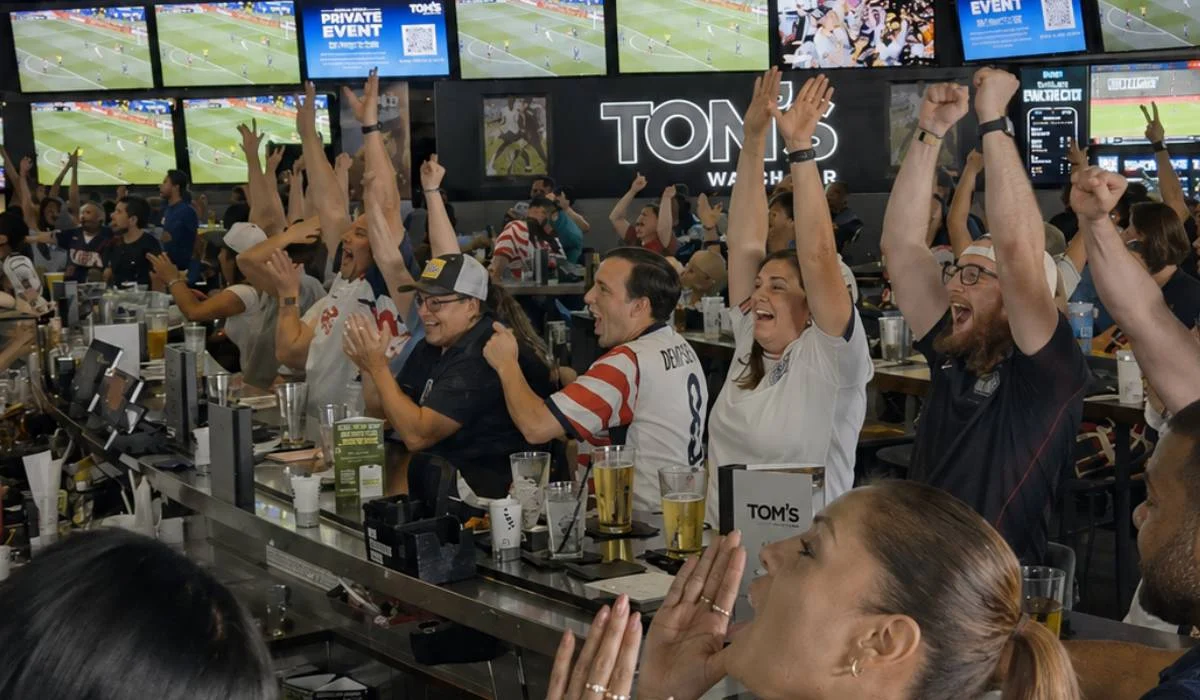
This structural difference has profound implications for the hospitality industry. In a traditional American sports bar setting, patrons often use breaks in play to order food, visit the restroom, or check their phones. Conversely, soccer fans tend to remain anchored to their seats from the opening kickoff to the final whistle, with the exception of the halftime interval. This level of sustained emotional investment requires a different approach to service and venue design. As soccer continues to gain traction in the United States—bolstered by the arrival of international icons like Lionel Messi to Major League Soccer (MLS) and the success of the U.S. Women’s National Team—businesses must adapt to a fan base that values uninterrupted engagement and shared atmosphere over passive observation.
The Economic Drivers of the Third Place
The concept of the "third place," originally coined by sociologist Ray Oldenburg, refers to a social surroundings that is separate from the two usual social environments of home ("first place") and the office ("second place"). In the context of modern sports, the necessity of the third place is being driven by two primary economic factors: the soaring cost of live attendance and the complexity of the digital broadcast landscape.
Stadium experiences, while historically the gold standard for fandom, have become increasingly inaccessible for the average consumer. According to industry data, the average cost for a family of four to attend an NFL or NBA game—including tickets, parking, and concessions—now frequently exceeds $600. Simultaneously, the transition of sports broadcasting to streaming platforms has created a fragmented market. Fans are often required to subscribe to multiple services, such as Peacock, Paramount+, Apple TV+, and ESPN+, just to follow a single team throughout a season.
This "streaming fatigue" has created a vacuum that physical venues are uniquely positioned to fill. By providing a consolidated location where fans can access all matches without the burden of individual subscription costs or the high price of stadium entry, sports entertainment venues are becoming essential hubs for community connectivity.
Four Strategic Pillars for Modern Sports Venues
To successfully transition into a "third place," operators are increasingly focusing on four critical areas of development: atmospheric design, operational efficiency, immersive technology, and community building.
1. Atmospheric Integrity and Design
The physical environment of a venue must do more than simply provide a screen. It must facilitate a sense of belonging. This involves a meticulous approach to lighting, acoustics, and layout. The goal is to create a space that naturally draws attention to the game while remaining conducive to conversation. Successful venues, such as Tom’s Watch Bar, prioritize a layout where every guest feels like a regular, regardless of whether it is their first visit. This is achieved through consistent service rituals and a seating arrangement that mimics the collective energy of a stadium terrace.
2. Eliminating Friction in the Fan Experience
In a continuous-action sport like soccer, any delay—whether it be a long queue at the entrance or a slow response from a server—is viewed as a significant "pain point" for the consumer. Modern venues are investing in technology and staffing models that eliminate these hurdles. The objective is to provide a seamless transition from the moment a fan enters the venue to the moment they leave. This includes pregame programming and postgame celebrations that extend the experience beyond the 90 minutes of play, ensuring that the venue becomes a destination in its own right.
3. Immersive Audiovisual Standards
The quality of the viewing experience is no longer just about the size of the screen; it is about sightlines and sound quality. To compete with the high-definition experience of a home theater, commercial venues are adopting large-scale, immersive sound systems and 360-degree viewing angles. The priority is to ensure that there are no "bad seats" in the house. By optimizing these technical aspects, businesses can replicate the roar of the crowd and the intensity of the match, providing a level of sensory engagement that cannot be matched in a domestic setting.
4. Fostering Tradition and Consistency
A true third place relies on repeat engagement rather than one-time visits. This is achieved by building traditions and rituals that fans can identify with. Whether it is a specific chant, a predictable rhythm of service, or a dedicated area for supporters’ groups, these emotional touchpoints foster a sense of identity. When a venue becomes synonymous with the team or the sport itself, it moves from being a service provider to being a partner in the fan’s emotional journey.
Data-Driven Growth in Sports Viewership
The urgency for businesses to adapt is underscored by the current surge in sports viewership across the United States. In 2024, Super Bowl LVIII became the most-watched television broadcast in U.S. history, attracting over 123 million viewers (with some estimates reaching 127 million). This trend is not limited to football. The NBA recently reported its largest audience in more than two decades, with approximately 170 million unique viewers across television and streaming platforms—an 86 percent increase compared to the previous season.
This growth is fueled by several factors, including the legalization of sports betting in many states, the viral nature of social media highlights, and increased participation in youth sports. The result is a more engaged and knowledgeable fan base that demands a higher quality of communal viewing. The success of Tom’s Watch Bar, which has tripled its footprint to 15 states in recent years, serves as a case study for the scalability of the "third place" model in this high-growth environment.
Chronology of Upcoming Major Sporting Events
The opportunity for businesses to capitalize on this trend follows a dense calendar of international events leading up to the 2026 World Cup:
- 2024: The Copa América and the Paris Summer Olympics have already demonstrated the high demand for communal viewing spaces.
- 2025: The expanded FIFA Club World Cup, to be held in the United States, will serve as a critical test run for infrastructure and fan engagement strategies.
- 2026: The FIFA World Cup will see 48 teams competing in 104 matches across 16 cities in the U.S., Canada, and Mexico, representing the largest sporting event in history.
Broader Implications for the Hospitality Industry
The shift toward the "third place" model suggests a long-term change in how the hospitality industry interacts with sports. It is no longer sufficient to be a "bar with TVs." Instead, the industry is moving toward a "stadium-adjacent" model of entertainment. This has implications for real estate, as developers seek to place these venues in high-traffic urban centers and entertainment districts.
Furthermore, the rise of the "third place" offers a hedge against the volatility of the economy. While consumers may cut back on luxury travel or high-end dining during economic downturns, the "affordable luxury" of a shared sports experience remains a resilient category. The social connection provided by these venues satisfies a fundamental human need for community, which is often amplified during times of social or economic stress.
The lesson for businesses is clear: the demand for shared sports experiences is continuous, not seasonal. By investing in atmosphere, technology, and community, operators can turn fleeting sporting moments into long-term customer loyalty. As the global spotlight turns toward North America for the World Cup and beyond, the venues that succeed will be those that offer more than just a view of the game—they will offer a place to belong.