
The seemingly simple act of brewing a cup of coffee is, at its heart, a sophisticated chemical extraction process, a dance of solubility and kinetics that determines the final sensory experience. Far from being a mere daily ritual, coffee brewing involves a complex interplay of variables, each influencing the myriad compounds released from the ground beans into the water. This intricate balance gives rise to distinct brewing methodologies, primarily pour-over and immersion, both striving for the elusive "perfect cup" but employing vastly different approaches to achieve it. Understanding these methods requires delving into the underlying chemistry, the evolution of brewing apparatus, and the ongoing quest for consistency and flavor optimization.
The Chemical Ballet of Coffee Extraction
A single cup of coffee contains a remarkable array of chemical compounds, with concentrations spanning nine orders of magnitude, as explored in previous analyses of coffee’s chemical composition. These compounds, which include diverse organic acids (like chlorogenic acids, crucial for bitterness and acidity), carbohydrates, lipids, proteins, and the well-known stimulant caffeine, each possess unique solubility characteristics and extraction rates. This inherent variability is not a flaw but a fundamental aspect that allows for the vast spectrum of coffee flavors and brewing creativity. If all compounds were extracted uniformly, the potential for nuanced taste profiles would be severely limited.
The ultimate goal in coffee extraction is not necessarily to extract all soluble material, which would approach a theoretical yield of nearly 30% of the bean’s dry weight. Such an extraction, often achieved by grinding coffee extremely fine and steeping it for extended periods, possibly even boiling it (akin to traditional Turkish coffee without additions), might produce a strong brew but not necessarily the most palatable. The widely accepted optimal extraction yield, championed by organizations like the Specialty Coffee Association (SCA), typically falls within the 18-22% range. This range is critical because it represents a "selective extraction," where desirable compounds are maximized while minimizing the extraction of less pleasant, often bitter or astringent, components that emerge later in the extraction process. Therefore, despite the intuitive appeal of "even extraction," chemically, the aim is often an uneven extraction, selectively targeting specific compounds to achieve a balanced and flavorful cup.
Pour-Over: A Symphony of Variables and the Quest for Control
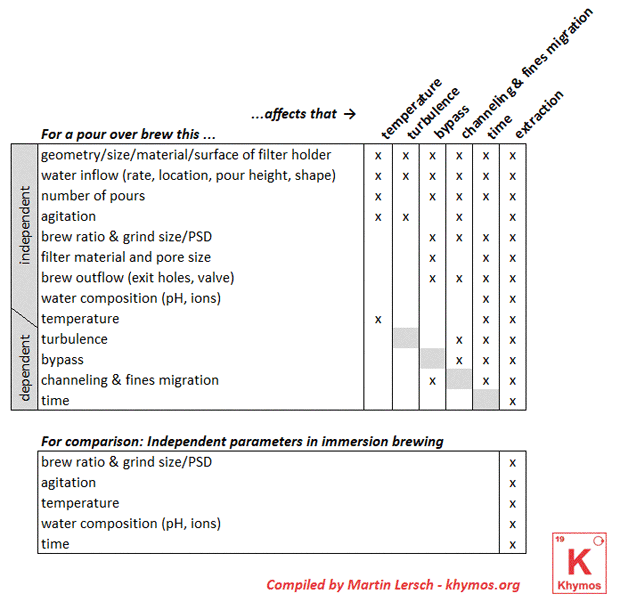
The pour-over, or percolation, technique epitomizes this selective extraction philosophy. It involves pouring hot water over a bed of ground coffee held in a filter, allowing gravity to draw the brew through the coffee and filter into a receptacle. While deceptively simple in concept, pour-over brewing is an immensely complex system with numerous adjustable parameters. The fundamental variables include:
- Brew Ratio: The proportion of coffee grounds to water, directly impacting concentration.
- Grind Size and Particle Size Distribution (PSD): Finer grinds increase surface area, accelerating extraction but also slowing flow and risking clogging. A consistent PSD is vital to prevent uneven extraction (channeling) where water finds paths of least resistance through coarser particles, bypassing finer ones.
- Water Composition and Temperature: Water’s mineral content (hardness, alkalinity) and pH significantly affect how compounds are dissolved. Ideal brewing temperatures typically range from 90-96°C (195-205°F), crucial for optimal solubility of various compounds.
- Filter Material and Pore Size: Paper, cloth, or metal filters each impart different characteristics, influencing clarity, body, and the retention of fines and oils.
Beyond these primary factors, a host of other elements intricately correlate and influence the final brew:
- Inflow Control: How water is introduced to the coffee bed (e.g., pouring height, flow rate, use of water distributors like Gabi Dripmaster B or Melodrip) affects bed disturbance and even saturation.
- Brewing Time: The total duration of water-coffee contact, a function of grind size, flow rate, and bed geometry.
- Bloom Time: An initial wetting phase allowing carbon dioxide to escape, promoting even saturation.
- Coffee Bed Geometry: The shape and depth of the coffee bed, determined by the brewer’s design, influences water flow dynamics. A deep, narrow bed offers more contact but slower flow, while a flat bed allows faster flow but risks channeling.
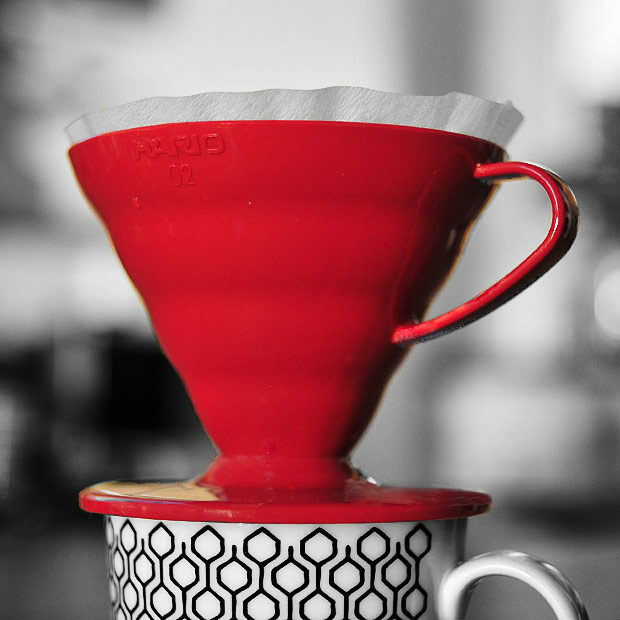
- Inside Wall Surface of the Filter Holder: Ridges (e.g., Hario V60) or patterns create space for water to flow along the filter sides, preventing clogging. A smooth surface (e.g., Chemex) can create a seal, minimizing bypass but requiring specific filter papers.
- Exit Hole(s) and Outflow Control: The number and size of holes, or the presence of a shut-off valve (e.g., Clever Dripper, Hario Switch), directly regulate the flow rate and contact time, offering critical control.
- Bypass: Water that flows around the coffee bed rather than through it, diluting the brew without contributing to extraction. This is a significant concern, as "water is lazy" and will always seek the path of least resistance. Designs that minimize bypass, such as those with filters entirely below the coffee bed (e.g., Tricolate, Aeropress), are gaining traction among enthusiasts seeking maximal extraction efficiency.
This extensive network of correlated parameters means that seemingly minor adjustments can cascade into significant flavor differences. For instance, a finer grind size not only increases surface area for extraction but also slows water flow, increases contact time, and heightens the risk of filter clogging and channeling. This inherent complexity explains the proliferation of countless pour-over brewing guides and YouTube tutorials, each attempting to demystify the process. While this offers immense control to skilled baristas and home brewers, it also introduces unintended variations, contributing to the propagation of brewing myths and making it challenging for two individuals to replicate the "same" recipe without meticulous attention to every minute detail.
A Historical Perspective on Brewing Innovation
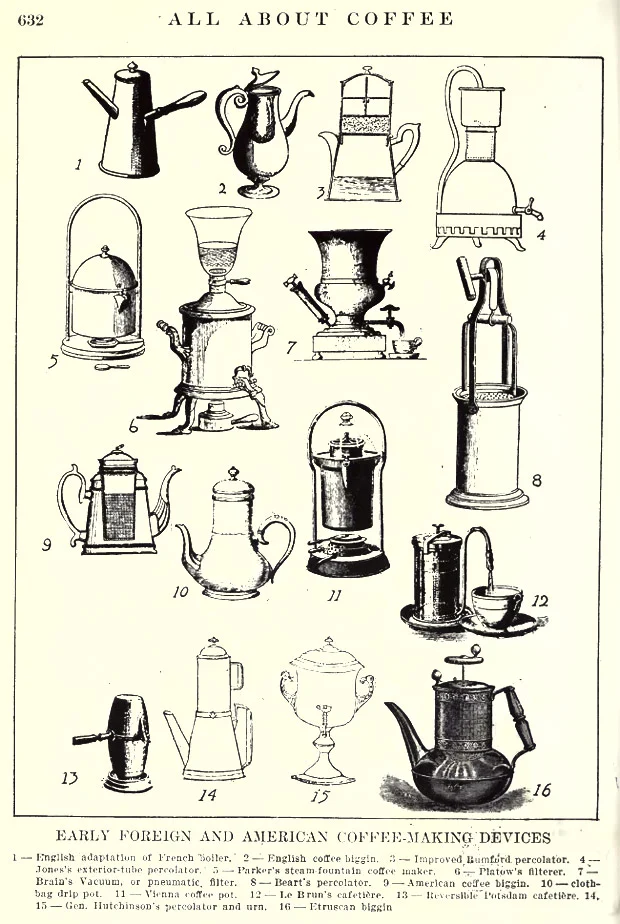
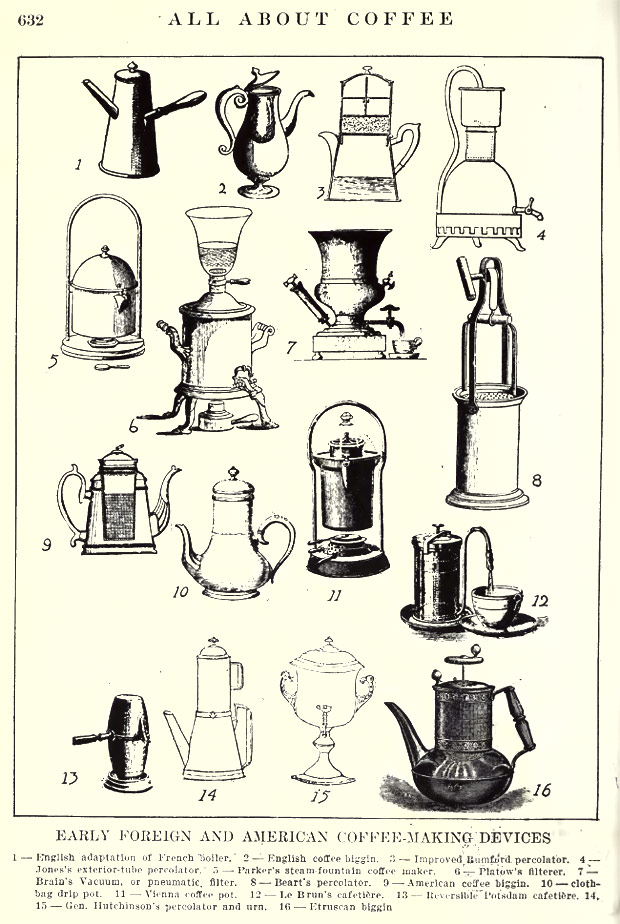
The pursuit of the perfect coffee maker is not a modern phenomenon. As evidenced by illustrations from W. A. Ukers’ seminal 1922 work, "All About Coffee," inventors have been grappling with these brewing challenges for centuries. The evolution from early percolators (which should not be confused with modern percolation/pour-over) to the diverse array of contemporary pour-over devices reflects a continuous effort to "untie the coffee knot."
Modern pour-over brewers showcase a remarkable diversity in design, each with specific features aimed at optimizing different aspects of extraction:
- Material and Insulation: The choice of material (plastic, ceramic, glass, metal) impacts thermal stability. Plastic and ceramic offer good heat retention at lower cost, while vacuum-insulated metal (e.g., Fellow Stagg X/XF) or double-walled glass minimize heat loss, which is crucial for maintaining consistent extraction temperatures.
- Shape and Geometry: From the classic Melitta trapezoid to the Hario V60’s cone and the Kalita Wave’s flat bottom, these shapes dictate the coffee bed’s geometry, influencing water distribution and flow.
- Filter Type: Paper filters (plain, folded, W-shaped) are most common, impacting clarity and fines retention. Metal filters allow more oils and fines through, contributing to body. The Karlsbader brewer, with its coarse ceramic grating, stands as an outlier, offering a unique, sediment-rich brew.
- Inflow and Outflow Control Mechanisms: The rise of specialized gooseneck kettles for precise pouring, water distributors, and brewers with integrated shut-off valves (like the Clever Dripper or Hario Switch) highlights the industry’s focus on managing water contact time and ensuring even saturation, particularly to counteract uncontrolled bypass.
The ingenuity behind these designs often addresses the core challenge of bypass, where water bypasses the coffee bed, diluting the brew without extracting flavor. Designers strive to ensure that, as much as possible, the coffee itself restricts water flow, not the equipment (except for controlled shut-off valves). The emergence of cylindrical filter holders with flat filters situated entirely below the coffee bed, such as the Aeropress, Delter Coffee Press, and Tricolate, represents a significant step towards minimizing bypass and achieving more predictable, controlled extractions.
Immersion Brewing: Robustness in Simplicity
In contrast to the delicate precision required for pour-over, immersion brewing offers a robust and repeatable alternative. In this method, all the coffee grounds are steeped in water for a predetermined duration, typically with an initial stir to ensure saturation and degasification. After the desired extraction time, the coffee liquid is separated from the grounds, often via pressure filtration.
The primary appeal of immersion brewing lies in its forgiving nature. Sharing a recipe between two individuals often yields remarkably similar results, a stark contrast to the variability inherent in pour-over. This repeatability stems from the fact that parameters like grind size and brew ratio can be controlled more independently of brewing time. The extended, full contact between water and coffee allows for a more comprehensive, albeit still selective, extraction, approaching an equilibrium state between the coffee brew and the grounds. Devices like the French Press, with its relatively coarse mesh filter, exemplify immersion brewing.
However, immersion brewing comes with its own set of characteristics. The French Press, for instance, allows a significant amount of coffee fines and oils to pass into the cup, contributing to a rich body and texture but often resulting in a noticeable sediment. While many appreciate this "mouthfeel," the presence of fines can also introduce undesired bitterness, and some find the taste to be "muted" compared to the clarity achievable with pour-over. To address this, some enthusiasts filter French Press coffee through paper filters post-brew, a simple experiment that drastically alters the cup profile by removing fines and some oils, yielding a cleaner, brighter taste. The Aeropress, especially when used in its inverted immersion mode, offers a hybrid approach, combining immersion with a paper filter for a clean, full-bodied brew.
The Broader Implications and the Ongoing Quest
The nuanced differences between pour-over and immersion brewing methods underscore the complex interplay of chemistry, physics, and design in the world of coffee. For the burgeoning specialty coffee industry, this translates into a constant cycle of innovation, research, and consumer education. Baristas and coffee professionals are increasingly adopting scientific principles to refine their craft, moving beyond traditional intuition to data-driven approaches. This has led to a wider array of equipment choices for consumers, allowing them to tailor their brewing experience to their preferences for clarity, body, or convenience.
The ongoing scientific inquiry into coffee extraction, from detailed analyses of compound solubility to fluid dynamics modeling, continues to push the boundaries of what is possible. The pop culture reference to Gale Boetticher’s elaborate coffee setup in "Breaking Bad" perfectly captures this scientific zeal, embodying the universal longing for the "very best cup of coffee we have ever tasted." It is a testament to the idea that coffee brewing is not just an art but a science, a frontier where chemists, engineers, and passionate enthusiasts converge in a continuous pursuit of perfection. As new insights emerge and innovative designs hit the market, the journey towards unlocking coffee’s full potential remains an exciting and evolving endeavor, promising even more exquisite and consistent brews in the future.