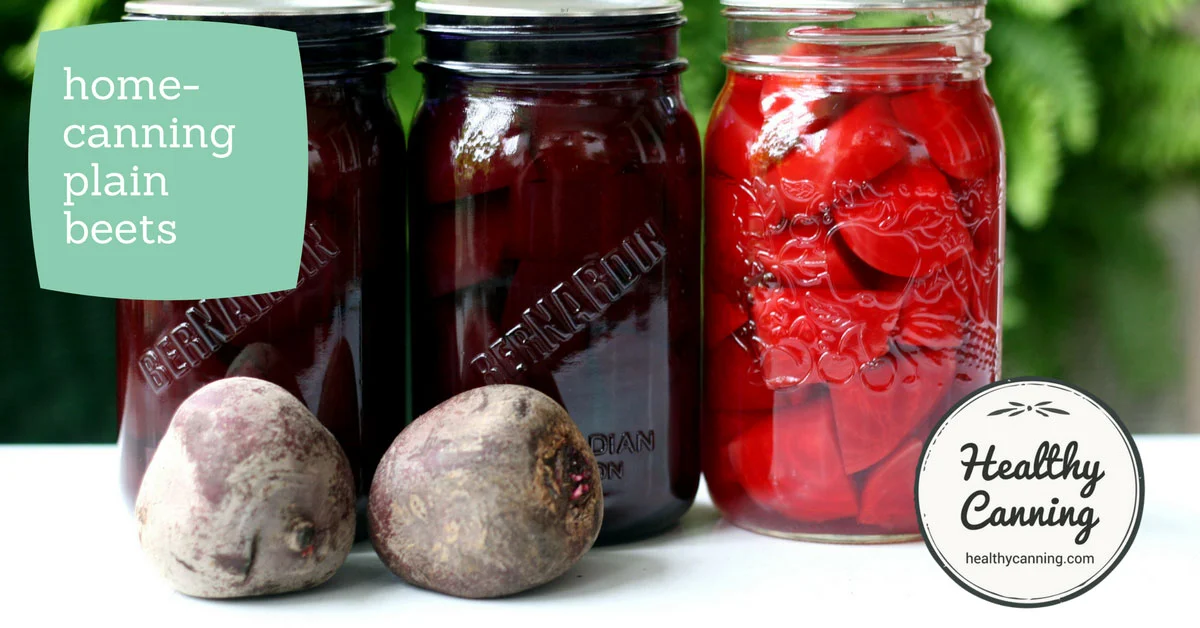

Home-canned plain beets offer a convenient culinary touch to weeknight meals, serving as a swift side dish when warmed in the microwave with sour cream and dill, or roasted rapidly in olive oil or duck fat during chilly winter evenings. However, preparing and preserving low-acid vegetables like beetroot requires strict adherence to scientifically validated safety protocols. Following guidelines established by the United States Department of Agriculture (USDA), home canners can produce high-quality, shelf-stable plain beets, provided they rely exclusively on pressure-canning equipment.
The Critical Importance of Pressure Canning
Food safety authorities and extension services emphasize a non-negotiable rule: plain beets must always be processed using a pressure canner. Water-bath canning is entirely unsuitable and profoundly dangerous for plain, non-acidic root vegetables. Historical documentation and public health data compiled across decades outline a persistent risk of botulism linked to improperly processed beets.

From 1990 to 2012, public health records in the United States documented at least ten cases of botulism resulting from home-canned beets that were incorrectly processed using boiling water bath methods instead of pressure canning. Clostridium botulinum spores thrive in low-acid, oxygen-deprived environments such as sealed jars. Because beets possess firm flesh and low acidity, they rank alongside green beans as potential carriers of the deadly neurotoxin if treated improperly.
Food preservation experts compare this risk to handling raw poultry; while dangerous if mishandled, standard safety measures—in this case, using a properly calibrated pressure canner—eliminate the threat entirely, allowing home cooks to stock their pantries with absolute confidence.
Understanding the Scope: Roots Versus Greens
For international practitioners, particularly those outside North America, clarity regarding terminology is essential. USDA pressure-canning procedures for plain beets apply exclusively to the root or tuber portion of the plant. While beet greens (the leafy tops) are entirely edible and can be preserved at home, they require a separate, distinct processing procedure comparable to that used for spinach and other greens. Combining the roots and greens into a single jar or applying unverified processing times compromises safety and is strongly discouraged.
Step-by-Step Preparation and Yield Guidelines
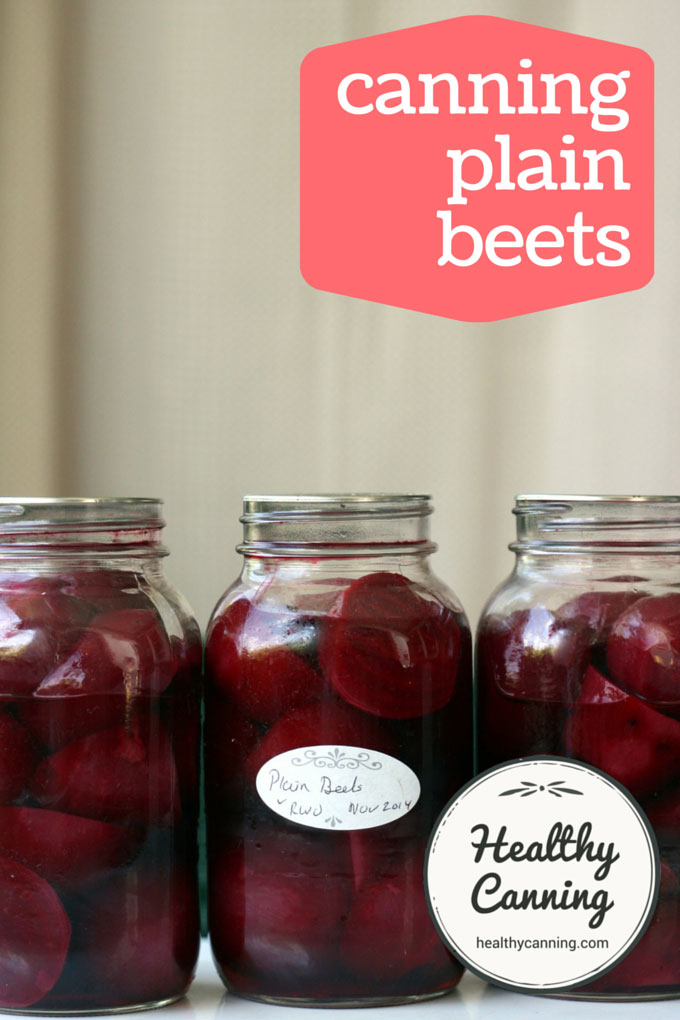
Successful preservation begins long before jars enter the canner. As a general benchmark, home canners should anticipate requiring approximately 1.25 kilograms (3 pounds) of raw beets to yield a single 1-litre (US quart) jar of finished product. For example, roughly 10 medium raw beets, measuring about 9 centimeters (3 inches) in diameter with skins intact, will weigh approximately 2 kilograms (4.5 pounds).
Jar sizes may include either half-litre (1 US pint) or 1-litre (1 US quart) containers. The standard headspace required is 3 centimeters (1 inch). Salt may be added to individual jars for seasoning—typically one-half teaspoon for pints and one teaspoon for quarts—but food safety specialists emphasize that salt plays no role in preservation safety; it is strictly a flavor enhancer.
Processing Pressures and Times
Processing parameters depend strictly on the type of gauge on the pressure canner and the local altitude. For weighted-gauge canners operating at elevations between 0 and 300 meters (0 to 1,000 feet, half-litre and 1-litre jars must be processed at 10 pounds of pressure. Half-litre jars require 30 minutes of processing time, while 1-litre jars require 35 minutes.
For dial-gauge canners at the same elevation, processing requires 11 pounds of pressure. Canners operating at elevations exceeding 300 meters (1,000 feet) must upwardly adjust their pressure settings—typically moving to 15 pounds for weighted gauges—to compensate for lower atmospheric pressure and ensure internal jar temperatures reach the levels necessary to neutralize bacterial spores.
Pre-Cooking Beets for Optimal Results
Beets must be pre-cooked before being packed into jars. The primary objective is to heat the roots sufficiently so that their skins slip off easily. Furthermore, food safety protocols mandate that beets must be peeled prior to canning; this essential step significantly reduces the initial bacterial load introduced into the jars, a factor upon which the validated processing times rely.
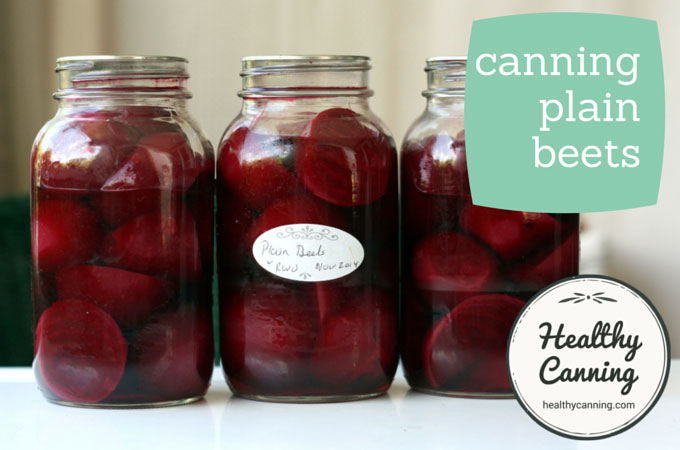
To minimize color loss and ease preparation, leave approximately 2 to 5 centimeters (1 to 2 inches) of the taproot and stem attached during the initial boiling or steaming phase. While this technique cannot prevent all pigment degradation, it helps mitigate excessive bleeding. Once the skins are easily slipped off, trim away the remaining stems and roots, and slice, dice, or leave smaller beets whole (under 5 centimeters / 2 inches in diameter).
Crucially, the USDA-tested procedure requires beets to be hot or at least warm when packed into jars. Canners are advised against plunging hot beets into ice water to cool them for handling. If beets cool completely during the peeling process, they must be thoroughly reheated—such as by a brief interval in a microwave—before being loaded into hot, sterilized jars.
Energy-Saving Pre-Cooking Innovations
While pressure canning remains mandatory for the final preservation step, contemporary culinary researchers have explored energy-efficient alternatives for the initial pre-cooking phase to reduce fuel and water consumption. Utilizing a multi-canner steam canner or a high-pressure cooker can significantly cut down preparation time and avoid heating up the kitchen.

When using a pressure cooker for pre-cooking, batch sorting is vital. Because a pressure cooker cooks all items simultaneously without the ability to remove items as they soften, large bags of mixed-size beets should be sorted by diameter. Medium beets (up to 10 centimeters / 4 inches) processed in a multi-quart pressure cooker with adequate water at high pressure for approximately three minutes, followed by a natural release, will yield uniformly tender roots ready for peeling.
The Science of Color Loss and Recovery
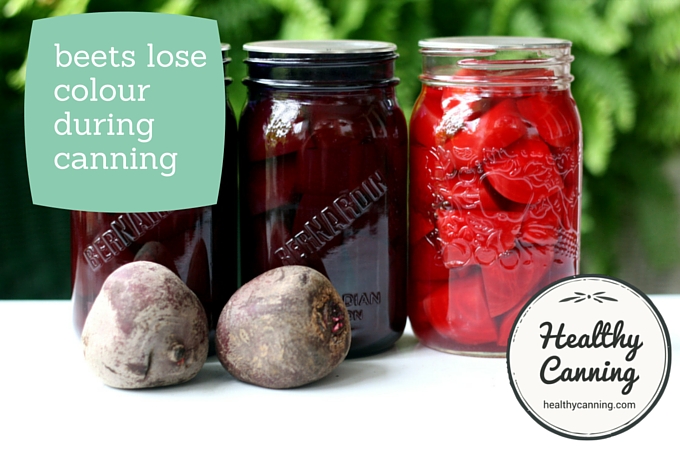
A common concern among home canners is the fading of vibrant red hues during the canning process. The natural pigments responsible for a beet’s deep color—known as betalains—are highly sensitive to thermal exposure. High temperatures can temporarily transform these pigments into colorless compounds.
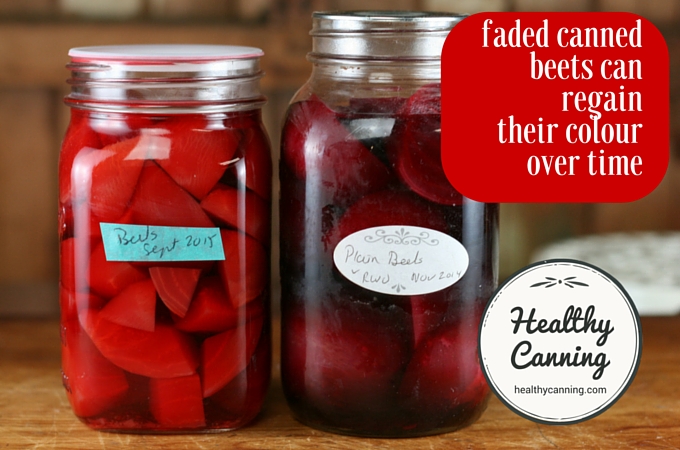
According to agricultural extension specialists, this reaction is frequently reversible. Canned beets that appear pale or washed out immediately after processing often regain a deep, rich red color after spending a few days or weeks resting quietly in a dark pantry at room temperature. Varieties specifically bred for color retention, such as ‘Detroit Dark Red’ and the elongated ‘Formanova’, offer superior performance, though gardeners generally need to cultivate these specific varieties themselves to guarantee authenticity.
Historical Evolution of Canning Guidelines
Public health recommendations regarding beets have evolved significantly over the past century. As early as 1926, USDA bulletins authored by food scientists like Louise Stanley strongly cautioned against water-bath canning for low-acid vegetables, explicitly citing botulism risks and establishing standardized pressure-canning parameters.
However, wartime exigencies occasionally disrupted adherence to sound scientific advice. During the Second World War, metal rationing severely limited the availability of pressure canners to the civilian population. In response, certain university agricultural extension services issued alternative instructions recommending an "acid method" that involved boiling beets in water baths after adding vinegar.
Modern food safety authorities caution against following these historical anomalies. The assumption that a small quantity of vinegar could render plain beets safe for boiling-water processing was scientifically flawed and introduced unnecessary public health risks. Contemporary home canners are strictly advised to disregard outdated publications and rely exclusively on current, research-backed guidelines issued by recognized authorities such as the USDA and the National Center for Home Food Preservation.
Judging Criteria for Quality Assessment
In agricultural fairs and professional food preservation evaluations, high-quality home-canned beets are judged against rigorous standards. Evaluators look for uniform size and shape, with whole beets measuring under 5 centimeters (2 inches) in diameter and larger specimens neatly sliced or cubed. The color must be deep, dark, and even, free from brownish fading or undesirable white rings.
The packing liquid must remain sparkling clear and distinctly red, completely free of cloudiness, sediment, or loose fibrous matter. Furthermore, top-tier canned beets must show no residual traces of stems, roots, or skin, ensuring a tender texture that enhances modern culinary applications ranging from traditional borscht and maple-roasted sides to contemporary coconut milk curries.