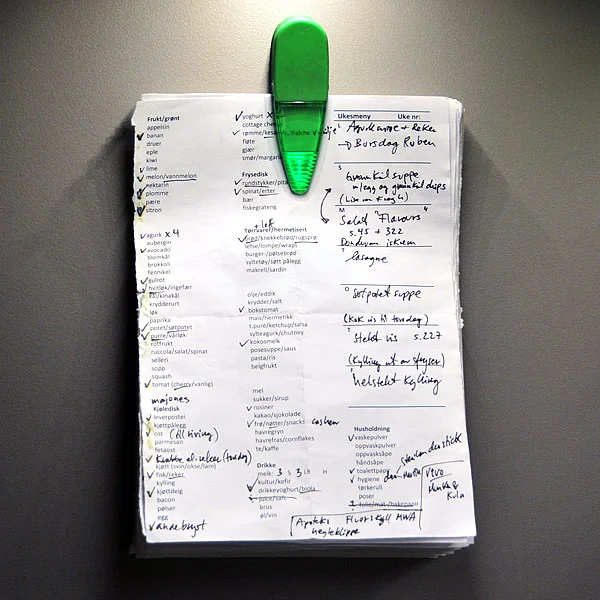

The contemporary balancing act of maintaining a full-time career while managing a household has given rise to widespread logistical fatigue, a modern phenomenon known colloquially in Norway as tidsklemma—the relentless squeeze of time. For families navigating this high-stress environment, the traditional daily chore of figuring out what to cook for dinner has increasingly become a source of friction rather than culinary enjoyment. Amid a digital landscape flooded with algorithmic grocery apps, meal-planning software, and cloud-based recipe boxes, a surprising counter-trend has emerged from domestic kitchens: a return to analog, highly optimized paper systems. Culinary researchers and busy households alike are discovering that a single sheet of A5 paper, refined over years of trial and error, can outperform complex digital applications in reducing food waste, saving money, and alleviating the mental load of daily sustenance.
Origins of the Six-Year Master List
The evolution of this low-tech organizational breakthrough did not happen overnight. For many culinary enthusiasts, stepping away from food blogging or public recipe sharing for extended periods—sometimes spanning three years or more—often signals a shift toward internal domestic routines. Behind closed doors, the kitchen remains active, driven by the necessity of feeding a family within strict temporal boundaries.
The strategy that emerged from this period of quiet domestic refinement centers on a generic, category-organized master shopping list. Rather than starting from scratch each week—a cognitive drain that frequently leads to impulse buying and forgotten ingredients—households are adopting standardized templates. Over a six-year period of iterative adjustments, these lists have evolved to reflect specific dietary preferences, local supermarket layouts, and household demographics. As children grow up, move through developmental stages, and alter their nutritional needs, the physical list dynamically shifts. Items are added, phased out, and reorganized to match the precise spatial geography of the local grocery store aisles, transforming a routine chore into a streamlined, high-efficiency errand.
The Analog Advantage in a Digital Era
In an era where technology companies continuously market smartphone applications promising frictionless grocery management, the enduring resilience of paper warrants closer examination. Behavioral psychologists and domestic efficiency experts note that digital tools often introduce friction rather than removing it. Unlocking a phone, navigating between applications, dealing with intermittent connectivity in the deep aisles of a supermarket, and typing on virtual keyboards can distract shoppers and increase the time spent in-store.
Conversely, paper offers a high-resolution overview that digital screens struggle to replicate. A standard A5 or A4 sheet of paper can simultaneously display a seven-day meal plan and a comprehensive grocery inventory categorized by department. This single-source-of-truth document can be easily folded, slipped into a pocket or clipped to a shopping cart, and annotated in real-time with a pen or pencil. The tactile nature of checking off items manually provides a cognitive sense of completion that digital check-boxes rarely match. Furthermore, the blank margins of a physical list offer infinite flexibility for impromptu notes, pricing comparisons, and last-minute additions that fall outside the standard inventory.
Chronology of the Weekly Shopping Cycle
Implementing a successful weekly grocery system requires a strict adherence to a predictable operational rhythm. Understanding the chronology of this domestic workflow highlights why structural planning is critical for modern households.
Phase One: The Retrospective Review (Bi-Weekly or Monthly)
Before printing a fresh batch of shopping lists—typically done in batches of ten to twenty copies—the household manager conducts a brief review of previous weeks. By flipping through archived paper lists, the shopper evaluates purchase accuracy: Which items were consistently left unbought? Which ingredients ran out faster than anticipated? This historical audit ensures the generic master list remains accurate and prevents the accumulation of surplus goods.
Phase Two: Menu Integration (Sunday or Pre-Shopping Day)
The meal planning phase involves assigning specific dinners to the upcoming week. Rather than writing out full recipes, experienced planners utilize shorthand, such as indexing cookbook page numbers or noting brief meal titles directly onto the shopping sheet. This integration serves a dual psychological purpose: when the shopper eventually navigates the grocery store aisles, glancing at the menu acts as a cognitive trigger, often reminding them of overlooked ingredients or structural components required for a specific dish.
Phase Three: The Single-Trip Execution (Mid-Week)
By consolidating nutritional requirements into a single weekly shopping trip, households drastically reduce the hidden costs of food procurement—namely, fuel consumption, parking fees, and the susceptibility to point-of-sale marketing that plagues frequent, ad-hoc grocery store visits. Walking through the store with a category-sequenced paper list allows the shopper to move in a linear path from produce to pantry goods, significantly cutting down transit time within the facility.
Phase Four: Strategic Deviation and Flexibility
A common criticism leveled against rigid meal planning is its potential inflexibility. Critics argue that strict schedules stifle culinary spontaneity and the joy of cooking based on daily cravings or fresh market availability. However, domestic analysts emphasize that a meal plan should function as a structural scaffold rather than an authoritarian mandate. Successful practitioners incorporate built-in allowances for spontaneous social invitations, dining out with friends, or relying on convenient takeout options during periods of profound physical exhaustion. The primary objective of the plan is not to eliminate culinary freedom, but to ensure that baseline nutritional needs are met efficiently, preventing the default resort to processed convenience foods born of sheer fatigue.
Data and Economic Implications of Meal Planning
The macro-level implications of adopting structured, paper-based grocery planning extend far beyond personal time management. Economic and nutritional data consistently point to the hidden costs of unstructured food purchasing. According to consumer expenditure surveys, households that shop without a defined list spend an estimated 20 to 30 percent more per trip on impulse purchases compared to those who adhere to a strict inventory.
Furthermore, food waste remains a critical global challenge, with a significant percentage of discarded food originating at the household level. When consumers buy ingredients without a corresponding weekly menu, perishables frequently spoil before they can be prepared. By aligning the shopping list directly with a chronological dinner plan, households create a closed-loop system where every purchased item has a designated culinary destination. This alignment not only curbs financial leakage but also aligns with broader environmental objectives aimed at reducing municipal organic waste.
Sociological Perspectives on the Time Squeeze
The modern struggle to balance professional ambitions with domestic responsibilities has been studied extensively by sociologists and economists. The Norwegian concept of tidsklemma encapsulates the psychological pressure experienced by working parents who feel squeezed between the demands of the workplace and the logistical requirements of family life.
Experts in family dynamics note that food preparation represents one of the most persistent daily demands on domestic labor. When left unmanaged, it generates decision fatigue—a psychological phenomenon where the quality of human decision-making deteriorates after a long session of decision-making tasks. Arriving home from a full day of employment only to ask, "What is for dinner?" triggers immediate cognitive strain. Pre-planning meals and utilizing standardized lists effectively offloads this decision-making process to an earlier, calmer moment in the week, preserving mental energy for other familial and professional responsibilities.
Adaptability and Public Availability of Resources
To assist households seeking to escape the cycle of unstructured grocery shopping, standardized templates have been made publicly available for adaptation. Recognizing that no two families share identical dietary habits, store layouts, or linguistic preferences, the foundational documents are distributed in editable formats.
Users can download the master inventory as a word-processing document in varying regional formats, such as Norwegian A4, English A4, or North American legal size. This accessibility allows individuals to customize category headers—separating fresh produce, dairy, proteins, and dry goods—to mirror the exact physical architecture of their preferred retail supermarket.
As domestic routines continue to evolve in response to economic pressures and time constraints, the enduring appeal of a simple, paper-based grocery list demonstrates that technological advancement is not always synonymous with efficiency. By merging historical analog methods with modern organizational discipline, families can reclaim valuable hours of their week, reduce unnecessary financial expenditures, and restore a sense of calm to the daily ritual of breaking bread.