
The quest for extended youth and a longer, healthier life has captivated humanity for centuries, but never before has it manifested with the scientific precision and public spectacle embodied by figures like Bryan Johnson. Johnson, a tech entrepreneur and the subject of the Netflix documentary Don’t Die, has propelled the concept of "bio age" into mainstream consciousness through his ambitious "Project Blueprint." This highly publicized regimen aims to systematically reverse his biological age, demanding an annual investment reportedly in the millions. His daily protocol is an intricate tapestry of dozens of supplements, weekly acid peels, collagen-boosting injections, hyperbaric oxygen therapy, and perhaps most controversially, plasma infusions derived from his 17-year-old son.
Johnson asserts that these extreme interventions, meticulously tracked through various bio age tests, have successfully reduced his biological age by 5.1 years since the project’s inception, leading him to claim he is "aging in reverse." However, his claims have not gone unchallenged. A New York Times exposé, for instance, presented a starkly different picture, alleging that Johnson’s biological age had, in reality, increased by 10 years, underscoring the nascent and often contentious nature of this field. Despite such skepticism, Johnson’s "don’t die" crusade has undeniably gained significant traction, fueling a burgeoning public interest in biological age testing. The topic is a frequent subject on popular health podcasts hosted by figures like Peter Attia, Joe Rogan, and Andrew Huberman. A simple online search for "bio age testing" reveals a myriad of advertisements for direct-to-consumer blood or urine testing kits, promising to reveal one’s biological age, pace of aging, and more. With prices for these tests becoming increasingly accessible, a fundamental question emerges for individuals and health professionals alike: Should bio age testing be pursued, and if so, which tests offer the most reliable insights, and how should the resulting data be interpreted and acted upon?
Defining Biological Age: Beyond the Calendar
At its core, your biological age, or "bio age," refers to the functional state of your cells, tissues, and organs, reflecting their actual physiological health rather than merely the number of years you have been alive. This stands in stark contrast to your chronological age, which is simply the count of birthdays you’ve celebrated. The distinction is crucial because while everyone ages chronologically at the same rate, biological aging is a highly individualized process influenced by a complex interplay of genetics, lifestyle choices, environmental exposures, and medical history.
Consider two 50-year-old men: Chang, who works a sedentary desk job, spends his evenings in front of the television, resides in a highly polluted urban environment, consumes processed foods, and smokes regularly. On the other hand, Jabari, also 50, exercises several times a week, lives in a pristine natural setting, is a non-smoker, prioritizes nutrient-dense meals, practices meditation, and tends to his garden. While both share the same chronological age, it would be a reasonable inference, genetics notwithstanding, that Jabari’s biological age would be significantly younger than Chang’s. The burgeoning field of longevity science aims not just to extend lifespan but to maximize "healthspan" – the period of life spent in good health, free from chronic disease and disability. Understanding one’s biological age is presented as a key metric in this pursuit.
Unpacking the Science: How Biological Age is Measured
The measurement of biological age relies on the identification and quantification of specific biological markers, or biomarkers, that are known to change with age. These biomarkers provide a snapshot of various physiological processes linked to aging and disease risk.
The Role of Biomarkers
Biomarkers are measurable indicators of a biological state. In the context of aging, they can be anything from molecular changes at the cellular level to macroscopic physiological functions. The challenge lies in identifying biomarkers that reliably correlate with the overall aging process and predict future health outcomes.
Epigenetic Clocks: DNA Methylation
Among the most prominent and scientifically robust methods for assessing biological age are epigenetic clocks, which primarily measure DNA methylation. This physiological process involves the chemical modification of DNA, where methyl groups are added to specific DNA bases, typically cytosine. These methylation patterns change predictably with age, influenced by both genetic predisposition and environmental factors. Scientists have identified specific sites in the genome where methylation levels are highly correlated with chronological age.
Pioneering researchers like Steve Horvath developed the "Horvath Clock," a complex algorithm that analyzes methylation patterns across numerous CpG sites (regions where cytosine and guanine nucleotides are connected by a phosphate) to predict an individual’s biological age. More recently, tools like "DunedinPACE" have emerged, which aim to measure the pace of aging, rather than just a static biological age, by tracking dynamic changes in methylation over time. These epigenetic clocks have been invaluable research tools, allowing scientists to study how various lifestyle factors, environmental exposures, and pharmaceutical interventions impact the aging process at a molecular level. However, their transition from a research instrument to a direct-to-consumer product for individuals to "pinpoint" their biological age remains a subject of considerable scientific debate. While they offer fascinating insights, the clinical actionability of a single epigenetic age reading for a healthy individual is still being established. A typical DNA methylation test kit can cost around $300. It’s crucial to understand that these tests generally analyze methylation patterns from blood samples, providing insight into the biological age of blood cells, which may not perfectly reflect the aging rates of other organs or tissues within the body. Therefore, a DNA methylation test should not be considered a substitute for comprehensive annual medical check-ups and routine blood work.
Telomere Length Analysis
Another widely discussed biomarker of aging is telomere length. Telomeres are protective caps located at the ends of chromosomes, akin to the plastic tips on shoelaces. Their primary function is to safeguard genetic information during cell division. With each cell division, telomeres naturally shorten. Once they reach a critically short length, the cell can no longer divide and enters a state of senescence (cellular aging) or undergoes programmed cell death.
Abnormally short telomeres are definitively associated with several rare genetic disorders, such as dyskeratosis congenita. In these cases, physicians often order a specialized test called the flow-FISH test to accurately measure telomere length across a wide range of blood cells for diagnostic purposes. However, the utility of telomere length as a predictive biomarker for general aging and disease risk in healthy individuals is far more contentious. While shorter telomeres are generally linked to older biological age and increased risk for certain age-related diseases, the variability in telomere length among individuals, even at the same chronological age, is significant. Furthermore, the commercial telomere tests marketed directly to the public, often known as qPCR telomere tests, are generally less precise and are not the same assays used in clinical or research settings. These tests, typically costing around $100, may satisfy curiosity but lack the scientific rigor and clinical validation to form the basis of significant health and fitness decisions.
Accessible Insights: Free and Doctor-Approved Biomarker Tests
While advanced commercial tests delve into molecular biology, many foundational indicators of biological age are readily accessible, often free, or covered by routine medical care. These "evergreen" biomarkers have long been used by researchers to assess aging rates and predict longevity, offering valuable insights without the hefty price tag.
Foundational Fitness Indicators
Long before high-tech blood tests, scientists relied on simple physical assessments to gauge an individual’s overall fitness and aging trajectory. These tests remain highly relevant and predictive.
- The Sitting-Rising Test (SRT): This simple yet profound test assesses both strength and balance, two critical components of functional independence and longevity. Studies, including a 12-year investigation of 4,200 adults aged 46 to 75, have shown a strong correlation between low SRT scores and an increased risk of mortality from cardiovascular disease. To perform the test, lower yourself to the floor into a crisscross leg position, then stand back up, keeping your legs in the same position. Start with 10 points, deducting one point for each body part (hand, knee, shin) used for leverage and half a point for unsteadiness. A lower score indicates potential deficits in balance, coordination, muscle strength, and power, all of which are indicators of biological age.
- Grip Strength: Your grip strength is a remarkably robust predictor of overall health and longevity. It serves as a proxy for total body muscle strength, which itself is a vital determinant of health. Weak grip strength has been associated with a higher risk of future muscle weakness, slower walking speed, difficulty rising from a chair, and increased susceptibility to conditions like cardiovascular disease, diabetes, certain cancers, and cognitive decline. Some research suggests grip strength can be a better indicator of longevity than blood pressure. While a hand-held dynamometer (available at many physical therapy clinics and some gyms, or for purchase between $100-$500) provides precise measurements, a simple tennis ball squeeze test can offer a general indication: squeezing for 15-30 seconds is average, over 90 seconds is excellent.
- One-Foot Stand: The ability to balance on one foot for an extended period is a powerful indicator of neurological integrity, proprioception, and musculoskeletal health. It requires the coordinated effort of the eyes, inner ear, skeletal muscles, and brain. Impaired balance is a significant risk factor for falls, a leading cause of injury-related death among older adults. Furthermore, an inability to maintain balance can be a warning sign for underlying health issues such as diabetes, heart disease, or cancer. A study from Duke University provides age- and sex-matched averages for this test, allowing individuals to benchmark their performance by standing near a wall for safety, lifting one leg, and timing how long they can maintain balance.
Subjective and Physiological Markers
Beyond physical performance, how you feel and basic body measurements also offer critical insights into your biological age.
- Fatigue Assessment: Distinguishing between transient tiredness and persistent fatigue is crucial. While tiredness often resolves with rest, fatigue describes a chronic, debilitating exhaustion that interferes with daily life, encompassing mental dullness and emotional exhaustion. When common causes like sleep deprivation, dehydration, or chronic stress have been ruled out, persistent fatigue can signal an underlying health problem, ranging from anemia and obesity to depression, cancer, or diabetes. The Pittsburgh Fatigability Scale, which asks individuals to rate their perceived fatigue after various activities on a 0-5 scale, can quantify this. Scores below 15 are considered good, 15-24 a warning sign, and 25 or above warrant discussion with a healthcare professional, as higher fatiguability is linked to increased mortality risk and declines in physical function.
- Body Composition: The ratio of muscle to fat in your body, rather than just overall weight, is a critical determinant of biological age and healthspan. Both excessive body fat, particularly visceral fat (around organs), and insufficient muscle mass (sarcopenia) are detrimental. High body fat increases the risk for heart disease, high blood pressure, cancer, type 2 diabetes, and inflammation. Simultaneously, low muscle mass is associated with similar risks, including insulin resistance, faster cellular aging, and an increased propensity for falls. While gold standard methods like DEXA scans or Bod Pod are costly, a simple tape measure can provide a surprisingly accurate estimate of body fat percentage when combined with age, sex, height, and weight in an online calculator. Key measurements include neck, waist, and hip circumference.
Clinical Blood Panels: Your Annual Health Snapshot
Routine blood work, typically part of an annual physical, offers a wealth of information about your metabolic and cardiovascular health, which are strong predictors of biological age and longevity. These markers are often responsive to lifestyle changes, making them practical tools for monitoring the effectiveness of health interventions.
- Cardiovascular Health Markers:
- Total Cholesterol, LDL ("bad" cholesterol), HDL ("good" cholesterol), Triglycerides: These lipid levels are crucial for assessing cardiovascular disease risk, the leading cause of premature mortality. Optimal ranges are well-established (e.g., total cholesterol < 200 mg/dL, LDL < 100 mg/dL, HDL > 60 mg/dL, triglycerides < 150 mg/dL).
- Apolipoprotein B (Apo B) and Lipoprotein (a): These more advanced markers offer a deeper insight into the number of atherogenic (plaque-forming) particles in the blood, providing a more refined risk assessment for heart disease.
- C-reactive protein (CRP): A marker of systemic inflammation, high levels of CRP (< 2.0 mg/L optimal) are associated with an increased risk of cardiovascular events and other chronic diseases.
- Metabolic Health Markers:
- Fasting Glucose: Indicates immediate blood sugar control, with optimal levels below 100 mg/dL.
- Hemoglobin A1C: Provides an average blood sugar level over the past two to three months, offering a longer-term view of diabetes risk (optimal < 5.7%).
These markers, when assessed by a healthcare professional, can be used to calculate a personalized cardiovascular disease risk score and guide preventative strategies.
Bone Density: The Unsung Hero of Longevity
Strong, healthy bones are often an overlooked biomarker of biological age. Research on "super-agers" (individuals living to 90 and beyond in good health) consistently highlights robust bone health as a defining characteristic. Bones are not merely structural supports; they are metabolically active organs that secrete hormones like osteocalcin, which plays roles in bone remodeling, energy metabolism, muscle function, and even brain health. Declining osteocalcin levels, theorized to occur with bone degradation, may contribute to age-related problems such as diabetes, muscle loss, and cognitive issues.
Loss of bone density, leading to conditions like osteopenia and osteoporosis, significantly increases the risk of fractures, which can dramatically impair quality of life and increase mortality risk for up to a decade post-break. Regular bone density monitoring is particularly important for individuals in high-risk categories, including postmenopausal women, those with a family history of osteoporosis, individuals on certain medications (e.g., long-term corticosteroids), and those with low body weight or a history of eating disorders. Dual-energy X-ray absorptiometry (DEXA) scans are the gold standard for measuring bone mineral density. While typically not covered by insurance for those under 65 without specific risk factors, a DEXA scan costs approximately $300 out-of-pocket. Results are reported as a T-score, comparing an individual’s bone density to that of a healthy young adult. A T-score between +1.0 and -1.0 is considered normal, while scores below -1.0 indicate osteopenia or osteoporosis.
Commercial Bio Age Tests: A Critical Perspective
For those willing to invest financially, a range of commercial bio age tests offer more high-tech insights into specific biological markers. However, it is crucial to approach these tests with a critical mindset, understanding their limitations and the broader context of scientific validation.
Advanced Physiological Assessment: VO2 Max
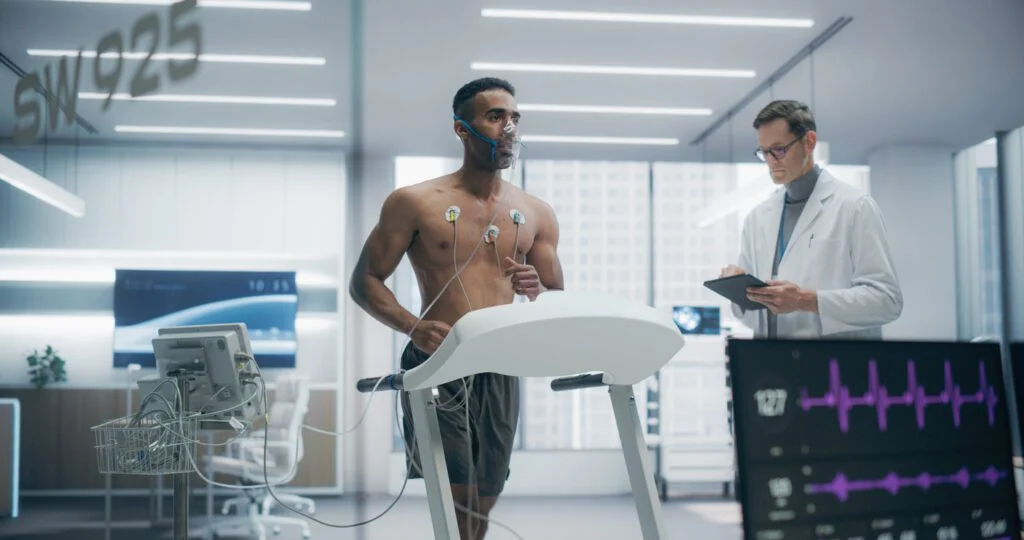
While technically a performance metric, VO2 max (maximum oxygen uptake during exercise) is increasingly recognized as a powerful biomarker of biological age and a robust predictor of all-cause mortality. For years, VO2 max was primarily a concern for elite athletes, but its broader implications for healthspan are now widely appreciated. Individuals with higher VO2 max values typically exhibit superior physical fitness and a significantly lower risk of developing chronic conditions such as heart disease, diabetes, cancer, and stroke. A long-term observational study of over 5,000 Danish men, followed for 46 years, found that those with above-average VO2 max in middle age lived, on average, five years longer than their peers with below-average VO2 max. Each unit increase in VO2 max correlated with a 45-day increase in longevity, suggesting it may be a more accurate predictor of mortality than traditional risk factors like high cholesterol or blood pressure.
VO2 max naturally declines by about 10% per decade starting around age 30, due to age-related changes in the cardiovascular and respiratory systems. Measuring VO2 max provides an objective assessment of cardiorespiratory fitness, which is highly modifiable through lifestyle interventions.
- Lab-Based Testing: The most accurate method involves wearing a metabolic mask and heart monitor while exercising to exhaustion in a fitness lab. This provides precise measurements not only of VO2 max but also of anaerobic threshold and metabolic efficiency. Costs typically range around $150.
- The 1-Mile Walk Test: A more accessible estimation involves walking one mile on a flat surface while wearing a heart rate monitor. Recording walk time and heart rate allows for calculation using a specific formula or a free online calculator.
- Smartwatch Estimates: Many smartwatches offer VO2 max estimates based on workout data, sex, and age. While potentially less accurate than lab tests, especially for very sedentary or extremely fit individuals, they can be useful for tracking trends over time.
- The Cooper Test (12-Minute Run): This validated field test involves running as fast as possible on a flat surface for 12 minutes and recording the distance covered. A formula or online calculator can then estimate VO2 max, showing approximately 90% correlation with lab measurements.
Translating Data into Action: The Path to a Younger Biological Age
The true value of any biological age test, whether free or commercial, lies not in the number itself, but in its capacity to inform and motivate meaningful behavior change. Viewing this data as a neutral snapshot, rather than a moral judgment, is essential. Furthermore, biological age is not static; it can be influenced and potentially reversed through targeted interventions.
Overcoming Common Pitfalls
Many individuals seeking to improve their health and longevity fall into two common traps:
-
Mistake #1: Ignoring Evergreen, Big-Impact Strategies: The most profound and consistent improvements in biological age and healthspan come from adhering to fundamental, scientifically validated health practices. These are often perceived as "boring" because they lack the novelty of a new supplement or gadget, but their cumulative impact is immense. These strategies include:
- Consistent physical activity: Regular exercise, encompassing both aerobic and strength training, significantly reduces the risk of chronic diseases, improves metabolic health, and preserves muscle mass. Studies show that even moderate exercise can extend lifespan by several years and improve cognitive function.
- Nutrient-dense diet: Emphasizing whole, unprocessed foods, abundant in fruits, vegetables, lean proteins, and healthy fats, is paramount. A diet rich in antioxidants and anti-inflammatory compounds can combat cellular damage and improve metabolic markers.
- Adequate sleep: Chronic sleep deprivation profoundly impacts hormonal balance, immune function, and cognitive performance, accelerating biological aging. Adults typically require 7-9 hours of quality sleep per night.
- Effective stress management: Chronic psychological stress elevates cortisol levels, leading to systemic inflammation and increased risk for cardiovascular disease, metabolic disorders, and accelerated cellular aging. Techniques like mindfulness, meditation, and spending time in nature can mitigate these effects.
- Strong social connections and sense of purpose: Loneliness and lack of purpose are significant risk factors for premature mortality, comparable to smoking or obesity. Cultivating meaningful relationships and engaging in purposeful activities contribute to psychological well-being and physical health.
- Avoiding toxins: Eliminating smoking, minimizing alcohol consumption, and reducing exposure to environmental pollutants are crucial for reducing cellular damage and disease risk.
These "big rock" strategies, supported by thousands of studies, not only extend life but enhance its quality, leading to greater strength, happiness, and reduced disability in later years. The challenge lies in consistent adherence, often requiring professional guidance in behavior change.
-
Mistake #2: Data Without Action: Collecting biomarker data without subsequently modifying behavior is akin to identifying a problem without taking steps to resolve it. The data should serve as a baseline, a compass pointing towards areas needing attention. It should then be used to objectively track the impact of lifestyle changes or medical interventions. For example, if a blood panel reveals elevated cholesterol, adopting a heart-healthy diet and increasing physical activity, then retesting, provides tangible evidence of progress. Without this crucial step of translating data into actionable strategies, the investment in testing becomes a wasted opportunity.
Conclusion: The Future of Longevity Science
The landscape of biological age testing is rapidly evolving, driven by scientific innovation, commercial interest, and a global desire for extended healthspan. While the allure of "biohacking" and rapid age reversal is strong, particularly as popularized by figures like Bryan Johnson, it is imperative to maintain a balanced perspective. The most powerful tools for influencing biological age remain the consistent, foundational lifestyle choices that have been validated by decades of scientific research.
Advanced commercial tests offer fascinating glimpses into molecular processes, but their clinical utility for individuals, especially outside specific medical contexts, is still under active investigation. They can provide motivation and additional data points, but should always be interpreted in consultation with trusted healthcare professionals, who can provide context and guard against unnecessary anxiety or the promotion of unproven, proprietary protocols. Ultimately, whether one chooses to invest in high-tech bio age tests or relies on free, accessible biomarkers, the overarching principle remains the same: data is valuable only when it informs and catalyzes sustainable actions toward a longer, healthier, and more fulfilling life. The future of longevity science lies in empowering individuals with actionable insights, integrating cutting-edge research with time-tested wisdom, and fostering a holistic approach to well-being.