
The influential culinary science blog, Khymos, has broken a seven-year silence in its book recommendation series, unveiling a curated list of essential titles from 2020 that bridge the gap between gastronomy and scientific inquiry. This long-awaited return marks a significant moment for enthusiasts and professionals alike, reaffirming Khymos’s role as a discerning voice in the burgeoning field of food science communication. The last recommendations from the blog were issued in 2013, highlighting a period of rapid evolution in both culinary practices and the public understanding of food chemistry and physics. The newly published list, primarily focusing on works from the past year, underscores the continued maturation of this interdisciplinary domain, offering insights from flavor perception to molecular gastronomy and even the science of regional cuisines.
The Evolution of Food Science Communication: A Brief Chronology
The intersection of food and science, often termed "molecular gastronomy" in its early academic manifestations, gained mainstream traction in the late 20th and early 21st centuries. Pioneers like Hervé This and Nicholas Kurti laid foundational work, but it was arguably Harold McGee’s seminal 1984 book, On Food and Cooking: The Science and Lore of the Kitchen, that truly democratized the field. McGee’s meticulous research and accessible prose transformed kitchen curiosities into scientific explorations, inspiring a generation of chefs, home cooks, and writers. Khymos, established in the mid-2000s, emerged as a vital online platform, curating resources, conducting interviews, and providing critical commentary on new developments, including notable book releases. Its 2013 recommendations reflected the then-current landscape of the field, emphasizing foundational texts and innovative applications.
The subsequent seven-year hiatus, while significant, coincided with an explosion of interest in food science, fueled by television programs, social media, and a growing consumer demand for understanding the provenance and properties of food. During this period, food science transitioned from a niche academic pursuit to a widely recognized discipline with practical applications in professional kitchens and home cooking alike. The return of Khymos’s recommendations in 2020, therefore, serves not only as a personal update from the blog’s author but also as a timely survey of how the field has diversified and deepened its literary output. The selections highlight key trends: the integration of scientific principles directly into recipes, comprehensive explorations of sensory experiences, academic curricula translated for a broader audience, sophisticated analyses of food pairing, and encouragingly, the application of scientific rigor to non-Western culinary traditions.
Spotlight on 2020’s Definitive Culinary Science Texts
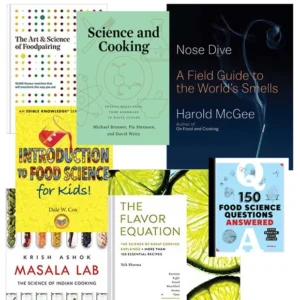
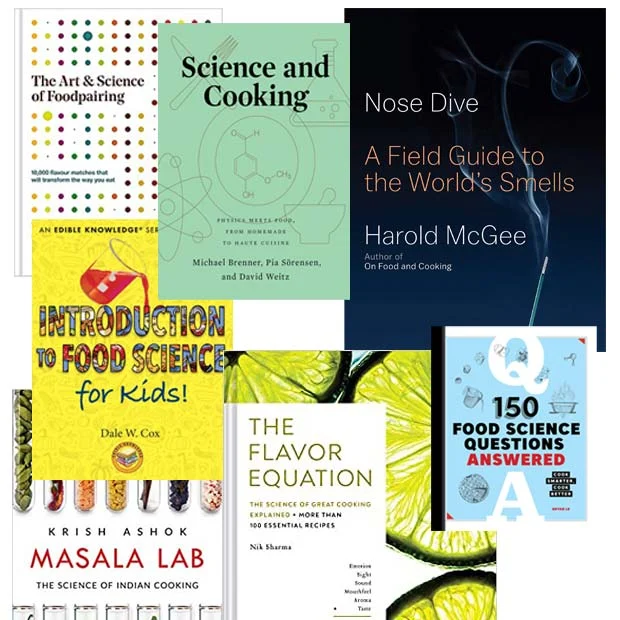
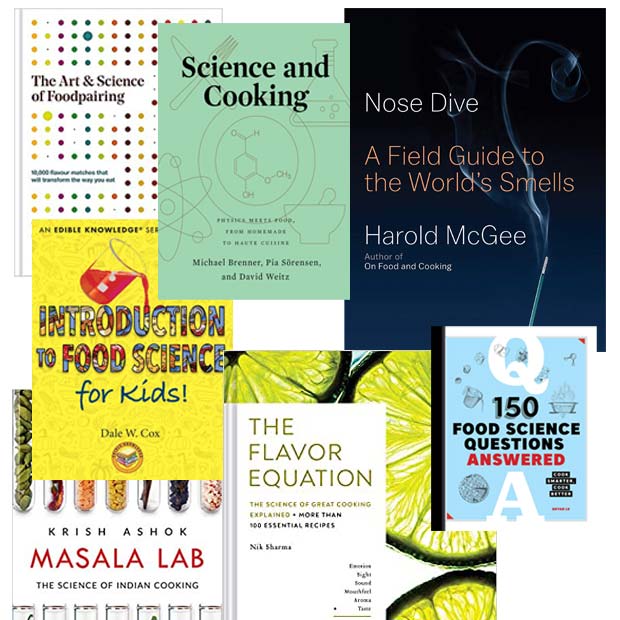
The 2020 list features seven distinct titles, each contributing uniquely to the scientific understanding of food. These books collectively paint a picture of a dynamic field that is both expanding its theoretical horizons and enhancing practical culinary skills through evidence-based approaches.
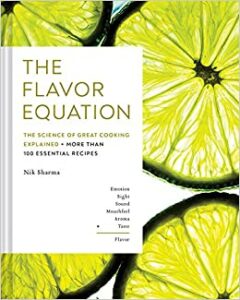
1. The Flavor Equation by Nik Sharma
Nik Sharma’s The Flavor Equation stands out for its innovative approach to integrating science directly into the cooking process. Spanning 352 pages, this 2020 publication boasts approximately 100 recipes, each accompanied by a dedicated "The Flavor Approach" section. This ingenious structural choice moves beyond segregating science into introductory chapters, instead weaving scientific explanations directly into the practical application of each dish. Sharma, a former molecular biologist turned food writer and photographer, brings a rigorous yet approachable methodology to understanding how ingredients interact to create complex flavor profiles. The book systematically explores the six elements of flavor—brightness, saltiness, savoriness, fieriness, richness, and sweetness—through a scientific lens. The inclusion of metric units is a significant bonus for a global audience, making the recipes universally accessible. Industry experts and critics have lauded Sharma’s ability to demystify complex chemical interactions, providing home cooks with the tools to intuitively build and balance flavors, thereby elevating their culinary creations beyond mere adherence to recipes. This integration marks a significant step forward in making scientific cooking less intimidating and more intuitive for everyday use.
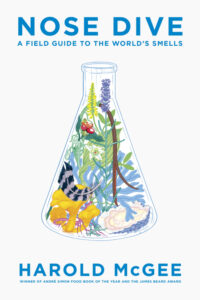
2. Nose Dive: A Field Guide to the World’s Smells by Harold McGee
Harold McGee, whose On Food and Cooking is often credited with igniting widespread interest in culinary science, returns with Nose Dive: A Field Guide to the World’s Smells. This ambitious 688-page tome, also released in 2020, dedicates itself entirely to the vast and intricate world of olfaction. Far exceeding the boundaries of food, McGee explores smells from every conceivable source – natural environments, human bodies, industrial processes, and, of course, the kitchen. The book meticulously identifies volatile molecules responsible for various aromas, yet it does so in a manner that remains engaging for the general reader, avoiding overly academic jargon. McGee’s work is celebrated for its deep dives into the sensory experience, providing a comprehensive understanding of how scent shapes perception and memory. Its significance lies in extending the scientific lens beyond taste to the often-underestimated sense of smell, which is crucial for a complete appreciation of flavor. The book’s extensive research and narrative style reinforce McGee’s status as a preeminent authority in food science communication, offering both detailed scientific explanations and rich historical and cultural context for scents. The existence of different covers for UK and US editions reflects its broad international appeal.
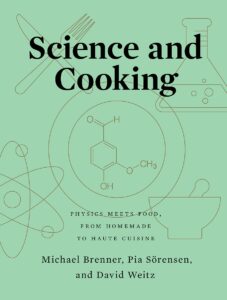
3. Science and Cooking: Physics Meets Food, From Homemade to Haute Cuisine by Michael Brenner, Pia Sørensen, and David Weitz
This 320-page book, published in 2020, is a direct outgrowth of the highly successful "Science and Cooking" course first launched at Harvard University a decade prior. Authored by the course’s founders, Michael Brenner (applied mathematics), Pia Sørensen (chemistry), and David Weitz (physics), the book translates the interdisciplinary lectures into a cohesive literary format. The Harvard course gained renown for featuring collaborations between leading scientists and world-class chefs, with many of its lectures freely available on YouTube, reaching a global audience. The book mirrors this collaborative spirit, integrating advanced scientific concepts—from fluid dynamics to thermodynamics—with practical culinary techniques and recipes. It delves into the physics and chemistry behind phenomena like emulsification, gelation, and caramelization, making complex scientific principles accessible. The inclusion of metric units is a practical benefit, aligning with global scientific standards. This work serves as a testament to the effective pedagogy that can arise when academic rigor is applied to everyday experiences, making it an invaluable resource for students, educators, and curious cooks seeking a deeper understanding of culinary transformations.
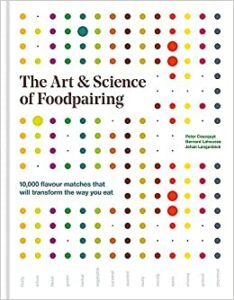
4. The Art and Science of Foodpairing by Peter Coucquyt, Bernard Lahousse, and Johan Langenbick
The Art and Science of Foodpairing, a 388-page volume from 2020, compiles years of research and application from the Foodpairing company, co-founded by Bernard Lahousse. Lahousse, previously interviewed by Khymos, and his team have pioneered a data-driven approach to identifying compatible flavor combinations based on shared aromatic compounds. While the concept of flavor pairing has faced scrutiny and remains somewhat controversial in certain culinary circles—some argue it oversimplifies the complex interplay of taste, texture, and cultural context—this book provides a robust defense and practical guide. It showcases how scientific analysis can inspire novel and harmonious ingredient combinations, pushing the boundaries of traditional gastronomy. The book’s strength lies in demonstrating where scientific analysis can inform and guide creative culinary endeavors, offering a systematic framework for understanding and experimenting with flavors. It bridges the gap between empirical observation and artistic intuition, providing a valuable resource for chefs and food innovators looking to explore new taste horizons.
5. Masala Lab by Krish Ashok
Krish Ashok’s Masala Lab, a 280-page book published in 2020, is particularly noteworthy for its application of scientific principles to regional cuisines, specifically Indian cooking. Ashok, an electronic/software engineer, brings a methodical, analytical mind to the intricacies of traditional Indian culinary techniques. This publication addresses a significant gap in the food science literature, which has historically been dominated by Western culinary traditions. By dissecting the science behind tempering spices, making curries, and understanding the role of various ingredients in Indian dishes, Ashok not only demystifies complex processes but also empowers cooks to innovate within the framework of traditional flavors. The enthusiastic reception from the Khymos blogger, despite the book’s initial limited availability via Amazon India, highlights the growing demand for scientifically informed approaches to diverse global cuisines. Masala Lab is a powerful example of how scientific curiosity can enrich and preserve cultural culinary heritage while pushing it forward.
6. 150 Food Science Questions Answered: Cook Smarter, Cook Better by Bryan Le
Bryan Le’s 150 Food Science Questions Answered: Cook Smarter, Cook Better, a concise 198-page book from 2020, offers an accessible entry point into the world of culinary science through a question-and-answer format. Structured into chapters covering cooking basics, flavor fundamentals, ingredient groups, and essential food safety and storage, the book serves as a practical reference guide. Le’s work is particularly recommended for those new to applying a scientific mindset in the kitchen, offering clear, concise answers to common culinary dilemmas and curiosities. Its browsable nature encourages casual exploration, promising that even seasoned cooks will find intriguing insights. This book democratizes food science by breaking it down into digestible, actionable pieces of information, making it an excellent resource for quick look-ups or for sparking a deeper interest in the "why" behind cooking techniques.
7. Introduction to Food Science for Kids!: A Kitchen-Based Workbook by Dale W Cox
Rounding out the 2020 selections is Dale W Cox’s Introduction to Food Science for Kids!: A Kitchen-Based Workbook. At 112 pages, this book explicitly targets a younger audience, leveraging the kitchen as an ideal laboratory for introducing fundamental chemical and physical concepts. By framing scientific exploration within the context of cooking, Cox taps into children’s natural curiosity about food, making learning engaging and tangible. This workbook is crucial for fostering scientific literacy from an early age, demonstrating that science is not confined to textbooks but is an integral part of everyday life. Its publication highlights a growing recognition of the importance of STEM education through practical, relatable activities, ensuring that the next generation can approach food with both culinary skill and scientific understanding.
Broader Implications and Future Trends
The collection of books recommended by Khymos for 2020 reflects several key trends in the field of food science communication. Firstly, there is a clear movement towards making complex scientific principles more accessible and integrated into practical cooking. Authors like Nik Sharma and the Harvard team demonstrate how science can directly enhance culinary creativity and success, moving beyond theoretical discussions to actionable advice. Secondly, the increasing diversity of culinary traditions receiving scientific treatment, exemplified by Krish Ashok’s Masala Lab, signals a welcome expansion beyond Eurocentric perspectives. This trend promises to enrich the global understanding of food science, uncovering universal principles while celebrating cultural specificities. Thirdly, the emphasis on sensory experiences, as seen in Harold McGee’s Nose Dive, highlights a growing appreciation for the holistic nature of flavor and the profound impact of all senses on eating.
Furthermore, the inclusion of educational resources for beginners and children underscores the ongoing effort to democratize food science. Books like Bryan Le’s Q&A format and Dale W Cox’s children’s workbook are instrumental in building a foundational understanding and fostering curiosity across all age groups. This indicates a robust ecosystem of knowledge dissemination, from advanced academic texts to entry-level guides, ensuring that the insights of food science are not confined to elite kitchens or research labs but are available to anyone with an interest.
The return of Khymos’s book recommendations, following a seven-year pause, is more than just an update; it’s a reaffirmation of the blog’s enduring commitment to curating high-quality resources in culinary science. The 2020 selections provide a valuable snapshot of a field that continues to innovate, diversify, and inspire. These books collectively offer a rich tapestry of knowledge, empowering cooks of all levels to approach food with greater understanding, creativity, and scientific acumen, thereby shaping the future of gastronomy one informed dish at a time.