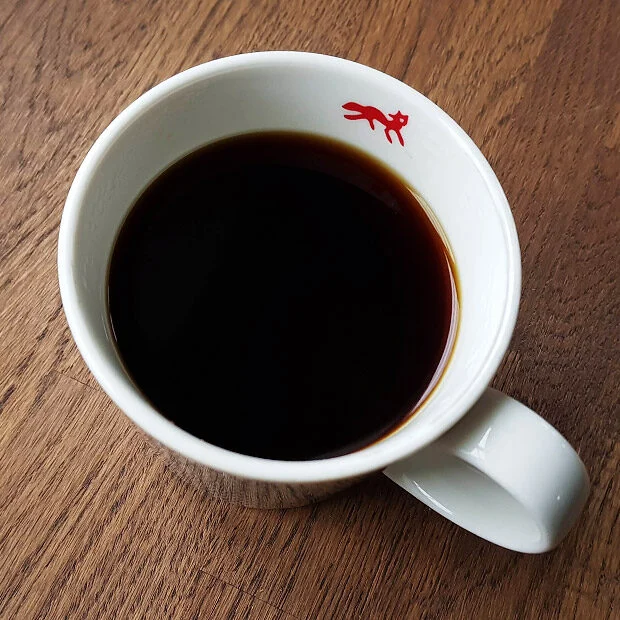

The morning cup of coffee is a daily ritual for millions of people worldwide, valued as much for its comforting warmth as for its ability to jump-start a sluggish brain. Yet, beneath its dark, enticing surface lies a complex biochemical matrix that has puzzled and fascinated food scientists for decades. While casual drinkers view coffee as a simple beverage of roasted beans steeped in hot water, advanced chemical analysis reveals that a standard cup of black coffee is an intricate cocktail containing hundreds, if not thousands, of distinct molecular compounds. Understanding this chemical landscape requires looking beyond the basic brewing parameters—such as water temperature, grind size, and extraction yield—to examine the microscopic building blocks that dictate color, aroma, and taste.
The Composition of the Cup: Water and Total Dissolved Solids
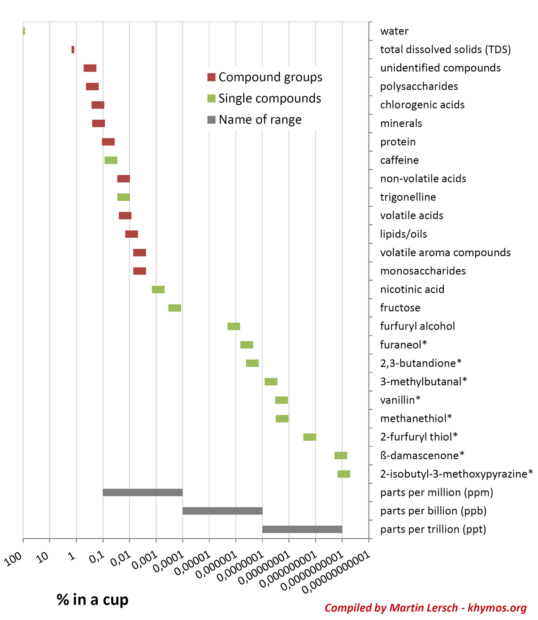
At its core, a standard cup of black coffee is overwhelmingly composed of water, accounting for more than 98.5 percent of the beverage. The remaining 1.2 to 1.5 percent consists of Total Dissolved Solids (TDS). This means that in a single liter of brewed coffee, there are approximately 12 to 15 grams of solid matter extracted directly from roughly 60 grams of roasted coffee grounds.
These extracted compounds are responsible for every sensory attribute the consumer experiences. When analytical chemists examine coffee using sophisticated techniques like chromatography, they frequently encounter a labyrinth of known and unknown molecules. Research tracing back to landmark aroma extract dilution analyses (AEDA) highlights the depth of this complexity; a prominent 2002 study revealed that 13 out of 40 key odorants in coffee remained entirely uncharacterized. This persistent mystery stems from two primary challenges: many crucial aroma compounds exist in infinitesimally small concentrations, making it difficult to isolate samples large enough for structural identification, while other molecules are excessively large, complicating the process of mapping their exact molecular geometry.
Historical Chronology of Coffee Chemistry Research
The scientific quest to understand and replicate the elusive aroma of coffee has evolved significantly over the latter half of the 20th century.
- The 1960s: Researchers first discovered rose ketones, including $beta$-damascenone, in rose oil. These compounds would later be recognized as foundational elements not only in high-end perfumery—such as Dior’s iconic Poison fragrance—but also in the profile of brewed coffee.
- 1996: A pivotal study published by researchers P. Semmelroch and W. Grosch demonstrated that synthetic model coffees could be constructed using just 22 key volatile compounds. While sensory assessors described these model formulations as "clearly coffee-like," they fell short of replicating the profound depth of natural Arabica or Robusta brews, underscoring that dozens of additional compounds remain necessary to achieve authentic complexity.
- 2002: An AEDA study spearheaded by C. Sanz and colleagues shattered previous assumptions about coffee volatiles by identifying 40 key odorants, while simultaneously revealing that nearly a third of them could not yet be structurally identified due to analytical limitations.
- 2016–2020: Modern studies, including comprehensive analyses by researchers like M.E. Batali and colleagues, expanded the scientific community’s understanding of how specific polar and non-polar compounds dissolve during various stages of extraction, bridging the gap between physical chemistry and sensory perception.
Volatiles, Non-Volatiles, and Sensory Perception
The chemical compounds extracted during the brewing process are broadly categorized into two distinct classes: volatiles and non-volatiles. Volatile compounds easily vaporize and travel up into the nasal passage, driving the aroma profile that often dictates a consumer’s initial impression of the beverage. Conversely, non-volatile compounds remain in the liquid, interacting directly with taste receptors on the tongue to produce sensations of bitterness, sweetness, acidity, and astringency. Lipids and insoluble microscopic particles further contribute to the body and physical texture of the coffee.
Dr. W. Grosch, a prominent food chemist and co-author of foundational food chemistry literature, has long emphasized that concentration does not equate to sensory impact. In human olfaction, every compound possesses a unique odor threshold—the minimum concentration required for the human nose to detect it.
This dynamic leads to a fascinating biochemical reality: a compound present in concentrations as minuscule as 0.0000000001 percent can wield just as much influence over the overall flavor profile as a compound present at a much higher 0.01 percent concentration. This relationship is quantified using the Odor Activity Value (OAV), calculated by dividing a compound’s concentration by its specific odor threshold.
A prime example is $beta$-damascenone. Even though it is present in coffee at trace levels down to 1 part per trillion (ppt), human olfactory receptors are exceptionally sensitive to it. Consequently, it ranks among the top five most impactful odorants in a typical cup of coffee, bridging the worlds of fine fragrance and culinary science through its floral, sweet, and baked-apple notes.
Polar Versus Non-Polar Extraction Dynamics
Another critical framework for understanding coffee composition involves the polarity of extracted compounds. Polar compounds—including acids, minerals, proteins, and carbohydrates—are highly soluble in water. Because water acts as an aggressive polar solvent, it successfully extracts more than 75 percent of the available polar compounds from roasted coffee grounds during a standard brew cycle.
On the other side of the spectrum are non-polar compounds, which encompass various lipids and crucial volatile aroma molecules. These substances possess low water solubility, meaning that a standard water-based brew extracts only about 10 to 30 percent of the non-polar compounds present in the dry grounds. Food scientists note that this disparity opens up intriguing avenues for culinary experimentation, suggesting that alternative solvents, such as food-grade ethanol, could theoretically unlock entirely new dimensions of extraction that water alone cannot reach.
Analytical Limitations and Broader Implications
For decades, Total Dissolved Solids (TDS) has served as the gold standard for barometers of coffee strength within the commercial and specialty coffee industries. However, food scientists warn that relying solely on TDS measurements provides an incomplete picture of beverage quality.
Because TDS measures the total mass of dissolved matter without accounting for individual chemical identities or extraction rates, it fails to correlate reliably with flavor and aroma. A brew with an optimal TDS reading of 1.3 percent can taste remarkably flat or brilliantly vibrant depending entirely on the precise micro-concentrations of key odorants like $beta$-damascenone and other unidentified volatile compounds.
Industry experts and flavor chemists agree that while digital refractometers and TDS metrics are invaluable tools for quality control and consistency in commercial cafés, they are fundamentally poor predictors of subjective sensory experience. As analytical techniques continue to advance, researchers anticipate the discovery of additional key odorants currently hidden below current detection limits. Until then, the human nose remains the ultimate analytical instrument—a sophisticated biological detector capable of appreciating the vast, microscopic universe hidden within every single drop of coffee.