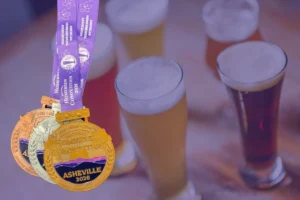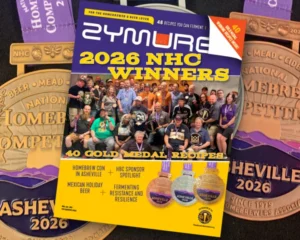

The art of craft brewing continues to thrive in Southern California as local ingenuity takes center stage on a national platform. In the highly competitive arena of amateur brewing, precision, patience, and a deep understanding of fermentation science separate the casual hobbyists from the elite artisans. This dedication was recently validated at the highest level during the final round of the prestigious National Homebrew Competition.
Jeff Zwetsch and Don Frakes, representing the Anaheim, California-based Ace Brewing Society, secured a gold medal in Category 1: Pale American Beer. Their award-winning brew triumphed over a formidable field of 104 entries in its specific category, showcasing the rigorous standards and exceptional quality that define top-tier American homebrewing today.
The achievement underscores not only the personal dedication of Zwetsch and Frakes but also the collaborative, knowledge-sharing environment fostered by regional brewing clubs across the United States. As the craft beer industry continues to mature, the boundary between professional microbreweries and advanced homebrewing continues to blur, with many commercial innovators tracing their roots back to kitchen-counter experiments and club competitions.
Main Facts of the Victory
The National Homebrew Competition, organized annually by the American Homebrewers Association (AHA), represents the world’s largest international amateur beer competition. Winning a medal in the final round requires surviving preliminary judging phases that evaluate thousands of entries submitted from across the globe.
In the 2026 final round, the competition for Category 1: Pale American Beer was particularly fierce. Encompassing styles characterized by their light color, clean fermentation profiles, and balanced hop-to-malt ratios, this category demands absolute technical flawlessness. Judges look for subtle off-flavors, proper carbonation, clarity, and true-to-style aromatic profiles. With 104 distinct entries in this single category alone, any minor deviation in the brewing process would have disqualified a contender from podium contention.
Zwetsch and Frakes, active members of the Ace Brewing Society, meticulously formulated their recipe to hit the precise parameters demanded by the Beer Judge Certification Program (BJCP) style guidelines. Their gold-medal success serves as a testament to their recipe design, water chemistry adjustments, precise temperature control during mashing and fermentation, and rigorous sanitation practices.
Chronology and Evolution of the National Homebrew Competition
To understand the magnitude of Zwetsch and Frakes’ victory, it is essential to examine the historical trajectory of the National Homebrew Competition. Established in the late 1970s, the event began as a modest gathering of passionate individuals experimenting with malt extracts and basic equipment during a time when homebrewing was still federally illegal in the United States.
Following the legalization of homebrewing in 1978 under President Jimmy Carter—legislation largely championed by homebrewing pioneers and the American Homebrewers Association—the hobby exploded in popularity. What was once an underground pastime transformed into an organized, sophisticated subculture.
The National Homebrew Competition evolved concurrently. Over the decades, the judging protocols became standardized, relying on certified judges who undergo rigorous sensory training to evaluate beers objectively. The competition now spans dozens of distinct categories, ranging from traditional European lagers and British ales to experimental wild ales and modern American IPAs.
The road to the 2026 final round began months prior, with regional first-round competitions held across multiple locations nationwide. Entries that advanced to the final round were subjected to another rigorous layer of evaluation by a master panel of judges. This multi-tiered evaluation structure ensures that only the most technically proficient brews ultimately claim gold, silver, or bronze medals.
Supporting Data and the Landscape of American Homebrewing
Data from the American Homebrewers Association indicates that the demographics and technical capabilities of homebrewers have shifted dramatically over the last two decades. While exact participation numbers fluctuate year-over-year, the organization boasts thousands of active members nationwide, supported by hundreds of registered local homebrew clubs.

Clubs like the Ace Brewing Society play a critical role in this ecosystem. These organizations function as decentralized laboratories and educational networks. Members frequently pool resources to purchase specialized equipment, conduct collaborative brew days, and engage in blind sensory panels where they critique each other’s batches. This peer-review mechanism accelerates the learning curve for individual brewers, elevating the overall quality of entries submitted to national competitions.
Furthermore, the availability of advanced brewing ingredients—such as proprietary hop varieties, specialized liquid yeast strains, and precise digital temperature-control systems—has democratized access to professional-grade techniques. Amateurs today regularly employ equipment that mirrors commercial pilot systems, allowing for a level of consistency and experimentation that was virtually impossible for homebrewers in the 1980s and 1990s.
Official Responses and Industry Perspectives
While individual statements from Jeff Zwetsch and Don Frakes following their victory reflect the humility common among passionate homebrewers, representatives of the broader brewing community have been vocal in praising the caliber of this year’s winners.
Industry analysts and veteran judges noted that the Pale American Beer category is deceptively difficult to master. Because the style relies heavily on balance and drinkability rather than aggressive hop bitterness or heavy roasted malts, brewers cannot hide flaws behind intense flavors. Every technical choice—from grain selection to fermentation temperature management—is laid bare on the palate.
"When you win gold in a foundational category like Pale American Beer out of more than a hundred entries, it means you have completely mastered the fundamentals of brewing science," noted one regional BJCP-certified judge who spoke on the condition of anonymity regarding specific final-round entries. "There is zero room for error in a clean, crisp style. Zwetsch and Frakes clearly demonstrated an elite understanding of process control."
Leadership within the American Homebrewers Association frequently emphasizes that competitions like this do more than simply award medals; they drive continuous education and innovation within the craft beverage space. Many commercial craft breweries operating today were founded by individuals who cut their teeth winning medals at the National Homebrew Competition, translating their amateur accolades into successful commercial enterprises.
Broader Impact and Economic Implications
The success of local homebrewers in national arenas carries subtle yet significant economic and cultural implications for regional hubs like Anaheim, California. Southern California has long been recognized as a powerhouse in the global craft beer movement, home to legendary commercial breweries that helped pioneer the West Coast IPA and other influential styles.
The pipeline from homebrewing to commercial enterprise remains robust. Many commercial operations utilize amateur competitions as a testing ground for experimental recipes or as a scouting ground for talented head brewers. When local club members like Zwetsch and Frakes achieve national recognition, it reinforces the region’s reputation as an epicenter of brewing excellence and technical proficiency.
Moreover, the victory highlights the ongoing vitality of club culture in an era where digital connectivity often replaces physical community. The Ace Brewing Society, like many similar chapters across the country, relies on face-to-face mentorship, shared equipment investments, and communal tasting sessions. This collaborative ethos not only produces award-winning beer but also fosters a resilient local economy centered around specialty supply shops, agricultural producers of hops and grains, and equipment manufacturers.
Conclusion and Future Outlook
The awarding of a gold medal in Category 1: Pale American Beer at the 2026 National Homebrew Competition marks a career milestone for Jeff Zwetsch and Don Frakes. Their success in navigating a massive field of 104 elite entries demonstrates the heights that can be achieved through meticulous attention to detail, adherence to scientific rigor, and the collaborative support of a dedicated local brewing community.
As the American Homebrewers Association continues to provide educational resources, validated recipes, and competitive platforms for amateur brewers, talents like Zwetsch and Frakes will undoubtedly continue to push the boundaries of what is possible in home kitchens and garage breweries. Their victory not only honors their personal dedication but also enriches the broader narrative of American craft brewing, proving that mastery of the craft begins at the grassroots level.