
Pure maple syrup is one of the most celebrated natural sweeteners in North America, representing a multi-million-dollar industry centered primarily in the northeastern United States and eastern Canada. Because of its seasonal availability and the significant cost associated with production—requiring approximately 40 gallons of sap to produce a single gallon of syrup—many consumers prefer to purchase this liquid gold in bulk. However, the high nutrient and sugar content that makes maple syrup desirable also makes it a target for various spoilage organisms, specifically molds and yeasts. While maple syrup is often viewed as a shelf-stable product, its longevity is heavily dependent on packaging materials, temperature control, and the integrity of its seal. This report provides a detailed analysis of home preservation techniques, the chemical properties that govern syrup safety, and the risks associated with various storage methods.
The Chemical Composition and Safety Profile of Maple Syrup
To understand how to store maple syrup, one must first understand what legally constitutes the product. In North America, regulatory bodies like the U.S. Food and Drug Administration (FDA) and the Canadian Food Inspection Agency (CFIA) mandate strict density requirements. Pure maple syrup must be boiled until it reaches a sugar concentration between 66° and 68° Brix. One degree Brix is roughly equivalent to 1% sugar content.
This specific density is the primary defense against spoilage. If the syrup is too thin (below 66° Brix), it lacks the necessary osmotic pressure to inhibit the growth of bacteria and yeast, leading to rapid fermentation or mold colonization. Conversely, if the syrup is boiled beyond 68° Brix, it becomes supersaturated, and sugar crystals (sucrose) will precipitate out of the liquid and settle at the bottom of the container.

While maple syrup has an average pH of approximately 5.15—putting it well above the 4.6 threshold for "low-acid" foods—it is not typically a candidate for botulism concerns. The high sugar concentration results in low "water activity" (aw), meaning there is very little "free" water available for microbial spores to germinate. However, this low water activity is not enough to stop xerophilic molds, which can thrive in high-sugar environments once a container is opened and exposed to the air.
Shelf Storage and the Vulnerability of Packaging
The shelf life of unopened maple syrup is largely determined by the permeability of its container. Glass and metal are considered "impermeable" barriers; they do not allow oxygen to pass through the walls of the container. Consequently, unopened glass bottles or tin cans can be stored at room temperature in a dark, cool cupboard for years without significant degradation.
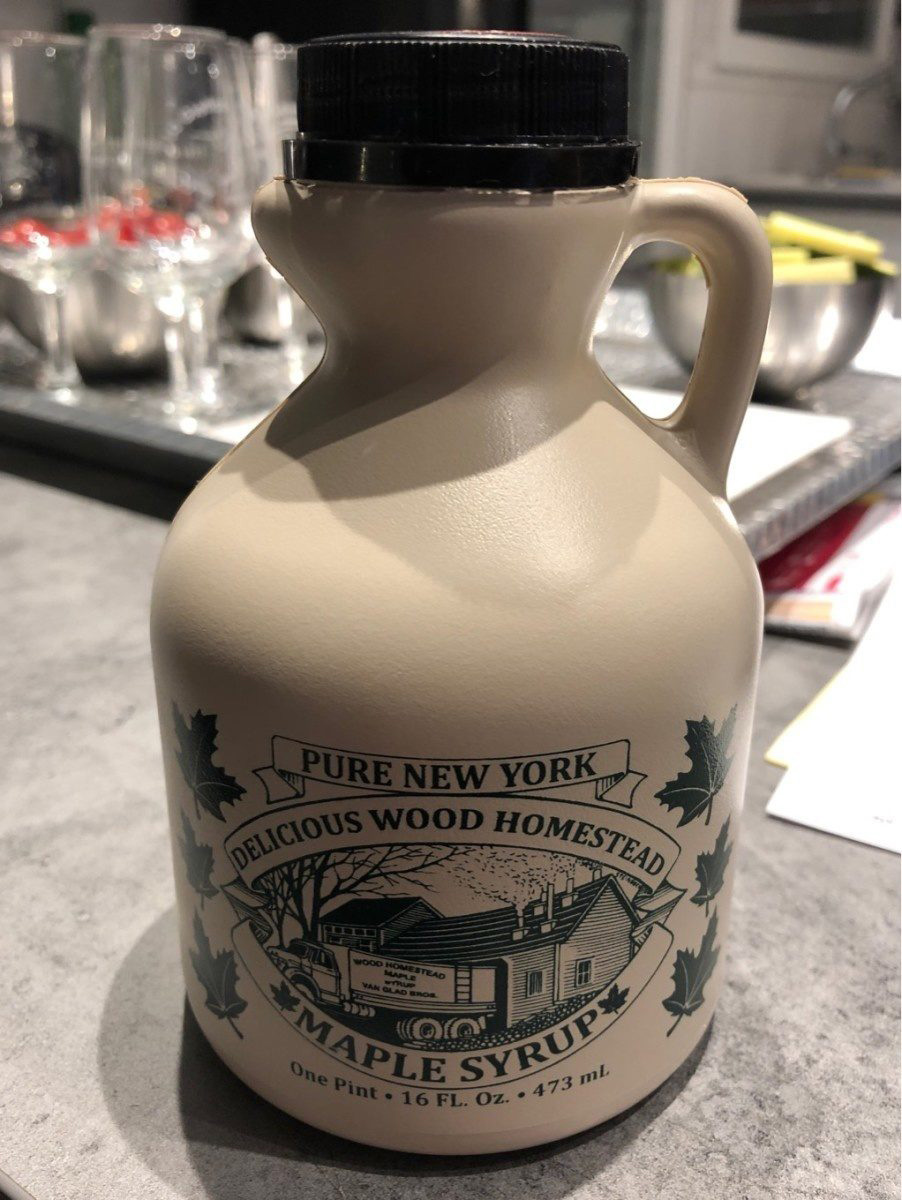
However, the modern "beige or grey plastic jug," often adorned with pastoral scenes of sugar shacks, presents a different set of challenges. These jugs are typically made of high-density polyethylene (HDPE). While food-grade, HDPE is slightly porous at a molecular level, allowing a slow but steady migration of oxygen into the syrup over time. The Quebec Maple Syrup Producers (QMSP) Association notes that while these containers are aesthetically pleasing and convenient for shipping, they do not provide a foolproof barrier. Oxygen entry can lead to darkening of the syrup, flavor changes, and an increased risk of mold growth even before the seal is broken. For this reason, experts recommend that any syrup purchased in plastic jugs be stored in the refrigerator or freezer immediately, even if unopened, to prolong its peak quality.
Post-Opening Protocols: The Necessity of Refrigeration
Once the original seal of a maple syrup container is broken, the product is immediately exposed to environmental contaminants, including airborne mold spores such as Penicillium and Aspergillus. At room temperature, these spores can colonize the surface of the syrup, forming a visible film or "mat."
Refrigeration is the minimum requirement for opened syrup. The cold temperatures of a standard refrigerator (typically 35°F to 40°F or 1.5°C to 4.4°C) combined with the syrup’s low water activity significantly slow the metabolic processes of spoilage organisms. However, refrigeration is not a permanent solution. Over several months, mold can still develop in the thin layer of condensation that sometimes forms between the syrup surface and the lid. If mold is detected, the standard recommendation from food safety experts is to discard the entire container, as some molds produce mycotoxins that can migrate throughout the liquid.
Freezing: The Gold Standard for Home Preservation
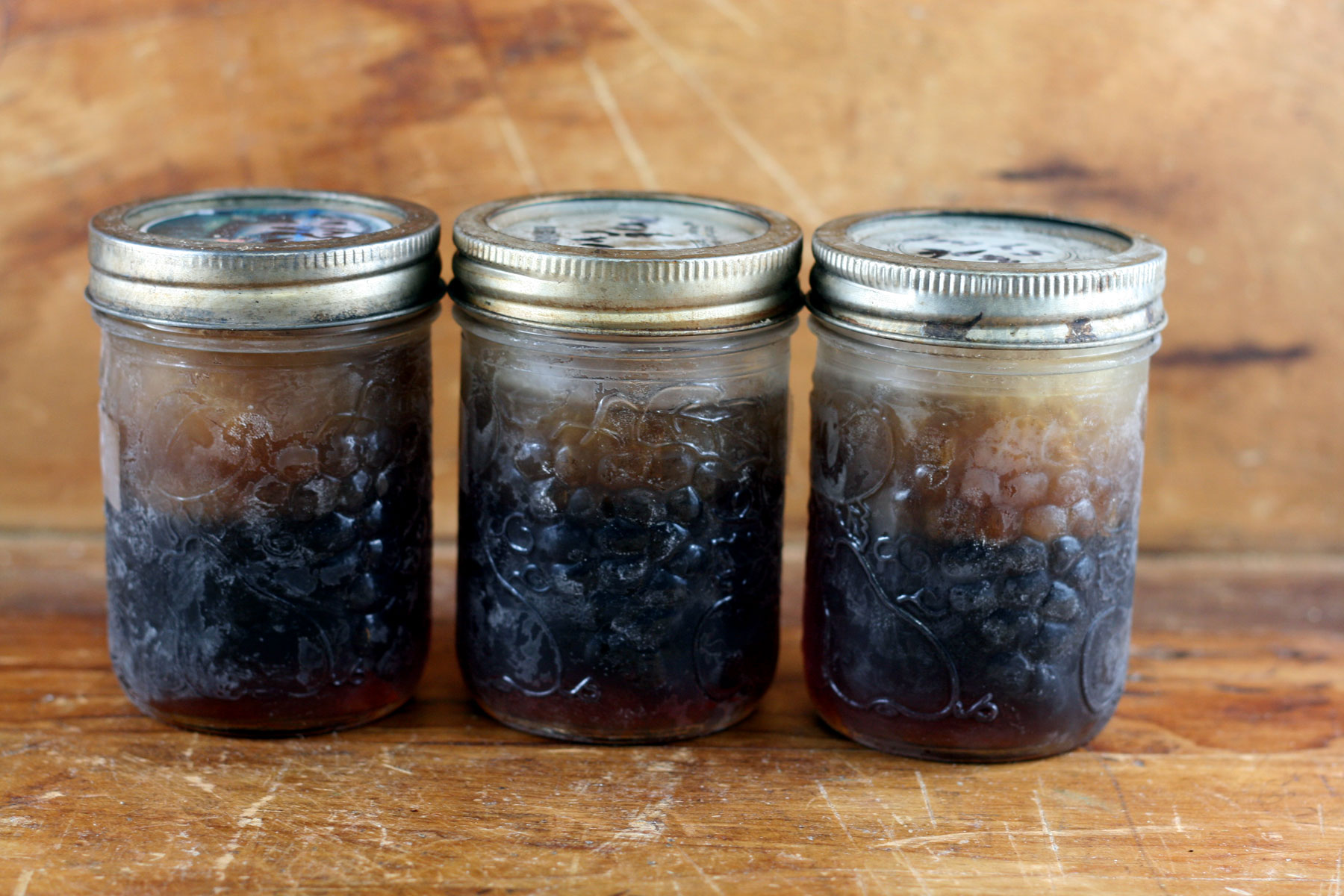
For consumers who purchase maple syrup in large quantities—such as gallon-sized containers—freezing is the most effective method for maintaining quality over an indefinite period. Unlike water, maple syrup does not freeze into a solid, brittle block due to its high sugar content. Instead, it becomes highly viscous, taking on the consistency of thick honey or chilled molasses.
Advantages of Freezing
Freezing offers several distinct benefits for the home cook:
- Total Inactivation: While freezing does not necessarily kill all mold spores, it completely inactivates them, preventing any growth as long as the temperature remains below freezing.
- Quality Retention: Freezing prevents the Maillard reaction (darkening) and flavor oxidation that can occur over time at room temperature or in the fridge.
- Flexibility: Syrup can be frozen, thawed, and refrozen multiple times without damaging its cellular structure, as it lacks the high water content that causes ice crystal damage in fruits or vegetables.
Packaging for the Freezer
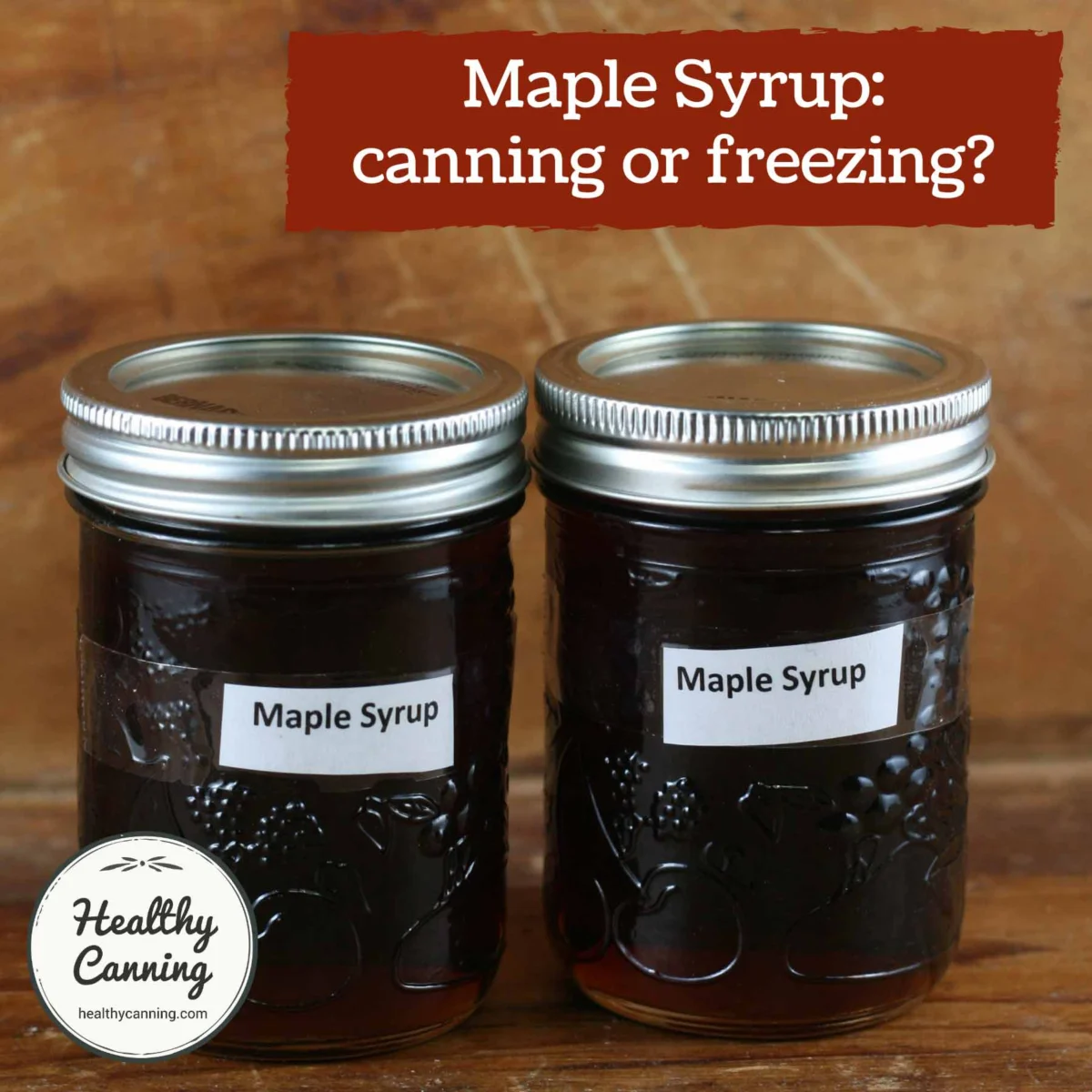
Glass Mason jars are the preferred vessel for freezing syrup, as they are non-porous and do not impart chemical flavors. When freezing in glass, "headspace"—the empty space between the top of the liquid and the lid—is critical to prevent the jar from shattering. According to the National Center for Home Food Preservation (NCHFP), the following headspace should be observed:
- For Wide-Mouth Jars: Half an inch (1.2 cm) for pints; one inch (2.5 cm) for quarts.
- For Narrow-Mouth Jars: Three-quarters of an inch (1.9 cm) for pints; one and a half inches (3.8 cm) for quarts.
The Risks and Realities of "Home Canning" Maple Syrup
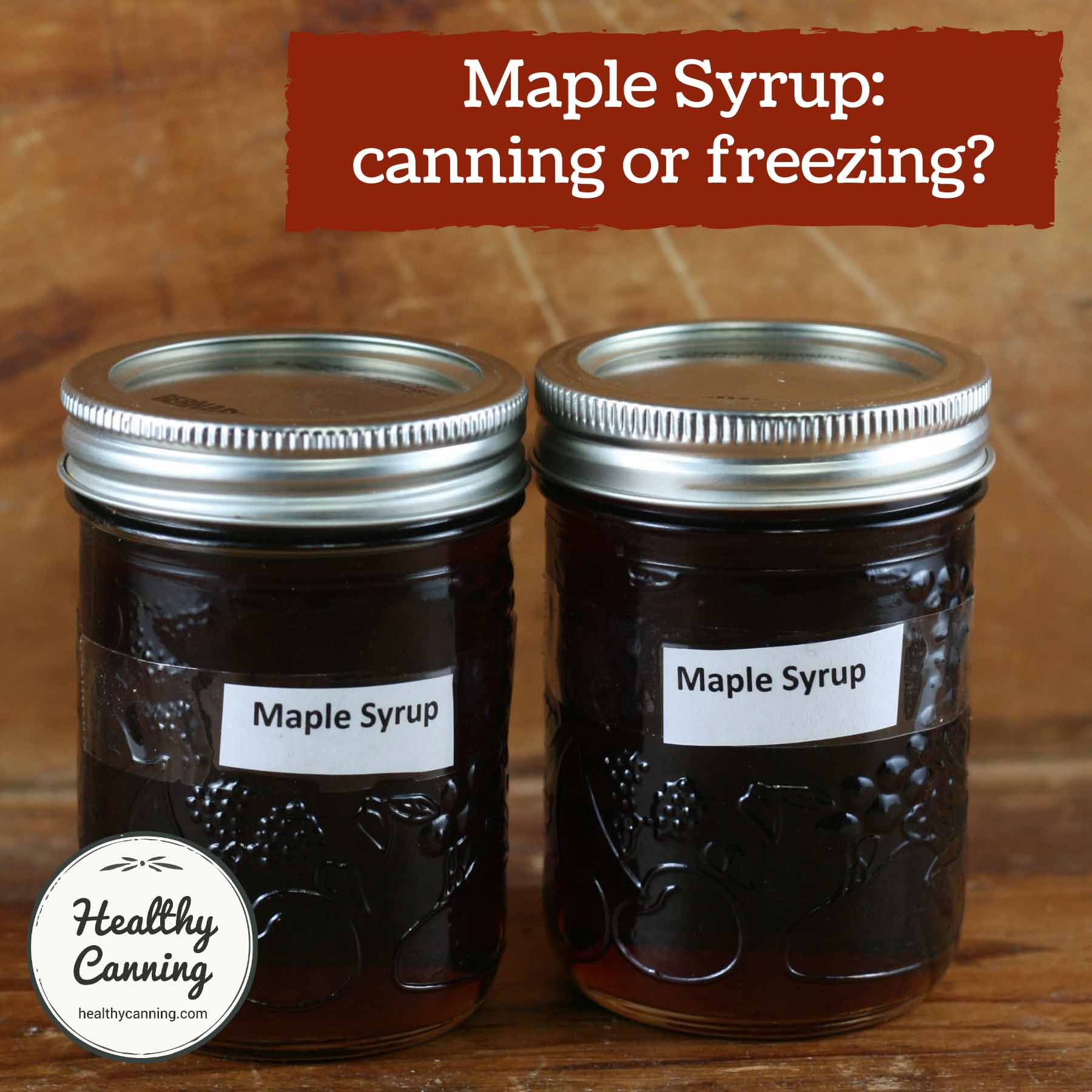
Many home preservers attempt to "re-can" bulk maple syrup into smaller jars using a hot-pack method. It is important to note that this is technically "bottling" rather than "canning," as the filled jars are not typically processed in a boiling water bath or pressure canner. In fact, traditional heat processing is discouraged because it can overcook the syrup, leading to a burnt flavor and the precipitation of minerals.
The Hot-Pack and Inversion Process
If a consumer chooses to bottle syrup at home to achieve shelf-stability, they must follow the same rigorous standards used by commercial packers:
- Heating: The syrup must be heated to a precise temperature range of 180°F to 185°F (82°C to 85°C). If the temperature is lower, it will not kill the mold spores present in the jar; if it is higher (above 190°F), it may cause "sugar sand" (niter) to cloud the syrup.
- Filling: The jars should be pre-heated to prevent thermal shock (cracking) and to ensure the syrup doesn’t lose heat upon contact. Jars should be filled to 90% capacity.
- Inversion: After sealing, the jars are turned upside down for 5 to 10 minutes. This ensures the scalding-hot syrup contacts the underside of the lid and the neck of the jar, theoretically killing any lingering spores.
- Rapid Cooling: Once the 5–10 minutes have passed, the jars must be cooled quickly using a fan or by spreading them out. If they remain hot for too long, a phenomenon called "stack burn" occurs, where the residual heat continues to cook the syrup, turning it dark and bitter.
Downsides of Home Bottling
Despite these steps, home bottling is often unsuccessful. Research from the University of Maine found that in many cases, small glass containers (like 100ml or pint jars) lose heat too quickly to maintain the required 180°F for the duration needed to kill spores. Furthermore, the "inversion" method is considered a "weak" preservation technique compared to modern vacuum-sealing. For these reasons, extension services increasingly point consumers toward freezing as a safer, easier alternative.
Chronology of Preservation: From Forest to Table
The history of maple syrup storage has evolved alongside packaging technology. Originally, indigenous peoples and early settlers stored maple sugar (boiled down until solid) because it was more stable and easier to transport than liquid syrup. With the advent of tin-plating and glass manufacturing in the 19th century, liquid syrup became the standard.
In the mid-20th century, the introduction of plastic packaging revolutionized the industry’s logistics but introduced the "permeability" issues discussed today. The current era of preservation is defined by a return to glass for quality and the widespread use of home freezers, which have effectively solved the problem of long-term spoilage for the average consumer.
Broader Impact and Implications for the Consumer
The failure to properly store maple syrup results in significant economic waste. Given that a quart of pure maple syrup can cost between $15 and $25, the loss of bulk purchases due to mold is a notable household expense. Moreover, as the climate changes, the "sugaring season" is becoming more unpredictable, potentially leading to higher prices and making the preservation of every ounce of syrup even more vital.
By opting for glass containers and utilizing the freezer, consumers can enjoy the peak flavor of maple syrup for years. While the allure of "canning" and creating a shelf-stable pantry is strong, the scientific consensus remains clear: for the highest quality and lowest risk, the freezer is the ultimate destination for excess maple syrup. Understanding the interplay of Brix density, oxygen permeability, and temperature control allows the home cook to treat this artisanal product with the respect its difficult production process deserves.