
Dough hydration remains one of the most critical yet frequently misunderstood variables in artisan bread baking. Far from being a static metric dictated entirely by a recipe, hydration represents a dynamic relationship between water, flour, ambient environmental conditions, and mechanical manipulation. For commercial bakeries and home artisans alike, mastering this balance is essential for determining the structural integrity, crumb structure, and exterior crust of the final loaf.
Understanding the mathematical foundation of hydration is the primary step in standardizing bread production. In professional baking, hydration is universally calculated using baker’s percentages, where the total weight of flour serves as the baseline of 100 percent. The weight of the water is then divided by the total weight of the flour and multiplied by 100. For instance, a formulation requiring 1,000 grams of flour and 700 grams of water yields a 70 percent hydration dough. This ratio allows bakers to predict dough behavior, handling characteristics, and oven spring prior to the initial mixing phase. However, professional bakers quickly learn that calculations on paper must adapt to the physical realities of raw ingredients.
The Evolution of Bread Hydration in Artisan Baking
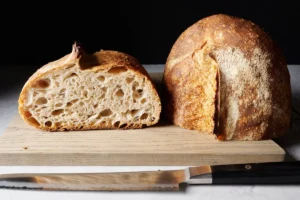
Historically, traditional European breads—particularly those associated with lower-extraction flours and traditional hearth baking—relied on moderate hydration levels ranging from 60 to 68 percent. These doughs produced tight, uniform crumbs with thick, chewy crusts capable of withstanding long storage periods. Over the past two decades, the global artisan sourdough movement has popularized high-hydration formulas, often pushing water levels to 75, 80, or even 85 percent and above.
This shift toward higher hydration was driven by a desire for open, irregular crumb structures, blistered crusts, and a custardy, tender interior mouthfeel. Yet, culinary historians and master bakers note that chasing excessively high hydration numbers can compromise structural stability. Bread formulated beyond 80 percent hydration without adequate protein development often results in flat loaves, structural collapse during cooling, and accelerated staling. Consequently, contemporary baking science emphasizes functional hydration—matching the water content precisely to the protein quality and extraction rate of the flour rather than arbitrary high targets.
Key Factors Influencing Water Absorption
Several biological and environmental variables dictate how much water a specific batch of dough can successfully absorb. Foremost among these is the protein content and quality of the flour. Flours with higher protein percentages (typically between 12% and 14%), commonly classified as strong bread flours, possess a robust gluten network capable of binding and retaining significant quantities of water. Conversely, lower-protein or softer flours utilized in various European and regional milling traditions require reduced water volumes to prevent structural failure and unmanageable stickiness.
Whole grain flours—including whole wheat, rye, and ancient grains—introduce additional complexity. The presence of bran and germ particles acts like a sponge, absorbing disproportionately high amounts of moisture. Consequently, formulas featuring high percentages of whole grains necessitate increased hydration levels. Furthermore, freshly milled flours consistently demand more water than aged, commercially processed flours due to the native enzyme activity and moisture retention properties inherent in freshly ground kernels.
Environmental factors such as ambient temperature, barometric pressure, and relative humidity also play a measurable role. Bakers operating in high-altitude, arid environments frequently must increase hydration to compensate for rapid evaporation during bulk fermentation, whereas high-humidity environments require conservative water additions to prevent slack, unworkable doughs.
Advanced Techniques: The Role of Bassinage
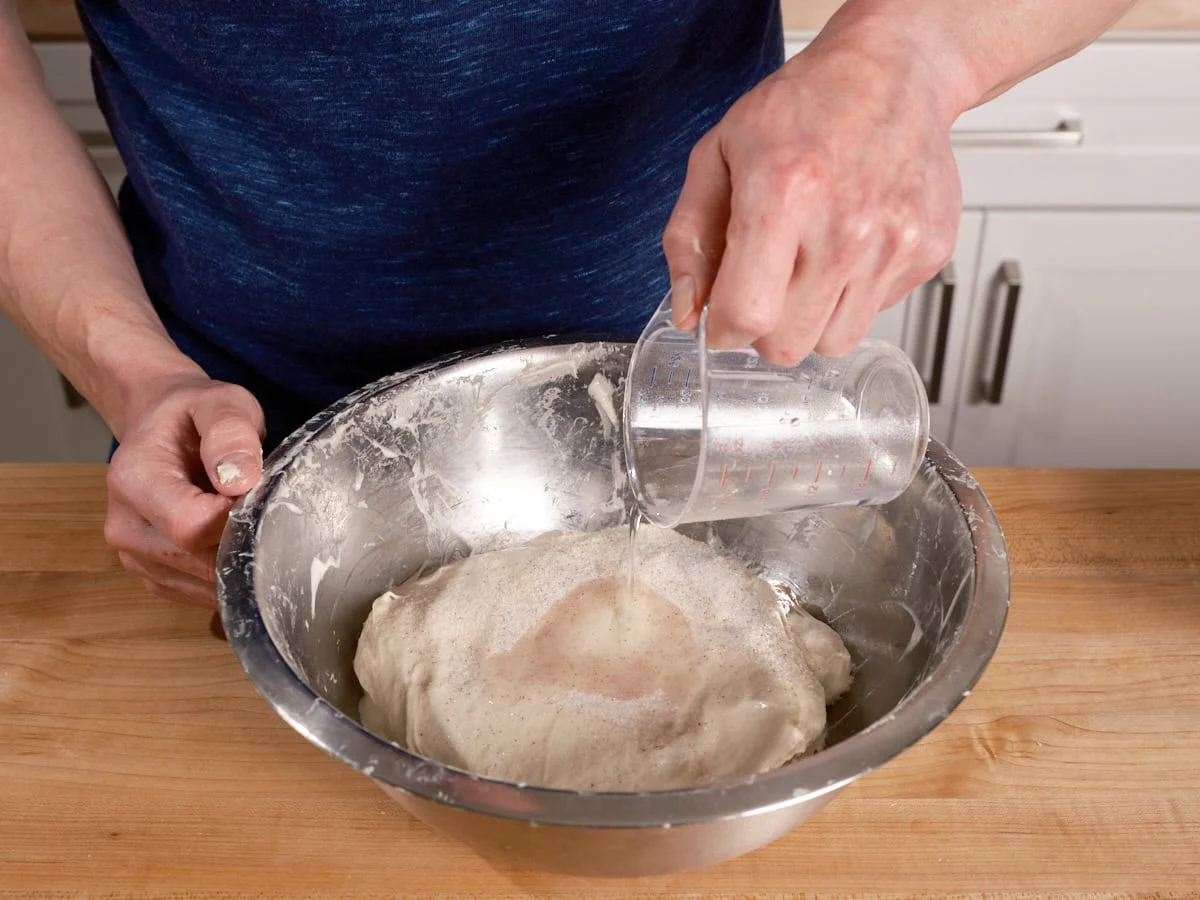
To successfully manage high-hydration formulas without compromising gluten development, professional bakeries frequently employ a technique known as bassinage, or double hydration. Rather than incorporating the total volume of water at the start of the mix, the baker holds back a percentage of the water—typically 10 to 20 percent—reserving it until the initial flour and water mixture has developed an embryonic gluten matrix through primary mixing or autolyse.
By introducing the bulk of the water first, the mechanical friction required to build protein bonds is maximized. Once the dough demonstrates structural elasticity, the reserved water is slowly integrated in stages. This method prevents the dough from becoming an unmanageable, soupy slurry during the critical early stages of gluten formation, allowing bakers to achieve higher total hydration levels while maintaining tight control over dough strength and extensibility.
Implications for Bakers and Commercial Production
The broader implications of dough hydration extend directly into operational efficiency, product consistency, and consumer satisfaction. For commercial operations, standardizing hydration requires rigorous quality control of incoming flour shipments, as protein content can fluctuate between milling lots and crop years. Bakeries that fail to adjust hydration parameters in response to flour variations often experience significant batch-to-batch inconsistencies, leading to increased waste and diminished product quality.
Moreover, working with higher hydration doughs demands specialized equipment and advanced manual dexterity. Automated mixing equipment, temperature-controlled proofing cabinets, and precise environmental monitoring systems are frequently required to maintain consistency at scale. For the home baker, the transition from moderate to high hydration requires a shift from strict adherence to timers and measurements toward sensory evaluation—learning to read the visual and tactile cues of the dough.
Conclusion: Moving Beyond Numerical Targets
Ultimately, the ongoing discourse within the baking community centers on moving away from dogmatic adherence to high hydration percentages. Master bakers advocate for a balanced approach where hydration serves as a tool to optimize the potential of specific flours rather than a badge of honor. By recording variables such as flour provenance, seasonal humidity, and water temperature, bakers can develop an intuitive understanding of dough mechanics. Through careful observation and precise adjustment, the science of hydration transforms from a technical hurdle into an essential craft, ensuring consistent, high-quality sourdough bread regardless of external variables.