
The human body, a marvel of natural engineering, has long been navigated by its owner through an intricate web of sensory input. Our forebears intuitively understood hunger, fatigue, and the need for rest, guided by the raw data of their internal states and the immediate environment. Today, this ancient reliance on self-perception is rapidly being supplemented, and sometimes supplanted, by a burgeoning array of wearable technologies. From smartwatches to ring trackers, these sleek devices promise to quantify nearly every aspect of our physical well-being: heart rate, step count, exercise intensity, and sleep quality. This technological shift marks a significant evolution in how individuals understand and manage their health, offering a bridge between subjective feeling and objective measurement.
The Rise of the Quantified Self: Bridging Subjectivity and Objectivity
The fundamental appeal of these modern gadgets lies in their capacity to provide concrete data for what was once purely experiential. In an ideal scenario, these devices act as a powerful tool, illuminating the often-unreliable nature of human self-assessment. While our subjective feelings are undeniably important, they are not always precise. Humans are notoriously poor at accurately quantifying their experiences and behaviors with cold, hard precision.
Consider the common scenario of dietary intake. A colleague, for instance, genuinely believed he was maintaining a strict caloric window. However, meticulous tracking revealed a surprising discrepancy: an additional 500 calories daily, largely attributable to his liberal use of barbecue sauce. This anecdote underscores a prevalent human tendency to misjudge or underestimate inputs and outputs, a phenomenon rooted in cognitive biases and a lack of consistent, objective feedback.
Yet, there are exceptions that highlight the potential for refined self-perception. Canadian sprinter Ben Johnson was reportedly capable of estimating his 100-meter sprint time to within a tenth of a second of the official stopwatch readout. While an outlier performance, such anecdotes prompt a critical question for the average individual: How accurate are you at assessing yourself, and how can technology, like fitness trackers, be wisely employed to enhance this accuracy and inform better health decisions?
The pursuit of this balance—leveraging technology without losing touch with intrinsic body signals—is central to optimizing personal health in the digital age. This exploration delves into the reliability of data trackers, identifies scenarios where tracking proves genuinely beneficial, and offers strategies to integrate technological insights with innate sensory awareness.
The Evolving Landscape of Wearable Technology and Its Accuracy
The global wearable technology market has witnessed explosive growth over the past decade, driven by advancements in sensor technology, miniaturization, and data processing. Valued at over $60 billion in 2023, projections anticipate its value to exceed $180 billion by 2030, reflecting a burgeoning consumer demand for personalized health insights. This growth has led to a proliferation of devices, each promising a deeper understanding of one’s physiology. Smartwatches, fitness bands, chest straps, smart rings, and even continuous glucose monitors (CGMs) have become commonplace, offering a spectrum of metrics from the basic to the highly advanced.
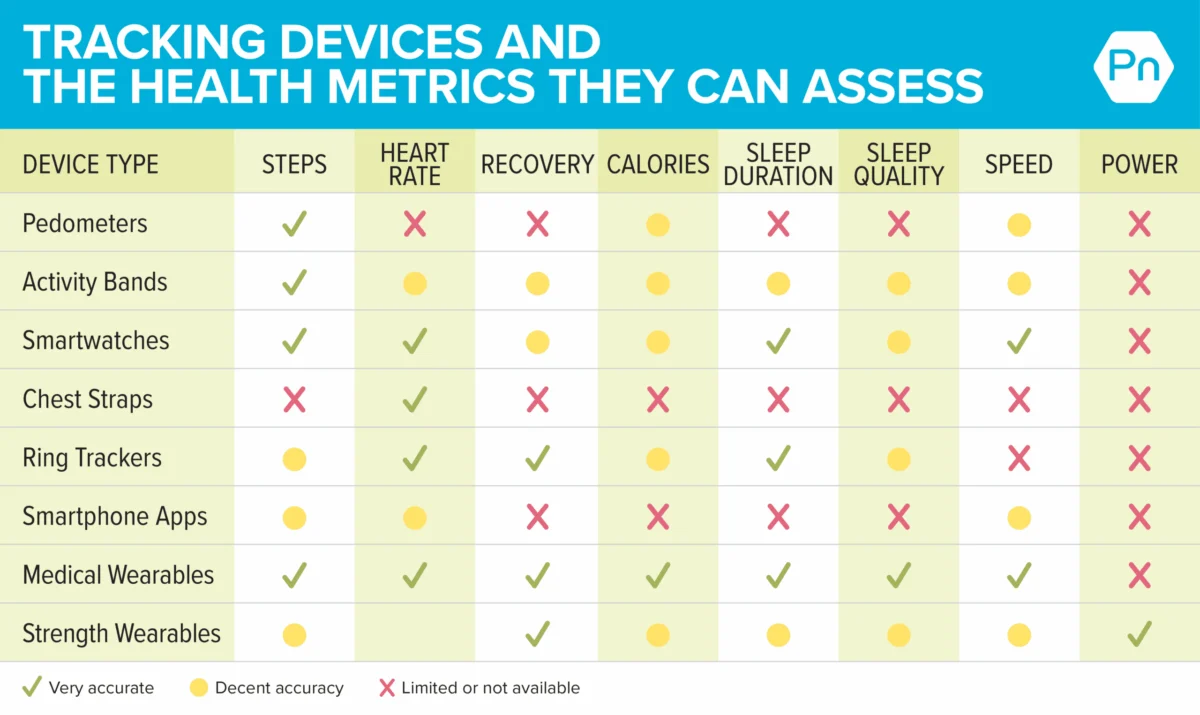
However, the efficacy of these devices hinges on the accuracy of the data they collect. Not all data is created equal, a truth influenced by both hardware quality and the sophistication of underlying software algorithms and datasets. While some metrics offer high reliability, others come with substantial margins for error.
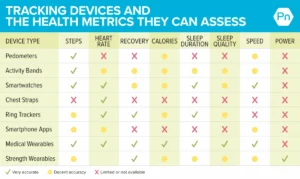
- Highly Reliable Metrics: Heart rate and step count data are generally considered the most dependable. Chest straps typically offer the gold standard for heart rate measurement due to their direct electrical signal detection. Optical sensors in wrist-worn devices have improved significantly but can still be affected by skin tone, movement, and fit. Step counting, particularly with accelerometers, is also largely robust.
- Moderately Reliable Metrics: Sleep duration can be reasonably estimated, but sleep quality and distinct sleep stages (REM, deep sleep) are more complex and often rely on proprietary algorithms that may not align perfectly with clinical polysomnography. GPS-based distance tracking is generally accurate in open environments but can suffer in urban canyons or dense foliage.
- Lower Reliability Metrics: Calorie expenditure is notoriously difficult to quantify accurately. Algorithms for "calories burned" are often generalized and do not account for individual metabolic rates, body composition, or the thermic effect of food. Research consistently shows significant overestimation by many consumer devices. Similarly, metrics like movement velocity, power output (without dedicated power meters), and advanced recovery scores derived from heart rate variability (HRV) can have substantial variability and may not always be clinically validated across diverse populations.
Factors such as the quality of the sensors, the sophistication of the algorithms, the placement of the device on the body, and even individual physiological differences (e.g., skin perfusion, body hair) can influence data accuracy. Consumers are advised to view these advanced metrics as trends and indicators rather than absolute, precise measurements, understanding that the value often lies in consistent tracking rather than pinpoint accuracy for every single data point.
The Information Paradox: When Too Much Data Becomes Detrimental
While the promise of abundant data is compelling, it also presents a significant challenge: the paradox of tracking. "What’s really remarkable," notes computer scientist Samantha Kleinberg, who studies decision-making, "is that even a tiny amount of surplus information has a big negative effect on our decision-making." This observation resonates with the concept of the "inverted U" curve, illustrating that optimal decision-making occurs within a "sweet spot" of information. Too little detail makes it tough to make the right decision, but so does an overwhelming flood of data.
This phenomenon, often termed "analysis paralysis," is evident in everyday life—like sifting through hundreds of taco place reviews only to feel more confused than when you started. In the realm of health and fitness, where personalized science, customization, and complexity are constantly touted, navigating this information overload becomes an art form. When data blurs into an indistinct mass without a clear path forward, it can hinder progress rather than facilitate it.
To cut through this complexity, a fundamental question should guide one’s engagement with tracking technology: Does tracking genuinely increase my well-being and performance? A clear "yes" or "no" provides immediate direction. However, for those in the fuzzy middle, specific signs can help discern whether tracking is a beneficial tool or a counterproductive burden.
Strategic Application: When Tracking Truly Helps
Tracking devices are most effective when they serve specific, actionable purposes, enhancing motivation, validating efforts, or deepening self-understanding.

Sign #1: Tracking Reduces Stress and Validates Methods
One powerful application of tracking is its ability to build confidence and alleviate anxiety, particularly for individuals who might doubt their own efficacy despite high performance. Consider Zak, whose coach advocated for Zone 2 cardio. Despite the logical reasoning, Zak, accustomed to pushing himself to the limit, struggled to trust that an activity feeling "easy" could be effective. Yet, his heart rate monitor provided irrefutable data: weeks of consistent Zone 2 work led to a measurable drop in his resting heart rate and reduced recovery times from intense runs. This objective validation allowed Zak to relax into the process, leading to further improvements.
For coaches, this demonstrates how reliable data can bolster expert assurance, shining a spotlight on existing performance and dispelling the "not good enough" narrative. While continuous glucose monitors (CGMs) are gaining popularity for "optimizing" blood sugar, they also exemplify this principle. For some, CGMs can validate certain food choices, confirming their positive impact. However, this same technology can become a source of undue stress if used without clear purpose or if individuals become overly fixated on minor fluctuations.
Bad Omen: Tracking is Increasing Stress or Negatively Affecting Performance. Sometimes, data generates stress without any tangible upside, particularly when scores relate to factors beyond immediate control. A new parent, sleep-deprived from caring for a newborn, receiving consistently "poor" sleep quality scores from a tracker, exemplifies this. In such scenarios, where priorities lie elsewhere or control is limited, tracking can be counterproductive, creating unnecessary anxiety. Reassessing its utility when circumstances or priorities shift is crucial.
Sign #2: Clear Feedback Enhances Motivation and Ability
According to B.J. Fogg’s Behavior Model, for a behavior to occur, three elements are needed: motivation, ability, and a prompt. Fitness trackers excel by providing this crucial "prompt" when motivation and ability are already present.
Take Margaret, who regularly enjoyed a glass of wine, believing it aided sleep. Once she started using a sleep tracker, the objective data revealed a stark pattern: her sleep quality was consistently poorer on nights she consumed alcohol. This clear, undeniable feedback—her sleep score acting as a powerful prompt—motivated her to adjust her evening routine. By highlighting critical data points, trackers can clarify choices and empower behavioral change. As the adage goes, "Once you see it, you can’t un-see it."
This principle extends to significant health transformations. Tim Jones, CEO of Precision Nutrition, leveraged feedback from various lifestyle trackers to reduce his genetically high cholesterol levels, ultimately building a richer, healthier life. His story highlights how actionable data can sustain motivation for long-term health goals.
Bad Omen: Data Collection is Decreasing Motivation or Ability. The pursuit of numbers can, paradoxically, erode the very joy and intrinsic motivation that drives activity. Jan, an avid recreational cyclist, initially thrived on demolishing local trail records. However, his relentless focus on speed and quantifiable achievements led to under-recovery and eventually burnout. When workouts become solely about the numbers, detaching from technique, felt experience, or simple enjoyment, tracking has likely ceased to be helpful and may even become detrimental.
Sign #3: Tracking Deepens Self-Understanding
The belief that "the harder you work, the better your results" is a common trap. While effort is essential, unchecked "grinding" can lead to overtraining, inhibiting performance and recovery. Conversely, many individuals chronically underestimate their effort and capacity, missing opportunities for growth. In both scenarios, data can provide a more accurate understanding of one’s true potential.
Consider high-intensity interval training (HIIT), which typically involves fixed periods of intense effort interspersed with fixed rest periods. These rest periods are often generalized estimates. However, heart rate data can personalize recovery, revealing whether an individual’s actual needs are faster or slower than the prescribed interval. The mind might say "yes," but the heart rate monitor might suggest "not quite yet." This objective feedback helps individuals avoid "junk volume"—where fatigue accumulates without commensurate performance improvement—and instead train and recover more efficiently. By looking at real-time metrics of output, fatigue, and recovery, both individuals and coaches can gain a deeper, more accurate understanding of the body’s responses.
Bad Omen: Over-Reliance on Data is Making You Lose Touch with Your Own Senses. The anecdote of "The Great My Fitness Pal Blackout" in 2019 serves as a potent reminder of the dangers of over-reliance. When the calorie-tracking app, used by millions, went down, many users reported feeling adrift, unable to make dietary decisions without external guidance. This dependency highlights a disconnection from internal signals—hunger, fullness, energy levels—that are fundamental to intuitive self-regulation.
When technology becomes a crutch rather than a tool, individuals risk losing touch with their own interoception (the ability to sense internal bodily states). This can manifest as an inability to gauge hunger, fatigue, or even emotional states without external data validation. The concept of "nomophobia"—the fear of being without a mobile device—underscores this growing psychological dependency on technology for basic functioning and self-assessment.
Integrating Technology and Intuition: A Balanced Approach
While objective data provides essential feedback and guidance, sustainable practice and genuine enjoyment in health and fitness stem from maintaining a strong connection to one’s felt experience. Motivation based purely on external metrics or progress can falter during plateaus or setbacks. However, individuals who cultivate mindfulness, mastery, meaning, and a sense of success in their practice develop a more resilient and enjoyable journey.
The good news is that fitness trackers can actually help calibrate and improve one’s ability to accurately sense what’s happening within the body. This involves a conscious strategy of integrating technological insights with innate sensory awareness.

1. Check in with Yourself Before You Check the Data
Imagine asking someone about their vacation, and they need to consult their photos before they can answer. This illustrates the pitfall of relying purely on external data for one’s own experience. Whatever the metric—distance biked, calories consumed, heart rate—the simplest way to mindfully engage with tracker data is to pause, breathe, and tune into your brain’s powerful (if not always accurate) prediction-making abilities.
First, estimate your metric based on how you feel. How far do you think you ran? How well do you feel you slept? Once you’ve made your self-assessment, then compare it to the detailed (though not always perfectly accurate) outputs of your fitness tracker. Over time, this practice can significantly narrow the gap between your subjective perception and objective reality, essentially training your internal sensors. Regular app updates are also important, as algorithms are continually refined for better predictive accuracy.
2. Develop Mental Shortcuts that Can Stand in for Objective Measures
Coaches often ask clients to estimate their strength boundaries, such as how many reps they can perform at a given weight until failure. Novices are frequently off by five or more reps. However, consistent calibration with objective data—or even insightful mental prompts—can dramatically reduce this margin of error.
While fancy tools like accelerometers might be used, a simple question like, "For a million dollars a rep, how many more reps do you think you could do?" can serve as a powerful shortcut to understanding maximal effort. This leverages the Rate of Perceived Exertion (RPE), a highly validated sensory-driven approach where individuals subjectively rate the intensity of their effort. While not everyone is inherently good at estimating RPE, consistent practice, coupled with occasional objective calibration, can significantly improve this skill. This allows individuals to effectively "feel" their way through workouts, even without constant data display.
3. Keep Developing Your Ability to Dial Into Your Senses
While trackers boast accelerometers, GPS, and gyroscopes, the human body is equipped with an incredibly rich and complex network of sensory information that technology cannot yet replicate. We possess:
- Proprioception: The sense of our body’s position and movement in space.
- Interoception: The sense of our internal bodily states, such as hunger, thirst, pain, and heart rate.
- Vestibular sense: The sense of balance and spatial orientation.
- Touch (Tactile sense): Sensing pressure, temperature, texture.
- Vision, Audition, Olfaction, Gustation: Our traditional five senses, providing rich environmental context.
All this information feeds into the powerful pattern-recognition machine of the nervous system. To continuously hone this invaluable network, regularly check in with what and how you’re feeling across all these sensory dimensions. By learning to calibrate your own senses with objective data, you can harness the cool advances in wearable tech while ensuring your own felt experience remains central to your health journey.
Expert Perspectives and Broader Implications
The integration of wearable technology into health management also raises broader ethical and societal questions. Data privacy is a significant concern, with companies collecting vast amounts of personal health information, raising questions about data security, usage, and potential monetization. From a medical standpoint, while wearables offer valuable supplementary data, most medical professionals caution against self-diagnosis based solely on tracker outputs, emphasizing their role as tools for awareness and motivation rather than diagnostic instruments.
Psychologists and behavioral scientists advocate for mindful technology use, warning against the potential for obsessive tracking, body image issues, and anxiety related to performance metrics. The goal, they argue, should be empowerment through information, not enslavement to data.
Ultimately, the future of personalized health lies in a symbiotic relationship between human intuition and technological innovation. Wearable technology, when used judiciously and with an emphasis on enhancing self-awareness rather than replacing it, offers unprecedented opportunities for informed decision-making and improved well-being. The challenge, and the opportunity, is to cultivate a balanced approach where technology serves as a wise guide, amplifying our innate capacity to understand and care for ourselves, rather than diminishing it.
References
Click here to view the information sources referenced in this article.
If you’re a coach, or you want to be…
You can help people build sustainable nutrition and lifestyle habits that will significantly improve their physical and mental healthâ€while you make a great living doing what you love. We’ll show you how.
If you’d like to learn more, consider the PN Level 1 Nutrition Coaching Certification. (You can enroll now at a big discount.)