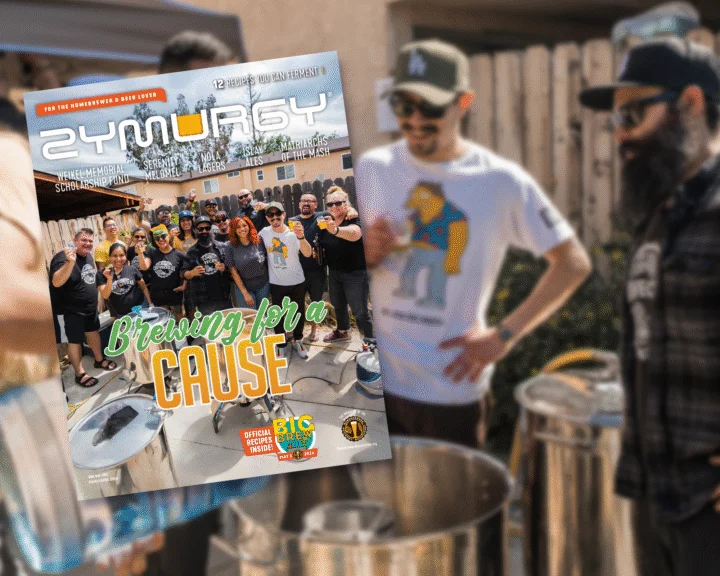

The American Homebrewers Association (AHA) has officially released the March/April 2026 issue of Zymurgy, a publication that has served as the definitive voice for the hobbyist brewing community since its inception in 1978. This latest edition arrives at a critical juncture for the industry, centering on the theme of "the pivot"—a comprehensive examination of how both amateur and professional brewers are navigating a landscape defined by volatile climate patterns, fluctuating economic pressures, and a rapidly diversifying beer culture. Featuring twelve new validated recipes and several deep-dive investigative features, the issue serves as both a technical manual and a sociological study of modern fermentation.
The editorial direction, led by Editor-in-Chief Dave Carpenter, underscores the necessity of adaptation. As the craft beer market enters a more mature and disciplined phase, the hobbyist sector is following suit by focusing on sustainability, historical reclamation, and technical precision. This issue does not merely provide instructions for brewing; it contextualizes the act of brewing within the broader global challenges of the mid-2020s.

The Stoney Creek Homebrewers and the Legacy of the Weikel Memorial Scholarship
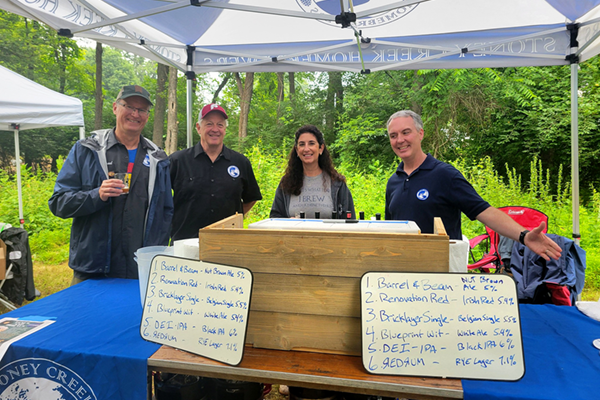
A primary focus of this issue is the cover story authored by renowned brewing expert Josh Weikert, which details the philanthropic efforts of the Stoney Creek Homebrewers. Founded in 2007 in the Philadelphia area, the club has long been a pillar of the East Coast brewing community. The feature explores the establishment and impact of the Weikel Memorial Scholarship Fund, created in response to a tragic loss within the club’s ranks.
The scholarship serves as a mechanism for "brewing for good," providing financial support for aspiring brewers to pursue formal education in the craft. Weikert’s reportage highlights a growing trend among homebrew clubs: the transition from social gatherings to formalized non-profit entities that contribute to local community resilience. By funding education, the Stoney Creek Homebrewers are ensuring that the technical standards of the craft remain high even as the industry faces economic headwinds.
Reclaiming History: The Erasure and Resurgence of the Brewster
In a significant historical retrospective, Zymurgy addresses the "Matriarchs of the Mash," a feature dedicated to the often-overlooked history of women in brewing. For centuries, brewing was a domestic task managed almost exclusively by women, known as "brewsters" or "alewives." However, as brewing transitioned from a household necessity to an industrial enterprise during the late Middle Ages and the Industrial Revolution, women were systematically marginalized and their contributions erased from the historical record.
The March/April 2026 issue seeks to rectify this narrative by painting a global portrait of female fermenters. The article traces the lineage from the ancient Sumerian goddess Ninkasi to the modern female head brewers who are currently leading some of the world’s most innovative breweries. This reclamation of history is not just about social equity; it is about understanding the foundational techniques—often passed down through oral tradition among women—that form the basis of modern brewing science.
Regional Evolution: The Lager Renaissance in New Orleans
The geographical focus of this issue shifts to the American South, specifically the evolving beer scene in New Orleans. For decades, the city’s lager offerings were largely limited to a few major brands and the long-standing efforts of Abita Brewing Company. The article describes the previous state of the market as a "lager desert," where the extreme heat and humidity of the region made the production of clean, crisp bottom-fermented beers a significant technical challenge for smaller operations.
However, the last five years have seen a dramatic shift. A new generation of New Orleans brewers has embraced the technical rigor required for lager production, aided by advancements in temperature control and water chemistry adjustment. The feature explores how these brewers are creating "Crescent City" styles that respect European traditions while catering to the local palate and climate. This regional boom reflects a national trend where brewers are moving away from overly hopped IPAs toward the subtle complexity and drinkability of well-crafted lagers.

Fermentation in Extreme Climates: Indigenous Traditions of North America
Expanding the scope of fermentation beyond malted barley, Art Fitzsimmons contributes a feature on the indigenous fermenting spirits of North America’s hottest regions. As climate change alters the availability of traditional brewing ingredients, Fitzsimmons looks to the past to find solutions for the future. The indigenous peoples of the American Southwest and Northern Mexico have a long history of fermenting desert flora, such as agave, prickly pear, and mesquite.
The article details the "present-day fermenting spirit" of these communities, who have mastered the art of working with ingredients that thrive in inhospitable conditions. This segment provides a crucial perspective on "the pivot," suggesting that the future of brewing may involve a return to hyper-local, drought-resistant ingredients. The inclusion of these practices in Zymurgy signals a broadening of the definition of "homebrewing" to include a wider array of fermented beverages.
International Perspectives: The Islay Ale Movement
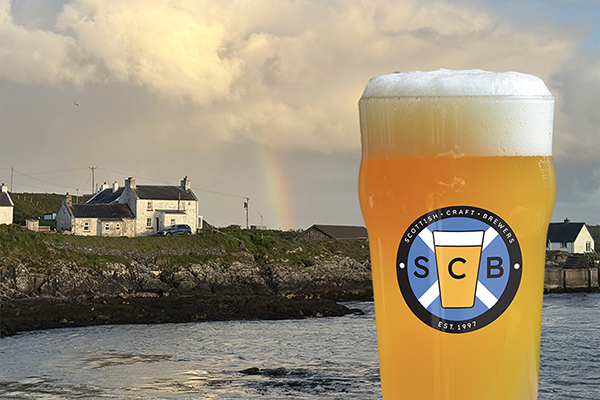
While Islay, Scotland, is synonymous with peated Scotch whisky, the March/April 2026 issue highlights a burgeoning beer movement on the island. Donald MacKenzie and Mackay Smith, inspired by the Scottish Craft Brewers homebrew club, have successfully established a brewing culture that mirrors the island’s famous spirits.
The feature examines how Islay Ales utilizes the same environmental factors that define Islay whisky—soft water and a proximity to the sea—to produce beers with a distinct sense of place. This international spotlight emphasizes the symbiotic relationship between distilling and brewing, showing how homebrewing clubs can act as incubators for professional ventures even in regions dominated by other industries.
Supporting Data: The Economic and Cultural State of Homebrewing in 2026
The "pivot" described throughout the issue is supported by emerging data regarding the hobbyist brewing market. Industry analysts note that while the "craft beer boom" of the 2010s has leveled off, the commitment of serious homebrewers has intensified. Membership in organizations like the AHA remains a vital resource for those looking to offset the rising costs of commercial beer through high-quality home production.
Data indicates that the average homebrewer in 2026 is increasingly focused on "sessionability" (lower alcohol content) and "technical mastery." The twelve recipes included in this issue reflect this, with a focus on styles that require precise fermentation management rather than expensive, trending adjuncts. Furthermore, the issue highlights the economic value of AHA membership, which provides access to validated recipes that reduce the risk of "failed batches"—a significant concern as the cost of grain and hops continues to rise due to global supply chain pressures.

Official Responses and Editorial Vision
Dave Carpenter, who has served as Editor-in-Chief since 2019, emphasizes that the magazine’s role is to provide a "steady hand" in a changing world. Carpenter’s background in both brewing and linguistics informs the publication’s professional yet accessible tone. Under his leadership, Zymurgy has expanded its digital presence, offering members an online preview and an extensive archive of resources.
In a statement regarding the March/April issue, Carpenter noted that the "pivot" is not just about survival, but about finding new avenues for creativity. "Brewing has always been about managing variables," Carpenter suggests. "Whether those variables are the temperature of the mash tun or the shifting price of CO2, the goal remains the same: to create something meaningful and shareable."
Broader Impact and Future Implications
The March/April 2026 issue of Zymurgy serves as a roadmap for the future of the hobby. By highlighting the intersection of social responsibility (Stoney Creek), historical awareness (the role of women), and environmental adaptation (indigenous fermentation), the publication asserts that homebrewing is more than just a pastime; it is a resilient cultural practice.
As the industry moves forward, the "pivot" will likely become a permanent state of being. The ability to adapt to new ingredients, new climates, and new social expectations will define the next generation of brewers. Zymurgy’s commitment to providing validated, peer-reviewed content ensures that the homebrewing community remains at the forefront of this evolution, maintaining a high standard of excellence regardless of the challenges that lie ahead.
For those looking to engage with this content, the AHA offers various membership tiers, including a $4.99 subscription model that provides access to the digital publication and its vast repository of DIY content. As the magazine continues to document the evolution of the craft, it remains an essential resource for anyone dedicated to the art and science of fermentation.