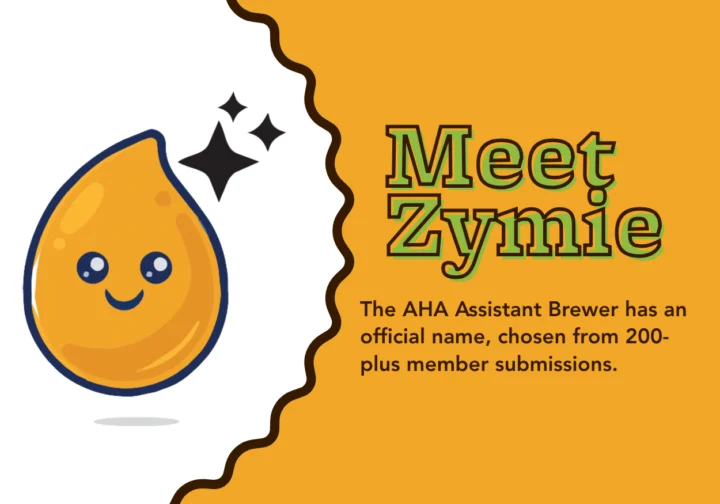

The American Homebrewers Association (AHA) has officially named its new artificial intelligence assistant after a rigorous community-wide naming campaign, concluding weeks of deliberation among thousands of enthusiasts. The digital sidekick, designed to navigate complex brewing queries, water chemistry calculations, and fermentation troubleshooting, will henceforth be known as Zymie.
The announcement follows an open call for submissions that yielded more than 200 distinct entries from AHA members across the country. Ultimately, the winning moniker was submitted independently by two distinct members, Joshua Willard and Kris Gould, highlighting a collective convergence on a name that blends scientific nod with approachable camaraderie. Zymie is engineered to serve as an indispensable resource for hobbyists navigating the intricate science and art of craft brewing at home.
Chronology of the Naming Campaign and Development
The rollout of the AHA Assistant Brewer represents a significant technological milestone for an organization with decades of deep-rooted traditions. The conceptualization of the digital assistant began months prior, driven by a growing demand among members for instantaneous, reliable answers drawn from decades of archival material, including issues of Zymurgy magazine and trusted homebrewing literature.
As the underlying architecture of the tool was finalized, association leadership recognized the necessity of community integration. Rather than assigning a corporate or automated designation from the top down, the AHA launched a naming competition in late summer. Members were invited to submit creative suggestions via an online portal.
By the close of the submission window, administrators had cataloged over 200 entries, ranging from humorous puns and historical nods to technical jargon. A panel reviewed the submissions, noting that the entries offered considerable insight into the creativity and humor inherent in the homebrewing community. On the day of the formal unveiling, Joshua Willard and Kris Gould were recognized as the co-creators of the winning name.
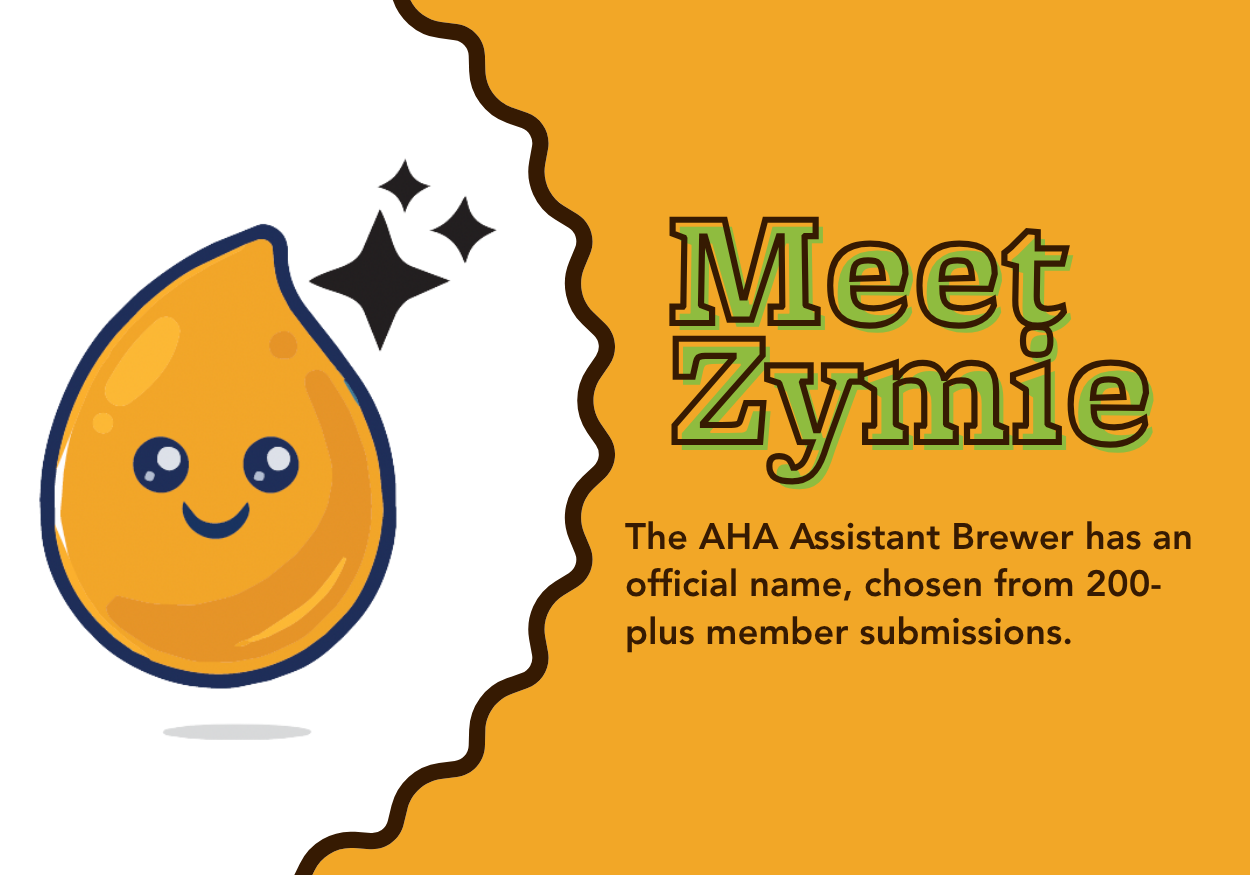
Following the naming decision, the association turned its attention to visual identity. Zymurgy art director Dave Harford utilized the community submissions as thematic inspiration to design an avatar for the assistant. The resulting character—depicted as a vibrant, golden drop of wort or brew—was crafted to establish a visual presence that feels organic to the craft beer community rather than sterile or mechanical.
Technological Architecture and Human-Centric Philosophy
While Zymie is powered by advanced artificial intelligence, the overarching philosophy governing its deployment remains strictly human-centric. The AHA has emphasized that the digital tool is not intended to replace the hands-on experimentation, empirical trial-and-error, and mechanical ingenuity that define the modern homebrewing hobby.
Instead, Zymie functions as an aggregator of institutional knowledge. The system is programmed to draw exclusively from vetted association resources, providing rapid guidance on common and complex dilemmas. These include managing mash temperatures, calculating alpha acid isomerization, selecting yeast strains, and troubleshooting off-flavors caused by microbial contamination or improper fermentation temperatures.
Association leadership has outlined a framework for AI integration centered on transparency, data security, member value, and editorial responsibility. By restricting the AI’s reference database to verified homebrewing texts and association archives, the AHA aims to mitigate the risk of algorithmic hallucinations—inaccurate or fabricated information—that frequently plague general-purpose language models.
Supporting Data and Industry Context
The introduction of Zymie occurs against a broader backdrop of technological integration within the artisan food and beverage sectors. According to recent demographic and market data from the Brewers Association and related homebrewing advocacy groups, the homebrewing demographic is increasingly tech-forward, utilizing digital refractometers, automated temperature-control fermentation chambers, and cloud-based recipe formulation software.
However, despite the proliferation of digital tools, the barrier to entry for mastering intermediate and advanced brewing science remains high. Water chemistry adjustment, for instance, requires balancing calcium, magnesium, sulfate, chloride, and carbonate ions to hit specific style profiles—a task that historically required wading through dense chemical textbooks or complex spreadsheet calculators. By embedding an interactive assistant into its digital ecosystem, the AHA seeks to lower this educational barrier, supporting both novice brewers and seasoned veterans refining their craft.
Access to the tool is tiered to reward association membership. Full, unlimited access to Zymie is integrated into active AHA memberships, while non-members are provided access to a limited trial version via the association’s official portal. This strategy aligns with broader membership retention and acquisition models utilized by special-interest trade organizations and hobbyist associations in the digital age.
Official Responses and Community Reception
Reactions from the homebrewing community during the submission phase and subsequent rollout have been overwhelmingly positive, marked by the lighthearted camaraderie typical of the culture. Discussions across various online forums and local homebrew club meetings highlighted an appreciation for the association’s inclusive approach to naming the assistant.
"We received an incredible array of suggestions that showcased the humor, wit, and deep knowledge base of our membership," noted an association spokesperson during the launch. "The volume and quality of the submissions demonstrated just how engaged our community is with the evolution of the association’s digital offerings."
The selection of Joshua Willard and Kris Gould as the originators of the winning name has been celebrated within their respective local chapters. Both brewers noted the appropriateness of a name derived from "zymurgy"—the branch of applied chemistry that deals with fermentation processes, such as winemaking and brewing.
Broader Impact and Industry Implications
The successful deployment of Zymie serves as a potential case study for other niche hobbyist organizations considering the integration of generative AI. By anchoring the technology within a trusted repository of proprietary content and maintaining a clear boundary between automation and human expertise, organizations can leverage modern tools without alienating traditionalist members.
Furthermore, the initiative underscores a shifting paradigm in how educational content is consumed. Modern enthusiasts increasingly expect on-demand, conversational access to information rather than static articles or indexed search functions. By translating decades of printed literature into a responsive conversational interface, the AHA has modernized its educational delivery mechanism.
As Zymie begins interacting with thousands of members globally, the association plans to monitor the system’s performance and accuracy continuously. Feedback loops built into the interface will allow users to report anomalies or request deeper expansions on specific brewing topics, ensuring the assistant evolves alongside the community it serves.
For the American Homebrewers Association, the arrival of Zymie marks the beginning of a new chapter in member support—one that bridges the ancient craft of fermentation with the cutting edge of digital communication. Whether a brewer is attempting a traditional German Pilsner, experimenting with wild fermentation techniques, or diagnosing a stuck fermentation, Zymie stands ready as a 24/7 digital compatriot in the pursuit of the perfect pint.