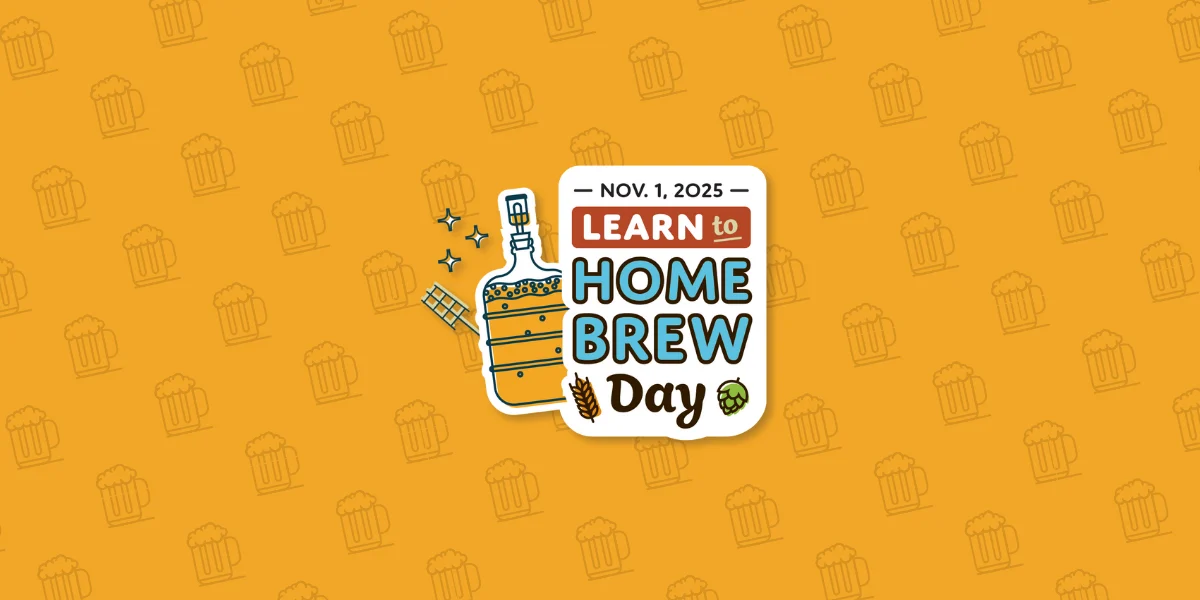

The American Homebrewers Association has officially designated Saturday, November 1, 2025, as the 26th annual Learn to Homebrew Day, a global initiative designed to introduce newcomers to the craft of fermentation and celebrate the community of amateur zymurgists. Established in 1999, this annual event serves as a focal point for the homebrewing calendar, encouraging experienced brewers to share their equipment, knowledge, and finished products with those interested in the hobby. The 2025 iteration arrives at a pivotal moment for the industry, as the American Homebrewers Association (AHA) seeks to bolster participation in a hobby that has historically served as the primary pipeline for the multi-billion dollar professional craft beer industry.
The event, which traditionally takes place on the first Saturday of November, is structured to be decentralized, occurring in backyards, garages, and professional craft breweries across the globe. By providing standardized recipes and educational resources, the AHA aims to lower the barrier to entry for a hobby that combines elements of chemistry, culinary arts, and mechanical engineering. For 2025, the association has curated specific recipes designed to be accessible to novices while offering enough complexity to engage veteran brewers. These official recipes serve as a communal benchmark, allowing participants in different time zones and countries to share a unified experience.
The Historical Evolution of Learn to Homebrew Day
The inception of Learn to Homebrew Day traces back to 1999, when the American Homebrewers Association sought a way to formalize the grassroots sharing of brewing knowledge. While homebrewing was federally legalized in the United States in 1978 under President Jimmy Carter, it took several decades for the hobby to move from a niche, often misunderstood activity into a mainstream cultural phenomenon. The establishment of a dedicated day of education was intended to demystify the process and highlight the legality and safety of making beer at home.
Since its founding, the event has grown from a handful of small gatherings in the United States to an international celebration. According to historical data from the AHA, thousands of participants join the festivities each year, spanning all 50 U.S. states and dozens of countries including Canada, Brazil, the United Kingdom, and Australia. The event has survived various shifts in the beer industry, including the rapid expansion of craft breweries in the 2010s and the supply chain disruptions of the early 2020s, remaining a steadfast tradition for the estimated 1.1 million homebrewers currently active in the United States.
Bridging the Gap Between Amateur and Professional Brewing
One of the primary functions of Learn to Homebrew Day is its role as a recruitment tool for the broader brewing industry. Data from the Brewers Association—the parent organization of the AHA—indicates that a vast majority of professional brewers in the United States began their careers as homebrewers. Iconic figures in the industry, such as Ken Grossman of Sierra Nevada Brewing Co. and Sam Calagione of Dogfish Head Craft Brewery, have frequently cited their early days of homebrewing as the foundation of their commercial success.
By encouraging new participants on November 1, the AHA is effectively cultivating the next generation of professional talent. The skills learned over a boiling kettle on a Saturday afternoon—sanitation protocols, temperature control, and recipe formulation—are the exact competencies required in a commercial brewhouse. Consequently, many professional breweries participate in Learn to Homebrew Day by hosting "big brew" events, where they invite local clubs to set up their equipment on-site, fostering a direct link between the amateur community and the professional sector.
The Technical Landscape of Homebrewing in 2025
The 2025 celebration of Learn to Homebrew Day highlights the significant technological advancements that have transformed the hobby over the last quarter-century. In 1999, most homebrewers relied on rudimentary setups involving modified turkey fryers and plastic buckets. Today, the market for homebrewing equipment has matured into a sophisticated industry offering automated, all-in-one electric brewing systems that allow for precise digital control over every stage of the process.
For the 2025 event, the AHA is focusing on resources that cater to both traditional "extract" brewing—which uses concentrated malt sugars to simplify the process—and "all-grain" brewing, which involves mashing crushed malted barley. This dual focus ensures that individuals with minimal equipment can still produce high-quality beer, while those with advanced setups can push the boundaries of the craft. The inclusion of official recipes for 2025 is a strategic move to standardize the learning process, ensuring that newcomers are working with proven formulas that yield consistent results.
Economic and Cultural Impact
The economic significance of homebrewing extends beyond the purchase of ingredients. The hobby supports a robust ecosystem of local homebrew supply shops (LHBS), which serve as essential community hubs. These retailers provide not only the raw materials—malt, hops, yeast, and water—but also the expert advice necessary for success. Learn to Homebrew Day often results in a significant seasonal spike in revenue for these small businesses, as newcomers purchase starter kits and veterans upgrade their hardware in preparation for the winter brewing season.
Culturally, the event reinforces the social fabric of the brewing community. Homebrew clubs, of which there are over 1,500 recognized by the AHA, often use November 1 as their most significant outreach day of the year. These clubs provide a structured environment for peer review, where brewers can receive objective feedback on their work, helping them to refine their techniques. This social infrastructure is credited with maintaining the high standards of quality found in the modern American beer scene.
Official Resources and Community Engagement
To facilitate the 2025 event, the American Homebrewers Association has launched an integrated digital platform that includes a "Brew Day" locator. This tool allows prospective brewers to find public demonstrations and club meetings in their immediate vicinity. Furthermore, the AHA provides a suite of educational materials, including:
- Step-by-Step Instructional Videos: Covering everything from sanitation to bottling.
- The 2025 Official Recipes: Detailed ingredient lists and process schedules for two distinct beer styles, designed to appeal to a wide range of palates.
- Discounted Membership Programs: To encourage long-term engagement, the AHA typically offers incentives for new members who join during the Learn to Homebrew Day window, providing access to Zymurgy magazine and thousands of award-winning recipes.
While the specific styles for the 2025 recipes are chosen to be approachable, they also reflect current market trends. In recent years, there has been a notable shift toward lower-alcohol "session" beers and experimental styles using non-traditional ingredients. The 2025 selections are expected to mirror this evolution, balancing classic brewing traditions with modern innovation.
Broader Implications and Future Outlook
The continued success of Learn to Homebrew Day is a testament to the enduring appeal of "maker" culture in an increasingly digital world. As consumers seek more transparency and a deeper connection to the products they consume, homebrewing offers a tangible, hands-on experience that results in a physical, shareable product.
Industry analysts suggest that the stability of the homebrewing sector is vital for the health of the overall craft beer market. While commercial craft beer sales have faced headwinds due to changing consumer preferences and increased competition from spirits and canned cocktails, the homebrewing community remains a dedicated core of brand advocates and educated consumers. A person who understands the difficulty of brewing a clean, crisp Pilsner or a complex Stout at home is more likely to appreciate and support the artisanal efforts of professional craft breweries.
As November 1, 2025, approaches, the American Homebrewers Association is calling on its members to act as ambassadors for the craft. The goal for this year’s event is not only to increase the number of active brewers but to foster an environment of inclusivity and diversity within the hobby. By reaching out to demographics that have been historically underrepresented in the brewing community, the AHA hopes to ensure that the future of homebrewing is as vibrant and varied as the beers produced in its members’ kitchens and garages.
In conclusion, Learn to Homebrew Day 2025 represents more than just a hobbyist gathering; it is a celebration of a 26-year legacy that has fundamentally reshaped the global beer landscape. Through education, community building, and a shared passion for fermentation, the event continues to prove that the finest beer in the world isn’t always found on a retail shelf—sometimes, it is found in a five-gallon batch brewed at home. Participants are encouraged to visit the official AHA website to download recipes, find local events, and prepare for what is expected to be one of the largest coordinated brewing events in the association’s history.