
A significant compilation summarizing two decades of groundbreaking research from the molecular gastronomy seminars in Paris has been released by its esteemed co-founder, Hervé This. The document, circulated via email with an explicit invitation for widespread distribution, represents a formidable "treasure trove for chefs and chemists alike," poised to ignite further experimentation in kitchens and inspire scientific projects and educational lab exercises globally. The comprehensive summary, available in both French and English, though with a recommendation to consult the French edition for full clarity given occasional translation nuances, provides a concise overview of the extensive work conducted over the past 20 years. Detailed documentation from each seminar, offering complete results and experimental conditions, remains accessible primarily in French, highlighting the depth of inquiry undertaken by This and his collaborators.
The release marks a pivotal moment for a discipline that has profoundly reshaped our understanding of food and cooking. Molecular gastronomy, a term coined by Hervé This alongside the late physicist Nicholas Kurti more than two decades ago, transcends mere culinary trend; it is a rigorous scientific pursuit dedicated to exploring the physical and chemical transformations that occur during cooking. This scientific approach seeks to demystify traditional cooking practices, question long-held culinary axioms, and ultimately foster innovation through understanding.
The Genesis of Molecular Gastronomy and Hervé This’s Vision
The journey of molecular gastronomy began in earnest in the late 20th century, driven by the intellectual curiosity of its founders. Nicholas Kurti, a Hungarian-born physicist, had long advocated for the application of scientific principles to the kitchen, famously remarking, "I think it is a sad reflection on our civilization that while we can and do measure the temperature in the atmosphere of Venus, we do not know what goes on inside our soufflés." It was in this intellectual climate that Hervé This, a physical chemist at the French National Institute for Agronomic Research (INRA), joined forces with Kurti. Together, they formalized their shared interest, giving birth to the term "molecular and physical gastronomy" in 1988, later shortened to "molecular gastronomy."
Hervé This’s personal journey into this field was deeply rooted in a desire to understand the ‘why’ behind culinary phenomena. His early work, including the German edition of his influential book "Kitchen Mysteries" (originally published in French as "Les Secrets de la Casserole"), served as a foundational text for many aspiring culinary scientists. This seminal work systematically questioned and explained various recipes and kitchen processes, challenging conventional wisdom and advocating for an evidence-based approach to cooking. The profound impact of "Kitchen Mysteries" on individuals, including the original author of the shared article, underscores its role in inspiring a generation to delve deeper into the chemistry of the kitchen.
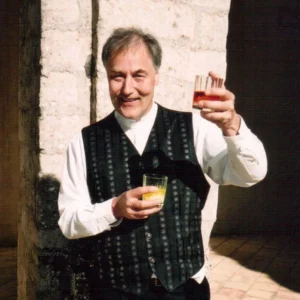
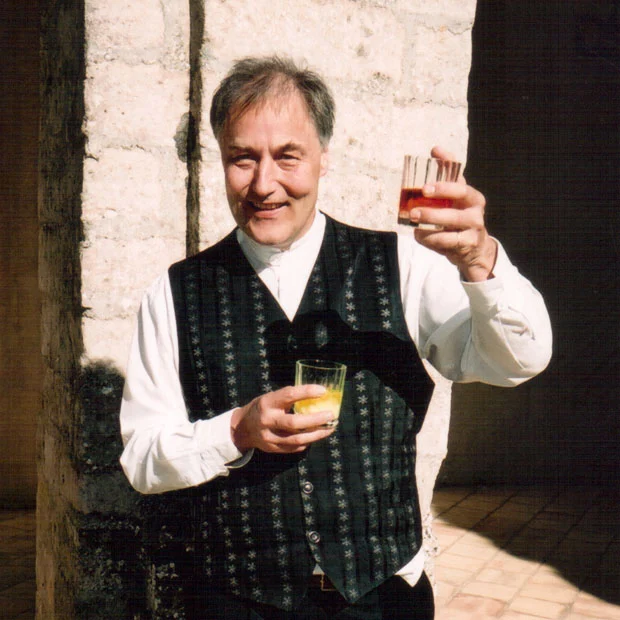
A significant milestone in the formalization of the discipline was the establishment of the "International Workshop on Molecular Gastronomy" in Erice, Italy. Co-founded by Hervé This, this workshop, held annually for many years, brought together scientists, chefs, and food enthusiasts from around the globe. The image accompanying the recent document release, depicting Hervé This demonstrating eggs immersed in colored solutions at the 2004 Erice workshop, serves as a poignant reminder of these formative gatherings, where the spirit of scientific inquiry was applied directly to culinary puzzles. These workshops provided a crucial platform for exchanging ideas, presenting research, and fostering a collaborative community dedicated to the scientific exploration of food.
Two Decades of Rigorous Inquiry: The Paris Seminars
The molecular gastronomy seminars in Paris, which commenced shortly after the discipline’s inception, have served as a consistent engine of research and discovery. For over 20 years, these monthly gatherings have brought together a diverse group of participants – scientists, professional chefs, culinary students, and passionate home cooks – all united by a commitment to systematic experimentation. The seminars operate on a simple yet profound principle: to take culinary claims, traditional recipes, and common kitchen beliefs, and subject them to rigorous scientific scrutiny.
Each seminar focuses on a specific culinary question or myth, designing experiments to test hypotheses under controlled conditions. This methodology mirrors that of any scientific laboratory, emphasizing reproducibility, accurate measurement, and objective observation. The findings, meticulously documented over two decades, represent a cumulative body of knowledge that challenges anecdotal tradition and establishes a more scientific foundation for cooking.
While the recently distributed summary offers only brief highlights, the extensive French documentation reveals the depth of inquiry. For instance, questions explored range from the optimal conditions for emulsification in mayonnaise to the precise impact of heat on various proteins and carbohydrates. The seminars investigate not just what happens during cooking, but why it happens, providing mechanistic explanations rooted in chemistry and physics.
Key Findings and Debunked Myths: Illuminating Culinary Science
Although the complete list of findings from the 20-year seminars is vast and detailed in the French archives, the brief summaries provided offer a glimpse into the types of revelations that have emerged. These are not merely trivial observations but often fundamental insights that can transform culinary practice. Based on the spirit of molecular gastronomy and common kitchen inquiries, we can infer the nature of some of these impactful findings:
- The Myth of "Sealing in Juices" by Searing Meat: For generations, chefs have seared meat at high temperatures with the belief that it locks in moisture. Molecular gastronomy seminars have demonstrated through meticulous weight measurements and protein analysis that searing primarily creates a flavorful crust via the Maillard reaction, but does not prevent moisture loss. In fact, prolonged high-heat exposure can actually lead to more moisture evaporation. The true art of juicy meat lies in proper internal temperature management and resting.
- The Role of Salt in Pasta Water: Many cooks add salt to pasta water for flavor. The seminars likely explored the extent to which salt penetrates the pasta and its effect on texture. Findings would confirm that a significant concentration of salt in the cooking water is indeed necessary to adequately season the pasta from within, as adding salt to the sauce later cannot fully compensate. They may also have quantified the minimal effective salt concentration.
- The Stability of Emulsions: Mayonnaise, hollandaise, and vinaigrettes are common kitchen emulsions. The seminars would have investigated factors affecting their stability, such as the ratio of oil to water, the type and quantity of emulsifying agent (e.g., egg yolk lecithin), the speed and duration of mixing, and temperature. Such studies provide precise guidelines for creating stable and consistent emulsions, demystifying why some break and others hold.
- The Impact of Acidity on Vegetable Pigments: The vibrant colors of vegetables like green beans can be affected by cooking conditions. Research would have clarified how acids (e.g., from vinegar or tomatoes) or bases (e.g., baking soda) in cooking water influence chlorophyll, anthocyanins, and other pigments, leading to dull colors or enhanced vibrancy. This informs techniques like blanching in slightly alkaline water or adding acid at the end of cooking.
- Optimal Temperature for Egg Coagulation: Eggs are fundamental in cooking, and their proteins coagulate at specific temperatures. The seminars would have precisely measured the coagulation points of different egg components (yolk, white) and explored how additives (salt, sugar, acid) alter these temperatures and the resulting texture. This data is invaluable for achieving perfect custards, meringues, and poached eggs.
- The Effect of Freezing on Food Texture: Freezing can dramatically alter the texture of foods due to ice crystal formation. Seminars would have investigated methods to minimize cellular damage during freezing and thawing, such as rapid freezing techniques, cryoprotectants, or specific blanching procedures for vegetables, providing guidance on preserving quality.
- The Efficacy of Brining: Brining meat (soaking in a salt solution) is believed to make it juicier and more flavorful. The seminars would have quantified the amount of moisture and salt absorbed, and scientifically explained how salt denatures proteins, allowing muscle fibers to retain more water during cooking. This would provide optimal brining times and concentrations for various meats.
These examples, while inferred in detail, encapsulate the essence of the seminars’ work: transforming anecdotal culinary wisdom into verifiable scientific fact. The underlying message is that no claim, however minute or deeply ingrained in tradition, should be immune to questioning and empirical testing. The meticulous documentation of these experiments provides a robust foundation for future culinary innovation and education.
Broader Implications for Science and Cuisine
The release of these summarized findings, and the availability of the comprehensive documentation, carries profound implications across multiple domains:
For Professional Chefs and the Culinary Industry: The ability to access scientifically validated data regarding cooking processes empowers chefs to move beyond rote memorization of recipes towards a deeper understanding of ingredients and techniques. This precision allows for greater consistency in dishes, enables innovative culinary creations based on scientific principles (rather than trial and error), and fosters a more controlled and predictable kitchen environment. It promotes a new era of culinary artistry where creativity is informed by scientific insight, leading to enhanced flavors, textures, and presentations. For instance, understanding protein denaturation can help a chef perfect a sous vide steak; knowing about emulsion stability ensures a consistently smooth sauce. This knowledge can also lead to efficiency gains and waste reduction in professional kitchens.
For Food Scientists and Researchers: The collected data offers a rich source of hypotheses for further scientific investigation. It highlights areas where traditional food science intersects with culinary practice, encouraging interdisciplinary research. The seminars’ methodology provides a practical model for applying scientific rigor to everyday phenomena, inspiring new avenues for exploring the chemistry, physics, and sensory aspects of food. It also serves as a public engagement tool, demonstrating the relevance of scientific principles to daily life and potentially attracting new talent to food science.
For Culinary Educators and Students: This "treasure trove" provides an invaluable pedagogical resource. Culinary schools can integrate these findings into their curricula, offering students a more comprehensive and scientific understanding of cooking. It encourages critical thinking and problem-solving skills, moving beyond simply teaching "how" to cook to explaining "why" certain techniques work. For science educators, these examples provide relatable, hands-on demonstrations for chemistry and physics principles, making abstract concepts tangible and engaging for students from primary school to university levels.
For Home Cooks and Enthusiasts: While perhaps not delving into the detailed scientific papers, the overarching message of questioning and experimenting empowers home cooks. It encourages them to think critically about recipes, adapt techniques based on understanding, and experiment with greater confidence. This democratizes scientific inquiry in the kitchen, making cooking a more intellectually stimulating and rewarding activity. It helps demystify seemingly complex culinary processes and allows for more consistent results at home.
Shaping the Future of Food Innovation: The principles championed by Hervé This and the molecular gastronomy seminars are fundamental to the future of food innovation. From developing new food products with enhanced nutritional profiles and sensory qualities to optimizing industrial food processing, the scientific understanding of food transformations is paramount. This body of work underscores the importance of a scientific foundation for sustainable and efficient food systems, contributing to advancements in food technology, preservation, and gastronomic experience.
Looking Ahead: The Continued Evolution of Culinary Science
Hervé This and his collaborators have done a monumental service in meticulously documenting two decades of inquiry. Their work stands as a testament to the power of scientific curiosity applied to even the most quotidian aspects of life. The open invitation to distribute these results reflects a deep commitment to knowledge sharing and the advancement of culinary science as a whole.
The ongoing legacy of molecular gastronomy, as evidenced by these seminars, is not merely about creating avant-garde dishes, but about fostering a deeper, more scientific appreciation for food. It is about encouraging everyone, from the Michelin-starred chef to the home cook, to ask "why?" and to seek evidence-based answers. As the culinary world continues to evolve, the foundational work of the Paris seminars will undoubtedly remain a cornerstone, inspiring new generations to explore the endless mysteries and marvels that occur daily in our kitchens. The challenge now, as This himself implies, is for the wider community to embrace this scientific rigor, to question prevailing culinary wisdom, and to continue the journey of discovery that these seminars have so brilliantly pioneered. The invitation to share personal culinary claims or kitchen myths in public forums serves as a call to action, ensuring that the spirit of scientific inquiry in the kitchen remains vibrant and perpetually evolving.