
For millennia, human beings navigated their health and well-being primarily through acute sensory perception: the rumble of hunger, the ache of fatigue, the burn of exertion, or the subtle shifts in body temperature. This innate connection to physiological signals served as the primary diagnostic tool. Today, however, a profound paradigm shift is underway. The advent of sophisticated wearable technology has ushered in an era where personal health is meticulously quantified, transforming subjective experience into objective data points. From heart rate variability and step counts to exercise intensity and sleep architecture, individuals can now monitor an array of biometric markers, often consolidated within a single, sleek device worn on the wrist or finger.
This technological evolution offers a compelling bridge between what one subjectively feels and what can be objectively measured. While our internal perceptions are invaluable, they are not always the most reliable arbiters of our physiological state. Humans possess a remarkable capacity for self-deception and are not inherently skilled at quantifying complex experiences and behaviors with cold, precise accuracy. A common anecdote involves individuals who confidently believe they are adhering to strict dietary guidelines, only to discover through meticulous tracking that hidden caloric sources, such as an unsuspecting condiment, contribute hundreds of extra calories daily. This inherent human variability underscores the potential utility of external measurement tools.
The Rise of Digital Health Tracking: A Brief Evolution
The journey from rudimentary self-assessment to advanced digital tracking has been incremental yet transformative. Early health gadgets were simple pedometers, offering a basic count of steps. The 1990s saw the emergence of heart rate monitors, initially bulky chest straps primarily for athletes. The 21st century, however, marked an explosion in wearable technology. The "Quantified Self" movement, gaining traction in the late 2000s, championed self-knowledge through numbers, laying the groundwork for widespread adoption. By the 2010s, devices evolved into multi-sensor smartwatches and activity bands capable of tracking diverse metrics. Today, the global wearable technology market is valued in the tens of billions of dollars, projected to grow significantly as consumers increasingly seek data-driven insights into their health, fitness, and overall well-being. This growth is driven by a confluence of factors: increasing health consciousness, the miniaturization of sensors, advancements in data processing, and the pervasive integration of technology into daily life.
Unpacking the Accuracy of Wearable Technology
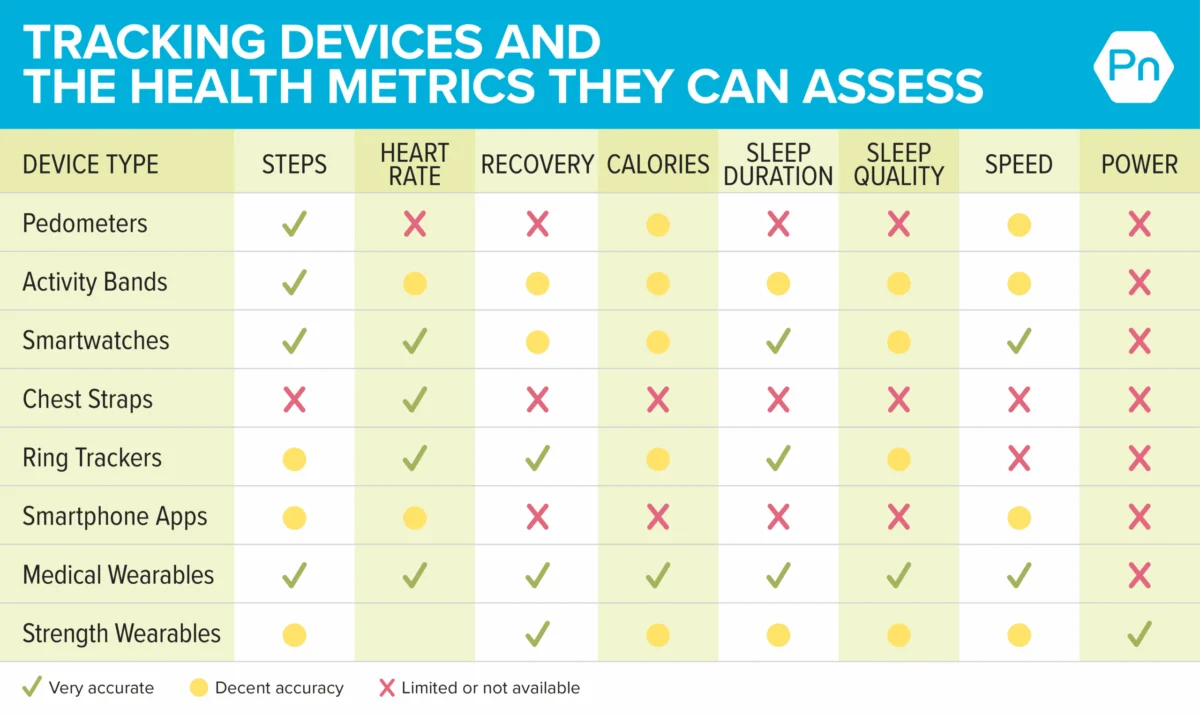
Despite their widespread appeal and increasing sophistication, the accuracy of health trackers is not uniform across all devices or metrics. The axiom "not all data is created equal" holds particularly true in this domain. Reputable brands invest heavily in research and development, refining both hardware and proprietary software algorithms, which can significantly influence data quality.
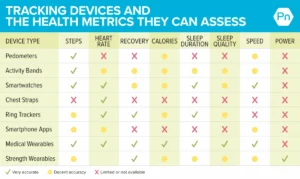
Generally, metrics like heart rate and step count tend to be highly reliable across most modern devices. Optical heart rate sensors in smartwatches, while not always as precise as medical-grade electrocardiograms (ECGs) or chest straps, have shown strong correlation with clinical standards during steady-state activities. Step counters, leveraging accelerometers, are also largely accurate for basic ambulation. However, the reliability can diminish for more complex outputs. Metrics such as calories burned, sleep stage differentiation, and movement velocity often involve more complex algorithms, incorporating individual biometrics and activity profiles, leading to substantial margins for error. For instance, studies have indicated that calorie expenditure estimations from consumer wearables can deviate by 20-30% or more from laboratory-grade measurements. Sleep tracking, while useful for identifying trends in sleep duration, often struggles with the precise differentiation of sleep stages (REM, deep, light) compared to polysomnography, the clinical gold standard. This variability necessitates a critical understanding of what data points can be trusted for actionable insights and which should be viewed with a degree of healthy skepticism. Consumers are increasingly encouraged to consult independent reviews and academic research when selecting devices, recognizing that the promise of comprehensive data does not always equate to consistent scientific accuracy.
The Paradox of Information: Optimizing Decision-Making

The proliferation of data, while offering unprecedented insight, presents a unique challenge: the paradox of information. As computer scientist Samantha Kleinberg, who studies decision-making, notes, even a small amount of surplus information can negatively impact our ability to make sound choices. This concept aligns with the "inverted U-curve" model, which posits that decision-making ability initially improves with more relevant information but then declines sharply once a saturation point is reached.
This phenomenon is evident in everyday scenarios, such as the "analysis paralysis" experienced when sifting through hundreds of restaurant reviews for a simple meal. In health and fitness, where the market is flooded with devices, apps, and "expert" advice promising more science, customization, and complexity, finding the optimal amount of information becomes an art form. Too little detail leaves individuals uninformed, while too much detail can overwhelm, leading to confusion, inaction, or misguided decisions. The goal, therefore, is not merely to collect more data, but to discern the relevant data that facilitates effective decision-making. Individuals are encouraged to ask a fundamental question: "Does tracking genuinely enhance my well-being and performance?" A clear "yes" or "no" can guide the decision to continue or discontinue tracking, while ambiguity signals a need for deeper introspection into the utility of the data being collected.
When Data Empowers: Key Benefits of Smart Tracking
When leveraged appropriately, health trackers can be powerful tools for personal development and health optimization, offering three primary benefits:
-
Validation and Stress Reduction: For many, particularly high-achievers or those prone to self-doubt, objective data can provide crucial validation. Consider the individual meticulously adhering to a new exercise regimen, such as "Zone 2 cardio," which feels deceptively easy. Despite anecdotal assurances from a coach, the subjective feeling of low effort might trigger anxieties about effectiveness. However, when a heart rate monitor consistently shows the heart rate within the target zone and, over weeks, the resting heart rate drops, alongside improved recovery times, the data provides undeniable proof of efficacy. This objective feedback calibrates subjective perceptions, reducing stress and building confidence in the process. For coaches, this data can be instrumental in empowering clients, shining a spotlight on existing performance and assuaging anxieties about "not being good enough." It provides tangible evidence that complements expert guidance, creating a more robust foundation for progress. Conversely, in situations beyond one’s control, like a new parent receiving poor sleep scores from a tracker, the data can become a source of unnecessary stress. In such cases, pausing tracking can be a wise decision, prioritizing mental well-being over metrics that offer no immediate actionable insights.
-
Enhanced Motivation and Behavioral Change: According to behavioral scientists, the initiation and maintenance of any behavior require three core elements: motivation, ability, and a prompt. Fitness trackers excel at providing the "prompt" when motivation and ability are already present. A classic example is the individual who regularly consumes alcohol, believing it aids sleep. Upon wearing a sleep tracker, they discover a consistent degradation in sleep quality on nights when they imbibe. This clear, undeniable feedback—the prompt—serves as a powerful catalyst for behavioral adjustment. By highlighting critical data points, trackers make the consequences of certain choices starkly apparent, enabling individuals to "un-see" previous assumptions and make clearer, more informed decisions. This feedback loop, grounded in objective reality, can significantly bolster intrinsic motivation, driving sustainable changes that might otherwise be difficult to initiate or maintain through willpower alone.
-
Deepened Self-Understanding: The intuitive belief that "the harder you work, the better your results" is often a pitfall, particularly for those with a "grinder" mentality. This mindset can lead to overtraining, inhibiting recovery and performance. Conversely, many individuals chronically underestimate their capabilities and effort, missing opportunities to push beyond perceived limits. Data from trackers can illuminate these blind spots, helping individuals to more accurately understand their potential and physiological responses. For instance, in high-intensity interval training (HIIT), recovery periods are often fixed estimates. Heart rate data, however, can provide a personalized, real-time picture of actual recovery needs, which may be faster or slower than anticipated. This allows for dynamic adjustment of training, preventing unproductive "junk volume" (where fatigue accumulates without performance gains) and optimizing efficiency. By integrating real-time metrics of output, fatigue, and recovery, individuals and their coaches can foster a more nuanced self-awareness, leading to more efficient and effective training protocols. However, this benefit hinges on not becoming overly reliant on data. The cautionary tale of "The Great My Fitness Pal Blackout" in 2019, which left millions adrift without their calorie-tracking app, underscores the danger of disconnecting from internal hunger, fullness, energy, and fatigue signals. An over-reliance on external data can erode one’s innate ability to interpret bodily cues, highlighting the need for a balanced approach.
Strategic Integration: Maximizing Wearable Utility for Self-Assessment
To truly harness the power of fitness trackers without losing touch with one’s intrinsic bodily wisdom, a strategic approach is essential. The goal is not to replace human senses but to calibrate and enhance them, fostering a more resilient and enjoyable health practice.

-
Prioritize Internal Check-ins Before Data Review: A fundamental practice for balanced data integration is to pause and check in with one’s internal sensations before consulting any tracker data. This could involve assessing perceived energy levels, hunger, sleep quality, or workout exertion. This mindful moment allows the brain’s powerful, albeit sometimes fallible, prediction-making machinery to engage. Only after this self-assessment should the objective data be reviewed. This consistent comparison—your feeling versus the device’s reading—serves as a continuous calibration exercise. Over time, this practice can significantly narrow the gap between subjective perception and objective reality, sharpening one’s intuitive understanding of their body. Furthermore, it reinforces the primacy of the "felt experience," ensuring that technology remains a tool for insight rather than a substitute for self-awareness.
-
Develop Intuitive Benchmarks and Mental Shortcuts: While advanced tools like accelerometers or blood lactate measurements offer precise objective data, practical application often benefits from mental shortcuts. A well-established example is the Rate of Perceived Exertion (RPE), a subjective scale of how hard one feels they are working. While novices may struggle with accurate RPE estimation, consistent calibration with objective data (e.g., heart rate zones, power output) can dramatically improve accuracy. Coaches often employ creative prompts, such as "For a million dollars a rep, how many more reps do you think you could do?" to help clients tap into their maximal effort, leveraging a qualitative prompt to quantify an otherwise subjective feeling. These mental models, developed through iterative comparison with objective data, empower individuals to make informed decisions even when a device is unavailable or when the focus needs to shift away from constant data scrutiny.
-
Nurture Your Innate Sensory Network: Despite the sophistication of wearable technology, the human body remains the most complex and nuanced "tracking device." We are equipped with an incredibly rich network of sensory information, far exceeding what any current gadget can replicate. This includes:
- Proprioception: The sense of where your body parts are in space.
- Interoception: The sense of the internal state of your body (e.g., hunger, thirst, heart rate, visceral sensations).
- Vestibular Sense: The sense of balance and spatial orientation.
- Thermoreception: The sense of temperature.
- Nociception: The sense of pain.
- And, of course, the traditional five senses.
This intricate network feeds into the nervous system’s powerful pattern-recognition machinery. To continuously hone the ability to interpret this rich internal data, regular check-ins with one’s sensations are paramount. By actively listening to what and how one is feeling—the subtle cues of energy, fatigue, satiety, or stress—individuals can cultivate a profound connection to their bodies. When this developed sensory awareness is combined with the objective feedback from wearable technology, a powerful synergy emerges. This approach allows individuals to leverage the cutting-edge advances in health tech while firmly keeping their own subjective experience and innate wisdom at the forefront of their health journey.
Broader Implications and the Future Landscape
The rise of wearable technology and data-driven health has broader societal implications. It fuels the "Quantified Self" movement, encouraging individuals to take a more active, informed role in their health management. This shift has the potential to move healthcare from a reactive, disease-focused model to a proactive, preventive one. However, it also raises critical concerns regarding data privacy and security. The vast amounts of sensitive health data collected by these devices present lucrative targets for cybercriminals and raise questions about how this information is stored, shared, and utilized by companies and potentially insurers. The ethical considerations surrounding data ownership and informed consent will continue to be a significant area of debate.
Looking ahead, the integration of artificial intelligence and machine learning promises even more personalized and predictive health insights. Future devices may not only track data but also interpret complex patterns, offer highly tailored recommendations, and even detect early signs of illness before symptoms manifest. The dialogue between technology and human intuition in health is ongoing, continually evolving. The most successful approach will undoubtedly involve a harmonious integration, where technology serves as an intelligent assistant, augmenting human senses and empowering individuals to make better decisions, rather than replacing the irreplaceable wisdom of their own bodies. The ultimate goal remains a healthier, more self-aware populace, equipped with both the tools and the intrinsic understanding to thrive.