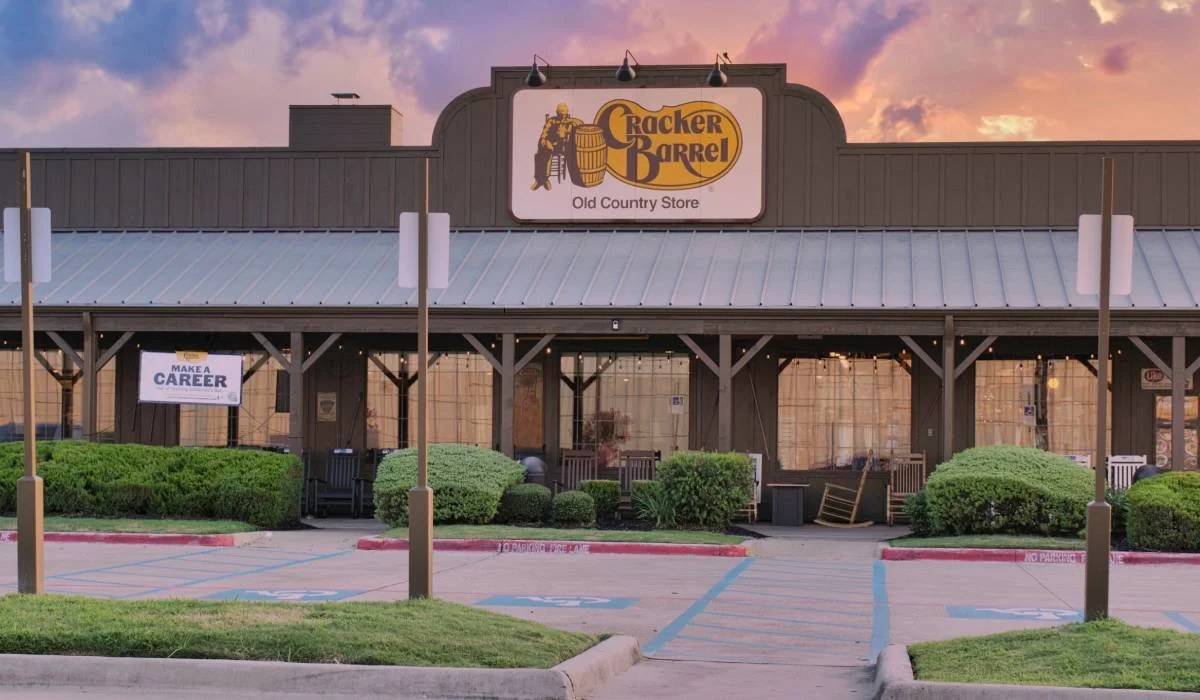

Cracker Barrel Old Country Store is laying the groundwork for a comprehensive operational and cultural turnaround, leaning on fresh leadership, targeted menu investments, and an enhanced in-store retail strategy to reverse persistent traffic declines. Guided by newly appointed Chief Executive Officer David Deno, the iconic comfort-food chain has outlined a multi-year strategic roadmap that culminates in a projection of positive comparable store sales by fiscal 2027.
The strategy arrives at a pivotal juncture for the Tennessee-based hospitality company. While the brand continues to command strong foundational loyalty—particularly during breakfast hours and through its unique integrated retail footprint—it has faced headwinds from shifting consumer behaviors, broader economic pressures affecting lower-income diners, and declining restaurant foot traffic. By focusing sharply on food quality, operational consistency, guest hospitality, and disciplined cost management, Deno and his executive team aim to restore the brand to sustainable, long-term growth.
A New Leadership Era and Early Store-Level Assessments
David Deno assumed the chief executive role roughly six weeks prior to the company’s fourth-quarter earnings call, stepping into the post with a wealth of industry experience, including his previous tenure as CEO of Bloomin’ Brands. Rather than immediately imposing top-down mandates from corporate headquarters, Deno spent his initial weeks on the job traveling across the country, visiting numerous Cracker Barrel locations, and engaging in direct dialogues with frontline employees, store managers, and patrons.
This hands-on immersion shaped his early strategic assessments. Deno identified the dinner daypart as the primary target for immediate culinary investment. While Cracker Barrel’s breakfast offerings continue to generate the chain’s highest customer satisfaction scores and most resilient traffic trends, dinner represents a significant growth frontier. To capture a larger share of evening dining occasions, the company plans to upgrade core protein offerings, specifically focusing on chicken, hamburger, and steak dishes. These menu enhancements are designed to ensure that every meal delivered to a guest meets rigorous expectations regarding taste, portion size, temperature, and overall quality.
The turnaround plan also emphasizes the cultivation of operational excellence among the company’s approximately 75,000 employees. Deno has underscored that store teams are the backbone of the brand experience. By prioritizing training, development, and employee engagement, Cracker Barrel hopes to secure the consistency required to turn positive guest sentiment into repeat visits.
Financial Performance and Fourth-Quarter Metrics
The strategic overhaul comes on the heels of a fourth quarter that highlighted both ongoing challenges and pockets of resilience. For the period, Cracker Barrel reported total revenue of $849.3 million, outperforming internal company expectations. Restaurant sales contributed $698.5 million to this total, while the retail division generated $150.8 million.
Despite the better-than-expected revenue figures, underlying transaction volumes faced continued pressure. Comparable restaurant sales declined 2.1 percent during the fourth quarter, driven by a 6.1 percent drop in customer traffic. This traffic contraction was partially offset by a 4.2 percent increase in the average check size, which included a 4.4 percent pricing adjustment.
Chief Financial Officer Craig Pommells noted that comparisons with the prior fiscal year varied considerably between the third and fourth quarters due to shifting holiday calendars and promotional timing. When adjusting for these calendar anomalies, Pommells described the underlying traffic trend as one of gradual, month-over-month improvement. Furthermore, off-premises dining continued to represent a bright spot for the restaurant segment, accounting for 19 percent of total restaurant sales—an increase of approximately one percentage point compared to the same period a year earlier, largely propelled by sustained growth in third-party delivery partnerships.
Profitability metrics demonstrated positive momentum during the quarter. Adjusted EBITDA rose 11.4 percent year-over-year to reach $62.1 million. This figure was influenced by a net $9.1 million benefit from tariff refunds, part of which the company strategically reinvested into operations. Adjusted earnings per diluted share stood at $0.99. On the balance sheet, Cracker Barrel made notable strides in debt reduction, ending the quarter with $337.2 million in debt—a reduction of $147.4 million compared to the previous year. This deleveraging was significantly aided by the deployment of $77 million in net proceeds derived from a sale-leaseback transaction.
Fiscal 2027 Outlook and Strategic Financial Targets
Looking ahead, Cracker Barrel’s executive leadership has established a clear financial blueprint designed to stabilize the business and return it to growth. The company’s comprehensive fiscal 2027 outlook anticipates a return to positive comparable store sales, projecting an increase of 3 to 5 percent for the full fiscal year. Pricing is expected to contribute approximately 3 percent to this top-line growth.
Total revenue for fiscal 2027 is projected to land between $3.325 billion and $3.4 billion, with adjusted EBITDA anticipated to range from $180 million to $200 million. Notably, the company’s current capital allocation plans call for zero new restaurant openings during the fiscal year, signaling a disciplined shift away from footprint expansion and toward maximizing the productivity and profitability of existing assets. Capital expenditures are forecasted at $110 million to $125 million, with roughly 65 percent dedicated to maintenance initiatives and the remaining 35 percent earmarked for technology upgrades and strategic growth projects.
Menu Innovation and Margin Expansion
Menu mix management is expected to play a crucial role in driving both customer satisfaction and financial margins. CFO Craig Pommells pointed out that recent introductions of appetizers and shareable menu items have been met with enthusiastic responses from diners. Additionally, the option for guests to upgrade their entrées from two traditional sides to three has proven popular, offering a subtle yet effective mechanism to boost average check sizes and improve restaurant-level margins.
“We do think as we look to the future and we think about dinner and so on, there’s opportunity in the menu mix component of the business that is a win-win for our customers and then obviously improving our margins as well,” Pommells explained during the earnings presentation.
Beyond menu engineering, executive leadership is pursuing cost-saving measures in areas less visible to the dining public, including corporate overhead, back-office processes, and technology infrastructure. Within the restaurants, targeted pushes to increase the attachment rates of higher-margin items like desserts and specialty side orders are expected to further bolster profitability.
Operational Gains and Employee Turnover Improvements
The foundation for Cracker Barrel’s turnaround is further supported by measurable improvements in guest perception and employee retention metrics during the fourth quarter. The brand’s Google Star rating climbed 2 percent year-over-year, hovering near historic highs for the company. More significantly, internal tracking data revealed that food taste and service scores improved by nearly 400 basis points compared to the prior-year period, while food temperature scores registered a notable 500-basis-point improvement.
These customer-facing gains coincided with stabilization in workforce stability. Hourly employee turnover improved by 450 basis points year-over-year, and managerial turnover saw an 85-basis-point improvement. Given the labor-intensive nature of full-service dining, retaining experienced staff is viewed as a vital prerequisite for delivering the consistent food quality and warm hospitality that define the Cracker Barrel brand promise.
Revitalizing the Retail Shop Experience
A distinguishing characteristic that separates Cracker Barrel from virtually all major competitors in the full-service restaurant space is its integrated retail shop, which guests navigate upon entering and exiting the dining room. During the fourth quarter, comparable retail sales increased by 0.7 percent, marking the segment’s strongest comparative growth performance since the second quarter of fiscal 2023.
This retail resilience was achieved despite a lower overall shopper count, compensated for by higher average selling prices and an increase in items purchased per transaction. Categories such as toys, housewares, and seasonal merchandise—particularly an earlier-than-usual rollout of Halloween-themed inventory—performed exceptionally well.
CEO David Deno sees substantial untapped potential in the retail division, noting that the company intends to make the shopping experience more inviting and navigable. Planned adjustments include simplifying product layouts, widening store aisles, and creating clearer sight lines throughout the retail floor. Furthermore, leadership aims to create deeper synergy between the retail displays and the culinary offerings, reinforcing the notion that the retail shop is an irreplaceable brand asset.
“The business is a real competitive advantage because we are the only full-service restaurant brand offering guests a true retail experience alongside their meal,” Deno stated.
Digital Engagement, Value, and Customer Segmentation
To capture market share in an increasingly digital and cost-conscious restaurant landscape, Cracker Barrel continues to invest heavily in its loyalty program and promotional architecture. The Cracker Barrel Rewards program has surpassed 12.5 million active members, who currently account for more than 40 percent of the brand’s tracked sales. Complementing this database is a newly redesigned website and mobile application, which allow the company to deliver more personalized marketing, targeted offers, and streamlined ordering capabilities. Advertising expenditures are planned to remain robust, running at approximately 3 percent of sales through fiscal 2027.
At the same time, executive leadership remains keenly aware of macroeconomic pressures impacting consumer spending behaviors. Deno and Pommells acknowledged a clear bifurcation in the customer base: lower-income diners are exhibiting noticeable budgetary strain and pulling back on discretionary dining occasions, while higher-income consumers remain relatively resilient.
To address the needs of value-seeking guests, Cracker Barrel has actively promoted entry-level price points and accessible menu specials. Highlights of this value strategy include the $7.99 Sunrise Pancake Special, weekday Early Dine meals starting at $8.99, and various rotating lunch promotions designed to keep the brand accessible for families and individuals monitoring their household budgets. With an overall average check resting comfortably near $16, the chain believes it offers a compelling value proposition relative to the sit-down dining sector as a whole.
Implications and the Road Ahead
As Cracker Barrel embarks on this multi-year strategic evolution, the immediate priority remains translating higher guest satisfaction scores and smart menu modifications into sustained, organic traffic growth. While CEO David Deno has emphasized that it is premature to establish extended long-term targets for unit growth or aggressive margin expansion after just six weeks on the job, the foundational elements of the turnaround are firmly in place.
By balancing rigorous cost discipline with targeted investments in food quality, employee development, retail layout, and digital loyalty, Cracker Barrel is positioning itself to weather near-term consumer pressures. If the company’s strategic roadmap unfolds as planned, the iconic brand will not only reclaim its historical traffic momentum by fiscal 2027 but will also cement its unique position as a premier destination where comfort food and retail tradition seamlessly intersect.