
The global public health crises of recent years fundamentally altered daily domestic routines, most visibly manifested in an unprecedented surge in home baking. As populations worldwide entered extended periods of lockdown, confinement to households sparked a dramatic renaissance in culinary arts, with bread-making emerging as a primary pastime. This cultural shift placed immense strain on commercial supply chains. In regions such as Norway, supermarket shelves were routinely cleared of commercial yeast packets for weeks and even months at a time. Yet, a deeper understanding of microbial biology and mathematical progression offered home bakers a practical solution to this nationwide shortage: leveraging the principles of exponential growth to stretch a single 12-gram sachet of instant dry yeast across numerous baking cycles.
The Science of Exponential Microbial Expansion
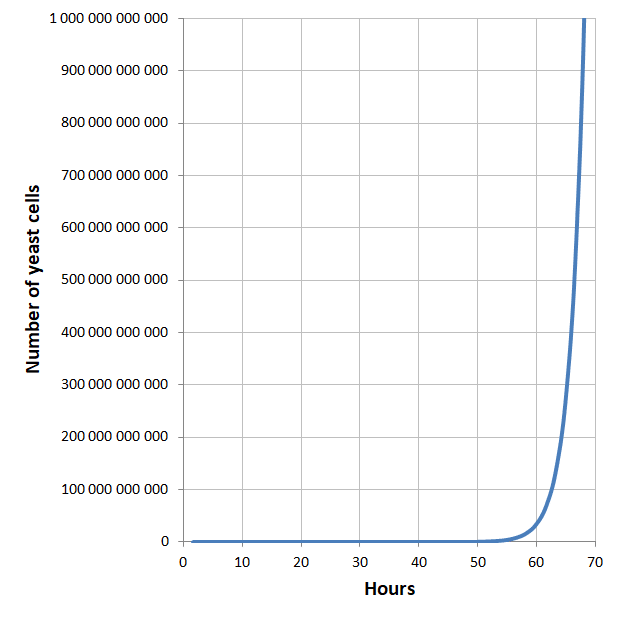
To comprehend how a microscopic quantity of yeast can leaven substantial batches of flour, one must examine the fundamental mechanics of microbial reproduction. Exponential growth occurs when a quantity increases by a fixed percentage over regular intervals. Under ideal laboratory or industrial conditions—characterized by optimal temperatures, adequate oxygenation, and an abundant supply of nutrients—a single Saccharomyces cerevisiae (yeast) cell undergoes binary fission, dividing into two independent cells approximately every 100 minutes.
This biological timeline translates to a complete reproductive life cycle in less than two hours. Following another 100 minutes, those two cells multiply into four, establishing a geometric progression that rapidly accelerates. Within 24 hours of uninterrupted, ideal growth, a single founding cell expands into a population of approximately 16,000. By the 48-hour mark, that figure surges to roughly 268 million cells. In under three days, the initial organism multiplies into a staggering one trillion cells—roughly equivalent to the total cell count found in a standard 50-gram block of compressed commercial yeast.
While such uninhibited, rapid proliferation is typically restricted to industrial bioreactors rather than dense bread doughs, the underlying mathematics illustrate why traditional baking practices often utilize far more yeast than strictly necessary.
Chronology of the Baking Renaissance
The widespread yeast shortages of the early 2020s followed a distinct temporal progression tied directly to pandemic mitigation measures.
In the initial weeks of widespread lockdowns, consumer behavior shifted abruptly toward panic-buying and pantry-loading. Staple baking ingredients, including flour, sugar, and yeast, disappeared from grocery store inventories almost overnight. Commercial manufacturers struggled to pivot from supplying bulk commercial quantities to packaging consumer-sized portions for home kitchens.
As restrictions persisted through the subsequent months, consumers adapted to the scarcity. Home bakers began experimenting with low-yeast methodologies, prolonging fermentation times to compensate for reduced inoculations. Concurrently, interest in wild fermentation methods, such as sourdough starters, experienced a massive global wave. However, the convenience, speed, and reliability of commercial instant dry yeast continued to appeal to a broad demographic of casual bakers, driving the adoption of precision measurement tools in home kitchens.
Data and Methodology: Precision Baking Through Digital Tools
Navigating the transition from high-yeast, rapid-rise recipes to long-fermentation, low-yeast techniques requires precise measurements that standard kitchen utensils cannot provide. Traditional recipes often call for excessive amounts of yeast simply to guarantee a predictable rise within a constrained one-to-two-hour window. By extending the bulk fermentation period—often referred to as a direct or straight dough method—bakers can achieve superior structural and flavor development while using a fraction of the inoculum.
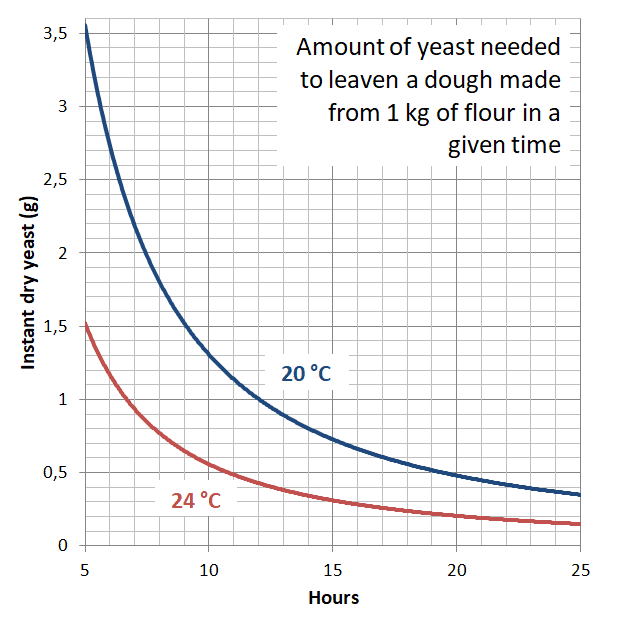
Modern culinary technology has streamlined this process. Applications such as PizzApp+, originally developed for artisanal pizza makers to calculate precise ingredient ratios based on fermentation time and ambient temperature, have found widespread utility among general bread bakers. For example, empirical data derived from these calculation models demonstrates that a standard dough formulation utilizing one kilogram of wheat flour requires a mere 0.48 grams of instant dry yeast when subjected to a 20-hour bulk fermentation at 20 degrees Celsius.
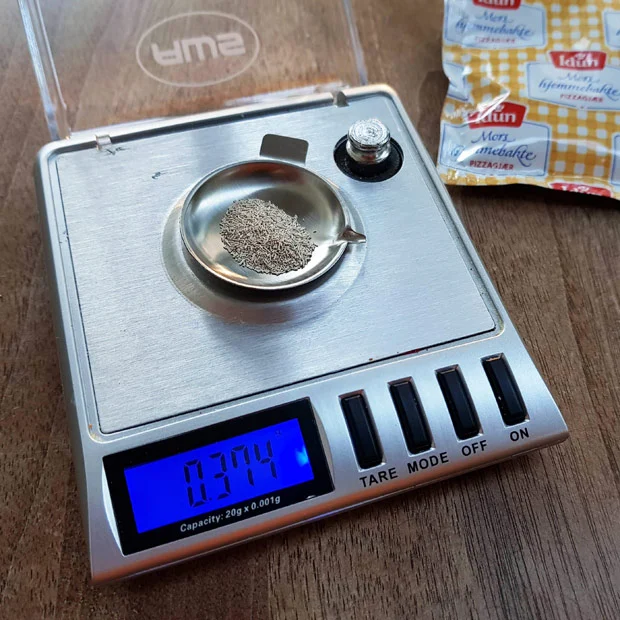
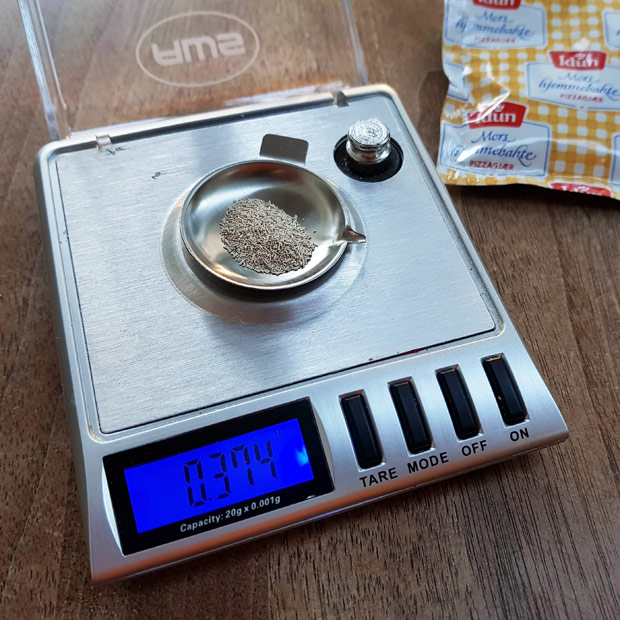
Achieving such accuracy necessitates the use of digital culinary scales capable of reading down to 0.001 grams. While laboratory-grade equipment remains cost-prohibitive for domestic use, affordable consumer-grade milligram scales became increasingly common household accessories during the baking boom, fundamentally changing how home cooks approach recipe formulation.
Industry Perspectives and Expert Analysis
Food scientists and culinary historians note that the widespread reliance on excessive commercial yeast is a relatively modern phenomenon. Prior to the industrial standardization of baking ingredients, bakers routinely relied on longer fermentation times, which allowed both wild yeasts and symbiotic lactic acid bacteria to proliferate.
According to analyses from agricultural economists, the supply chain disruptions of the pandemic exposed vulnerabilities in centralized food distribution networks, forcing a return to resource-efficient culinary practices. Industry experts emphasize that utilizing minimal quantities of commercial yeast not only mitigates the risk of running out of supplies during periods of high demand but also yields measurable improvements in the final product. Extended fermentation times allow enzymatic activity to break down complex carbohydrates into simpler sugars, enhancing crumb structure, digestibility, and flavor complexity through the subtle generation of organic acids.
Broader Economic and Cultural Implications
The intersection of mathematics, microbiology, and domestic cooking during periods of societal confinement highlights a broader trend toward kitchen literacy. Consumers who were previously reliant on ultra-processed, commercially manufactured goods developed a granular understanding of food science, biochemistry, and resource management.
From an economic perspective, the optimization of ingredients—such as extracting dozens of loaves from a single packet of dry yeast—reflects a permanent shift in consumer habits toward waste reduction and self-sufficiency. Furthermore, the popularity of digital calculation tools bridges the gap between home cooking and industrial food science, empowering individuals to manipulate variables such as time, temperature, and microbial load with scientific precision.
Ultimately, the confluence of supply chain challenges and biological reality demonstrated that microscopic organisms, governed by predictable mathematical laws, can provide both psychological comfort and nutritional sustenance during times of global uncertainty.